

Executive Overview
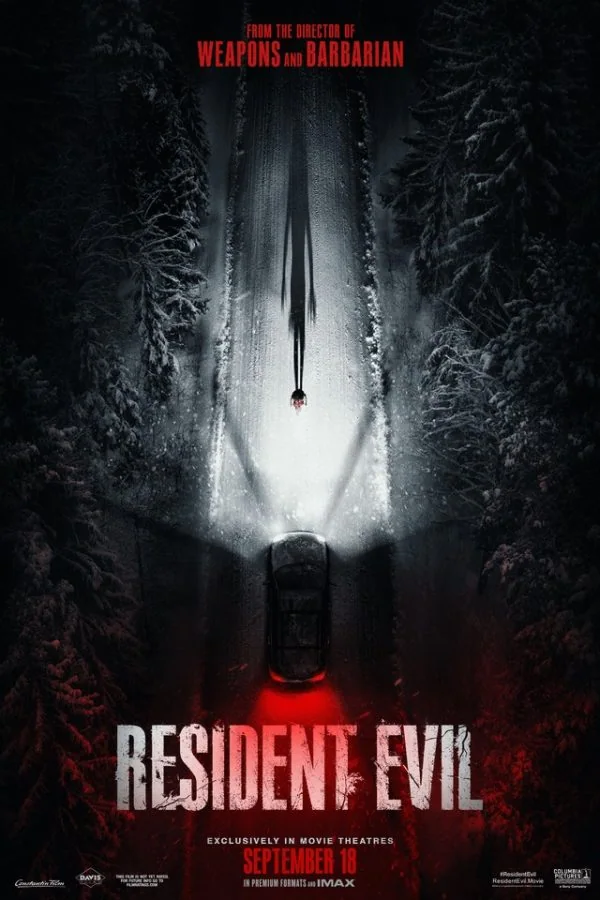
The cinematic landscape of video game adaptations has long been fraught with missteps, tonal miscalculations, and a persistent inability to capture the elusive essence of interactive media. For three decades, Capcom’s legendary Resident Evil franchise—initiating its reign of terror on the original PlayStation in 1996—has spawned numerous sequels, spin-offs, and live-action adaptations of wildly fluctuating quality. Yet, critics and purists alike have generally agreed that the core survival horror atmosphere, marked by claustrophobic dread, inventory management, and B-movie absurdity, remained untranslated to the silver screen.
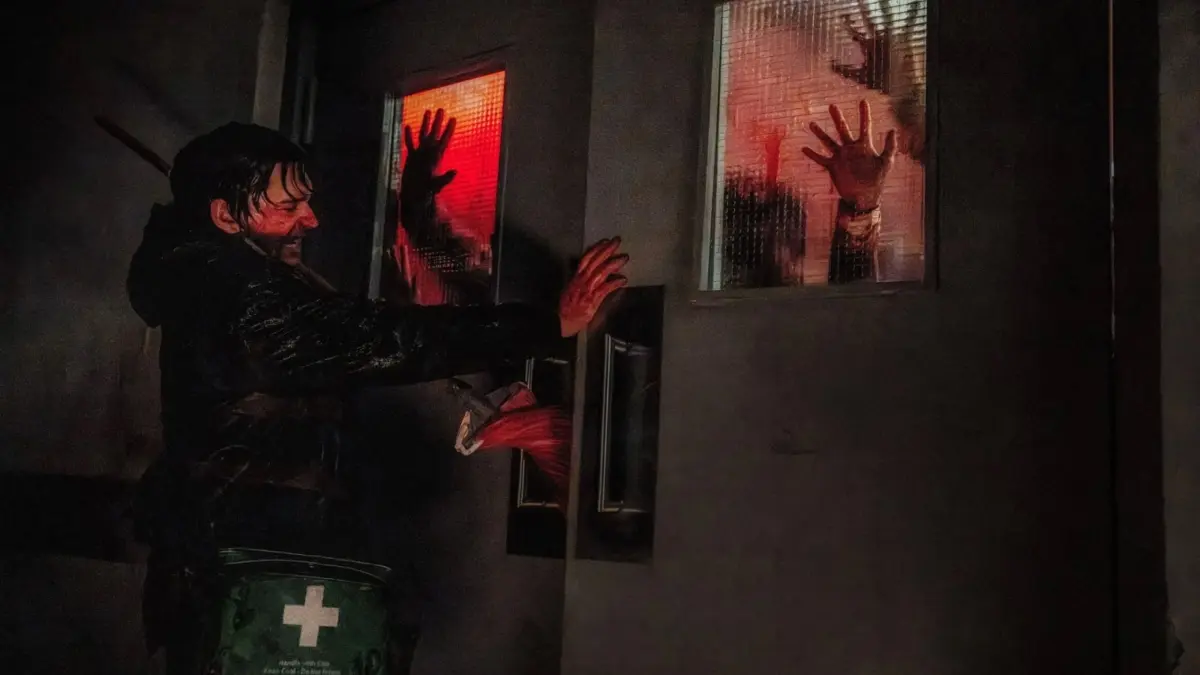
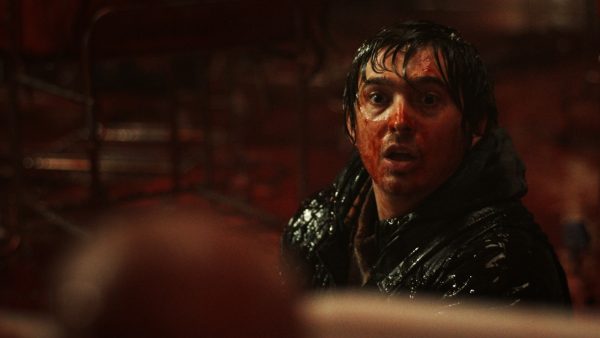
That narrative changed definitively in 2026 with the release of Resident Evil, co-written and directed by Zach Cregger alongside co-writer Shay Hatten. Rather than relying on fan service or slavish devotion to established lore, Cregger approaches the material through a brilliant lens of subversion. Shifting focus away from elite tactical units like the Special Tactics and Rescue Service (STARS) and seasoned operatives, the film anchors its 90-minute gauntlet of terror on an entirely ordinary, completely out-of-his-depth protagonist: Bryan, an organ transplant courier portrayed with desperate, comedic vulnerability by Austin Abrams.
Set against the chilling backdrop of a snow-swept Raccoon City viral outbreak, the film blends relentless action set pieces, practical blood-and-gore effects, meta-commentary on video game tropes, and a surprisingly resonant emotional core about impending fatherhood. Featuring an ensemble cast that includes Zach Cherry, Kali Reis, Paul Walter Hauser, Johnno Wilson, Shaun W. Loeser, and Devon Deshaun Stewart, Cregger’s film has been heralded as a milestone in the horror genre—a masterclass in tension-building that treats its source material with both deep reverence and playful irreverence.

Detailed Chronology: A Nightmarish Delivery Route
The narrative of Resident Evil unfolds over a single, punishingly long night, leveraging a cold winter aesthetic that transforms Raccoon City into an icy, visually distinct labyrinth unlike anything seen in previous iterations of the franchise.
The Inciting Incident and the Snowy Road
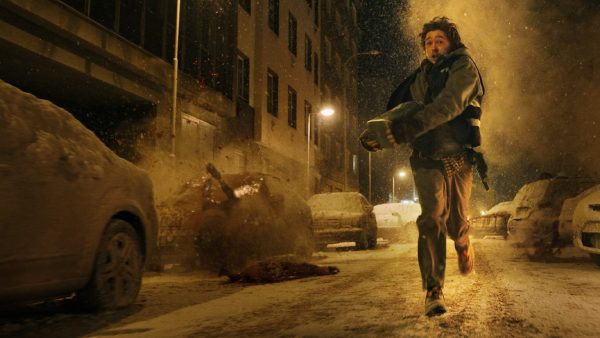
The film opens with Bryan navigating a blinding snowstorm on a late-night delivery run. Stressed and isolated, he takes a fraught phone call from his girlfriend. The conversation quickly veers into deeply personal territory, revealing Bryan’s palpable anxiety and reluctance regarding impending fatherhood. Utilizing defensive humor to deflect her concerns, Bryan brushes the topic aside just as cellular service cuts out. Stranded on the desolate, snow-covered roads outside Raccoon City, his personal crisis is abruptly interrupted by professional duty: he is carrying a vital organ transplant that must reach a remote hospital immediately to save a patient’s life.
The Outbreak and the Barn Encounter
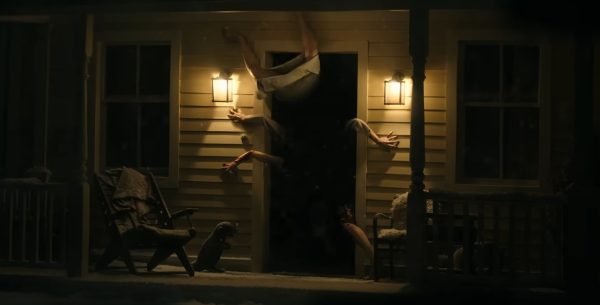
When his vehicle is disabled, Bryan seeks refuge near an eerily empty homestead, only to discover that the local viral outbreak has already turned the populace into aggressive, mutating monsters. Stranded inside an adjacent barn, Bryan encounters his first wave of infected adversaries. In a sequence that highlights Cregger’s knack for dark comedy and meta-awareness, Bryan discards a wooden ladder after scaling it, only to experience a sudden realization familiar to every survival horror gamer: that exact environmental tool is mandatory to progress to safety.
This moment sets the comedic and structural tone for the film. Bryan is no elite tactical operator; he is an everyday courier who handles firearms with the ineptitude of someone who has never touched a weapon. His desperate fumbling with indestructible padlocks, frantic searches for hidden keys in subterranean sewer levels, and unpolished marksmanship transform traditional action tropes into exercises in breathless suspense.
The Gauntlet of Mutations and Cinematic Craft
As Bryan pushes deeper into the infected zone, the film shifts into high gear, maintaining a relentless pace driven by Dariusz Wolski’s dynamic cinematography. Wolski seamlessly transitions between traditional cinematic framing, tense over-the-shoulder third-person perspectives, and brief first-person shooting angles reminiscent of gameplay mechanics. Every bullet counts, and Bryan’s continuous mental inventory of his dwindling ammunition adds crushing psychological weight to his survival efforts.
Among the film’s standout set pieces is an unforgettable, terrifying sequence wherein Bryan is pursued by a Katamari Damacy-style rolling sphere of fused, writhing “zombies.” Accomplished through the practical movement of acrobatic gymnasts, this horrific mass of bodies tumbles forward with compounding momentum, blending stylized dread with visceral terror. Throughout his journey, Bryan encounters various cameo appearances by notable actors who brief him on objectives, challenge his emotional resolve, and propel him toward the film’s chilling conclusion.
Supporting Context & Metrics: Behind the Lens
To understand the triumph of Cregger’s Resident Evil, one must examine the creative philosophy and technical execution driving the production.
- The Creative Partnership: Co-writers Zach Cregger and Shay Hatten recognized that successful game adaptation requires translating mechanics rather than mere lore. By transposing the trial-and-error logic of survival horror games into a cinematic grammar, the filmmakers achieved immediate verisimilitude.
- Cinematographic Innovation: Veteran cinematographer Dariusz Wolski utilized specialized camera rigging to mimic the third-person over-the-shoulder perspective popularized by modern survival horror video games, grounding the audience directly in Bryan’s panicked state of mind.
- Pacing and Runtime: Operating at a tight, unyielding 90-minute runtime, the film wastes zero frames. Every sequence functions simultaneously as a propulsive action set piece, a comedic commentary on gaming tropes, and a psychological exploration of its lead character.
- Thematic Subtext: While comparisons to Mad Max: Fury Road are inevitable due to the film’s relentless, no-frills onslaught of chaos, its deeper resonance stems from its exploration of parental anxiety. Bryan’s harrowing encounters with death mirror his internal panic over fatherhood, transforming a creature feature into an unexpected coming-of-age ordeal.
Official Statements and Industry Reception
Critical reception for Resident Evil has been overwhelmingly positive, positioning the film as a watershed moment for video game cinema. Reviewers have praised Cregger’s ability to balance high-stakes body horror with self-aware levity.
In critical circles, prominent voices have noted the brilliance of casting Austin Abrams as an everyman protagonist. By replacing the traditional action-hero archetype—the "STARS" operative—with what reviewers jokingly term a "DOPE" (an ordinary worker drastically out of his depth), the film manufactures genuine stakes where invulnerability previously existed.
Industry analysts have also highlighted Capcom’s hands-off, collaborative approach with Cregger, granting the filmmaker the creative latitude necessary to reinvent Raccoon City for a contemporary audience. Studio representatives have expressed immense satisfaction with the film’s theatrical opening weekend metrics, pointing to strong word-of-mouth and high engagement across social media platforms as indicators of long-term box office viability.
Future Outlook
The explosive success of Resident Evil (2026) fundamentally alters the trajectory of Capcom’s cinematic endeavors. By proving that high-concept video game adaptations can achieve critical acclaim without sacrificing fidelity to core gameplay loops, the film sets a new industry standard.
As the film concludes on a pointed, emotionally resonant cliffhanger—one that leaves audiences clamoring for closure regarding this initial chapter of the outbreak—speculation regarding a sequel has already begun. While official greenlights from studio executives are pending final box office tallies, both Zach Cregger and the ensemble cast have expressed enthusiasm for expanding this gritty, snow-choked cinematic universe.
If Cregger maintains creative control over subsequent installments, the Resident Evil film franchise is no longer a troubled cinematic afterthought, but a vibrant, essential pillar of modern horror cinema. Fans and critics alike share a singular sentiment: that Cregger should continue directing entries in this universe for years to come.





Belum ada komentar. Jadilah yang pertama berkomentar!