In the contemporary landscape of international cinema, few releases generate the quiet, lingering tremors that accompany a truly profound psychological investigation. Enter the highly anticipated motion picture Satoko (tentatively translated or referred to in Japanese contexts as 『いりおもて』 or associated production structures), which has officially locked in its nationwide theatrical release date for September 18, 2026.
Directed by acclaimed visionary filmmaker Shintaro Tanaka—whose previous works have consistently challenged the boundaries of narrative convention—Satoko arrives on the heels of major industry backing and a meticulous, multi-year production cycle. Distributed by Happinet Phantom Studios, the film positions itself not merely as entertainment, but as a deeply unsettling, culturally resonant mirror reflecting the fractures, silent griefs, and hidden traumas of modern human relationships.
The narrative architecture of Satoko centers on an intricate web of three distinct characters whose lives intersect under the heavy, oppressive weight of unsolved mysteries, suppressed tragedies, and shifting moral landscapes. Anchored by a powerhouse ensemble cast featuring seasoned veterans and rising stars alike, the film moves deliberately through a maze of psychological tension, unearthing dark truths that refuse to stay buried.
This comprehensive report examines every facet of the Satoko phenomenon: its detailed production chronology, the thematic weight of its character studies, official statements from the creative core, and a forward-looking analysis of its expected cultural and box-office trajectory.
Detailed Chronology: From Concept to the 2026 Silver Screen
The journey of Satoko from an abstract directorial vision to a fully realized cinematic release is a testament to the perseverance of independent-leaning auteur cinema within a commercial studio ecosystem.
Phase I: Inception and Development
The roots of Satoko trace back to early 2023, when director Shintaro Tanaka, alongside a dedicated scriptwriting cell, began conceptualizing a narrative that would explore the fault lines of familial duty and societal expectations. Recognizing the gravity of the subject matter—which deals heavily with grief, memory distortion, and intergenerational trauma—the production team deliberately avoided rushing the screenwriting process. Over an intensive eighteen-month period, the script underwent four major structural overhauls, ensuring that the psychological motivations of the central trio remained airtight and emotionally authentic.
By mid-2024, the casting process became one of the industry’s most closely guarded secrets. Tanaka sought performers who could convey profound emotional resonance through minimalism, avoiding melodrama in favor of raw, internalized tension.
The finalized ensemble cast bridges multiple generations of acting talent:
The Veteran Anchor: Bringing over three decades of prestige film experience, this central figure grounds the narrative’s historical weight, portraying a character whose past decisions continue to cast long shadows over the present.
The Mid-Career Force: At 35 years old, this core actor bridges the gap between youthful idealism and hardened cynicism, executing complex moral compromises with chilling precision.
The Breakout Talent: A 15-year-old rising star whose casting was heralded as a masterstroke by casting directors, representing the vulnerable, yet fiercely resilient younger generation caught in the crossfire of adult deception.
Phase III: Principal Photography and Post-Production
Principal photography commenced under stringent confidentiality agreements across various regional locations in Japan known for their contrasting landscapes—shifting from claustrophobic urban interiors to sweeping, desolate rural vistas that mirror the internal isolation of the characters.
Post-production, which spanned the latter half of 2025 and early 2026, focused heavily on sonic atmosphere. Rather than relying on traditional, swelling orchestral scores, the sound design team—in close collaboration with Tanaka—utilized ambient noise, calculated silence, and subtle acoustic dissonances to heighten audience anxiety. The visual grading was similarly austere, favoring desaturated tones punctuated by sharp, glaring flashes of natural light that symbolize the painful exposure of long-hidden secrets.
Phase IV: The Official Release Announcement
On September 18, 2026, Satoko is scheduled to make its official theatrical debut under the banner of Happinet Phantom Studios. Advance industry screenings held in late August 2026 have already sparked fervent discussions among critics, positioning it as an early frontrunner for upcoming domestic and international film festival accolades.
Supporting Context & Metrics: The Architecture of Psychological Suspense
To fully appreciate Satoko, one must examine the broader genre dynamics and quantitative metrics surrounding its production and distribution strategy.
Character Dynamics and Interlocking Conflicts
The film’s brilliance lies in its refusal to offer simplistic heroes or villains. Instead, it deploys a triad of characters whose psychological profiles are meticulously deconstructed:
The Burden of Memory: Each character is defined by what they choose to remember versus what they desperately attempt to forget. The narrative uses non-linear framing devices to suggest that memory is not a static archive, but an active, malleable weapon used to protect the ego or inflict psychological damage.
Societal Pressures: Set against the backdrop of contemporary societal structures, the film investigates how institutional expectations—marriage, career success, filial piety—force individuals into emotional straightjackets. When these structures fail, the resulting psychological fallout is catastrophic.
The Silent Transmission of Trauma: A recurring motif throughout the film is the passage of unspoken pain from one generation to the next. The screenplay poses a haunting question: Can a person inherit a crime they never committed simply by virtue of blood and proximity?
Exhibition Strategy: A targeted nationwide rollout in Japan via Happinet Phantom Studios, supported by international festival submissions currently being coordinated by sales agents.
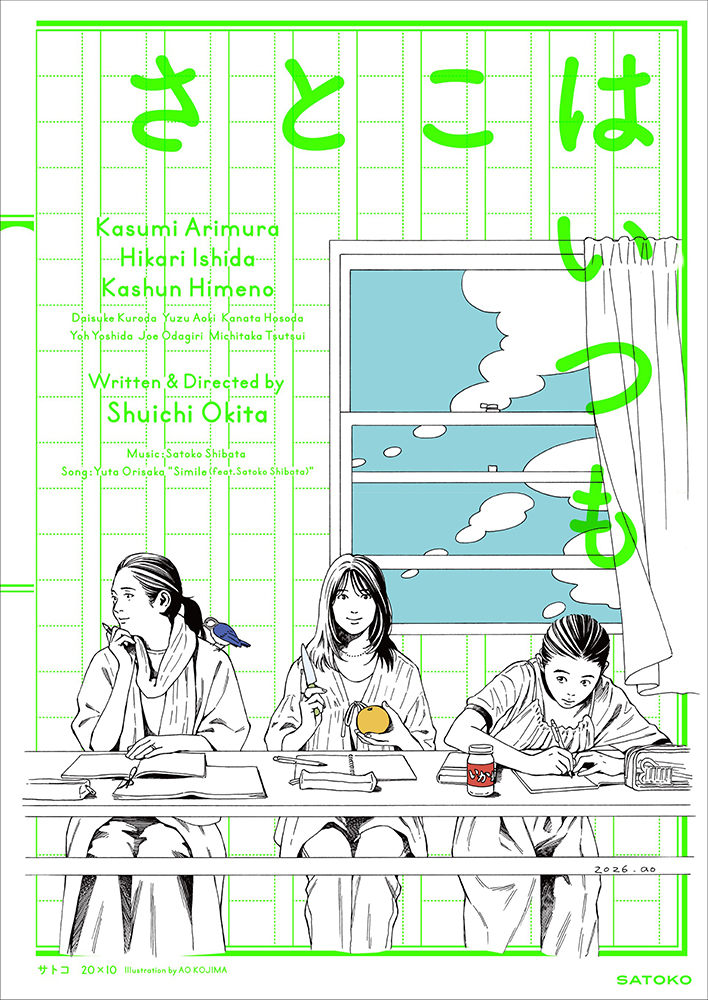
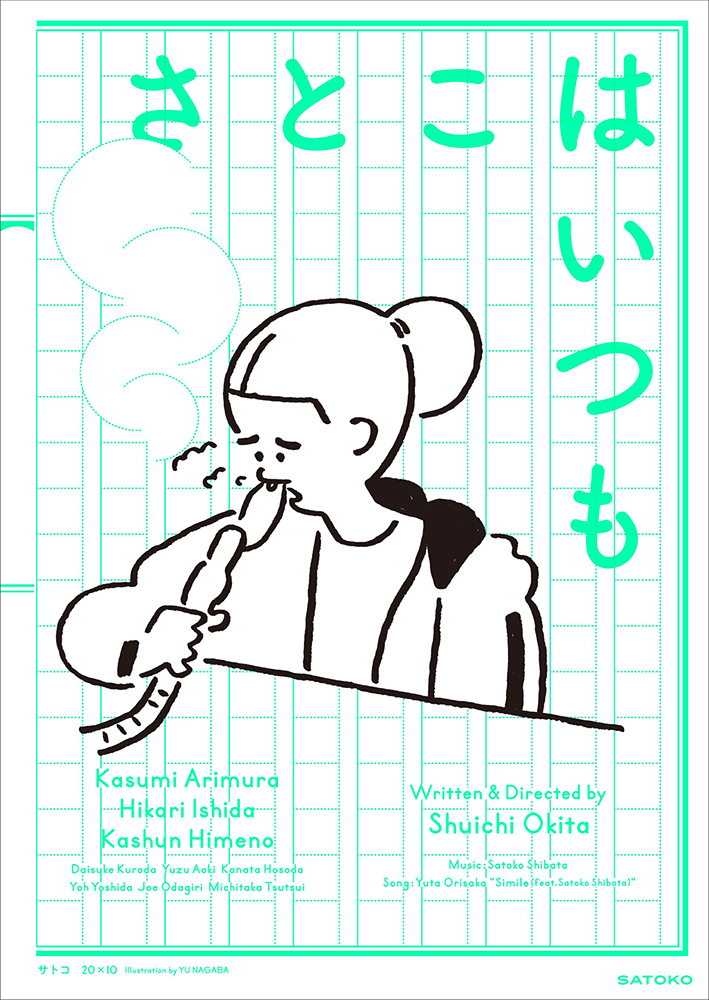
Marketing Approach: Eschewing conventional, spoiler-heavy promotional trailers, the marketing campaign has relied on atmospheric teasers, cryptic visual motifs, and arthouse-focused print materials that invite audience speculation rather than spelling out the plot.
Official Statements and Creative Insights
The rollout of Satoko has been accompanied by rare, highly reflective commentary from its key creators, offering profound insights into the philosophy driving the film.
Director Shintaro Tanaka on the Anatomy of Silence
In a recent press release distributed via Happinet Phantom Studios, director Shintaro Tanaka elaborated on his creative intent:
"When crafting Satoko, I was less interested in the physical actions of crime or resolution, and far more fascinated by the spaces in between. What happens when people stop speaking? What truths fester in the silence of a shared household? We live in an era where everyone is encouraged to express themselves constantly, yet true emotional isolation has never been more widespread. With this film, I wanted to strip away the noise of modern communication and force both the characters and the audience to confront what remains when all the defenses are down.
"Our cast delivered performances that surpassed my highest expectations. They did not merely play roles; they inhabited psychological states that required immense vulnerability. I believe audiences will find themselves looking not just at the screen, but inward at their own lives."
Producer Perspectives on Market Positioning
Speaking on behalf of the production committee, lead producers emphasized the calculated risk of backing an uncompromising psychological drama in a theatrical market often dominated by commercial IP:
"Satoko represents the gold standard of what independent-minded Japanese cinema can achieve when given the space to breathe. Happinet Phantom Studios is proud to champion a work that respects the intelligence of the viewer. We are seeing a distinct shift in audience appetite—viewers are demanding stories that do not offer easy answers, but instead linger in the mind long after the credits roll. Satoko is precisely that kind of cinematic experience: haunting, rigorous, and ultimately unforgettable."
Future Outlook: Legacy and Cultural Impact
As the September 18, 2026 release date approaches, industry analysts are closely monitoring Satoko to gauge its potential impact on the broader cultural and commercial landscape of Japanese cinema.
Critical Reception and Award Season Prospects
Early reactions from private industry screenings point toward a formidable awards-season run. Critics have been particularly vocal in praising the film’s screenplay—noted for its economy of dialogue and psychological acuity—as well as the powerhouse lead performances. Should these early accolades translate into mainstream critical consensus, Satoko is expected to become a major talking point across domestic and international critics’ circles, positioning itself for consideration at major international film festivals throughout late 2026 and 2027.
The Evolution of Psychological Drama
Beyond its immediate box-office prospects, Satoko may well serve as a watershed moment for how trauma and interpersonal conflict are depicted on screen. By rejecting sensationalism in favor of an unsparing, deeply empathetic examination of human frailty, Shintaro Tanaka and his team have crafted a work that transcends its genre boundaries.
For audiences willing to engage with its challenging themes, Satoko promises not just a trip to the cinema, but a profound psychological encounter—one that challenges our perceptions of truth, memory, and the unbreakable chains that bind us to one another.












Belum ada komentar. Jadilah yang pertama berkomentar!