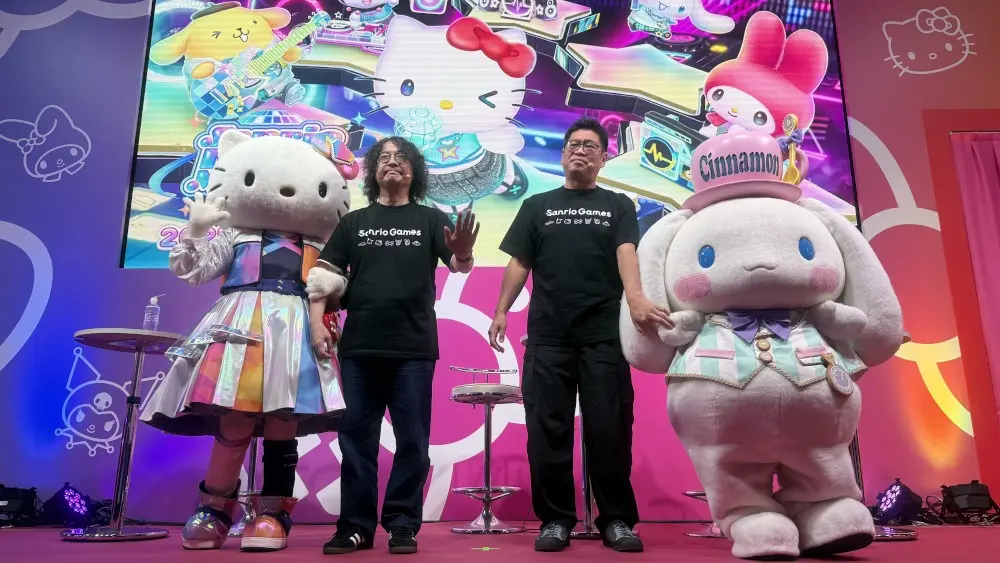
At the heart of Tokyo Game Show 2026 (TGS 2026), the newly established interactive entertainment powerhouse Sanrio Games—a dedicated division under Sanrio—captured the attention of the global gaming community with its prominent exhibition booth. Highlighted by the showcase of their upcoming title, Sanrio Kawaii Me Live! (available for iOS and Android), the developer’s presence underscored a bold new strategic direction for the company.
Beyond the brightly colored visuals and iconic characters that have defined Sanrio for decades, Sanrio Kawaii Me Live! represents a major technological and creative leap. The game merges rhythm-based mechanics, interactive virtual spaces, and cutting-edge Augmented Reality (AR) to offer players an unprecedented level of personalization and immersion.
During TGS 2026, Sanrio Games hosted an exclusive panel featuring key development figures, including Game Producer [Name Placeholder], Sound Director [Name Placeholder], and Lead AR Engineer [Name Placeholder]. This in-depth report explores the production stories, musical philosophies, technological innovations, and long-term vision behind Sanrio Kawaii Me Live!, drawing from developer interviews, hands-on demos, and official press briefings.
Detailed Chronology: From Concept to TGS 2026 Spotlight
The genesis of Sanrio Kawaii Me Live! traces back roughly three years, originating within Sanrio’s newly formed interactive entertainment division. Recognizing the shifting landscape of digital entertainment, leadership sought to leverage Sanrio’s globally beloved intellectual properties—such as Hello, My Melody, and Cinnamoroll—in a completely interactive medium. Instead of relying solely on traditional character-driven mobile games, the team envisioned a title that would place the player directly at the center of the experience.
Phase 1: Conceptualization and the Rhythm-Game Foundation (Year 1)
In the initial development phase, the core team focused on defining the gameplay loop. The goal was to bridge the gap between traditional rhythm action games and modern virtual idol simulations. Developers experimented with various control schemes tailored for touchscreens, ensuring that casual players could easily pick up the game while maintaining enough depth to challenge rhythm game veterans.
Phase 2: Building the Virtual Stage and AR Integration (Year 2)
By the second year, production scaled significantly. Collaborating with external audio engineering partners and internal character designers, the team established the game’s signature aesthetic. A major breakthrough during this period was the integration of AR features. The developers wanted to break the boundary between the digital screen and the physical world, allowing players to project Sanrio characters and virtual stages into their actual living rooms, parks, or bedrooms using their mobile devices’ cameras.
Phase 3: TGS 2026 Reveal and Public Hands-On (Year 3)
The journey culminated at Tokyo Game Show 2026, where Sanrio Kawaii Me Live! made its public debut. The reaction from attendees and industry analysts alike was overwhelmingly positive. The TGS booth featured dedicated rhythm-game demo stations, interactive AR photo zones, and daily developer talk sessions that provided a transparent look into the game’s production pipeline.
Supporting Context & Metrics: Crafting the Sound and Visual Identity
One of the most compelling aspects discussed during the TGS 2026 developer panels was the meticulous attention paid to the game’s audio design.
The Musical Philosophy
Sound Director [Name Placeholder] emphasized that the music in Sanrio Kawaii Me Live! is not merely background noise; it is the emotional driving force of the entire experience. Every track is composed to reflect the distinct personality and thematic elements of the associated Sanrio character. For instance, tracks featuring Cinnamoroll lean into light, breezy, synth-pop arrangements that evoke a sense of soaring through the clouds, whereas characters with edgier or more dynamic personalities feature energetic, bass-heavy electronic dance music (EDM) tracks.
+-----------------------------------------------------------------+
|                    Character Musical Profiles                   |
+-------------------+---------------------------------------------+
| Cinnamoroll       | Light, breezy synth-pop, uplifting tempos   |
+-------------------+---------------------------------------------+
| Character B       | High-energy electronic dance music (EDM)    |
+-------------------+---------------------------------------------+
| Character C       | Whimsical, acoustic-driven melodic tunes    |
+-------------------+---------------------------------------------+
Visual and Technical Metrics
To support the complex audio-visual synchronization required for a high-tier rhythm game, Sanrio Games optimized their proprietary game engine. The engine ensures a consistent 60 frames per second (fps) across a wide range of iOS and Android devices, minimizing input lag—a critical metric for rhythm games.
Furthermore, the game utilizes advanced shading techniques to give the 3D models of classic Sanrio characters a vibrant, cel-shaded anime aesthetic that bridges the gap between classic 2D art and modern 3D rendering.
Official Statements: Insights from the Development Team
During the exclusive press roundtable at TGS 2026, the creative minds behind Sanrio Kawaii Me Live! shared their thoughts on the challenges and triumphs of developing a next-generation Sanrio title.
Game Producer [Name Placeholder]: "When we set out to create Sanrio Kawaii Me Live!, our primary objective was to redefine what a Sanrio game could be. For decades, our characters have brought comfort and joy through merchandise, anime, and theme parks. With this title, we wanted to give fans a voice—literally and figuratively. By allowing players to customize their own avatars, interact with the characters in real-time, and experience rhythm-based gameplay, we are creating a living, breathing digital universe."
Sound Director [Name Placeholder]: "Composing music for globally recognized characters comes with a unique set of expectations. Fans have deep, emotional connections with these icons. Our goal was to honor that nostalgia while introducing fresh, modern soundscapes. When a player hits a note perfectly, the music responds dynamically, creating a profound sense of synergy between the player and the character on screen."
Lead AR Engineer [Name Placeholder]: "The AR functionality was designed to bring the magic of Sanrio out of the screen and into everyday life. We spent months refining the spatial tracking algorithms so that characters appear solidly anchored in the physical world. Whether you are dancing with Cinnamoroll in your living room or capturing a photo at a scenic landmark, the illusion of presence is remarkably strong."
Future Outlook: What’s Next for Sanrio Games?
As Sanrio Kawaii Me Live! prepares for its official launch on October 29, 2026, the gaming industry is watching closely. Sanrio Games has positioned this title as its flagship project for the mobile sector, signaling a larger corporate strategy to expand its footprint in interactive digital entertainment.
Post-launch plans discussed at TGS 2026 include regular content updates featuring new playable characters, seasonal event songs, expanded avatar customization options, and community-driven songwriting contests. The development team has also hinted at potential cross-overs and live virtual concert events hosted entirely within the game’s ecosystem, echoing the burgeoning trend of metaverse-adjacent entertainment experiences.
With its successful showing at Tokyo Game Show 2026, Sanrio Kawaii Me Live! has proven that the timeless appeal of Sanrio characters, combined with modern gaming technology and robust rhythm mechanics, holds immense potential. Fans and newcomers alike can look forward to a harmonious blend of cuteness, rhythm, and innovation when the game officially launches later this year.


![「Sanrio Kawaii Me Live!」開発者トークステージで語られた,サンリオサウンドの楽しさをグローバルに届ける試み[TGS2026]](https://www.4gamer.net/games/021/G102114/20260919005/SS/001.jpg)
![「Sanrio Kawaii Me Live!」開発者トークステージで語られた,サンリオサウンドの楽しさをグローバルに届ける試み[TGS2026]](https://www.4gamer.net/games/021/G102114/20260919005/TN/001.jpg)
![「Sanrio Kawaii Me Live!」開発者トークステージで語られた,サンリオサウンドの楽しさをグローバルに届ける試み[TGS2026]](https://www.4gamer.net/games/021/G102114/20260919005/TN/002.png)
![「Sanrio Kawaii Me Live!」開発者トークステージで語られた,サンリオサウンドの楽しさをグローバルに届ける試み[TGS2026]](https://www.4gamer.net/games/021/G102114/20260919005/TN/003.jpg)
![「Sanrio Kawaii Me Live!」開発者トークステージで語られた,サンリオサウンドの楽しさをグローバルに届ける試み[TGS2026]](https://www.4gamer.net/games/021/G102114/20260919005/TN/004.jpg)
![「Sanrio Kawaii Me Live!」開発者トークステージで語られた,サンリオサウンドの楽しさをグローバルに届ける試み[TGS2026]](https://www.4gamer.net/games/021/G102114/20260919005/TN/005.jpg)
![「Sanrio Kawaii Me Live!」開発者トークステージで語られた,サンリオサウンドの楽しさをグローバルに届ける試み[TGS2026]](https://www.4gamer.net/games/021/G102114/20260919005/TN/006.jpg)
![「Sanrio Kawaii Me Live!」開発者トークステージで語られた,サンリオサウンドの楽しさをグローバルに届ける試み[TGS2026]](https://www.4gamer.net/games/021/G102114/20260919005/TN/007.jpg)

Belum ada komentar. Jadilah yang pertama berkomentar!