

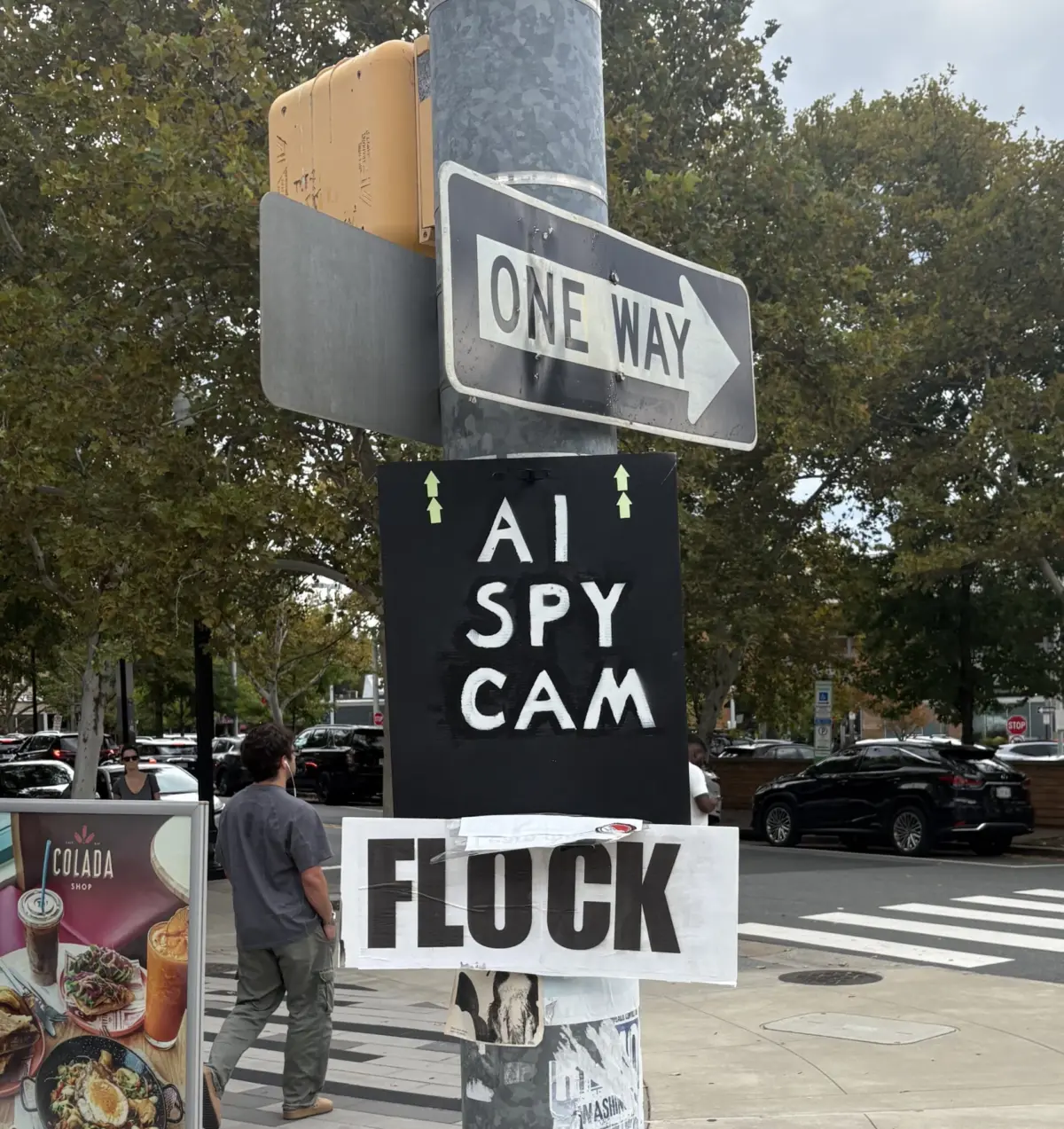
ARLINGTON, Va. — Flock Safety, the embattled automated license plate recognition (ALPR) and public safety technology company, is moving swiftly to restructure its workforce. Faced with an escalating wave of public outcry, municipal contract cancellations, and intense regulatory scrutiny, the startup announced a sweeping voluntary buyout program on Friday. Described internally as the "most generous" severance package in the company’s history, the move is designed to thin the ranks of a disillusioned workforce without resorting to involuntary layoffs—though leadership concedes that cutbacks were otherwise all but inevitable.
The initiative arrives at a pivotal moment for the tech sector and law enforcement apparatus. Once hailed as a darling of modern municipal policing, Flock Safety now finds itself at the center of a national reckoning over the ethics of mass surveillance, data privacy, and the creeping militarization of American neighborhoods.
Executive Overview
The unfolding crisis at Flock Safety underscores the fragile equilibrium between public safety innovation and civil liberties. For years, Flock built its business model on a simple premise: empowering neighborhoods and law enforcement agencies with a vast, interconnected web of high-definition cameras capable of tracking vehicles in real time. By capturing metadata—such as vehicle make, model, color, license plate, and even bumper stickers—the company promised to help solve property crimes, locate missing persons, and bring fugitives to justice.
However, the rapid expansion of Flock’s network—spanning thousands of communities across the United States—has triggered a fierce counter-movement. Privacy advocates, civil rights organizations, and local government officials are pushing back against what they characterize as an unchecked, unaccountable surveillance state.
The pressure intensified dramatically in late summer 2026, punctuated by explosive investigative reports revealing systemic misuse of the technology by law enforcement officers. As states ban the technology and municipalities sever ties at a record-breaking pace, Flock Safety is attempting to stabilize its internal operations. By offering voluntary buyouts to a significant portion of its 1,500-person workforce, the company hopes to purge internal demoralization while cutting operational overhead to weather the storm.
Detailed Chronology of a Crisis
To understand Flock Safety’s current predicament, one must trace the rapid sequence of events that transformed the company from a high-flying tech unicorn into a lightning rod for controversy.
Summer 2026: The Turning Point
- Early August 2026: A landmark investigation published by The Washington Post exposed a disturbing pattern of abuse regarding Flock’s technology. The report identified at least 46 distinct cases in which police officers allegedly weaponized the vast camera network to spy on their personal acquaintances, including wives, girlfriends, and ex-partners. The revelations shattered the narrative that strict institutional safeguards could automatically prevent the misuse of automated surveillance tools.
- Mid-August 2026: The political fallout was swift. State governments began taking direct legislative and executive action. Both Florida and Texas—two crucial markets for public safety tech—announced formal moves to block and prohibit the use of Flock cameras, citing severe and irreconcilable privacy concerns.
- Late August 2026: Municipalities nationwide began cutting ties at an unprecedented velocity. According to data compiled by anti-surveillance advocacy groups, approximately 90 cities terminated their contracts with Flock Safety in the month of August alone. This represented a staggering fourfold increase compared to the previous month, signaling that local politicians were acutely sensitive to voter backlash over civil liberties.
- September 2026: Facing mounting public pressure, legal threats, and a fractured customer base, Flock leadership acknowledged the heavy toll the crisis was taking on the organization. CEO Garrett Langley, appearing on the All-In podcast, candidly admitted that while the external legal and political pressures were immense, the "biggest damage" caused by the backlash had been sustained internally, striking directly at employee morale.
- September 19, 2026: In response to internal strain and financial pressures, Flock Safety announced its voluntary buyout program. According to reports by Wired, the company structured the severance packages to be exceptionally lucrative, anticipating that a substantial fraction of its 1,500 employees would opt to take the money and leave. Internal communications leaked to the press confirmed that without these voluntary departures, the company would have been forced to execute broad, involuntary layoffs.
Supporting Context & Metrics: The Anatomy of a Surveillance Network
To fully grasp the magnitude of the backlash against Flock Safety, it is essential to examine the scale of its operations and the specific mechanics of the technology that sparked such fierce opposition.
How Flock Technology Works
Flock Safety specializes in Fixed Automated License Plate Recognition (ALPR) cameras. Unlike traditional red-light cameras or traffic monitors, Flock’s devices are solar-powered, easily mounted on existing utility poles or custom posts, and designed to capture every passing vehicle 24 hours a day, seven days a week.
The cameras utilize advanced optical character recognition (OCR) and machine learning algorithms to process images at the edge, instantly uploading metadata to a cloud-based repository. Law enforcement agencies can then query this database using specific parameters—such as partial license plates, vehicle characteristics, or specific arrival and departure times across different camera locations.
While proponents argue this creates an invaluable "digital net" for tracking stolen vehicles or violent suspects, critics point out that the system inherently tracks the daily movements of ordinary, law-abiding citizens. Because the cameras record every vehicle indiscriminately, millions of records concerning innocent people are harvested, stored, and cross-referenced daily.

The Numbers Behind the Backlash
- 1,500: The approximate total headcount of Flock Safety’s workforce prior to the buyout announcement, a team now facing profound uncertainty.
- 46: The number of documented instances where police officers were publicly identified as misusing the technology for personal stalking and surveillance, as uncovered by The Washington Post in August 2026.
- 90: The number of cities that officially terminated their contracts with Flock Safety during the single month of August 2026—a 400% jump over July figures.
- 2: Major state economies (Florida and Texas) that initiated state-level blocks against the startup’s hardware and software infrastructure within weeks of the investigative exposés.
Official Statements and Industry Reactions
As the fallout from the August investigative reports continues to reverberate, stakeholders from across the political, legal, and technological spectrum have weighed in on the trajectory of public safety surveillance.
Flock Safety has consistently defended the utility of its technology, maintaining that ALPR systems are critical tools for modern law enforcement agencies striving to keep communities safe. Company executives have repeatedly emphasized that Flock provides the infrastructure, but that customer agencies bear the ultimate responsibility for establishing strict usage policies, auditing access logs, and penalizing officer misconduct.
However, civil liberties organizations, such as the Electronic Frontier Foundation (EFF) and local privacy coalitions, reject this division of responsibility. Critics argue that by building a system capable of mass, indiscriminate tracking without a warrant requirement, companies like Flock are inherently complicit in the erosion of constitutional protections against unreasonable searches and seizures.
During his appearance on the All-In podcast, CEO Garrett Langley addressed the human cost of the controversy. He noted that employees who joined the company with a sincere desire to reduce crime and improve community safety found themselves subjected to intense public hostility, protests, and internal doubt. By rolling out the "most generous" severance package in the company’s history, Flock leadership is effectively offering an honorable discharge to staffers who no longer wish to weather the reputational storm associated with the brand.
Future Outlook: Whither Public Safety Tech?
The current crisis at Flock Safety serves as a watershed moment for the broader GovTech and smart-city industries. It forces a fundamental re-evaluation of how municipalities procure, deploy, and oversee surveillance infrastructure.
1. Increased Regulatory and Legislative Scrutiny
The actions taken by Florida and Texas are unlikely to remain isolated incidents. Lawmakers across the country are facing mounting pressure from constituents to introduce stringent legislative guardrails on ALPR networks. Future regulations may require mandatory warrant requirements for querying historical location data, strict data retention limits (mandating automatic deletion after short windows), and independent civilian oversight boards to audit police access logs.
2. A Shift Toward Procurement Transparency
Municipalities that previously rushed to adopt automated policing tools under the banner of innovation are now adopting a much more cautious, deliberate approach. Public hearings, rigorous privacy impact assessments, and sunset clauses in vendor contracts are becoming standard prerequisites rather than optional afterthoughts. Vendors who fail to provide absolute transparency regarding data sharing and security architecture will likely find themselves locked out of lucrative public sector contracts.
3. Corporate Strategy and Cultural Rebuilding
For Flock Safety, surviving the current crisis requires more than just trimming the workforce through voluntary buyouts. The company must rebuild trust with both the public and its remaining employees. This will necessitate verifiable policy reforms, enhanced technological safeguards against internal abuse (such as multi-factor authentication, mandatory audit trails, and automated anomaly detection for officer queries), and a more proactive engagement strategy with civil rights advocates.
Whether Flock Safety can successfully navigate this existential storm remains to be seen. What is clear, however, is that the era of unfettered, uncritical expansion for private surveillance networks in American cities has definitively come to an end. The events of late 2026 have redrawn the boundaries between public safety and personal privacy, establishing a new baseline of accountability that will shape the technology sector for years to come.








Belum ada komentar. Jadilah yang pertama berkomentar!