

Executive Overview
In what is arguably one of the most monumental creative team-ups in modern cinematic history, streaming giant Netflix has officially unveiled the trailer and comprehensive details for The Further Mis-Adventures of Cliff Booth. The upcoming feature brings together two undisputed titans of contemporary filmmaking: visionary director David Fincher (Se7en, Fight Club, Mank) and legendary auteur Quentin Tarantino, who has penned the brand-new screenplay.
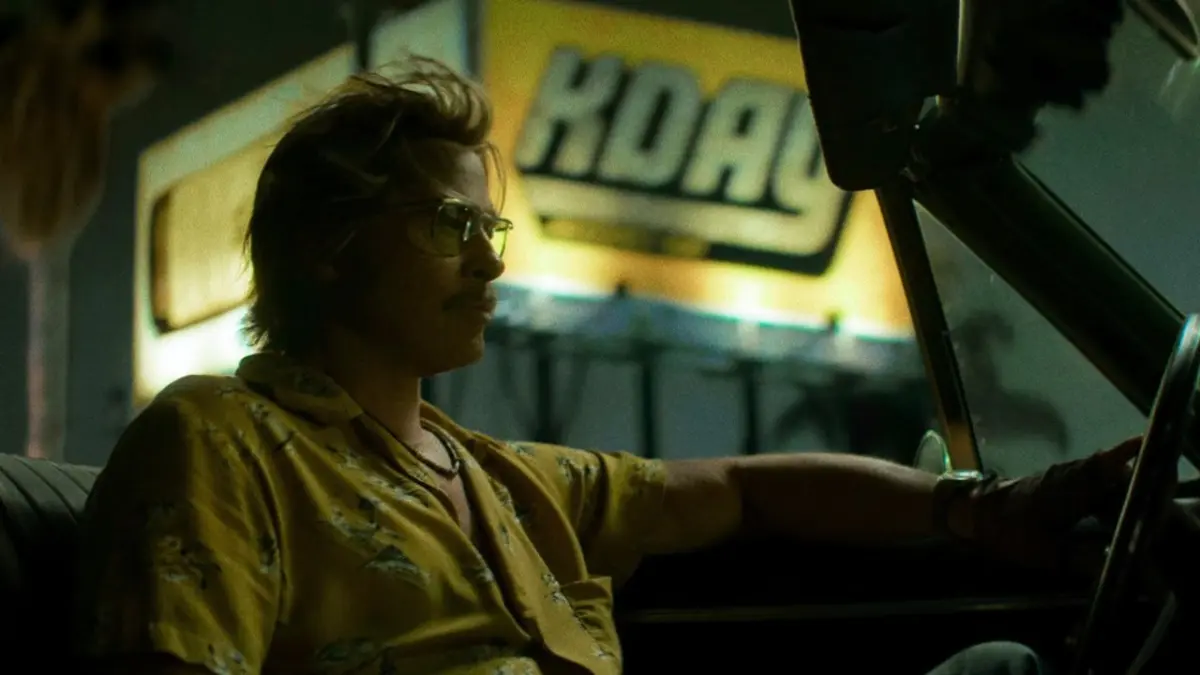
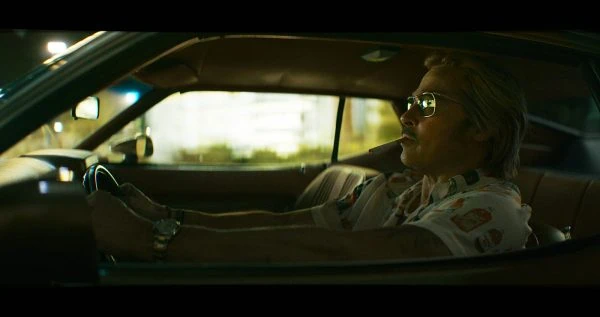
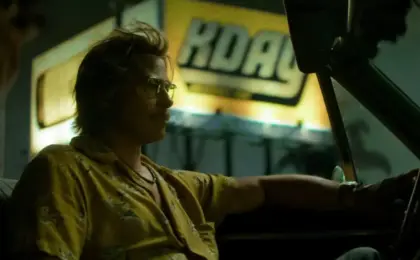
Brad Pitt returns to the role that earned him the Academy Award for Best Supporting Actor: the cool, collected, and lethally capable stuntman Cliff Booth. Picking up several years after the sun-drenched, alternate-history events of 1969 depicted in Once Upon a Time in Hollywood, this new chapter relocates the narrative to the gritty, asphalt-and-neon landscape of 1977 Los Angeles. No longer just a Hollywood insider coasting on the coattails of his fading stunt career, Booth has fully transitioned into the shadows of the entertainment industry, operating as a high-stakes, occasionally extralegal "fixer."
Netflix has scheduled a high-profile theatrical rollout—including exclusive IMAX engagements—beginning on November 25, followed by its global streaming premiere on December 23. Combining Tarantino’s razor-sharp dialogue, encyclopedic pop-culture pastiche, and penchant for sudden violence with Fincher’s meticulous framing, clinical pacing, and atmospheric dread, The Further Mis-Adventures of Cliff Booth promises to be an extraordinary collision of two distinct directorial sensibilities.
Detailed Chronology and Narrative Arc: From 1969 to the Gritty Reality of 1977
To understand where Cliff Booth finds himself in The Further Mis-Adventures of Cliff Booth, one must trace the timeline established in Tarantino’s 2019 masterwork Once Upon a Time in Hollywood. Set against the turbulent backdrop of late-60s Los Angeles, that film culminated in a violently revisionist climax where Booth and television actor Rick Dalton brutally thwarted members of the Manson family who had targeted Dalton’s Benedict Canyon home.
That night transformed Booth from an under-appreciated, hard-drinking stunt double into a local legend of sorts—though one whose mythos remained largely confined to the whispers of Hollywood backlots. But fairy tales, as the new synopsis bluntly asserts, have an expiration date.
The Shift to 1977: The Age of Cynicism
Moving the timeline forward eight years lands the story squarely in 1977—an era defined by economic anxiety, the hangover of post-Watergate disillusionment, and a vastly different, harder-edged Los Angeles. The free-love counterculture has given way to disco, punk, and an underworld of opportunistic crime.
In this new reality, Los Angeles no longer requires a "hippie-slaying stuntman" in the way it did during the paranoid summer of ’69. Stunt work has grown scarcer for an aging Booth, forcing him to make ends meet through modest gigs moonlighting as a bartender or working as a movie theater projectionist. Yet, the glitz and glamour of Hollywood continue to generate a staggering amount of human collateral, corporate corruption, and private disasters. Enter the world of the Hollywood fixer.
A Web of Crime, Ambition, and Desire
The narrative kicks into high gear when Booth receives an unexpected phone call. Talent agent Karen Crosby (portrayed with sharp professionalism by Elizabeth Debicki) reaches out on behalf of her client, TV megastar Charlie Peters (Scott Caan)—a leading man famously known for performing his own high-risk stunts.

As Booth is pulled deeper into Peters’ orbit, he crosses paths with an eclectic and hazardous assortment of industry figures:
- Toni Peters (Carla Gugino): Charlie’s perceptive and knowing wife, who clearly understands more about the machinery of Hollywood than she lets on.
- Roderick "Hot Rod" Harrison (Yahya Abdul-Mateen II): A powerhouse professional football champion who has successfully transitioned into a major screen star, navigating the dangerous intersection of sports celebrity and cinematic myth-making.
- The Verdusco Brothers (Matt Groove and JB Tadena): A pair of shadowy, unpredictable gangsters whose operations are causing chaotic ripples across the city’s underbelly.
What begins as a routine professional inquiry quickly spirals into a multi-layered crime thriller. The sunshine of the 1960s has completely burned away, replaced by a neon-lit neo-noir where murder, blackmail, theft, and extortion are simply standard operating costs for doing business in Tinseltown.
Supporting Context & Metrics: A Convergence of Auteurs and Industry Significance
The collaboration between David Fincher and Quentin Tarantino represents a seismic event within the film community. For decades, both filmmakers have stood as twin pillars of the 1990s American independent and studio renaissance, yet their artistic approaches have historically occupied opposite ends of the stylistic spectrum.
The Tarantino-Fincher Dynamic
Quentin Tarantino is celebrated for his exuberant, maximalist homage to exploitation cinema, sprawling non-linear narratives, razor-sharp pop-culture banter, and an unbridled love for celluloid history. David Fincher, conversely, is renowned for his surgical precision, cold digital cinematography, brooding psychological depth, meticulous framing, and an almost clinical obsession with procedural realism.
Merging Tarantino’s pulp-fiction universe with Fincher’s technical rigor introduces a fascinating tonal experiment. While Tarantino conceptualized the world and penned the screenplay, Fincher’s lens is expected to ground Cliff Booth’s misadventures in a darker, more tactile, and suspense-driven aesthetic than the sun-bleached nostalgia of Once Upon a Time in Hollywood.
Financial and Distribution Footprint
Netflix’s distribution strategy for the project underscores the streamer’s continued push into prestigious, event-scale theatrical releases. By securing an IMAX and traditional cinematic run starting November 25—nearly a full month before its December 23 streaming debut—Netflix is ensuring that the film qualifies for major awards consideration while also satisfying cinephiles who demand a premium theatrical experience.
Given Brad Pitt’s immense global box office pull, the proven intellectual property legacy of Once Upon a Time in Hollywood, and the combined marquee value of Fincher and Tarantino, industry analysts project a formidable opening weekend for the holiday theatrical window.
Official Statements and Industry Reception
While formal press junkets are still rolling out alongside the debut trailer, early industry chatter highlights the unprecedented nature of the project.
Industry insiders have noted that the genesis of the project stemmed from Tarantino’s exhaustive world-building during the production of his ninth feature film. Having written extensive backstories and unpublished prose regarding his characters, Tarantino reportedly realized that Cliff Booth’s post-1969 exploits warranted a canvas larger than a traditional sequel or novelization.
When the script began circulating among select creative circles, David Fincher—who has enjoyed a prolific and highly successful creative partnership with Netflix through projects like Mindhunter, Mank, The Killer, and Love, Death & Robots—gravitated toward the material’s cynical neo-noir undertones.
Speaking anonymously to trade publications, a production source close to the venture remarked:
"Quentin built a magnificent sandbox with Los Angeles in 1969, but David Fincher is the kind of filmmaker who knows how to map out every dark alleyway, basement, and boardroom in the city that the sun doesn’t touch. Watching Brad slip back into those boots under David’s direction isn’t just a sequel; it’s a masterclass in tone-shifting."
Future Outlook: What The Further Mis-Adventures Means for Hollywood
The release of The Further Mis-Adventures of Cliff Booth arrives at a fascinating crossroads for the entertainment industry. As traditional studios grapple with franchise fatigue and streaming platforms search for reliable, high-prestige intellectual property, this project charts a completely unique path. It is neither a traditional cinematic sequel nor a standard television spin-off; instead, it functions as a cinematic crossover between two master directors utilizing an established, award-winning character as the vehicle for a high-end crime narrative.
Furthermore, the film’s hybrid release model—hitting IMAX screens for Thanksgiving week before landing in millions of homes globally for the Christmas holidays—highlights the shifting paradigms of modern film distribution.
As audiences prepare to return to the seedier side of 1970s Los Angeles, expectations could not be higher. With Brad Pitt delivering what promises to be another effortlessly charismatic performance, Quentin Tarantino expanding his cinematic lore, and David Fincher commanding the visual architecture, The Further Mis-Adventures of Cliff Booth is poised to dominate cultural conversations well into the awards season.
Mark your calendars: The Further Mis-Adventures of Cliff Booth hits IMAX and select cinemas on November 25, followed by its streaming premiere on Netflix on December 23.



Belum ada komentar. Jadilah yang pertama berkomentar!