


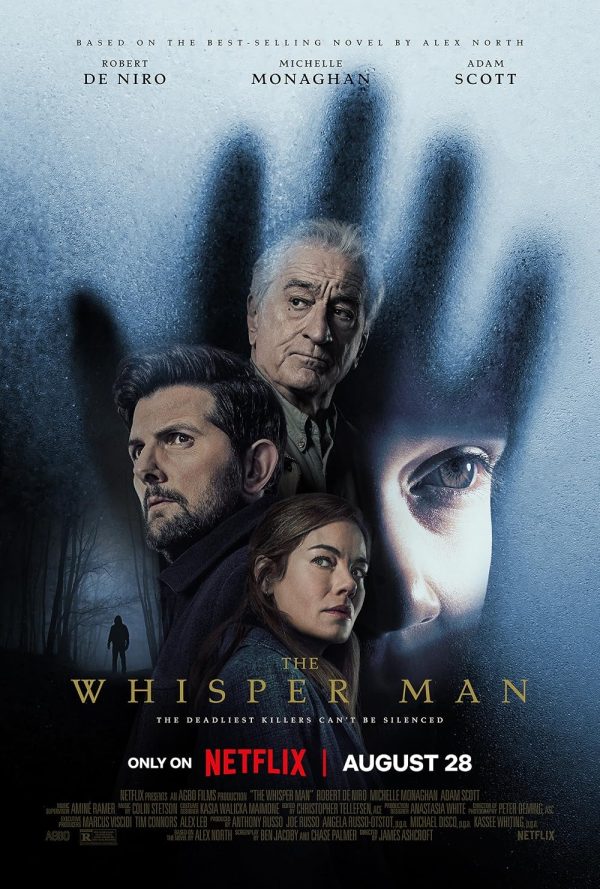
In the cinematic landscape of 2026, few projects boasted a pedigree as formidable on paper as The Whisper Man. Directed by James Ashcroft and adapted from Alex North’s bestselling psychological thriller novel by screenwriters Ben Jacoby and Chase Palmer, the film assembled a titan-class ensemble. Anchored by heavyweights Robert De Niro and Michael Keaton, alongside contemporary marquee draws Adam Scott and Michelle Monaghan, the production signaled prestige psychological horror-thriller territory.
Yet, as critics have begun to dissect following its theatrical rollout, a star-studded call sheet does not automatically insulate a project from narrative lethargy. The Whisper Man unfolds across a bloated two-hour runtime, ultimately squandering its immense acting capital. Despite boasting an eerie, standout villainous turn by Michael Keaton—channeling a calculated, chilling menace reminiscent of classic genre archetypes—the film trudges forward with a surprising lack of visceral urgency.
Set against the brooding backdrop of Featherbank, a fictional small New Jersey town cursed by a deeply traumatic past, the narrative attempts to weave an intricate tapestry of generational trauma, cyclical abuse, and the haunting legacy of the father-son dynamic. However, burdened by predictable twists, a restricted suspect pool, and a lethargic pacing that neuters high-stakes child abduction scenarios, The Whisper Man struggles to rise above the level of a forgettable cinematic footnote. This exhaustive review examines the structural anatomy of Ashcroft’s latest feature, deconstructing its thematic aspirations, narrative execution, and ultimate failure to maximize its powerhouse cast.
Detailed Chronology and Narrative Breakdown
The Move to Featherbank and the Resurgence of Fear
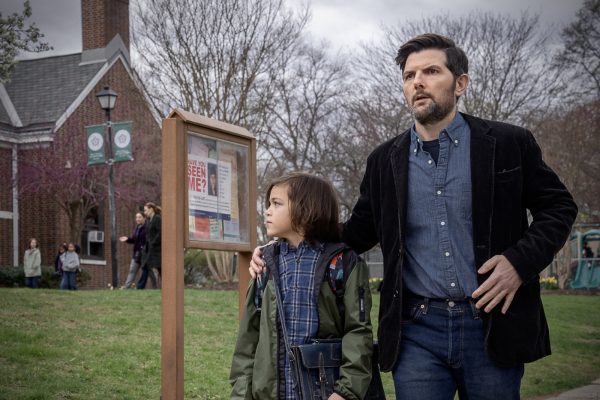
The narrative engine of The Whisper Man kicks into gear following a quiet tragedy. Adam Scott stars as Tom Kennedy, a crime novelist grappling with the recent loss of his wife. Seeking a fresh start and a secluded environment to heal, Tom relocates with his young son, Jake (portrayed by Acston Luca Porto), to Featherbank.

Unbeknownst to Jake, but deeply etched into the local collective consciousness, Featherbank was terrorized fifteen years prior by a notorious serial abductor and killer known colloquially as "The Whisper Man." The moniker derived from the killer’s chilling modus operandi: he would whisper to his lonely victims outside their windows at night before abducting them. The original terror wave was finally halted when veteran police detective Peter Willis (Robert De Niro) cracked the investigation, apprehending the culprit, Frank Carter (Michael Keaton), and locking him away behind bars indefinitely.
Following the relocation, however, history begins to repeat itself with chilling precision. New child abductions commence, accompanied by the dreaded audio tapes that signal the return of the Whisper Man’s methods. Predictably, young Jake—already struggling socially and emotionally to cope with the absence of his mother—becomes a target before the first act even draws to a close.
Twists, Interrogations, and a Thinning Suspect Pool
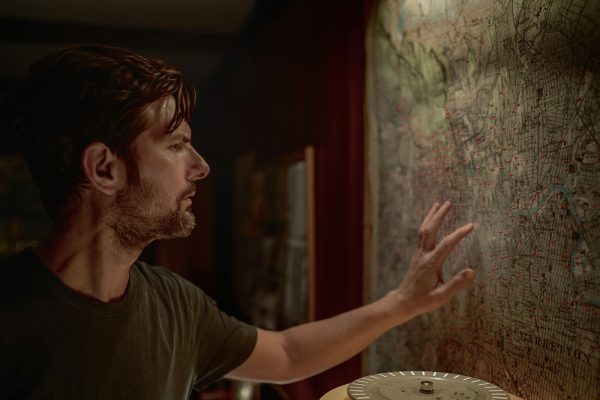
As the investigation swings into motion, the film executes its primary narrative twists. A complex past connection between Tom Kennedy and Detective Peter Willis is dragged into the light, forcing the two men to bury old animosities. They join forces with Detective Amanda Beck (Michelle Monaghan) to reopen the cold case files, decode the copycat’s patterns, and race against the ticking clock of a child’s survival window.
This collaborative manhunt inevitably leads the protagonists to maximum-security confinement, sitting face-to-face with the original Whisper Man, Frank Carter. Within these sterile interrogation settings, the screenplay attempts to unpack its overarching thematic thesis: an exploration of abused children, the mythologization of distant fathers, and how generational sickness propagates through families.
Unfortunately, the investigation’s structural breadth begins to collapse under its own weight. The web of suspects is remarkably thin, suffocating the investigative momentum. The audience is introduced to a predatory true-crime obsessive (Hamish Linklater) who hoards case artifacts purely as a morbid hobby, alongside a deeply concerned local school worker (Owen Teague) fearful that history is repeating itself. Aside from these peripheral figures—and the nagging, albeit clumsy, insinuation that one of the core heroes might secretly harbor a fractured, deranged psyche—the film leaves virtually nowhere else for the mystery to travel.
Climax and Deflating Resolution
As the runtime pushes toward its climax, the abductions reach a fever pitch, introducing the sickening implication of pedophilia into the killer’s operational profile. Yet, despite the life-or-death urgency that should accompany audio-taped countdowns to execution, the execution remains utterly flat.
The thematic fixation on family dynamics—guilt, estrangement, and the agonizing desire for parental approval—takes precedence over procedural thrills. Even Frank Carter, the incarcerated mastermind, maintains a bizarre psychological fixation on Tom Kennedy’s novels, viewing them as an emotional vessel born from paternal rejection. Meanwhile, Tom is paralyzed by the guilt that his own emotional withdrawal and inability to handle Jake’s overactive imagination (including talking to invisible friends) may have inadvertently groomed his son for vulnerability.
The final confrontation culminates in a sequence of uninspired chases and predictable unmaskings. In a final stroke of tonal dissonance, the copycat villain—who spent two hours leaving a wake of terror and destruction—meets a demise so anticlimactic and abrupt that it borders on the unintentionally comical.
Supporting Context, Cast, and Metrics
Production Data & Creative Personnel
- The Whisper Man
- Release Year: 2026
- Director: James Ashcroft
- Screenplay By: Ben Jacoby and Chase Palmer
- Source Material: Adapted from the bestselling novel by Alex North
- Genre: Psychological Thriller / Serial Killer Procedural
- Runtime: Approximately 120 minutes
Comprehensive Cast Ensemble
- Adam Scott as Tom Kennedy (Crime novelist and grieving father)
- Robert De Niro as Peter Willis (Veteran detective who solved the original case)
- Michael Keaton as Frank Carter (The incarcerated original "Whisper Man")
- Michelle Monaghan as Detective Amanda Beck
- Hamish Linklater as the True-Crime Obsessive
- Owen Teague as the School Worker
- Acston Luca Porto as Jake Kennedy
- Supporting Cast: Will Brill, Myrna Cabello, Aniela Zeig, Rigel Harris, Exavier Montanez, Jaxon Colon, Randy Danson, Robert Clohessy, Kimberlee Monroe, and Alyse Alan Louis.
Critical Metrics & Reception
- Flickering Myth Rating: 2 out of 5 stars (Film: ⭐⭐ / Movie: ⭐⭐)
- Core Critique Consensus: A masterclass in wasted potential. While individual performances—particularly Michael Keaton’s chilling restraint—exhibit flashes of brilliance, the production is crippled by slow pacing, predictable plotting, and a complete absence of cinematic dread.
Official Statements and Industry Insights
While major studio press releases initially framed The Whisper Man as a dark, cerebral journey into the architecture of modern fear, early critical responses highlight a disconnect between executive aspirations and screen realization.
Industry analysts tracking the psychological thriller subgenre have noted an increasing fatigue regarding "prestige serial killer" adaptations that prioritize melancholic family melodrama over taut, pulse-pounding investigative procedurals. Adapting novels that rely heavily on internal monologues and psychological deterioration inherently poses structural challenges for screenwriters. In the case of Ben Jacoby and Chase Palmer’s script, critics argue that translating North’s prose resulted in dialogue that often spells out thematic subtext with heavy-handed exhaustion rather than allowing the tension to breathe organically through visual storytelling.
Furthermore, insiders have pointed to the casting coup of bringing together De Niro, Keaton, Scott, and Monaghan as a double-edged sword. While the names guaranteed international distribution and high pre-sales, the sheer gravity of such an ensemble inadvertently raised audience expectations to heights that a straightforward, somewhat derivative copycat narrative could not realistically sustain.
Future Outlook
The commercial and critical trajectory of The Whisper Man serves as a cautionary tale for modern Hollywood packaging: star power alone cannot resurrect a routine screenplay. As the film makes its way through theatrical windows and prepares for home-media distribution, its legacy will likely be defined as a missed opportunity rather than a genre-defining classic.
Looking ahead, director James Ashcroft will need to carefully navigate his upcoming slate, reassessing how narrative momentum is maintained across feature-length runtimes. For the stellar ensemble cast, The Whisper Man remains a harmless blip on otherwise illustrious filmographies—proof that even silver-screen legends need sharp scripts, crisp pacing, and genuine suspense to make audiences truly lean in, rather than tune out.








Belum ada komentar. Jadilah yang pertama berkomentar!