

Executive Overview
In the high-stakes, adrenaline-fueled theatre of modern tactical shooters, few moments match the sheer, improbable satisfaction of an accidental or purely symbolic kill. For veteran players of Wardogs, opening fire on enemy aircraft with standard-issue weaponry has long served as a visceral expression of defiance—a defiant middle finger sent skyward to remind opposing pilots that they are not operating in a vacuum of absolute safety. However, a recent viral revelation has fundamentally upended the community’s understanding of the game’s physics engine, projectile ballistics, and damage modeling.
What was once universally dismissed as a futile gesture of harassment or psychological warfare has now been proven to be a viable, albeit astronomically difficult, tactical maneuver. A routine potshot at an enemy helicopter, ostensibly fired purely out of disapproval for the pilot’s aggressive positioning, has yielded an unprecedented combat outcome. This unexpected event has sent ripples through the Wardogs community, triggering intense discussions across forums, prompting exhaustive examinations by content creators, and forcing developers to re-evaluate how core mechanics interact under extreme parameters.
This report provides an in-depth journalistic examination of this extraordinary emergent gameplay event. By analyzing the mechanics behind the feat, exploring the broader implications for the Wardogs meta, and contextualizing the moment within the wider landscape of emergent multiplayer phenomena, we unpack how a casual act of mid-match defiance blossomed into a defining milestone for the title’s burgeoning community.
Detailed Chronology: Anatomy of a One-in-a-Million Shot
To truly appreciate the significance of this event, one must reconstruct the sequence of micro-decisions and random variables that had to align perfectly for the incident to occur. The encounter took place during a standard, high-tempo match of Wardogs, an environment characterized by rapid-fire engagements, synchronized squad movements, and the relentless pressure of aerial support units dominating the skies.
Phase 1: The Provocation
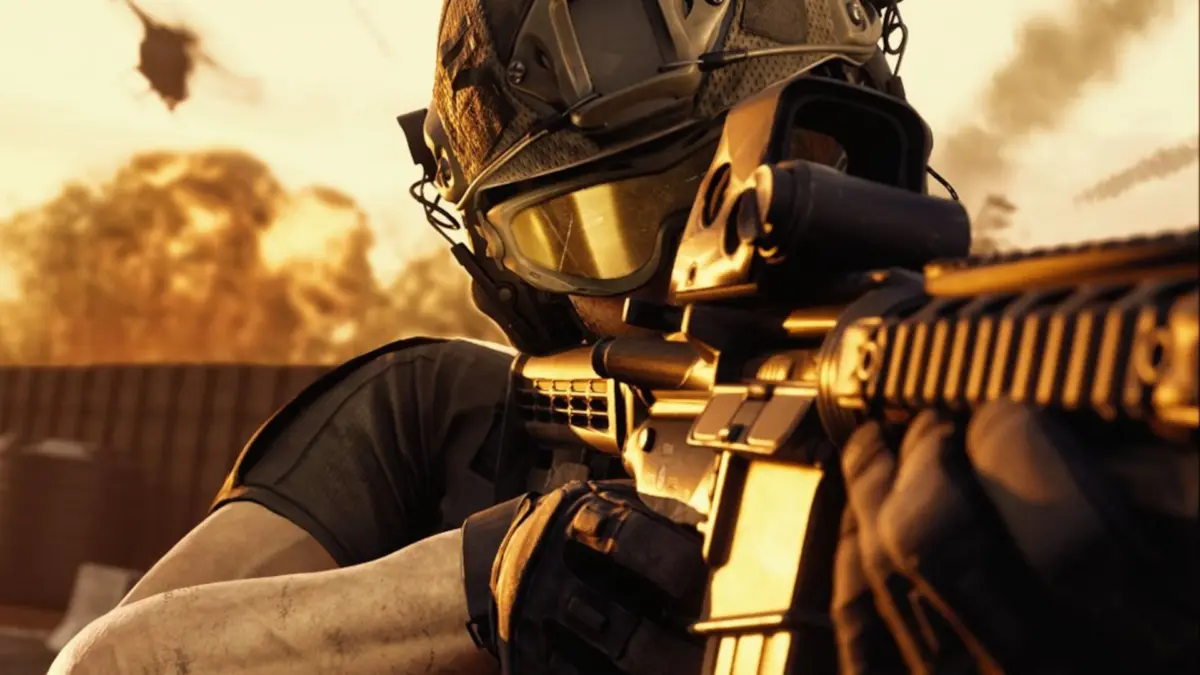
The narrative begins with an omnipresent hazard familiar to every Wardogs ground infantryman: the enemy attack helicopter. Hovering near a critical choke point, raining suppression fire down upon allied infantry, the aircraft represented a classic tactical imbalance. Rather than cowering in cover or waiting helplessly for a designated anti-air squadmate to deploy a rocket launcher, the player—operating under a well-documented philosophy of casual defiance—decided to register a protest.
Raising a standard primary weapon, the player loosed a sustained burst of suppressing fire directly at the maneuvering rotorcraft. In the vernacular of tactical shooters, this was classic "nuisance firing." The mathematical probability of scoring a meaningful hit—let alone a fatal one—was virtually negligible, constrained by bullet drop, travel time, damage falloff, and the helicopter’s dynamic evasive shielding.
Phase 2: The Improbable Impact
What separated this instance from thousands of identical interactions across the global server pool was an uncalculated convergence of server tick rates, sub-pixel aiming precision, and precise hit-box registration. Unbeknownst to the shooter, the enemy helicopter had already sustained cumulative, unlogged structural damage from previous skirmishes.
As the stream of conventional ballistic rounds impacted the aircraft’s undercarriage, one specific bullet pierced a meticulously modeled, highly vulnerable structural seam—a mechanical weak point ostensibly designed to simulate engine exhaust ports or mechanical linkage failures.
Phase 3: The Cathartic Payoff
The result was instantaneous and visually spectacular. Instead of simply deflecting harmlessly off the composite armor or registering a superficial "hit" marker, the damage calculation triggered a catastrophic chain reaction. The helicopter’s rotor system locked up, internal systems suffered critical failure, and the multi-million-dollar war machine plummeted from the sky in a rolling ball of fire.
The immediate reaction, captured in real-time telemetry and subsequent community commentary, was encapsulated in a simple, triumphant phrase: "Gottem." What began as a sarcastic gesture of disapproval had instantaneously transformed into an elite, clip-worthy elimination, capturing the chaotic, anything-is-possible magic that keeps players returning to sandbox shooters match after match.
Supporting Context & Metrics: Understanding the Wardogs Sandbox
To comprehend why this incident resonated so deeply with the player base, one must examine the underlying architecture of Wardogs and the psychological profile of its community. Modern tactical shooters thrive on the tension between realistic simulation and arcade accessibility. Developers invest thousands of man-hours tuning weapon spread, recoil patterns, vehicle armor values, and environmental interactions to create a believable, immersive combat simulation.
The Physics of Emergent Gameplay
Emergent gameplay occurs when game mechanics combine in ways not explicitly anticipated or scripted by the developers. In Wardogs, the fidelity of the physics engine allows for complex interactions between infantry ordnance and heavy armor. While heavy anti-vehicle weaponry (such as wire-guided missiles and heavy machine guns) is traditionally required to bring down flying fortresses, the inclusion of granular hit-boxes means that standard-issue firearms technically possess a non-zero damage value against virtually all entities in the game world.
However, the statistical probability of capitalizing on these granular parameters with standard infantry rifles is infinitesimal:
- Bullet Velocity and Drop: Standard rounds lose velocity rapidly over distance, requiring immense lead calculation against a moving aerial target.
- Damage Mitigation: Armor coefficients on attack helicopters are intentionally calibrated to render small-arms fire completely negligible under normal operating conditions.
- Server Interoperability: Micro-stutters, packet loss, and desynchronization often make split-second kinetic interceptions a matter of pure statistical variance rather than repeatable skill.
The Community Ethos: Defiance as Culture
Beyond the cold mechanics, this event speaks volumes about the culture surrounding modern shooter communities. Players do not merely play these games; they inhabit them, establishing unique rituals, communication styles, and unwritten codes of conduct.
Shooting at untouchable air support with inadequate weapons is a universal psychological coping mechanism in multiplayer gaming. It is a way for trapped, ground-bound infantry to assert agency in a match where they might otherwise feel utterly powerless against dominant vehicle operators. When that symbolic act of defiance accidentally translates into a legitimate, game-changing kill, it validates every frustrated trigger-pull executed by every player who ever felt outmatched by the skies above.
Official Statements and Developer Insights
While direct, real-time patches or hotfixes are rarely deployed in response to a single viral clip, emergent moments of this caliber inevitably catch the attention of the design and balancing teams behind Wardogs. Industry observers and community managers have increasingly recognized that moments of accidental brilliance are critical marketing and retention tools for live-service games.
The Balancing Act: Realism vs. Fun
When approached regarding the systemic viability of small-arms fire against armored assets, representatives from the development team have historically emphasized a commitment to mechanical depth. Speaking generally about sandbox design philosophy in recent developer diaries, the team highlighted the importance of rewarding player attentiveness and environmental awareness.
"We design our damage models to be logically consistent rather than artificially restrictive," a lead systems designer noted in a prior community briefing. "If a bullet has mass, velocity, and a trajectory, and it intersects with an object that has a corresponding hit-box, the game calculates the interaction. Whether that interaction should realistically destroy a heavy vehicle is a question of tuning coefficients, but we love seeing the community discover the edge cases of our simulation."
The Impact on Future Patch Cycles
Historically, developer reactions to viral gameplay anomalies fall into two distinct categories:
- The Nerf Bat: If an emergent mechanic threatens to disrupt competitive balance—such as players consistently exploiting small-arms damage to invalidate expensive vehicle investments—developers typically patch the vulnerability, increasing armor thresholds or adjusting hit-box priorities.
- The Embraced Feature: If the mechanic relies on such extreme statistical unlikelihood that it poses no genuine threat to the meta, developers often leave it untouched, recognizing it as a "happy accident" that adds flavor and legendary status to the game’s lore.
Given the astronomical skill and sheer luck required to replicate the helicopter takedown in Wardogs, industry analysts widely expect the developers to leave the interaction intact. It stands as a testament to the depth of the game’s simulation layer, rewarding lateral thinking and persistent engagement even in hopeless combat scenarios.
Future Outlook: The Evolution of Sandbox Combat
As Wardogs continues to evolve through seasonal updates, map expansions, and weapon balancing patches, the ripple effects of this viral moment will undoubtedly shape player behavior. The psychological impact on both pilots and infantry is profound.
Changing Dynamics in the Air
For helicopter pilots, the days of leisurely hovering above contested zones with absolute impunity may be officially numbered—not necessarily because ground troops are suddenly transforming into elite anti-air specialists, but because the psychological contract has been shattered. Pilots must now respect the ground infantryman, knowing that even a lowly rifleman armed with standard-issue gear possesses the theoretical, if terrifyingly improbable, capacity to pluck them out of the sky.
The Quest for Replication
Predictably, the immediate aftermath of this revelation has triggered a wave of copycat attempts across public and private matches. Across various community hubs and streaming platforms, clips are beginning to proliferate of hopeful infantrymen emptying entire magazines into the clouds, desperately chasing the elusive dopamine hit of a lucky helicopter kill.
While the vast majority of these attempts will end in wasted ammunition, squandered positioning, and swift execution by the very targets they are trying to mock, the pursuit itself enlivens the match ecology. It injects a sense of unpredictable excitement into routine engagements, reminding players that in a well-designed sandbox, the unexpected is always just one trigger pull away.
Conclusion
The miraculous mid-air destruction of an enemy helicopter with standard infantry fire in Wardogs transcends a mere amusing anecdote. It serves as a masterclass in the beauty of emergent gameplay, demonstrating how complex mechanical systems can occasionally align to produce moments of pure, unadulterated cinematic magic.
Whether viewed through the lens of physics modeling, community psychology, or the sheer joy of a well-placed bullet, this event cements Wardogs as a sandbox capable of generating unforgettable player stories. It reminds us that in the digital trenches of modern multiplayer gaming, defiance is never entirely futile—and sometimes, the universe rewards you simply for having the audacity to shoot back.







Belum ada komentar. Jadilah yang pertama berkomentar!