

Executive Overview
In what has quickly become one of the most significant and revealing data breaches in modern video game history, a massive cache of internal Rockstar Games files has surfaced online. This unprecedented leak includes the full source code for Grand Theft Auto 5, remnants of ambitious, city-sized single-player expansions that never saw the light of day, and an exceptionally early, 2015-era blueprint of the Grand Theft Auto 6 map.
While the gaming community has spent the past several years dissecting trailers and speculative rumors ahead of GTA 6‘s scheduled November 19 release, this new tranche of data offers a rare, unfiltered look behind the corporate curtain of one of the industry’s most secretive studios. Analysts, dataminers, and dedicated content creators have spent the days following the leak combing through directories, unearthing abandoned gameplay architectures, alternate universe versions of Liberty City, and mysterious narrative paths starring Trevor Philips.
This article provides an in-depth breakdown of what was found in the latest Rockstar data leak, tracing its origins back to the infamous 2022 security breach, examining the tantalizing ghost projects left on the cutting-room floor, and exploring what these discoveries mean for the future of the franchise as PC players continue to wait in limbo for official release news.
Detailed Chronology: From the Lapsus$ Breach to the Current Tranche
To understand the magnitude and nature of this recent data exposure, it is vital to trace its timeline. The roots of this leak trace directly back to September 2022, when a threat actor associated with the notorious hacking collective Lapsus$ breached Rockstar Games’ internal Slack channels and Confluence servers. That initial incident sent shockwaves through the industry by leaking nearly an hour of early footage from Grand Theft Auto 6, confirming its return to Vice City and showcasing dual protagonists, Lucia and Jason.
At the time, Rockstar Games acted swiftly, issuing copyright strikes, working with law enforcement, and releasing a statement expressing deep disappointment over the unauthorized disclosure. However, security experts long suspected that the breach was not limited to early video files. Over the subsequent months and years, incremental pieces of source code and internal documentation have periodically bled into public forums.
The latest wave, however, goes far beyond previous drops. The new data repository includes executable toolsets, rendering pipelines, compiler logs, and raw engine assets that allow technical community members to literally load cut content directly into existing builds of Grand Theft Auto 5.
Prominent gaming content creators and dataminers—such as YouTuber TJGM and Twitter/X user @affmalyt—have acted as unofficial archivists, systematically parsing through the raw code, audio files, and mapping coordinates. Their findings have mapped out a sprawling alternate history of Rockstar’s post-launch plans for GTA 5, confirming rumors that had circulated as industry whispers for nearly a decade.
Unearthing the Ghosts: Cancelled Single-Player DLC and Liberty City
For years, Grand Theft Auto 5 players felt aggrieved by Rockstar’s pivot away from single-player downloadable content (DLC) in favor of the wildly lucrative GTA Online. While Grand Theft Auto 4 received two critically acclaimed narrative expansions (The Lost and Damned and The Ballad of Gay Tony), GTA 5 received zero story-driven DLC expansions.
The newly leaked data finally validates what Rockstar artists and voice actors have hinted at in past interviews: story expansions were deep into production before being quietly euthanized.
The Mythical Liberty City Expansion
Among the most heavily discussed items in the leak is the conceptual framework for a GTA 5-engine adaptation of Liberty City. While early rumors suggested a massive map expansion would bridge Los Santos and Liberty City, the leak reveals how close Rockstar came to realizing this vision.
Dataminers extracting audio-loading zone configurations discovered that Rockstar had mapped out distinct coastal ambient audio demarcation zones that effectively outline a multi-island iteration of Liberty City. Interestingly, this unreleased version was not a direct port of the GTA 4 map. Instead, code pointers indicate it featured a significantly larger, redesigned layout tailored to the upgraded physics and vehicular mechanics introduced in GTA 5. While a functional playable map was not included in the leak—forcing modders to rely on external approximations—the underlying directory trees prove that Rockstar seriously investigated transporting Michael, Franklin, and Trevor to America’s East Coast.
"Agent Trevor" and the Underwater Base
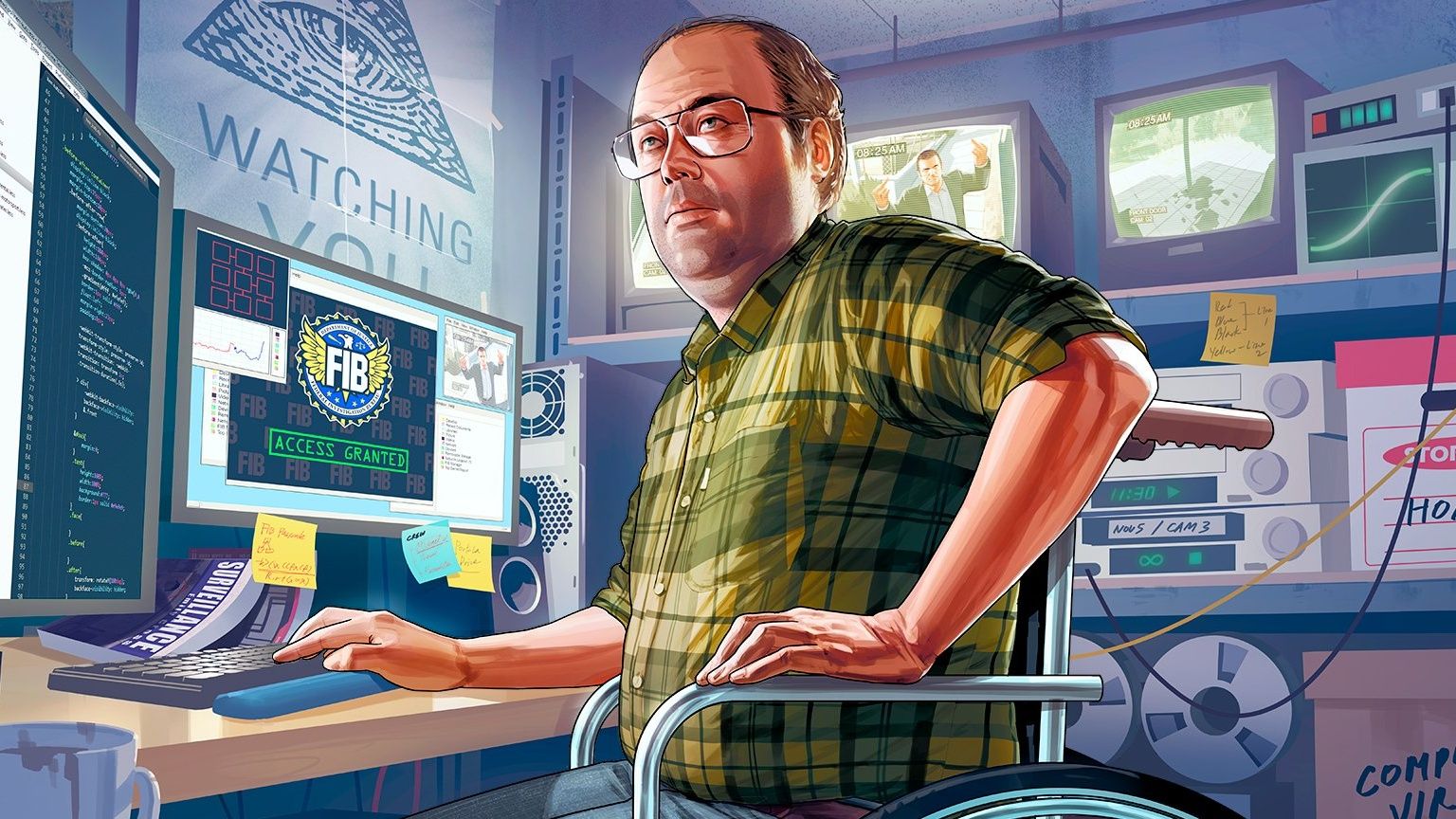
Even more substantial than the Liberty City fragments are the files pointing toward a narrative expansion codenamed "Agent Trevor."
Dataminer @affmalyt uncovered remarkably intact mission lists, script files, and model assets dedicated to this canceled storyline. Judging by the script data, the plot would have leaned heavily into espionage, government conspiracies, and private military contractors, pushing Trevor Philips into a surreal world of covert operations.
The crown jewel of the Agent Trevor discovery is a fully indexable underwater base map. Reminiscent of a high-tech subterranean facility straight out of Deus Ex or a classic James Bond villain’s lair, the level geometry and interior lighting configurations show a level of polish that suggests the project was well past the conceptual phase before being shelved—presumably because Rockstar’s development bandwidth was entirely consumed by the runaway financial success of GTA Online and the early development stages of Red Dead Redemption 2 and GTA 6.
Early Blueprints: The 2015 GTA 6 Map Reveal
Beyond the post-mortem of GTA 5 content, the leak has provided the clearest evolutionary timeline of the Grand Theft Auto 6 map to date.
By injecting early map data into the GTA 5 engine, dataminers were able to explore a rudimentary, block-out version of the next-generation game world. According to file timestamps and code metadata, this specific iteration of the map dates back to 2015—merely two years after GTA 5 originally launched on PlayStation 3 and Xbox 360.
This early build is decidedly "very unfinished," consisting largely of low-poly terrain, placeholder textures, and wireframe topography. Yet, text markers embedded in the files offer fascinating insights into the conceptual design phase of Leonida (Rockstar’s fictionalized Florida). Markers such as:
- "Alligator Farm"
- "Coast Guard"
- "Disused Theme Park"
…provide concrete proof of regional themes that have since been officially showcased in Rockstar’s promotional trailers. When content creators aligned these 2015 placeholder coordinates side-by-side with official shots from the GTA 6 reveal trailers, the structural DNA of the map remained remarkably consistent. It demonstrates that Rockstar mapped out the broad strokes of Leonida’s geography a decade before players will actually get to explore it.
Supporting Context & Metrics: The Scale of the Breach
To grasp the severity of what has transpired, it is helpful to look at the broader context of data security in the video game sector and the financial weight of the intellectual properties involved.
| Metric / Event | Detail |
|---|---|
| Original Breach Date | September 2022 (Lapsus$ cyberattack) |
| Primary Leak Components | GTA 5 Source Code, Unreleased DLC scripts, 2015 GTA 6 Map build |
| Projected GTA 6 Release Date | November 19 (Consoles) |
| PC Release Status | Officially unannounced / Pending |
| Parent Company Valuation | Take-Two Interactive ($20B+ market capitalization) |
The leakage of complete source code for a live-service and single-player titan like GTA 5 poses unique challenges. While GTA 5 is an older title, its online architecture underpins GTA Online, which has generated billions of dollars over three console generations. Security researchers note that exposing source code can provide malicious actors with a roadmap to develop exploits, cheats, and unauthorized exploits, forcing Rockstar’s engineering teams to rapidly patch legacy vulnerabilities.
Official Industry Stance and Take-Two’s Silence
As expected, Rockstar Games and its parent corporation, Take-Two Interactive, have maintained a strict policy of silence regarding the specifics of the recent data drop. Historically, Take-Two reacts swiftly and aggressively to copyright infringements, issuing legal demands to content creators, takedown notices to repository hosts, and swift strikes against archive channels.
However, the sheer ubiquity of the files means that containing the information has become practically impossible. Once data enters peer-to-peer sharing networks and private developer forums, scrubbing it entirely from the digital ecosystem is an exercise in futility.
Meanwhile, executive leadership at Take-Two has continued to focus on the commercial horizon. During recent investor earnings calls, Take-Two CEO Strauss Zelnick addressed the shifting landscape of hardware platforms, noting that "the PC platform is becoming more and more important" for the company’s long-term portfolio. Despite these admissions, Take-Two has steadfastly refused to provide a concrete release window for the PC port of Grand Theft Auto 6, leaving millions of computer gamers to wonder how long they will be forced to wait after the November 19 console launch.
Future Outlook: Looking Toward November 2026 and Beyond
The leaking of Rockstar’s internal archives serves as a bittersweet milestone for the gaming community. On one hand, it satisfies a decade-long curiosity about what could have been—offering a tantalizing glimpse into canceled single-player adventures, alternative visions of Liberty City, and the embryonic stages of the most anticipated entertainment product in human history. On the other hand, it highlights the immense human and technical cost of game development, where massive, ambitious projects are routinely conceived, built halfway, and discarded in the ruthless pursuit of shifting corporate priorities.
As we count down the weeks to Grand Theft Auto 6‘s debut on November 19, the conversation surrounding Rockstar remains polarized between excitement for the future and nostalgia for the roads not traveled in Los Santos. Whether any elements of these canceled DLCs—such as the underwater facilities or the espionage-driven narrative frameworks—will eventually be repurposed for future GTA Online updates or GTA 6 expansions remains to be seen.
What is certain, however, is that Rockstar’s codebooks have been forever opened, cementing this era as one of the most turbulent and revealing chapters in the storied history of AAA game development.



Belum ada komentar. Jadilah yang pertama berkomentar!