

Executive Overview
Yufuin, nestled at the dramatic foot of Mount Yufu in Oita Prefecture, remains one of Japan’s most cherished hot spring resort towns. Famed for its idyllic pastoral landscapes, morning mists, historic shrines, and tranquil lakes, it attracts millions of visitors annually. However, exploring a heritage-rich destination characterized by rural topography, narrow lanes, and scattered cultural landmarks can present logistical challenges. Navigating the town with heavy luggage, managing unpredictable weather, or accommodating travelers with limited mobility often strains traditional transit options like local buses or walking tours.
To address these pain points, the Yufu City Tourist Information Center has championed a comprehensive private chartered taxi initiative. Offering complete door-to-door convenience, this service allows visitors to handpick up to four landmark destinations from a curated list of five iconic Yufuin spots. Priced at an accessible flat rate of 6,000 yen (plus a 330-yen pick-up fee) per vehicle for a 60-minute excursion, the program delivers exceptional value—especially for groups of up to four passengers.
![[Yufuin] Explore Top Attractions by Private Taxi: 5 Popular Spots & Fare Guide](https://resources.matcha-jp.com/resize/720x2000/2026/09/22-271213.webp)
This comprehensive report examines the mechanics of Yufuin’s private taxi tours, details the five premier sightseeing locations included in the itinerary, analyzes the logistical and economic benefits for diverse demographics, and explores how this initiative redefines sustainable, accessible regional tourism.
Detailed Chronology and Itinerary Breakdown: The Five Landmarks
The chartered taxi service is structured around flexibility, allowing visitors to curate their 60-minute journey based on personal interest, prevailing weather conditions, and physical stamina. Travelers select four locations from five distinct cultural and natural anchor points across Yufuin.
![[Yufuin] Explore Top Attractions by Private Taxi: 5 Popular Spots & Fare Guide](https://place.matcha-jp.com/resize/200x2000/2026/02/11-11-10-30-3273b392b5e1c787d5e05ecb609136debf4c.webp)
1. Lake Kinrin (Kinrin-ko): The Shimmering Crown Jewel
- Location: 1561-1 Kawakami, Yufuin-cho, Yufu City, Oita Prefecture
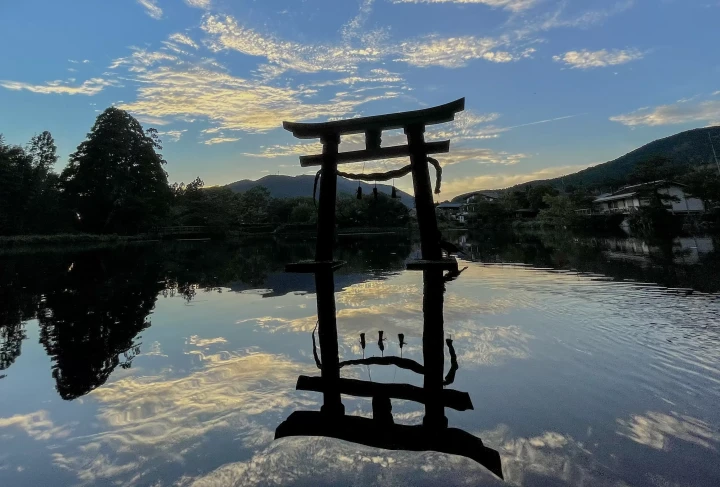
- Context & History: Situated roughly a 30-minute stroll (or a 10-minute drive) from JR Yufuin Station along the bustling Yunotsubo Kaido Street, Lake Kinrin is Yufuin’s most iconic body of water. Historically known in the Oita dialect as Takenshitan-Ike (“the pond below the mountain”) due to its proximity to Mount Yufu, the lake underwent a perceptual transformation in 1884. During a visit, the prominent Confucian scholar Mori Kuuso observed the shimmering golden scales of swimming fish catching the afternoon sun and formally christened the destination Kinrin-ko (Lake Kinrin).
- Visitor Experience: A well-maintained walking path encircles the perimeter, offering leisurely strolls alongside local waterfowl and aquatic life. The destination is globally renowned for a specific meteorological phenomenon: on chilly early mornings from autumn through winter, subterranean thermal and fresh waters mix to create a dramatic blanket of rising morning mist, wrapping the landscape in a dreamlike aura.
2. Unagihime Shrine: Echoes of Ancient Marshlands
- Location: 2220 Kawakami, Yufuin Kawakami, Yufu City, Oita Prefecture
- Context & History: Located a 20-minute walk (or 5-minute drive) from Yufuin Station against the backdrop of Mount Yufu and open fields, Unagihime Shrine is affectionately known by locals as Rokusha-sama—a reference to the six primary deities enshrined on its sacred grounds. Archaeological and historical records indicate that prehistoric Yufuin was once a vast marshland dating back to the Yayoi period. The shrine’s foundational roots trace back to indigenous eel worship, viewed then as sacred spirits of the wetlands.
- Historical Significance & Architecture: The shrine’s historical footprint was once vastly expansive. Records from the late Sengoku period document an order by feudal lord Otomo Yoshimune requiring timber harvested from these sacred grounds to construct the Bungo Ichinomiya "Yusuhara Hachimangu" in modern-day Oita City. Today, visitors can witness a massive tree stump—the remnants of a giant cedar felled during Typhoon Hagibis in 1991—which is now reverently preserved as a monument to the region’s primeval forests.
3. Ogosha Shrine: Millennium-Old Botanical Splendor
- Location: 746-19 Kawaminami, Yufu City, Oita Prefecture
- Context & History: Positioned roughly 1.5 kilometers from Yufuin Station, Ogosha Shrine is famed for its monumental arboreal specimens. Reaching the shrine requires navigating a steep incline leading to a mystical torii gate enveloped by dense timber.
- The Sacred Cedar: Standing immediately adjacent to the main shrine hall is a sacred cedar tree officially designated as a national natural monument. Believed to be over a millennium old, the tree projects an overwhelming presence with a base circumference of 13.3 meters, a trunk circumference of 10.9 meters, and a soaring height of 38 meters. A natural hollow behind the trunk spans the approximate dimensions of a three-tatami-mat room, housing an enshrined divine image. Because the narrow access road and steep slopes pose challenges for vehicular passing, private taxi transit provides an invaluable alternative to walking or self-driving.
4. Bussanji Temple: A Millennial Haven of Zen
- Location: 1879 Kawakami, Yufuin Kawakami, Yufu City, Oita Prefecture
- Context & History: Bussanji Temple operates as a historic Rinzai Zen Buddhist temple deeply rooted in the spiritual fabric of the local community. Its origins stretch back approximately one thousand years, following a divine revelation at Kirishima Shrine in Miyazaki Prefecture that prompted the establishment of a mountain hermitage on the slopes of Mount Yufu.
- Cultural Legacy: The temple grounds flourished as a primary spiritual nexus until the devastating Keicho earthquake of 1596 dislodged the principal Kannon statue into a valley below. Local villagers successfully recovered and relocated the image to its present site. Featuring a nostalgic thatched-roof gate that blazes with autumn foliage, Bussanji serves as a tranquil waypoint frequently integrated into traditional horse-drawn carriage (Tsujibasha) routes.
5. Kozenin Temple: Connection to Literary History
- Location: 144-1 Kawaminami, Yufu City, Oita Prefecture
- Context & History: Founded in 1370 and situated a 15-minute walk from JR Yufuin Station, Kozenin Temple stands quietly along a river away from the commercial core. Though a fire completely consumed the historic wooden complex in 1973, modern, fire-resistant structures now safeguard its heritage.
- Literary Significance: Kozenin is intrinsically linked to Zenkai, the historical monk who served as the psychological prototype for the celebrated novel Onshū no Kanata (Beyond Repentance) by author Kan Kikuchi. The temple grounds represent the site where a repentant figure took monastic vows before undertaking a monumental life mission: hand-carving the treacherous Aono-Domon Tunnel in Nakatsu City over three decades starting in 1735. Visitors exploring the lush property encounter expressive statues of the 16 Arhat Buddhas and unobstructed sightlines of Mount Yufu.
Supporting Context, Logistics, and Economic Metrics
The private taxi initiative directly targets structural friction points inherent in regional Japanese tourism. The pricing and operational framework are designed to maximize economic efficiency and travel comfort:
- Pricing Structure: 6,000 yen for a 60-minute, 4-spot itinerary, plus a 330-yen vehicle pick-up fee (inclusive of consumption tax).
- Capacity and Per-Capita Cost: Each chartered taxi accommodates up to four passengers. When utilized by a full party of four, the cost drops to just 1,500 yen per person—making private transit competitive with, or superior to, multi-ticket bus fares when factoring in time saved and comfort gained.
- Door-to-Door Logistics: Travelers are picked up directly from their accommodation and dropped off at their preferred locations or final destinations. This eliminates the physical burden of hauling luggage—making the service popular for visitors managing post-check-out logistics before catching departures at JR Yufuin Station.
- Weather and Mobility Insulation: Inclement weather conditions, such as sudden downpours or heavy snowfall, render walking tours and waiting at unsheltered bus stops exceptionally difficult. Private charters eliminate exposure to the elements, protecting families with toddlers and elderly travelers dealing with mobility constraints.
Official Statements and Operational Procedures
Arranging a chartered tour requires minimal administrative friction, though strategic planning is strongly advised by municipal authorities.
![[Yufuin] Explore Top Attractions by Private Taxi: 5 Popular Spots & Fare Guide](https://place.matcha-jp.com/resize/200x2000/2026/08/31-11-07-44-3273f3fd047078a4664151dd4f866eb067f1.webp)
- Reservation Protocol: Bookings are processed exclusively through the Yufu City Tourist Information Center, located directly adjacent to JR Yufuin Station. While same-day arrangements are occasionally accommodated subject to fleet availability, officials strongly recommend booking at least one day in advance to secure desired time slots, particularly during peak autumn foliage seasons, Golden Week, and inclement weather days when demand surges.
- Contact & Coordination: Travelers with fixed itineraries are encouraged to contact the tourist information center by phone immediately upon finalizing their travel dates to synchronize pick-up times with hotel check-out schedules and rail connections.
The Hub: Yufu City Tourist Information Center
Serving as the administrative and operational nexus for the private taxi program, the Yufu City Tourist Information Center is an architectural landmark in its own right. Designed by renowned architect Shigeru Ban, the facility features soaring arched wooden pillars and an expansive atrium flooded with natural light.
Located adjacent to railway platforms, the center offers sweeping views of Mount Yufu through expansive glass walls, allowing visitors to watch iconic regional rolling stock—including the Yufuin no Mori express and the ultra-luxury Seven Stars in Kyushu cruise train—glide past the station.
![[Yufuin] Explore Top Attractions by Private Taxi: 5 Popular Spots & Fare Guide](https://place.matcha-jp.com/resize/200x2000/2026/08/31-10-34-33-32730934ccff1909fad15175d01796b57d58.webp)
Comprehensive Facility Services
The ground floor houses a primary tourist guidance counter alongside Yufuin Chikki, a specialized service providing luggage storage and direct delivery to local hot spring inns (ryokan). A gentle interior slope leads to the second-floor Travel Library, which curates approximately 1,500 travel-related publications, and an open-air Observation Deck.
Additional services coordinated through the center include:
![[Yufuin] Explore Top Attractions by Private Taxi: 5 Popular Spots & Fare Guide](https://place.matcha-jp.com/resize/200x2000/2026/08/31-11-40-36-327336fd4fa272b476d9517c913a06d93cb1.webp)
- Seasonal horse-drawn carriage tours (Tsujibasha, operating March through December)
- Bicycle rentals
- Green Slow Mobility (nolc) transport options
- Comprehensive accommodation and regional tourism consulting
- Chartered taxi dispatch
- Rental provisions for strollers (baby cars) and wheelchairs
- Coin lockers and luggage delivery operations
Future Outlook
As domestic and international tourism to regional Japanese hot spring towns continues to evolve, the imperative for frictionless, barrier-free travel models becomes paramount. Yufuin’s private chartered taxi initiative offers a scalable blueprint for rural destination management. By bridging the gap between historical preservation and modern accessibility needs—protecting visitors from weather anomalies while ensuring seamless luggage management—the program safeguards the visitor experience against the pressures of over-tourism and infrastructural strain.
For families, multigenerational travelers, and visitors seeking a deeply personalized encounter with Oita Prefecture’s cultural heritage, Yufuin’s private taxi tours represent an indispensable operational advancement. As municipalities across Japan look toward sustainable tourism solutions, Yufuin’s integration of flexible, community-coordinated transit sets a definitive benchmark for regional hospitality.





Belum ada komentar. Jadilah yang pertama berkomentar!