

Executive Overview
For international travelers and domestic city-dwellers alike, Japan’s winter landscape holds an almost mythical appeal. Visions of pristine, snow-blanketed mountains, world-class powder snow, and steaming hot springs draw millions of visitors annually. Yet, a formidable barrier often deters independent travelers: the prospect of driving on treacherous, snow-choked mountain roads. Renting a car in unfamiliar winter conditions breeds anxiety, shifting the focus of a vacation from relaxation to high-stress navigation.
Compounding this challenge is the common assumption that Japan’s premier ski resorts and secluded snow paradises are practically inaccessible without private transportation. However, a hidden gem exists for those willing to look beyond the heavily touristed hubs of Nagano and Hokkaido. Vacation Lodge FamiliA, Aizu Kogen, nestled in the snowy expanse of Minamiaizu in Fukushima Prefecture, offers an idyllic winter retreat that requires zero driving.
Thanks to a seamless, direct rail connection via the Tobu Skytree Line from Asakusa Station in Tokyo, travelers can trade the asphalt of the metropolis for a sprawling alpine landscape without a single transfer. Operating under the welcoming ethos of "a place to make friends disguised as a guesthouse," FamiliA combines English-fluent hospitality with a turnkey, car-free travel ecosystem.
This comprehensive investigative and logistical guide will detail the exact train routes, ticketing protocols, demand-taxi connections, and post-stay sightseeing itineraries—including stops at Ouchi-juku and Nikko—empowering you to conquer Japan’s winter wonderland with absolute confidence.
Detailed Chronology & Logistical Blueprint: From Asakusa to Minamiaizu
Embarking on a snow vacation without a car demands meticulous planning, particularly when navigating Japan’s intricate railway network. The journey to Vacation Lodge FamiliA, Aizu Kogen is engineered for simplicity, provided travelers understand the nuances of ticketing and local transit links.
Phase 1: Departing Tokyo via the Tobu Limited Express Liberty Aizu
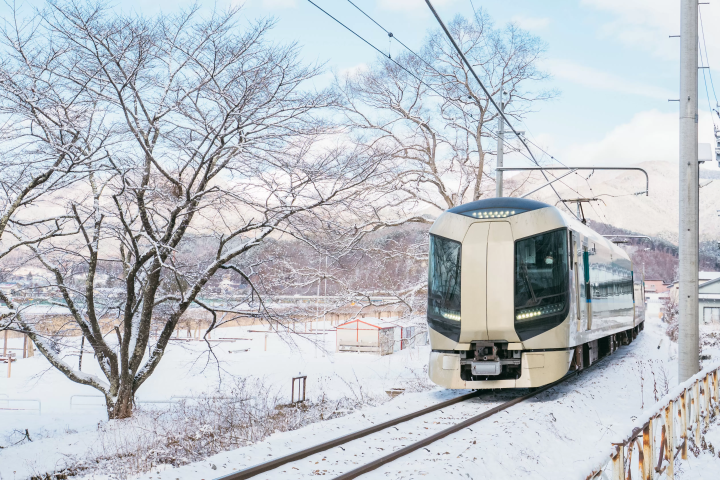
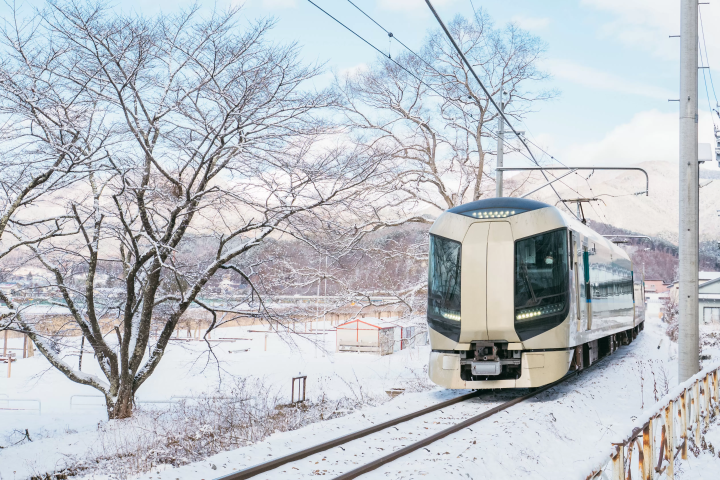
The journey commences at Asakusa Station, a historic district in Tokyo that serves as a major cultural and transit hub. From here, travelers board the Tobu Limited Express Liberty Aizu, a sleek modern train that carries passengers deep into the heart of Fukushima Prefecture without requiring a single train change.
[Tokyo: Asakusa Station]
       │
       │ (Tobu Limited Express Liberty Aizu: ~3 hours)
       ▼
[Fukushima: Aizu Kogen Ozeguchi Station]
       │
       │ (Local Demand Taxi: ~25-30 minutes)
       ▼
[Vacation Lodge FamiliA, Aizu Kogen]
To ensure a flawless departure, international visitors and first-time rail users must master three critical ticketing protocols:
- All-Reserved Seating and Advance Online Booking:
Unlike standard commuter trains, the Limited Express Liberty operates on an all-reserved seating basis. In addition to the base fare, passengers must purchase a Limited Express Ticket. These tickets can be secured online via the Tobu Railway’s English-language platform (TOBU Online Special Express Ticket Booking) up to one month in advance, beginning at 9:00 AM JST. Given the popularity of winter routes, securing these tickets online well in advance is essential to avoid sold-out cabins. - The IC Card Trap (Suica/PASMO):
While travelers can tap through the ticket gates at Asakusa Station using digital or physical IC cards like Suica or PASMO, IC cards cannot be used to exit at Aizu Kogen Ozeguchi Station. Because Aizu Kogen Ozeguchi is an unmanned station lying outside the Tokyo metropolitan IC network, passengers who mistakenly tap in with an IC card will face complications upon arrival. Travelers must purchase a physical paper ticket covering the entire distance from Asakusa to Aizu Kogen Ozeguchi before entering the gates at Asakusa. (Note: If an error is made, onboard conductors can process fare adjustments, but purchasing paper tickets beforehand prevents unnecessary friction). - Credit Card Transactions at Asakusa Station:
Automated ticket machines within Asakusa Station occasionally reject foreign credit cards due to international security protocols. Travelers wishing to pay for both base fares and express tickets via credit card should visit the Tobu Tourist Information Center Asakusa, located on the first floor of Asakusa Station. Staff fluent in English are on hand to issue all necessary paperwork and tickets in a single transaction.
As the train glides northward, the three-hour journey serves as a visual transition. Urban concrete gives way to suburban sprawl, which gradually yields to rolling hills and, finally, the dramatic, snow-laden peaks of the southern Aizu region. Equipped with onboard power outlets and complimentary Wi-Fi, passengers can work, stream, or simply enjoy a bento box while watching the landscape transform.
Phase 2: The Final Leg – Coordinating the "Ndabe" Demand Taxi
Upon arrival at Aizu Kogen Ozeguchi Station, travelers are met not with freezing winds and the pressure of finding a rental car, but with a synchronized local transit solution: the shared demand taxi locally known as "Ndabe Taxi."
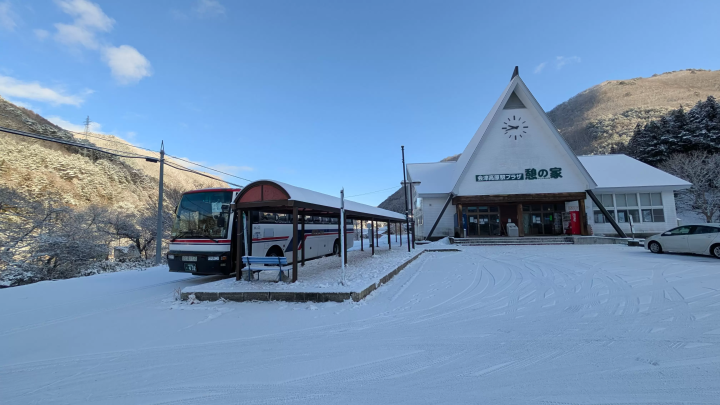
- Duration & Cost: Approximately 25 to 30 minutes; 900 yen one-way for adults.
- Convenience: The taxi delivers guests directly to the doorstep of Vacation Lodge FamiliA, eliminating the need to haul heavy ski bags or luggage across icy terrain.
Critical Booking Rules for Demand Taxis
Because these are shared, demand-responsive vehicles, they do not operate on a fixed turn-up-and-go schedule. Strict protocols govern their use:
- Deadline: Reservations must be made by telephone no later than 5:00 PM on the day prior to your desired travel date.
- Required Information: Callers must clearly state their exact arrival details—specifically, the arrival station, the specific train arrival time, and the destination (Vacation Lodge FamiliA, Aizu kogen).
- Language Support: For international travelers hesitant to make phone calls in Japanese, the English-speaking staff at Vacation Lodge FamiliA offer advance assistance and will coordinate bookings on guests’ behalf.
Recommended Travel Schedules (2025–2026 Timetable)
-
Option A: The Leisurely Check-In Route (Recommended for standard travelers)
- 11:00 AM – Depart Asakusa Station
- 1:51 PM – Arrive at Aizu Kogen Ozeguchi Station
- 2:00 PM – Board the pre-arranged demand taxi
- 2:30 PM – Arrive at Vacation Lodge FamiliA, Aizu kogen (timed perfectly for afternoon check-in)
-
Option B: The Early-Bird Ski Route (For maximum mountain time; excludes Sundays)
- 6:30 AM – Depart Asakusa Station
- 9:23 AM – Arrive at Aizu Kogen Ozeguchi Station
- 9:30 AM – Board the pre-arranged demand taxi
- 10:00 AM – Arrive directly at Takatsue Ski Resort (or Vacation Lodge FamiliA)
Supporting Context & On-Site Experience: Life at Vacation Lodge FamiliA
Once guests step across the threshold of Vacation Lodge FamiliA, the anxiety of winter travel dissolves entirely. Operating on the premise of a guesthouse designed to foster international community, the lodge serves as an ideal base camp for snow enthusiasts who value warmth, accessibility, and camaraderie over sterile luxury.
┌────────────────────────────────────────────────────────┐
│             VACATION LODGE FAMILIA ECOSYSTEM           │
├──────────────────┬──────────────────┬──────────────────┤
│ Backyard Mini    │ Aizu Highland    │ Takatsue Onsen   │
│ Snow Park        │ Takatsue Resort  │ Shirakaba no Yu  │
│ (0-min walk)     │ (5-min walk)     │ (3-min walk)     │
├──────────────────┼──────────────────┼──────────────────┤
│ • Free sleds     │ • Powder snow    │ • Natural hot    │
│ • Safe for kids  │ • No long lines  │   springs        │
│ • 10-sec to warm │ • Beginner to    │ • Open-air baths │
│   lounge         │   advanced runs  │ • Post-ski soak  │
└──────────────────┴──────────────────┴──────────────────┘
1. The Backyard Mini Snow Park (0-Minute Walk)
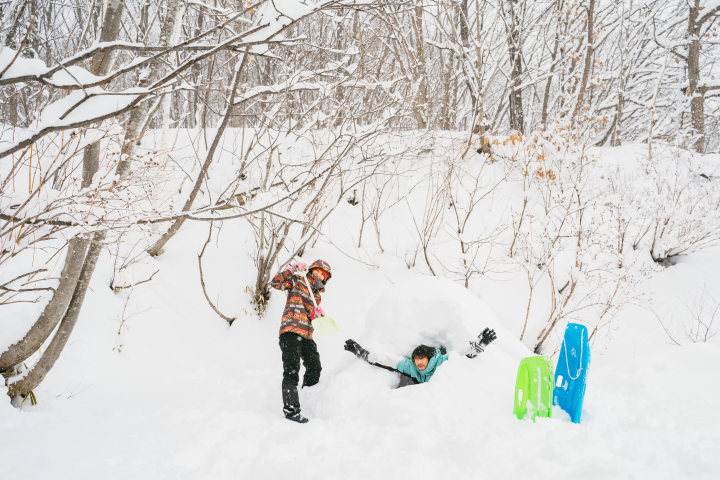
For families traveling with young children, traditional ski resorts can sometimes feel overwhelming. FamiliA solves this by incorporating a private backyard snow park just steps from the main building. Sleds and snow-play equipment are available for complimentary rental. Parents can watch their children build snowmen or slide down safe slopes, knowing that a steaming cup of coffee and a warm lounge are a mere ten-second walk away.
2. Aizu Highland Takatsue Ski Resort (5-Minute Walk)
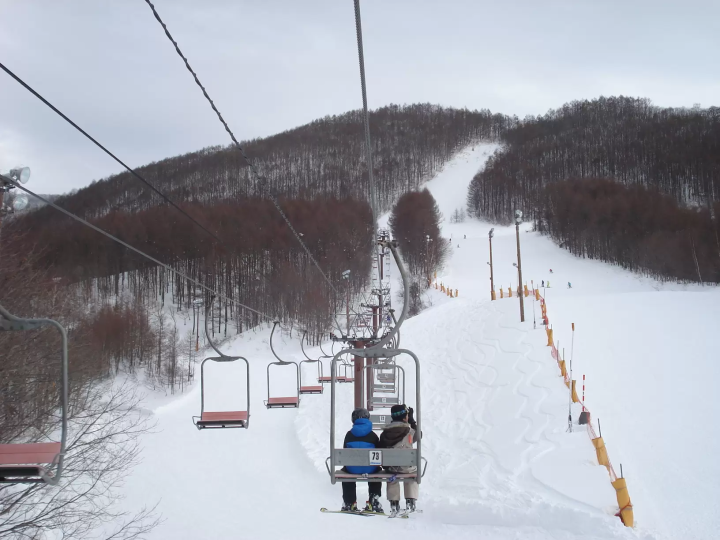
For serious skiers and snowboarders, the lodge’s proximity to Takatsue Ski Resort is its greatest asset. Unlike the congested, internationally commercialized mega-resorts of Hokkaido, Takatsue remains a hidden gem. It offers high-quality powder snow, well-groomed trails for all proficiency levels (from absolute beginners to aggressive tree-skiers), a dedicated kids’ park, and virtually non-existent lift lines. Renting gear and hitting the slopes requires none of the logistical gymnastics common at larger destinations.
3. Takatsue Onsen Shirakaba no Yu (3-Minute Walk)
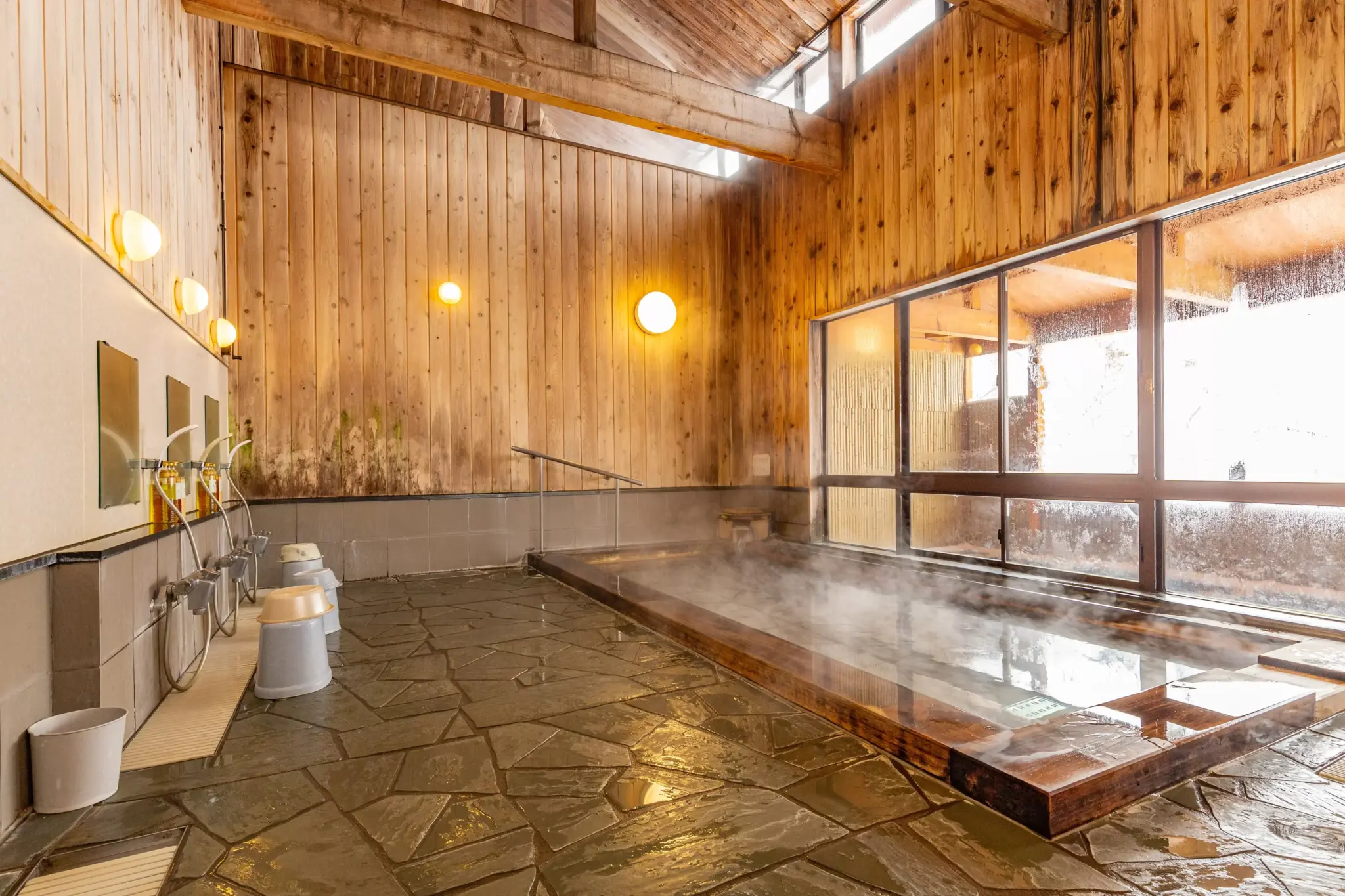
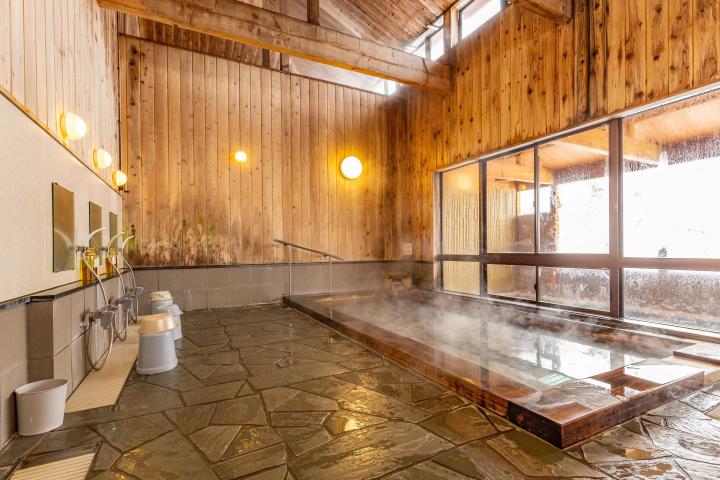
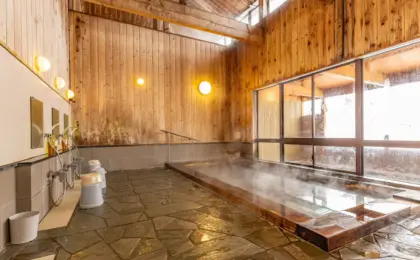
No Japanese winter vacation is complete without soaking in a natural hot spring (onsen). Located just a three-minute walk from the lodge, Shirakaba no Yu invites guests to submerge their weary muscles in mineral-rich thermal waters. Featuring spacious open-air baths (rotenburo) surrounded by snow-laden pine trees, it provides an authentic therapeutic counterpoint to a day spent carving down the mountain.
Official Guidelines: Extending Your Car-Free Journey Through Sightseeing
A common pitfall of winter travel itineraries is treating the destination as a dead-end: traveling north to ski, and then retracing one’s steps directly back to the capital. Vacation Lodge FamiliA leverages the region’s interconnected rail networks (Tobu Line, Yagan Railway, and Aizu Railway) to offer two distinct, car-free post-stay sightseeing loops.
Route Option 1: The Edo-Period Cultural Loop (Ouchi-juku & Aizu-Wakamatsu)
Travelers seeking deep historical immersion can loop westward toward Fukushima’s architectural treasures before heading back to Tokyo.
- The Transit Chain: From the lodge, take a demand taxi to Aizu-Tajima Station (~45 minutes). Board the Aizu Railway for a scenic 25-minute ride to Yunokami Onsen Station—notable as one of the few railway stations in Japan featuring a traditional thatched roof.
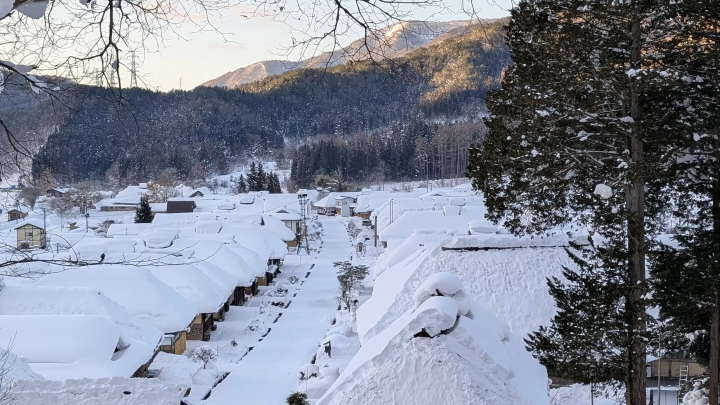
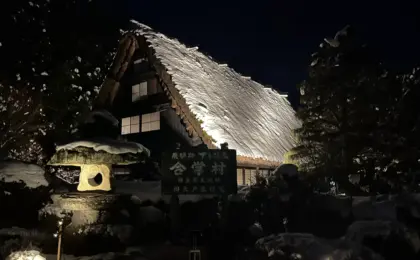
- Ouchi-juku: From Yunokami Onsen, board the local shared bus (Saruyu-go) for a 20-minute ride to Ouchi-juku. This meticulously preserved post town transports visitors straight back to the Edo period, featuring thatched-roof merchant houses lining a historic highway. Visitors can sample the region’s eccentric culinary specialty, Negi Soba (buckwheat noodles eaten using a single, long green onion in place of chopsticks), while absorbing the quiet majesty of a historic snowscape.
- Return/Extension: From Ouchi-juku, travelers can return via Aizu-Tajima Station to board the Limited Express Liberty directly back to Asakusa, or push deeper into the Tohoku region toward the samurai history of Aizuwakamatsu.
[Vacation Lodge FamiliA]
       │ (Demand Taxi: ~45 mins)
       ▼
[Aizu-Tajima Station]
       │ (Aizu Railway: ~25 mins)
       ▼
[Yunokami Onsen Station]
       │ (Saruyu-go Bus: ~20 mins)
       ▼
[Ouchi-juku (Thatched-Roof Post Town)]
Route Option 2: The Gorge & World Heritage Loop (Kinugawa Onsen & Nikko)
For travelers returning via Tochigi Prefecture, a two-stage cultural and relaxation stopover breaks up the journey home.
- Kinugawa Onsen (Approx. 1 hour by train from Aizu Kogen Ozeguchi): Nestled along a dramatic river gorge, this historic hot spring town is renowned for its therapeutic waters. Spending a night here allows travelers to unwind in luxury ryokans overlooking frozen riverbeds before tackling the final leg to Tokyo.
- Nikko Toshogu Shrine (World Heritage Site): From Kinugawa Onsen, travelers transfer at Shimo-Imaichi Station to reach Tobu Nikko Station (40–60 minutes total). Here lies the opulent mausoleum of Tokugawa Ieyasu, set within a vast cedar forest that takes on an ethereal, sacred quiet during winter snowfalls.
- Final Return to Tokyo: Following the shrine tour, travelers can board the Limited Express Kegon or Limited Express Liberty directly from Tobu Nikko Station, arriving back at Asakusa Station in roughly two hours.
Future Outlook: The Rise of Car-Free Alpine Tourism in Japan
The launch and refinement of seamless itineraries like the Asakusa-to-Aizu-Kogen route represent a quiet paradigm shift in Japanese tourism infrastructure. For decades, regional promotion boards across rural prefectures such as Fukushima, Niigata, and Nagano focused overwhelmingly on car-owning domestic tourists. International visitors, meanwhile, were largely funneled toward high-speed Shinkansen corridors (such as the Hokuriku Shinkansen to Nagano or Joetsu Shinkansen to Echigo-Yuzawa), leading to severe over-tourism in select pockets.
As municipal governments and independent hospitality operators—exemplified by Vacation Lodge FamiliA—collaborate to bridge the information gap for foreign travelers, car-free regional exploration is entering a golden age. By demystifying demand-taxi booking rules, providing bilingual logistical support, and emphasizing direct limited express rail corridors, rural Japan is proving that safety, accessibility, and untouched wilderness are not mutually exclusive.
For the international traveler paralyzed by the fear of winter driving, the message is clear: Japan’s deepest powder and most authentic cultural enclaves are entirely within reach. All it takes is a ticket from Asakusa, a reserved seat on the Liberty Aizu, and a willingness to let the rails carry you into the snow.





Belum ada komentar. Jadilah yang pertama berkomentar!