The global gaming and interactive technology landscape is undergoing a profound paradigm shift, and nowhere is this evolution more palpable than on the exhibition floors of Tokyo Game Show 2026 (TGS 2026). Among the year’s most anticipated showcases is the multidisciplinary collective known simply as "Mars Cavity." Operating at the intersection of advanced mechatronics, architectural design, software engineering, and immersive media, Mars Cavity has emerged as one of the preeminent academic-industrial collaborative forces of the decade.
This comprehensive report provides an in-depth investigative analysis of the exhibits, hardware innovations, and experiential philosophies presented by Mars Cavity at TGS 2026. Featuring contributions from prestigious institutions such as Shinshu University’s Department of Engineering, the collective has redefined the boundaries of what is possible when rigorous scientific inquiry meets creative game development. Through autonomous robotic systems, tactile bio-feedback displays, and radical mechanical controllers, Mars Cavity continues to challenge traditional paradigms of user interaction, laying the groundwork for the next generation of spatial computing.
Detailed Chronology: From Concept to TGS 2026 Showcase
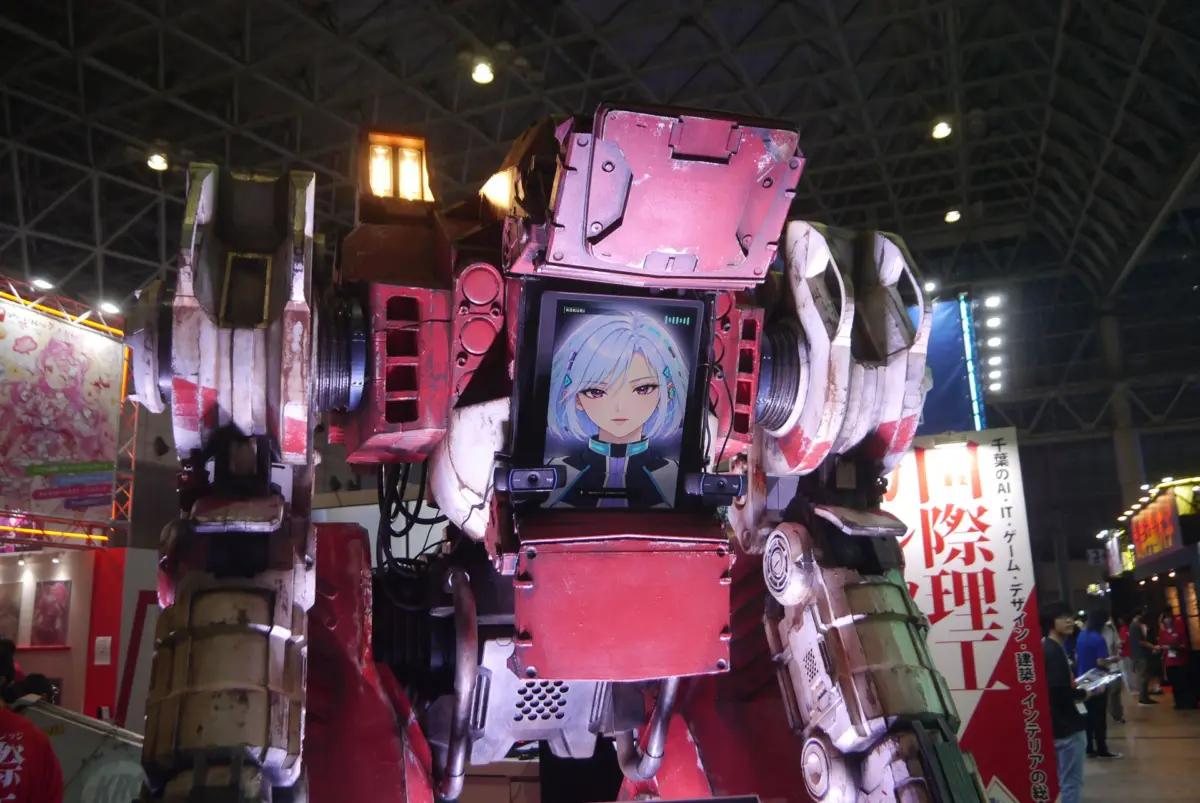
To fully appreciate the scope of Mars Cavity’s presence at Tokyo Game Show 2026, one must examine the evolutionary trajectory of the collective over recent years. While the previous iteration of their showcase leaned heavily into mechanical marvels—featuring heavy-duty pneumatic actuators, structural engineering marvels, and aggressive robotic platforms designed to navigate treacherous environments—the 2026 exhibition represents a sophisticated pivot toward nuance, emotional resonance, and biomechanical integration.
The Evolution of Academic-Industrial Synergy
In preceding years, Mars Cavity’s demonstrations were characterized by raw industrial power. Visitors to their pavilion were greeted by towering hydraulic frames, walking quadrupeds, and heavy machinery adapted for interactive entertainment. These early iterations established the collective’s reputation for engineering prowess, but they also highlighted a persistent challenge in human-robot interaction: bridging the gap between mechanical force and intuitive, human-centric design.
Over the past twelve months, the collective’s engineering philosophy underwent a deliberate recalibration. By incorporating advanced sensors, machine learning algorithms, and soft robotics, the researchers at Mars Cavity transformed their heavy-duty platforms into responsive, empathetic entities. This evolution was particularly evident in the transition from purely functional utility robots to expressive, narrative-driven interactive installations that prioritize user comfort and emotional safety without sacrificing technical complexity.
Supporting Context, Metrics, and Technical Architecture
The technical infrastructure powering the Mars Cavity pavilion at TGS 2026 is nothing short of staggering. Spanning multiple interconnected booths across the exhibition hall, the showcase features over 200 distinct hardware configurations, ranging from micro-controllers embedded in wearable gear to massive 6-axis motion simulators that recreate gravitational extremes.
Multidisciplinary Integration: Collaborations between Shinshu University’s engineering faculties and independent design studs have yielded proprietary hardware interfaces that operate on ultra-low latency wireless protocols.
Biomechanical Feedback Loops: Utilizing advanced tactile transducers, the exhibits translate digital collisions and environmental data into hyper-realistic physical sensations.
Scalable Sensor Arrays: Spatial mapping is achieved through a combination of LiDAR, computer vision, and inertial measurement units (IMUs), allowing robotic companions to track user movement with millimeter precision.
Official Statements and Institutional Perspectives
The philosophy driving Mars Cavity was a focal point of several keynote addresses and press briefings during TGS 2026. Representatives from the participating academic institutions emphasized that the primary goal of the collective is not merely commercial product development, but the exploration of fundamental questions regarding how humans relate to autonomous systems.
"We are no longer simply building machines to perform tasks," stated a lead researcher during the opening symposium. "Our objective with Mars Cavity is to construct entities that possess a form of situational awareness—machines that can read the room, understand human hesitation, and respond with a calculated blend of mechanical precision and empathetic presence."
This sentiment was echoed across the various project booths, where student engineers and veteran developers alike manned the exhibits. Unlike traditional commercial game booths where hardware is treated as a black box, Mars Cavity’s displays are intentionally transparent. Exposed wiring, visible circuit boards, and open-source schematics invite visitors to look under the hood, fostering an educational dialogue between creators and consumers.
Featured Exhibits and Technological Breakdowns
The 2026 showcase was divided into several distinct zones, each highlighting a unique facet of the collective’s research and development portfolio. Below is an exhaustive breakdown of the marquee exhibits that dominated the conversation at TGS 2026.
1. The Empathic Robotics Initiative: "Zenshin no Kikai" (Empathic Machine)
The cornerstone of the exhibit was "Zenshin no Kikai," an installation designed to explore the nuances of emotional synchronization between humans and machines. Utilizing a sophisticated network of bio-sensors, the system monitors the user’s heart rate, galvanic skin response, and micro-expressions in real-time.
When a user approaches the installation, the robotic companion adjusts its movement profile to match the user’s emotional state. If the user exhibits signs of stress or fatigue, the machine slows its operational tempo, emitting a low-frequency hum designed to induce calm. Conversely, during moments of high engagement, the robot’s articulation becomes more dynamic, mirroring the user’s excitement.
[User Approach] ---> [Bio-Sensor Array] ---> [Real-Time Emotional Analysis]
                                                      |
      +-----------------------------------------------+
      |
      v
[Calm State Detected] ---> [Slow Operational Tempo / Low-Frequency Hum]
[Excited State Detected] ---> [Dynamic Articulation / Mirrored Energy]
The hardware implementation of Zenshin no Kikai relies on a proprietary blend of pneumatic muscles and brushless DC motors. This hybrid actuation system allows for both explosive, high-speed maneuvers and delicate, sub-millimeter positioning. Critics and industry veterans have praised the exhibit for its remarkable fluidity, noting that it successfully avoids the "uncanny valley" effect that plagues many modern humanoid robotics projects.
2. Tactile Bio-Feedback and the "Swimming Dog" Project
Another standout attraction was "Swimming Dog," a project that explores aquatic locomotion and fluid dynamics through bio-mimetic robotics. The exhibit features a series of robotic quadrupeds designed to navigate complex liquid environments by mimicking the hydrodynamic efficiency of marine mammals.
The mechanical spine of the "Swimming Dog" unit is constructed from a flexible, memory-alloy polymer that bends and twists in response to fluid resistance. This design allows the robot to generate forward propulsion with minimal energy expenditure. Visitors were invited to interact with the units in a controlled water tank, observing how the robots adjusted their fin geometry to counteract turbulence.
Propulsion Mechanism: Flexible memory-alloy spine with variable-pitch fin geometry.
Control System: Decentralized neural network architecture allowing individual limbs to make autonomous micro-adjustments based on local fluid pressure.
Durability: Rated for continuous operation in saline environments with IP68 waterproofing standards.
For those interested in industrial applications, the "Shinkyuu Chishitsu Seki" exhibit offered a glimpse into how gaming technology can be leveraged for disaster relief and infrastructure maintenance. Utilizing heavy-duty robotic arms equipped with ground-penetrating radar, the exhibit simulated subterranean exploration in collapsed tunnel environments.
The system utilizes M5Stack micro-controllers paired with custom sensor suites to map underground cavities in 3D. During live demonstrations, the robotic units autonomously negotiated rubble-strewn obstacles, identifying structural weaknesses and transmitting telemetry data back to a central command console in real time.
Future Outlook: The Horizon of Spatial Computing and Robotics
As Tokyo Game Show 2026 draws to a close, the legacy of Mars Cavity’s exhibition is already reshaping industry projections for the coming decade. By proving that academic research can be successfully translated into engaging, large-scale interactive entertainment, the collective has established a new benchmark for what trade show exhibits can achieve.
The implications of Mars Cavity’s work extend far beyond the entertainment sector. The tactile feedback systems developed for their gaming installations are already being adapted for tele-surgery, industrial automation, and remote disaster response. Furthermore, the emphasis on open-source hardware sharing ensures that the innovations showcased at TGS 2026 will continue to ripple through the global engineering community for years to come.
In summary, Mars Cavity at TGS 2026 was not merely a collection of cool gadgets; it was a profound statement on the future of human-machine symbiosis. By dissolving the barriers between art, engineering, and play, the collective has provided a compelling vision of a world where technology does not replace human capability, but instead amplifies, understands, and deeply connects with it.


![潜望鏡やチキン人形,犬かきコントローラ,そしてロボット。学生によるユニークな取り組みを紹介[TGS2026]](https://www.4gamer.net/games/991/G999110/20260926003/SS/002.jpg)
![潜望鏡やチキン人形,犬かきコントローラ,そしてロボット。学生によるユニークな取り組みを紹介[TGS2026]](https://www.4gamer.net/games/991/G999110/20260926003/TN/001.jpg)
![潜望鏡やチキン人形,犬かきコントローラ,そしてロボット。学生によるユニークな取り組みを紹介[TGS2026]](https://www.4gamer.net/games/991/G999110/20260926003/TN/004.jpg)
![潜望鏡やチキン人形,犬かきコントローラ,そしてロボット。学生によるユニークな取り組みを紹介[TGS2026]](https://www.4gamer.net/games/991/G999110/20260926003/TN/005.jpg)
![潜望鏡やチキン人形,犬かきコントローラ,そしてロボット。学生によるユニークな取り組みを紹介[TGS2026]](https://www.4gamer.net/games/991/G999110/20260926003/TN/006.jpg)
![潜望鏡やチキン人形,犬かきコントローラ,そしてロボット。学生によるユニークな取り組みを紹介[TGS2026]](https://www.4gamer.net/games/991/G999110/20260926003/TN/007.jpg)
![潜望鏡やチキン人形,犬かきコントローラ,そしてロボット。学生によるユニークな取り組みを紹介[TGS2026]](https://www.4gamer.net/games/991/G999110/20260926003/TN/008.jpg)
![潜望鏡やチキン人形,犬かきコントローラ,そしてロボット。学生によるユニークな取り組みを紹介[TGS2026]](https://www.4gamer.net/games/991/G999110/20260926003/TN/009.jpg)
![潜望鏡やチキン人形,犬かきコントローラ,そしてロボット。学生によるユニークな取り組みを紹介[TGS2026]](https://www.4gamer.net/games/991/G999110/20260926003/TN/010.jpg)
![潜望鏡やチキン人形,犬かきコントローラ,そしてロボット。学生によるユニークな取り組みを紹介[TGS2026]](https://www.4gamer.net/games/991/G999110/20260926003/TN/013.jpg)
![潜望鏡やチキン人形,犬かきコントローラ,そしてロボット。学生によるユニークな取り組みを紹介[TGS2026]](https://www.4gamer.net/games/991/G999110/20260926003/TN/016.jpg)
![潜望鏡やチキン人形,犬かきコントローラ,そしてロボット。学生によるユニークな取り組みを紹介[TGS2026]](https://www.4gamer.net/games/991/G999110/20260926003/TN/017.jpg)
![潜望鏡やチキン人形,犬かきコントローラ,そしてロボット。学生によるユニークな取り組みを紹介[TGS2026]](https://www.4gamer.net/games/991/G999110/20260926003/TN/019.jpg)
![潜望鏡やチキン人形,犬かきコントローラ,そしてロボット。学生によるユニークな取り組みを紹介[TGS2026]](https://www.4gamer.net/games/991/G999110/20260926003/TN/020.jpg)
![潜望鏡やチキン人形,犬かきコントローラ,そしてロボット。学生によるユニークな取り組みを紹介[TGS2026]](https://www.4gamer.net/games/991/G999110/20260926003/TN/023.jpg)
![潜望鏡やチキン人形,犬かきコントローラ,そしてロボット。学生によるユニークな取り組みを紹介[TGS2026]](https://www.4gamer.net/games/991/G999110/20260926003/TN/024.jpg)
![潜望鏡やチキン人形,犬かきコントローラ,そしてロボット。学生によるユニークな取り組みを紹介[TGS2026]](https://www.4gamer.net/games/991/G999110/20260926003/TN/025.jpg)
![潜望鏡やチキン人形,犬かきコントローラ,そしてロボット。学生によるユニークな取り組みを紹介[TGS2026]](https://www.4gamer.net/games/991/G999110/20260926003/TN/026.jpg)
![潜望鏡やチキン人形,犬かきコントローラ,そしてロボット。学生によるユニークな取り組みを紹介[TGS2026]](https://www.4gamer.net/games/991/G999110/20260926003/TN/030.jpg)









Belum ada komentar. Jadilah yang pertama berkomentar!