In the rapidly evolving landscape of contemporary interactive entertainment, few titles have captured the imagination of the global gaming community quite like Project Mugen (開發 秘 境 ANANTA). Developed by Naked Rain Studio—a wholly-owned subsidiary under the corporate umbrella of gaming titan NetEase Games—this ambitious urban open-world role-playing game has consistently dominated industry discourse since its initial teaser trailers surfaced.
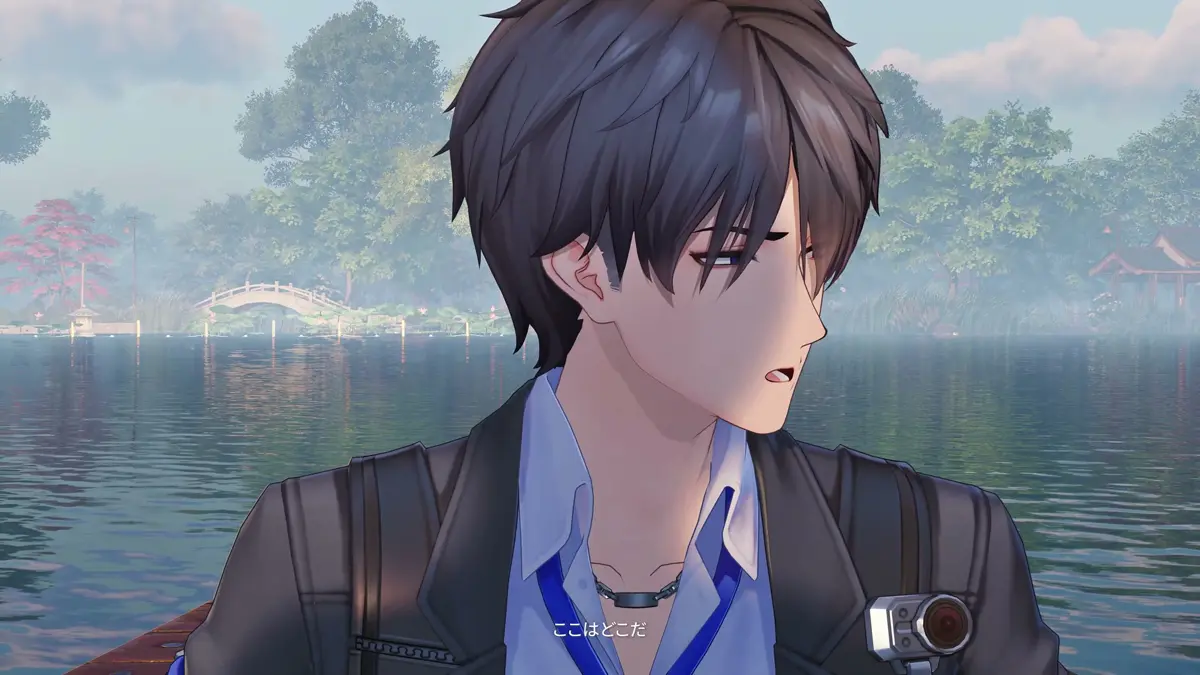
With its striking anime-inspired visual fidelity, seamless traversal mechanics, and dense, highly interactive urban environments, Project Mugen positions itself as a direct challenger to established heavyweights in the open-world action RPG genre. Following a prominent showcase at gamescom 2026, new details, extended media assets, and deep-dive developer interviews have shed light on the inner workings of this massive undertaking.
Industry analysts, enthusiasts, and market researchers alike are closely monitoring the project, which is officially slated for release across PC, PlayStation 5, iOS, and Android platforms on January 15, 2027. This comprehensive investigative report examines the architecture, mechanical depth, stylistic choices, and broader industrial implications of Naked Rain Studio’s flagship title, offering an authoritative overview of what promises to be one of the defining releases of the decade.
Detailed Chronology & Development Background
The developmental trajectory of Project Mugen is as fascinating as the fictional metropolis it portrays. Conceived under the working title "Project Mugen" by Naked Rain Studio—a development house uniquely structured around two internal factions, "Link" and "Rain"—the game has undergone meticulous iterative design. While the "Link" faction handles the core creative vision and world-building frameworks, the "Rain" faction steers technical execution, performance optimization, and systems architecture.
The Road to gamescom 2026
The journey toward the January 15, 2027 release date has been marked by calculated marketing beats and deliberate media drops. NetEase Games first captured public attention with high-octane conceptual trailers that promised an unprecedented level of urban freedom. Players were introduced to a sprawling, hyper-detailed cityscape where verticality is not merely a visual backdrop, but a core functional element of gameplay.
As development progressed, the team at Naked Rain Studio opted for a transparent communication strategy. Rather than retreating into prolonged development silence—a common pitfall for high-budget titles of this scale—NetEase utilized major international gaming conventions, social media campaigns, and targeted developer diaries to maintain momentum. The gamescom 2026 showcase served as a watershed moment, providing extended gameplay footage that silenced skeptics and invigorated the fanbase.
From an engineering perspective, developing a title that scales fluidly across mobile platforms (iOS and Android) while delivering bleeding-edge visual fidelity on high-end PCs and PlayStation 5 hardware is a monumental challenge. Naked Rain Studio’s cross-platform strategy relies heavily on proprietary engine optimizations and scalable rendering pipelines.
During interviews at gamescom 2026, studio leads emphasized that the PS5 version leverages custom hardware-accelerated ray tracing and high-speed SSD streaming to eliminate loading screens during intense traversal sequences. This commitment to technical excellence ensures that the urban exploration loop remains uninterrupted, preserving the immersive quality of the game world regardless of the player’s preferred platform.
Supporting Context & Metrics: The Mechanics of Urban Freedom
To truly understand the appeal of Project Mugen, one must examine its core gameplay loops. Unlike traditional fantasy-themed open-world RPGs that rely on sprawling wilderness, medieval hamlets, and ancient ruins, Project Mugen embraces the chaotic beauty of a densely populated, futuristic urban center.
Traversal and Mobility Systems
The standout feature of Project Mugen’s gameplay is its radical approach to movement. Players are not restricted to standard sprinting, jumping, and climbing animations. Instead, characters utilize specialized parkour augmentations, grappling hooks, wire-swinging mechanics, and even vehicle-assisted navigation to traverse the vertical expanse of the city.
Verticality as a Puzzle: Buildings are not static geometry; they are interactive playgrounds. Players can scale skyscraper glass facades, leap across narrow alleys, and utilize kinetic momentum to clear massive chasms between high-rise structures.
Vehicular Integration: While parkour forms the bedrock of movement, the integration of futuristic motorcycles, cars, and specialized transit systems allows for high-speed chases and dynamic combat engagements on the move.
Environmental Interaction: Every street sign, balcony, and rooftop ledge is calculated into the physics engine, ensuring that movement feels weighty, responsive, and organically integrated into the world design.
Combat Systems and Team Synergy
Combat in Project Mugen is designed around fast-paced, multi-character party management. Players control a rotating squad of up to four characters, each bringing distinct elemental affinities, weapon classes, and traversal abilities to the battlefield.
The combat engine emphasizes split-second timing, aerial combos, and flashy ultimate abilities that alter the battlefield state. For instance, crowd-control specialists can group enemies together, allowing area-of-effect (AoE) damage dealers to unleash devastating coordinated strikes. The inclusion of real-time character swapping mid-combo creates a high skill ceiling that rewards experimentation and tactical planning.
Official Statements & Developer Insights
In exclusive interviews granted during the gamescom 2026 exhibition, key members of Naked Rain Studio shed light on the philosophy driving Project Mugen’s design.
"We didn’t just want to build another open-world game; we wanted to capture the pulse of living, breathing city life," stated a senior studio representative. "Urban environments present unique technical and artistic hurdles. In a forest, nature provides organic boundaries. In a city, every window, vehicle, and pedestrian must react authentically to the player’s presence. That requires a complete paradigm shift in how open-world engines are constructed."
Furthermore, the developers addressed the elephant in the room for modern live-service titles: content cadence and monetization. Naked Rain Studio confirmed that the game will launch with a robust single-player narrative campaign, supported by post-launch expansions, seasonal events, and regular character additions.
Balancing Narrative and Live-Service Elements
A primary concern among the gaming community regarding free-to-play or live-service titles is narrative compromise. Fans often worry that story progression will be artificially throttled to accommodate gacha mechanics or seasonal filler. Naked Rain Studio has actively pushed back against this narrative, assuring players that the core story will be delivered with the production values typically reserved for premium, standalone console releases.
Character-Centric Storytelling: Each playable character features dedicated side stories, personal questlines, and deep lore integration, ensuring they feel like living participants in the world rather than mere inventory collectibles.
World Evolution: The city itself will evolve over time. Seasonal updates will introduce new districts, weather anomalies, and shifting faction dynamics, ensuring that the game world feels dynamic rather than static.
Future Outlook & Industry Implications
As the January 15, 2027 release date approaches, the industry ramifications of Project Mugen’s launch become increasingly apparent. NetEase Games is positioning this title not merely as a regional success, but as a global cultural phenomenon capable of competing directly with established giants in the open-world space.
Market Positioning and Competitive Landscape
The open-world RPG market is fiercely competitive, currently dominated by titans like miHoYo’s Genshin Impact and Honkai: Star Rail, Kuro Games’ Wuthering Waves, and traditional AAA single-player franchises. Project Mugen carves out a distinct niche by embracing an urban, contemporary aesthetic combined with high-mobility action mechanics.
If Naked Rain Studio successfully delivers on its technical and narrative promises, Project Mugen could redefine player expectations for mobile and cross-platform gaming. The fusion of console-grade presentation, fluid traversal, and deep action-RPG systems sets a new benchmark for what studios can achieve within the live-service framework.
Final Thoughts
The path from initial concept to the imminent January 15, 2027 launch has been characterized by ambition, technical innovation, and transparent communication from Naked Rain Studio. While challenges remain—particularly in maintaining server stability, balancing gacha economies, and delivering consistent content updates—the foundation laid by NetEase Games is formidable.
For gamers and industry observers alike, Project Mugen represents a thrilling glimpse into the future of interactive entertainment. As the final countdown begins, all eyes remain fixed on Naked Rain Studio and their breathtaking urban labyrinth.


![「無限大ANANTA」の新都市「重霄」は,杭州と上海が溶け合った街。路地の餅つきまで作り込まれていた[gamescom]](https://www.4gamer.net/games/731/G073164/20260827014/SS/010.jpg)
![「無限大ANANTA」の新都市「重霄」は,杭州と上海が溶け合った街。路地の餅つきまで作り込まれていた[gamescom]](https://www.4gamer.net/games/731/G073164/20260827014/TN/001.jpg)
![「無限大ANANTA」の新都市「重霄」は,杭州と上海が溶け合った街。路地の餅つきまで作り込まれていた[gamescom]](https://www.4gamer.net/games/731/G073164/20260827014/TN/002.jpg)
![「無限大ANANTA」の新都市「重霄」は,杭州と上海が溶け合った街。路地の餅つきまで作り込まれていた[gamescom]](https://www.4gamer.net/games/731/G073164/20260827014/TN/003.jpg)
![「無限大ANANTA」の新都市「重霄」は,杭州と上海が溶け合った街。路地の餅つきまで作り込まれていた[gamescom]](https://www.4gamer.net/games/731/G073164/20260827014/TN/004.jpg)
![「無限大ANANTA」の新都市「重霄」は,杭州と上海が溶け合った街。路地の餅つきまで作り込まれていた[gamescom]](https://www.4gamer.net/games/731/G073164/20260827014/TN/005.jpg)
![「無限大ANANTA」の新都市「重霄」は,杭州と上海が溶け合った街。路地の餅つきまで作り込まれていた[gamescom]](https://www.4gamer.net/games/731/G073164/20260827014/TN/006.jpg)
![「無限大ANANTA」の新都市「重霄」は,杭州と上海が溶け合った街。路地の餅つきまで作り込まれていた[gamescom]](https://www.4gamer.net/games/731/G073164/20260827014/TN/007.jpg)
![「無限大ANANTA」の新都市「重霄」は,杭州と上海が溶け合った街。路地の餅つきまで作り込まれていた[gamescom]](https://www.4gamer.net/games/731/G073164/20260827014/TN/008.jpg)
![「無限大ANANTA」の新都市「重霄」は,杭州と上海が溶け合った街。路地の餅つきまで作り込まれていた[gamescom]](https://www.4gamer.net/games/731/G073164/20260827014/TN/009.jpg)





Belum ada komentar. Jadilah yang pertama berkomentar!