

Executive Overview
Apple’s continued push into the gaming landscape continues to take shape with the rollout of developer beta versions for iOS 26.2, slated for a public release next month. Following the major introduction of the dedicated Apple Games app in iOS 26—a move that fundamentally altered how users manage, discover, and launch titles across iPhone, iPad, and Mac—the Cupertino tech giant is already addressing user feedback.
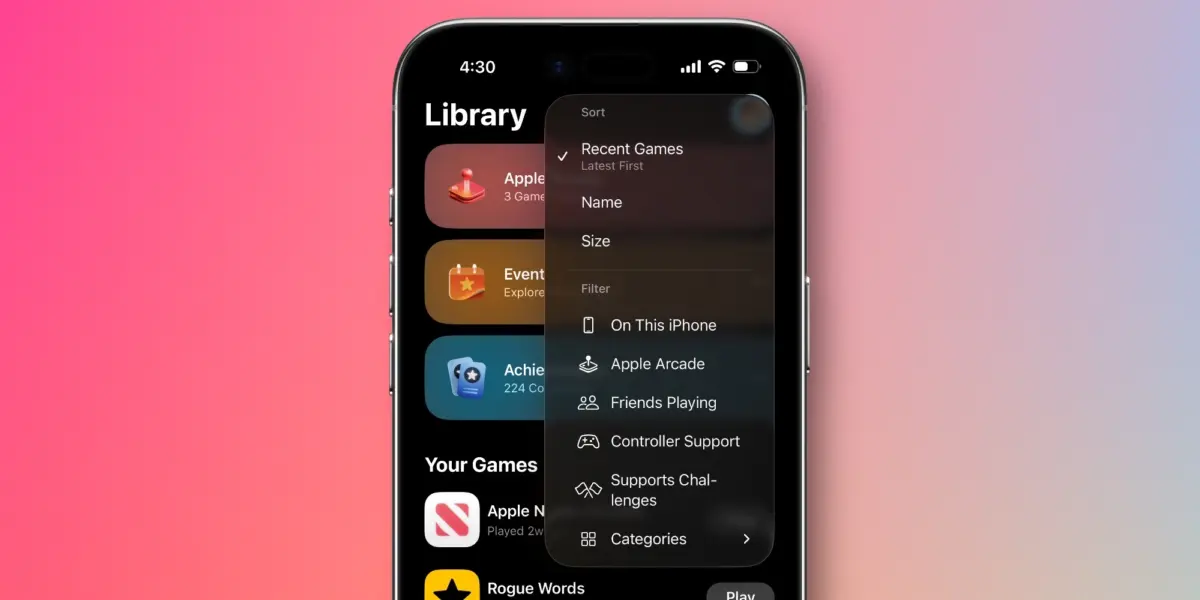
With the arrival of developer beta 2, Apple has highlighted a trio of focused refinements aimed squarely at improving the quality of life within the Games application. While these changes may not represent a seismic shift or feature a massive marketing push to capture entirely new demographics, they signify an essential commitment to iterative software polish. For existing power users and casual gamers alike, these updates demonstrate that Apple views its centralized gaming hub not as a static launchpad, but as a dynamic ecosystem requiring ongoing tuning. This report explores the mechanics of these new additions, analyzes Apple’s broader strategy in the modern gaming market, and evaluates what these incremental updates mean for the future of Apple-centric interactive entertainment.
Detailed Chronology: From iOS 26 to Beta 2
To understand the current trajectory of the Apple Games app, it is necessary to retrace the timeline of its introduction and the rapid iteration cycle that has brought us to the current iOS 26.2 beta phase.
The Inception: iOS 26 and the Unified Hub
When Apple launched iOS 26 to the public, it introduced two entirely new system-level applications to the iPhone home screen. Among them, the Apple Games app stood out as a long-overdue consolidation effort. Historically, Apple’s mobile gaming ecosystem was fragmented. Users relied on the App Store’s Arcade tab, scattered Game Center folders, external companion apps, and third-party launchers to keep track of their achievements, multiplayer invites, and library titles.
The Apple Games app changed that paradigm by acting as a single, unified dashboard. Designed to bridge the gap across iPhone, iPad, and Mac via iCloud sync, the app brought together game libraries, social features, and activity feeds into one native interface. However, like any major version 1.0 release, the app invited immediate critical feedback regarding navigation, filtering efficiency, and visual clutter.
The Transition to iOS 26.2 Beta 1 and Beta 2
Apple confirmed that iOS 26.2 would arrive next month, setting off the standard developer and public beta testing cycle. While developer beta 1 quietly laid the groundwork for under-the-hood performance enhancements and minor UI adjustments, it wasn’t until developer beta 2 rolled out that Apple overtly drew attention to the improvements via a newly minted splash screen.
This splash screen method is a classic Apple strategy: ensuring that when users update their devices, they are immediately made aware of subtle UI/UX changes that might otherwise go unnoticed. By highlighting these updates explicitly, Apple encourages adoption and feedback, ensuring that the community actively stress-tests the new functionality before the software hits the mainstream public.
Supporting Context & Metrics: The Evolution of Apple’s Gaming Ambitions
To fully grasp the significance of these refinements, one must analyze the broader context of Apple’s hardware and software investments in gaming over recent years.
Bridging Mobile and Desktop Hardware
Over the past several hardware generations, Apple has systematically aggressively upgraded its silicon capabilities. From the introduction of hardware-accelerated ray tracing on the A-series chips in iPhones to the powerhouse M-series processors found in iPads and Macs, the company has spared no effort in positioning its hardware as capable of running AAA console- and PC-grade titles. Games like Resident Evil, Death Stranding, and Assassin’s Creed have made their way to Apple platforms, moving the needle away from simple puzzle games and microtransaction-heavy gacha titles toward traditional gaming experiences.
However, hardware capability alone does not create a sustainable gaming ecosystem. Software infrastructure is equally critical. Sony and Microsoft achieved long-term console dominance largely due to their robust dashboard interfaces—dashboards that make managing libraries, tracking trophies/achievements, and connecting with friends seamless. The Apple Games app is Apple’s direct response to this architectural need.

The Role of Quality-of-Life Updates
Industry metrics show that while discovery is vital for acquiring new users, retention is driven by frictionless user experiences. The updates introduced in iOS 26.2 focus heavily on reducing friction:
- Streamlined Organization: Users with massive libraries spanning across multiple Apple devices often faced organizational fatigue.
- Contextual Filtering: Finding specific genres, installed versus uninstalled titles, or multiplayer-compatible games previously required navigating deeper menu hierarchies.
- Visual Clarity: Ensuring that the interface remains clean and responsive as a user’s library expands is paramount for maintaining daily active engagement.
While these changes are subtle—firmly categorized as "quality-of-life" improvements rather than revolutionary headline features—they are the exact operational building blocks that turn a lukewarm utility app into an indispensable part of a daily digital routine.
Official Statements and Industry Insights
While Apple has historically maintained a measured, product-centric communication strategy—relying primarily on App Store release notes rather than sprawling press conferences for minor point updates—industry analysts and developer community reactions provide deep insight into the current state of the platform.
App Store Release Notes and Developer Transparency
Apple’s official documentation accompanying the early developer builds emphasizes user-centric design adjustments. By cataloging user feedback collected since the launch of iOS 26, Apple’s software engineering teams have targeted minor workflow bottlenecks.
Independent developers and tech analysts have widely praised this rapid iteration cycle. In developer circles, the consensus is that Apple is finally treating its software ecosystem with the unified vision required to compete in a multi-platform gaming world. One prominent iOS developer noted:

"Apple isn’t trying to reinvent the wheel with 26.2. They built the highway with iOS 26, and now they are putting up better road signs and smoother asphalt. That’s what long-term platform stability looks like."
Community Reception and Early Feedback
Early adopters on forums and social media platforms who have installed the developer betas have expressed cautious optimism. While many initially questioned the need for a separate Games app when the App Store already existed, the realization that Apple is building a dedicated, ad-free social and library hub—akin to Steam or Xbox dashboards—has won over skeptics. The targeted refinements in iOS 26.2 directly answer the most common critiques regarding app bloat and navigation speed.
Future Outlook: Where is the Apple Games App Headed?
As we look toward the official public release of iOS 26.2 next month and beyond into future operating system cycles, several key questions remain regarding the trajectory of Apple’s gaming strategy.
1. Deepening Cross-Platform Integration
The holy grail of the Apple ecosystem has always been seamless continuity. While iCloud syncs game saves and library states across iPhone, iPad, and Mac, future iterations of the Games app are expected to lean even harder into cooperative and shared experiences. We may soon see deeper integration with SharePlay, allowing users to coordinate multiplayer sessions or view friend activity feeds natively across all devices without needing third-party messaging apps.
2. Expanded Game Discovery and Editorial Content
Right now, the Games app acts primarily as a library manager and dashboard. However, as the ecosystem matures, there is significant potential for Apple to incorporate curated editorial content, developer spotlights, and exclusive community events directly into the app interface. Transforming the hub from a passive library into an active discovery engine could drastically increase daily active usage.

3. Hardware Synergy
With rumors continually swirling about future iterations of Apple hardware—including specialized gaming accessories, enhanced controller support frameworks, and even potential dedicated gaming-focused displays or devices—the Games app will undoubtedly serve as the software glue holding the entire experience together.
Conclusion
The release of iOS 26.2 developer beta 2 may not bring sweeping, paradigm-shifting features that completely redefine how we use our iPhones, but it underscores a vital truth about modern software development: the details matter. By listening to early user feedback and rolling out targeted, quality-of-life refinements to the Apple Games app, Apple is quietly building a robust foundation for its gaming future.
As the software moves from developer testing to its public release next month, these small adjustments will add up to a significantly smoother, more cohesive experience for anyone trying to game across their Apple ecosystem. Whether you are a casual mobile gamer or someone diving deep into AAA titles on an iPad or Mac, Apple’s commitment to iterating on its core infrastructure is a welcome sign of long-term dedication to the gaming community.
Have you been actively using the Apple Games app since its introduction in iOS 26? Do these upcoming iOS 26.2 changes address any specific pain points you’ve experienced? Let us know your thoughts in the comments below!









Belum ada komentar. Jadilah yang pertama berkomentar!