

Executive Overview
The evolution of digital content creation, live streaming, and remote professional communication has fundamentally altered the hardware landscape. Creators are no longer satisfied with the muddy, compressed, and poorly lit video feeds that once characterized built-in laptop cameras and legacy USB webcams. While transitioning to a dedicated DSLR or mirrorless camera setup remains the gold standard for cinematic fidelity, the steep financial investment, complex software pipelines, steep learning curves, and cumbersome desk footprints make it an impractical path for many aspiring and mid-tier creators.
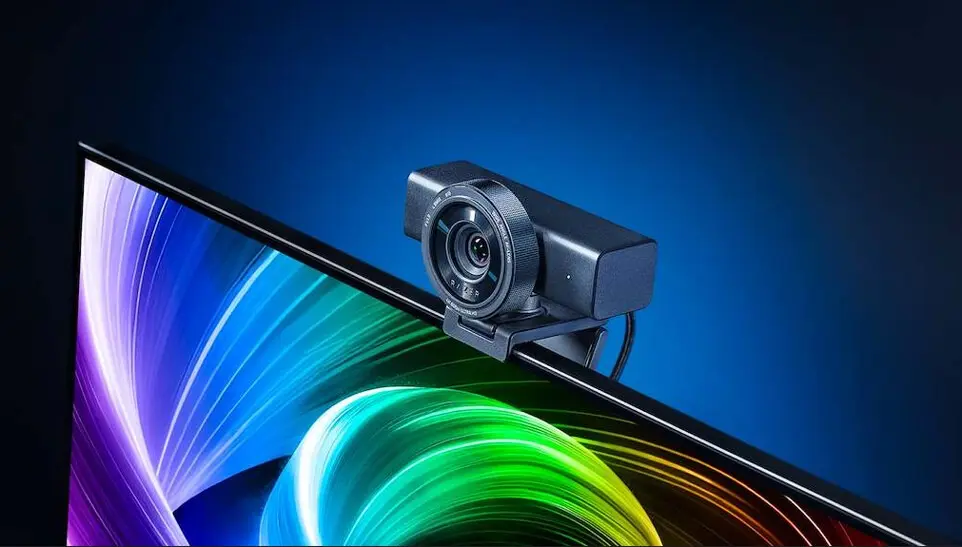
Enter Razer, a titan in the gaming peripherals industry, which has consistently pushed the boundaries of hardware design tailored to digital broadcasters. With the official worldwide release of the Razer Kiyo V2 Pro, the company is directly targeting the gap between traditional plug-and-play webcams and professional mirrorless setups.
At its core, the Kiyo V2 Pro is engineered to deliver uncompromising visual performance. Its headline-grabbing specification—4K video recording at a buttery-smooth 60 frames per second (fps)—places it in an elite tier of USB-connected cameras. This performance is anchored by an advanced Sony STARVIS 2 sensor, a heavy-hitting component renowned for its stellar low-light capabilities. Beyond raw resolution, Razer has outfitted the webcam with a suite of intelligent software-driven features, including dynamic automatic framing, Ultra-High Dynamic Range (HDR) processing, and a versatile optical architecture designed to capture wide desktop environments without fisheye distortion.
Priced at US$299.99 / €319.99, the Kiyo V2 Pro is unmistakably positioned as a premium product aimed at serious streamers, professional content creators, and corporate professionals who demand studio-grade visual output without the hassle of a complex multi-device rig. This comprehensive report explores the technological underpinnings of Razer’s latest flagship webcam, evaluating its hardware specifications, software ecosystem, market positioning, and the broader implications it holds for the content creation industry.
Detailed Chronology: The Evolution of the Razer Kiyo Lineage
To fully understand the significance of the Kiyo V2 Pro, one must examine the evolutionary path of Razer’s webcam division. The journey from basic lighting-integrated peripherals to sophisticated, high-frame-rate broadcasting tools highlights how rapidly consumer expectations have shifted over the past half-decade.
The Genesis: The Original Razer Kiyo
When Razer first introduced the original Kiyo, it revolutionized the streaming market by solving one of the most persistent problems faced by budget-conscious creators: inadequate lighting. By integrating a circular, multi-step ring light directly around the camera lens, Razer provided an all-in-one solution that guaranteed flattering, evenly lit facial illumination. While capped at 1080p resolution at 30fps (or 720p at 60fps), the original Kiyo became a staple for twitch streamers and remote workers alike, proving that utility and innovation could be successfully merged into a single desktop peripheral.
The Shift Toward Professional Fidelity: Kiyo Pro and Ultra
As the streaming boom accelerated and platforms like YouTube and Twitch embraced higher bitrates and resolutions, Razer expanded its product line. The Razer Kiyo Pro pivoted away from the built-in ring light, focusing instead on a large, high-performance ambient light sensor capable of delivering crisp 1080p video at 60fps with HDR functionality. It catered to users who already had dedicated studio lighting setups and required superior optical clarity.
Later, Razer pushed the envelope even further with the introduction of ultra-high-end optical hardware, bridging the gap toward DSLR-like sensors. However, these iterations often came with trade-offs in price, thermal management, or software integration.
The Arrival of the Kiyo V2 Pro
The announcement and subsequent release of the Kiyo V2 Pro mark the culmination of years of iterative engineering. Recognizing that modern creators demand both ultra-high definition (4K) and high motion fidelity (60fps)—a combination historically plagued by bandwidth bottlenecks and overheating issues in USB webcams—Razer went back to the drawing board. By pairing cutting-edge sensor technology from Sony with proprietary image-processing algorithms and streamlined mounting solutions, the Kiyo V2 Pro represents Razer’s most refined, feature-complete broadcasting camera to date. Available immediately through Razer.com, RazerStores, and select global partners, the device establishes a new benchmark for what a dedicated USB webcam can achieve.
Supporting Context & Metrics: Hardware, Optics, and Software Architecture
The Razer Kiyo V2 Pro is a masterclass in hardware-software integration. Dissecting its technical specifications reveals a device designed not just to meet the standards of modern streaming platforms, but to exceed them.
Optical Architecture and the Sony STARVIS 2 Sensor
At the heart of the Kiyo V2 Pro lies the Sony STARVIS 2 sensor, a technological marvel designed primarily for high-end security and industrial imaging applications where light capture is paramount. Traditional webcam sensors struggle immensely in dim environments, resulting in heavy digital noise, washed-out colors, and frustrating frame drops. The STARVIS 2 sensor changes the paradigm by drastically improving low-light sensitivity and near-infrared absorption.
For streamers who prefer atmospheric, low-light room aesthetics—such as RGB-lit gaming dens or mood-lit podcast studios—this sensor ensures that the user remains crisp, vibrant, and clearly visible without requiring blindingly bright studio softboxes.
Complementing the sensor is an 86-degree wide-angle lens. Wide-angle lenses on webcams often introduce heavy barrel or fisheye distortion, warping the background and making straight lines appear curved. Razer’s optical engineers have meticulously tuned the Kiyo V2 Pro to keep edge distortion under tight control, allowing creators to showcase more of their immersive desk setups, dual-monitor arrays, or physical memorabilia without sacrificing facial geometry.
4K at 60fps: The Performance Pinnacle
Achieving 4K resolution at 60 frames per second over a USB connection is a monumental engineering feat. While many competitors offer 4K streaming, they are frequently bottlenecked to 30fps, resulting in noticeable motion blur and stutter during fast-paced gaming or animated hand gestures. By delivering 4K at 60fps, the Kiyo V2 Pro ensures butter-smooth motion fidelity, giving viewers a crystal-clear, lifelike window into the creator’s broadcast.
Intelligent Software and Image Enhancement Suites
Hardware is only as good as the software driving it. The Kiyo V2 Pro introduces several automated and manual tuning features designed to eliminate the friction of video production:
- One-Click Image Enhancement: For creators who do not have the time or technical expertise to fiddle with ISO, shutter speed, and white balance settings, this feature dynamically analyzes the environment in real-time. It automatically adjusts exposure, suppresses background noise, and balances color temperatures.
- Ultra-High Dynamic Range (HDR): Backlit environments—such as a window behind a desk or intense LED strip lighting—frequently blow out highlights while plunging the creator’s face into heavy shadows. The Kiyo V2 Pro’s Ultra-HDR processing preserves detail across high-contrast scenes, ensuring balanced lighting from the darkest shadows to the brightest highlights.
- Granular Manual Controls: For power users and technical perfectionists, Razer provides comprehensive manual configuration options. Creators can fine-tune color saturation, sharpness, contrast, and custom white balance profiles to match their exact brand aesthetic.
Automated Framing and the Camo Pro Partnership
Using software-driven dynamic panning, tilting, and digital zooming, the Kiyo V2 Pro can track a user’s movements within its wide-angle field of view. This ensures the creator remains perfectly centered even if they shift in their chair or lean forward to read chat logs.
Furthermore, Razer is bundling access to Camo Pro, a premier third-party webcam software suite. Camo Pro unlocks advanced auto-framing capabilities, manual focus tracking, and granular camera controls, giving creators an even deeper layer of customization for professional-grade broadcasts. (Note: While Razer has confirmed the inclusion of Camo Pro bundle access in its announcements, specific details regarding the exact duration of the subscription remain unspecified at the time of writing.)
Physical Ergonomics: Mounting Versatility and Privacy Shutter
Hardware reliability extends beyond internal components to physical construction and user privacy. The Kiyo V2 Pro features a universal pivoting mount designed for seamless compatibility with both modern computer monitors and standard photographic tripods. This flexibility allows creators to mount the camera dead-center atop their display, position it at an aggressive low angle, or place it off-axis for dynamic multi-camera interview setups.
Security and peace of mind are equally prioritized via an integrated twist-operated privacy shutter. Unlike flimsy plastic clip-on caps that are easily misplaced, the Kiyo V2 Pro’s physical shutter mechanics allow users to instantly and completely block the lens aperture with a simple twist of the outer ring, guaranteeing total privacy when the camera is not actively in use.
Official Statements and Global Pricing Strategy
Razer’s official launch communications emphasize the democratization of professional-grade content creation. In product briefings, company representatives have highlighted that the Kiyo V2 Pro was conceived to eliminate the intimidation factor associated with high-end video gear.
"Content creators today face a difficult dichotomy," noted a product specialist during Razer’s global showcase. "They can settle for mediocre webcam feeds that limit their production value, or they can invest heavily in complex mirrorless and DSLR camera rigs that require dummy batteries, capture cards, specialized lenses, and endless software troubleshooting. With the Kiyo V2 Pro, we wanted to bridge that chasm. By combining the unmatched low-light performance of the Sony STARVIS 2 sensor with true 4K 60fps capabilities and intelligent automated framing, we are delivering studio-level cinematic fidelity in a simple, plug-and-play USB form factor."
Global Availability and Pricing Tiers
The Razer Kiyo V2 Pro is rolling out globally through official sales channels, including Razer.com, flagship RazerStores, and authorized online and brick-and-mortar retail partners.
- United States: US$299.99
- Eurozone: €319.99
As of the time of writing, Razer has not yet announced an official local pricing structure or named specific authorized retail partners for the Malaysian market, though regional availability is expected to follow in subsequent waves of international distribution.
Future Outlook: The Implications for Streaming Hardware
The release of the Razer Kiyo V2 Pro signals a fascinating inflection point in the streaming hardware ecosystem. For years, the conventional wisdom among veteran content creators was that USB webcams had hit a hard ceiling—that true professional quality required abandoning the USB interface entirely in favor of clean HDMI outputs, dedicated capture cards, and interchangeable-lens mirrorless cameras.
By pushing the limits of USB bandwidth, sensor technology, and onboard processing, the Kiyo V2 Pro challenges that long-held assumption. It demonstrates that manufacturers can extract DSLR-adjacent performance out of a compact desktop peripheral.
Looking forward, several industry trends will likely be shaped by devices like the Kiyo V2 Pro:
- The Rise of AI-Driven Optical Tracking: As automated framing, background blurring, and virtual lighting become standard software expectations, hardware manufacturers will increasingly rely on dedicated neural processing units (NPUs) built directly into peripherals to offload CPU rendering tasks.
- Low-Light Sensor Standardization: The successful integration of industrial-grade sensors like the Sony STARVIS series into consumer-facing webcams will likely force competitors to abandon aging, noisy CMOS sensors, raising the baseline expectation for low-light streaming fidelity across the entire industry.
- The Shrinking Creator Setup: As high-end webcams narrow the visual gap between themselves and mirrorless cameras, casual and mid-tier creators may increasingly bypass bulky camera rigs, saving desk space, reducing cable clutter, and simplifying their streaming workflows.
Ultimately, the Razer Kiyo V2 Pro is more than just an incremental upgrade; it is a definitive statement about the future of digital broadcasting. For streamers, gamers, and remote professionals looking to elevate their visual presence without descending into a rabbit hole of camera accessories, Razer’s latest flagship stands as a formidable, highly capable cornerstone for the modern desktop studio.









Belum ada komentar. Jadilah yang pertama berkomentar!