

Executive Overview
In the sprawling landscape of 1970s international cinema, few subgenres captured the grit, style, and cynical counter-cultural ethos quite like the Italian poliziotteschi movement. While American screens were dominated by gritty urban procedurals like The French Connection and operatic mafia epics like The Godfather, European filmmakers were eagerly fusing these domestic crime templates with high-octane Euro-crime aesthetics. Enter Maurizio Lucidi’s 1976 feature, The Executors—alternatively known by its US and international monikers, Street People and The Sicilian Cross.
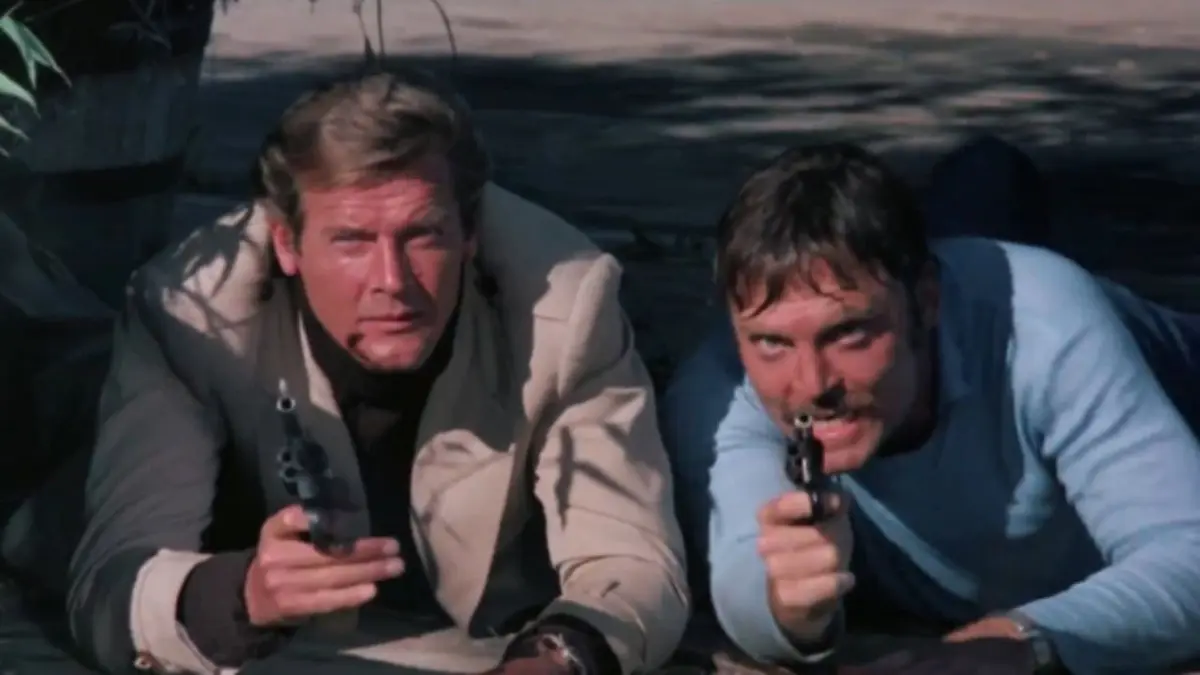
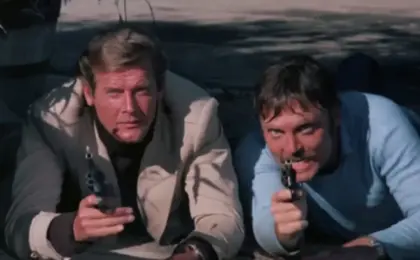
At first glance, the film presents an irresistibly unusual cinematic proposition: James Bond himself, Roger Moore, stepping away from the pristine tailoring of MI6 to portray an Anglo-Sicilian mob lawyer, alongside an adventurous, gravel-voiced Stacy Keach as a thrill-seeking Grand Prix driver. Rather than adhering strictly to the traditional "buddy cop" formula, The Executors brilliantly subverts the paradigm into a "buddy criminal" caper. The protagonists may operate outside the law, but their mission—hunting down rival syndicate members who have framed their family—places them in a bizarre, morally ambiguous tier of cinematic anti-heroes.
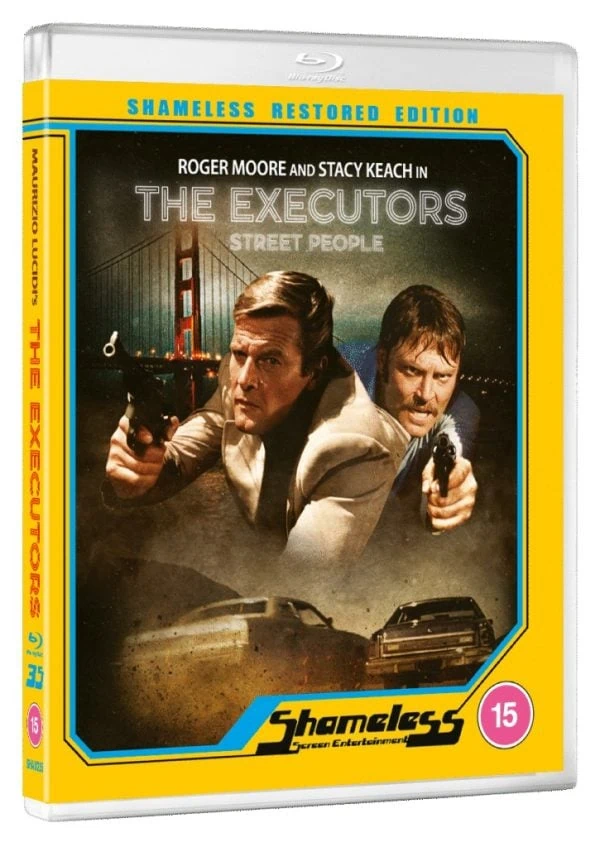
Recently brought back into the cultural conversation via a polished new Blu-ray home video release from Shameless Screen Entertainment, this forgotten genre hybrid offers modern audiences a fascinating window into mid-seventies guerrilla filmmaking. Boasting frantic San Francisco street chases, a wonderfully mismatched lead pairing, and a convoluted yet endlessly entertaining narrative, The Executors stands as a testament to the era’s penchant for transatlantic collaboration. This exhaustive retrospective examines the film’s production history, narrative structure, star dynamics, and enduring cult status within physical media circles.
Detailed Chronology: The Making and Mechanics of a Transatlantic Caper
To fully appreciate The Executors (1976), one must trace its roots back to the height of the 1970s crime wave. By the mid-1970s, Italian cinema was undergoing a distinct tonal shift. The spaghetti westerns that had dominated the previous decade were giving way to contemporary urban thrillers. Directors like Umberto Lenzi, Fernando Di Leo, and Maurizio Lucidi recognized a global appetite for faster, harder-edged crime dramas characterized by screeching tires, jazz-funk scores, and unflinching violence.

Lucidi’s production was conceptualized as a bridge between European exploitation thrills and Hollywood-scale action geography. Set primarily in San Francisco—a city immortalized for car chases by films like Bullitt (1968) and Dirty Harry (1971)—the narrative kicks off with a bizarre piece of contraband. A powerful mafia boss, Salvatore Francesco (played with veteran authority by Ivo Garrani), commissions a massive ornamental crucifix to be shipped from Sicily to the United States and erected in San Francisco.
However, the sacred artifact turns out to be a hollow vessel concealing a massive heroin shipment. When the drugs are intercepted and stolen on American soil, Francesco finds himself the prime suspect among his criminal peers, sparking a rage that threatens to tear his empire apart. Desperate to clear his name and recover the stolen product, the mob boss dispatches his nephew and legal counsel, Ulisse (Roger Moore).
Ulisse is far from a traditional courtroom attorney; polished, unflappable, and possessed of a subtle lethal streak, he recognizes that legal briefs won’t solve this crisis. He recruits his close friend Charlie Hanson (Stacy Keach), a high-octane professional racing driver with an appetite for danger and property destruction. What follows is a globe-trotting, bullet-riddled investigation that takes the duo from opulent Italian estates to the foggy, undulating asphalt of Northern California. As the plot unfurls, the initial drug-heist mystery deepens, dragging Ulisse into a web of uncomfortable family secrets and shifting allegiances that challenge his very identity.
Supporting Context & Metrics: Behind the Scenes and Guerrilla Filmmaking
The production of The Executors was defined by a unique set of logistical challenges and casting dynamics that continue to fascinate film historians. Understanding the movie’s production context requires looking at where its primary stars were in their respective careers during 1976.
The Stardom Equation: Moore and Keach
For Roger Moore, 1976 was a pivotal year. Having already donned the iconic tuxedo twice as James Bond in Live and Let Die (1973) and The Man with the Golden Gun (1974), Moore was right in the middle of his tenure as 007, preparing to shoot what many consider his finest outing, The Spy Who Loved Me (1977). Stepping into an Italian-financed crime thriller allowed Moore to experiment with a slightly earthier, though still impeccably dressed, persona. While critics have often noted that Moore struggles slightly to convince audiences he is a half-Sicilian mob lawyer, his sheer screen presence and dry wit provide a crucial anchor for a script that frequently threatens to spin off its narrative rails.
Conversely, Stacy Keach was a rising talent in American cinema, having recently garnered critical acclaim for films like Fat City (1972) and The Life and Times of Judge Roy Bean (1972). In retrospective interviews included on the Shameless Screen Entertainment release, Keach fondly recalls his time working alongside Moore. Far from the typical Hollywood ego clashes, Keach praised Moore for creating an open, collaborative environment on set, generously giving his co-star room to breathe and craft his performance.
Guerrilla Logistics on the Streets of San Francisco
One of the most notable aspects of The Executors is its action choreography, particularly its vehicular stunt work. San Francisco’s topography—defined by its legendary, plunging hills—provided an ideal canvas for director Maurizio Lucidi to craft high-speed pursuits reminiscent of Hollywood classics. However, as Keach revealed in special feature interviews, the production operated under severe financial and bureaucratic constraints.
Crucially, the production team did not secure official permits to film many of their action sequences on the streets of San Francisco. Consequently, the crew was forced to adopt a guerrilla-style filmmaking approach. Cameras were hidden or set up rapidly, and cars were hurled down public thoroughfares with minimal municipal oversight.
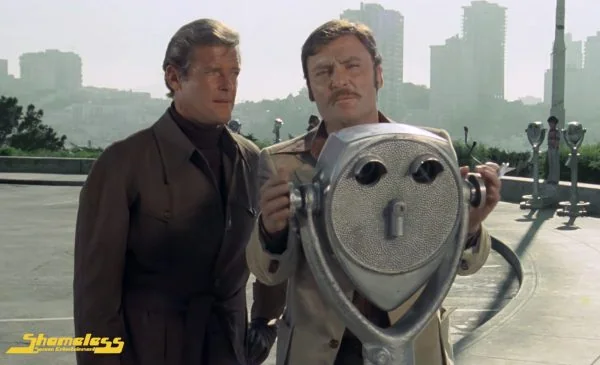
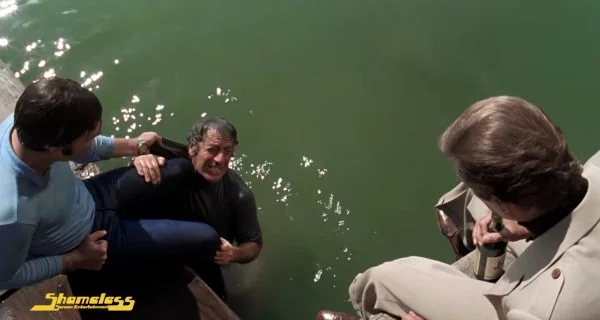
This unauthorized, run-and-gun methodology naturally resulted in distinct continuity quirks. Keen-eyed viewers will notice classic editing anomalies—such as Keach’s racing vehicle sustaining heavy structural damage in one shot, only to appear completely pristine and intact moments later. Yet, rather than ruining the viewing experience, these rough edges lend the film an authentic, raw energy that polished Hollywood blockbusters often lack. The danger onscreen was palpable because, in many instances, it was genuinely happening in real-time traffic.
Official Statements & Critical Reception
Upon its initial release, The Executors was often viewed as a standard-issue European genre entry—marketed heavily in various territories to capitalize on Moore’s burgeoning international fame as James Bond. Early promotional materials frequently leaned into his 007 association, featuring stylistic artwork that promised high-stakes espionage thrills, even though the film is firmly rooted in the sleazier, morally gray world of organized crime.
In modern reappraisals, critics have reassessed the film’s unique charm. Contemporary genre reviews, such as those highlighted in physical media circles by outlets like Flickering Myth, award the feature a solid three-out-of-five-star rating for its sheer entertainment value. Reviewers frequently emphasize that while the film’s plotting becomes increasingly muddled and convoluted by the third act, the undeniable chemistry between Moore and Keach rescues the project from mediocrity.
Davide Pulici of Nocturno, featured in the archival interview supplements of the modern Blu-ray release, notes that The Executors represents a fascinating intersection of styles:
"It captures a specific golden era of European genre filmmaking where international casts were thrown together into American crime landscapes, relying entirely on star wattage and kinetic action to smooth over narrative cracks."
Future Outlook: The Cult Revival and Physical Media Preservation
As major Hollywood studios increasingly homogenize their release slates, the appetite for eccentric, lost, and rediscovered genre cinema has never been stronger. Boutique home video labels have taken on the vital mantle of cultural preservation, rescuing titles like The Executors from the obscurity of public-domain VHS tapes and late-night television slots.
Shameless Screen Entertainment’s definitive Blu-ray release serves as a masterclass in how to curate a cult classic. Featuring a fresh, high-definition digital restoration that cleans up the sun-drenched Italian vistas and the foggy San Francisco bays alike, the release treats a minor 1970s curio with unexpected reverence. Complete with comprehensive archival interviews (including Stacy Keach’s insightful reflections), critical commentary supplements, and a reversible sleeve sporting the original exploitation-heavy theatrical poster art, the package ensures the film finds a new lease on life among modern physical media collectors.
Looking forward, the legacy of The Executors is secure not as high art, but as an endlessly watchable artifact of 1970s pop-culture cross-pollination. It reminds modern audiences of a time when James Bond could trade his Walther PPK for a mob lawyer’s briefcase, jump into a car with a gravel-voiced American character actor, and tear recklessly down the hills of San Francisco without a single studio permit in sight. For fans of retro action, Euro-crime, and unmatched mid-century star chemistry, The Executors remains an essential, petrol-fueled trip down memory lane.







Belum ada komentar. Jadilah yang pertama berkomentar!