

Executive Overview
Decades after its initial, largely overlooked creation, the formidable 1980 film Personal Problems has found new life through a special re-release at select London venues as part of The Final Film Festival, a showcase dedicated to rare and radical cinema. Directed by visionary auteur Bill Gunn and written by renowned literary icon Ishmael Reed, the film occupies a unique and eccentric space in the annals of American independent filmmaking.
Originally conceived as a two-part television project before being rejected by mainstream broadcasters, Personal Problems has traversed a long and arduous path to public appreciation. Thanks to extensive preservation work—including a definitive restoration and home-video release by Kino Lorber—modern audiences are finally grappling with its singular cinematic vision.
The film eludes easy classification. It has frequently been described as a "legendary meta soap-opera," a label that is accurate yet entirely insufficient to capture its scope. Blending a heightened, melodramatic narrative framework with an unyielding documentary-style commitment to the realities of African-American working-class life, Personal Problems defies conventional narrative boundaries. While its anarchic approach to plotting and disordered narrative threads occasionally prevent it from achieving the tight structural cohesion of a traditional canonized indie, these very "shortcomings" map directly onto its chaotic, experimental production history.
Today, as cinematic storytelling continues to push against traditional formats, Personal Problems stands out not merely as a historical curiosity, but as an astonishingly prescient work. Shot on pioneering video technology, it anticipated the digital revolution, the aesthetics of 21st-century mockumentaries, and a radical ethos of self-representation that remains profoundly relevant.
Detailed Chronology: From Bureaucratic Rejection to Cult Re-emergence
To understand the monumental significance of Personal Problems, one must trace its complex, turbulent history from conception to its current renaissance.
The Genesis and Production (Late 1970s – 1980)
In the late 1970s, writer Ishmael Reed and director Bill Gunn set out to craft a project that would authentically capture the interior and exterior realities of Black urban life in America. Initially envisioned as a serialized television presentation in two parts, the project sought to bypass the white-dominated gatekeepers of traditional media by securing institutional funding and independent production avenues.
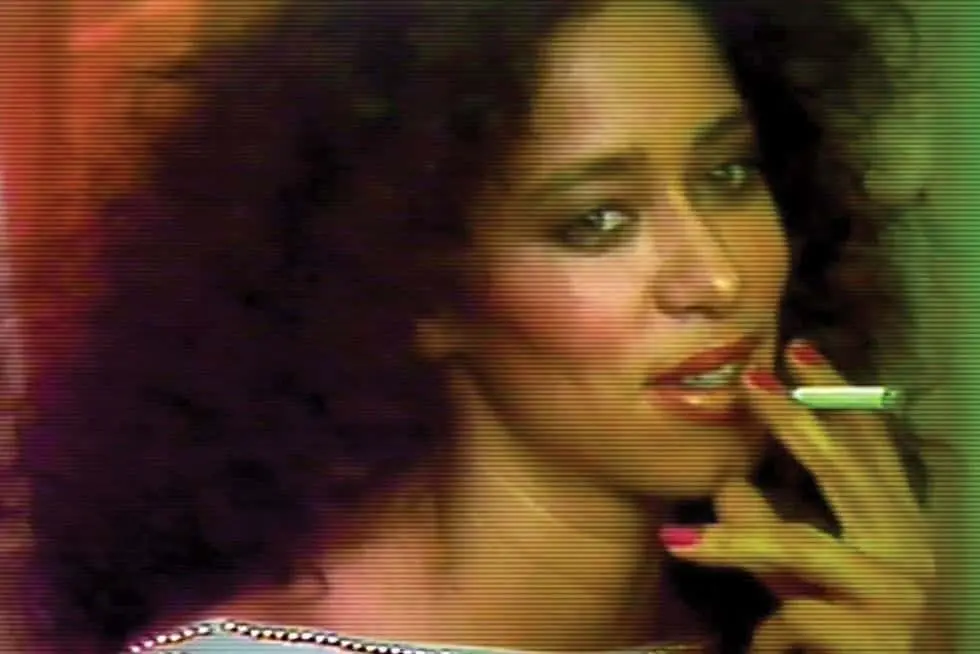
Gunn, celebrated for his avant-garde sensibilities (Ganja & Hess), and Reed, a towering figure in postmodern American literature, injected the production with a sharp, uncompromising cultural critique. They enlisted a remarkable cast, headlined by non-professional actor Vertamae Smart-Grosvenor as Johnnie Mae Brown. Rather than relying on polished Hollywood actors, the production drew heavily from New York’s vibrant community of artists, writers, and cultural workers, lending the project an undeniable aura of lived authenticity.
Broadcaster Rejection and the Wilderness Years (1980s – 1990s)
Upon completion, Personal Problems faced a wall of institutional indifference. Major television networks and commercial distributors rejected the project, deeming it too structurally unconventional, formally jarring, and commercially unviable.
Left without a traditional broadcast or theatrical footprint, the film entered a prolonged period of obscurity. For years, it existed primarily as a phantom artifact, circulating only through small, underground community screenings, academic settings, and word-of-mouth among dedicated cinephiles who recognized the audacity of Gunn and Reed’s vision.
Restoration and the Kino Lorber Renaissance (2010s – 2026)
The modern rehabilitation of Personal Problems represents a triumph of film archiving. Through meticulous restoration efforts, the fragile source elements were rescued from decay, allowing the film to be properly mastered for contemporary exhibition.
The subsequent DVD and digital release by Kino Lorber opened the floodgates for a critical reassessment. By 2026, its inclusion in high-profile showcases like London’s Final Film Festival cemented its transition from an obscure underground tape into a celebrated milestone of radical Black cinema.
Supporting Context & Metrics: Form, Technology, and Cinematic Precedents
The "Meta Soap-Opera" and Narrative Subversion
At first glance, Personal Problems utilizes the familiar architecture of the soap opera: a focus on melodramatic interpersonal conflicts, intense emotional close-ups, and an intimate exploration of a tight-knit circle of characters. However, Gunn and Reed immediately subvert this framework.
The film opens with a direct-to-camera interview featuring its lead protagonist, Johnnie Mae Brown (delivered in a breathtaking, naturalistic performance by Vertamae Smart-Grosvenor). This initial "meta" framing device creates an expectation of a documentary-hybrid format—one that might have utilized continuous talking-head interviews to dissect the action, akin to the structural framing devices later deployed by Peter Watkins, or utilized direct fourth-wall breaks reminiscent of Phoebe Waller-Bridge’s Fleabag (2016–19).
Instead, Personal Problems abandons the traditional interview format almost entirely after its opening moments. It relies instead on elliptical editing, refusing to over-explain motivations. The narrative flows organically through music-driven montage sequences and scenes that simply allow action to speak for itself.
Capturing the Rhythm of Real Life
What anchors the film’s sprawling narrative is its hyper-focus on the "small things"—the microscopic textures of everyday African-American urban existence. Gunn and Reed construct their key set pieces around recognizable social and institutional landscapes:

- The absurd bureaucracies and workplace politics of a state-run office.
- The uncomfortable tension of a man making inappropriate advances toward a teenage girl.
- The performative discourse of a loudmouth social justice warrior holding court at a house party.
By grounding their story in these specific, unvarnished micro-interactions, the filmmakers construct a panoramic macro-view of working-class life. We witness firsthand the systemic forces that shape their existence, complicate their inner lives, and ultimately provide them with purpose and meaning.
Technological Pioneering: Anticipating the Digital Age
One of the most remarkable technical aspects of Personal Problems is its medium. Shot during a period when video technology was newly emerging as a viable alternative to celluloid, the production adopted a minimalist, "get whatever we can" methodology.
Shorn of the sleek artificiality and high polish of contemporary studio formats, this lo-fi video approach yields staggering aesthetic dividends. It captures a lucid, unvarnished sense of reality. At the time of its creation, pioneers hoped that video technology would democratize filmmaking by slashing astronomical production costs—a prophetic vision fully realized decades later with the advent of affordable digital sensors and modern smartphones.
In its handling of video, Personal Problems achieves a mastery comparable to Jean-Luc Godard’s late-period video explorations in works like Éloge de l’Amour (2000) and Rise and Fall of a Small Film Company (1986). Featuring rough framing, jittery handheld camera movements, and heavy reliance on available, uncorrected light, Gunn’s direction predates the documentary-vérité aesthetic that would later come to dominate 21st-century television comedies such as The Office UK (2001–03) and The Thick of It (2005–12).
Placing Personal Problems in the Independent Canon
Historically, Personal Problems belongs to the fertile era of American independent cinema that birthed masterworks like John Cassavetes’ Faces (1968) and Charles Burnett’s Killer of Sheep (1978)—works that established independent film as a fiercely maverick, anti-Hollywood force.
While comparisons to Cassavetes and Burnett are inevitable, Personal Problems occupies its own distinct stylistic territory. It lacks the hyper-realist psychological density of Cassavetes, and it foregoes the rhythmic, jazz-like spontaneity of Burnett’s masterpiece. Yet, it shares their shared dedication to emotional honesty and human dignity.
Official Statements and Critical Reception
The critical reappraisal of Personal Problems has generated substantial dialogue among film historians, programmers, and contemporary artists.
Cultural critics have increasingly emphasized the film’s role as an invaluable historical document. Speaking on the motivations behind the preservation efforts, curatorial teams involved in its festival runs have noted:
"Bill Gunn and Ishmael Reed did not set out to make a polite, palatable artifact for white institutional approval. They constructed an uncompromising mirror for a community that had long been ignored, distorted, or completely erased by mainstream media channels. To watch Personal Problems today is to witness an act of profound cultural preservation and artistic liberation."
Film scholars have similarly pointed out the irony of its initial rejection versus its current status. Where 1980s television executives saw "disorder" and "unmarketability," modern audiences recognize narrative pluralism and formal innovation. Kino Lorber’s distribution notes describe the film as:
"…an unclassifiable lightning-in-a-bottle achievement—a work that marries the vernacular poetry of Ishmael Reed’s writing with Bill Gunn’s radically empathetic eye for human vulnerability."
Future Outlook: The Legacy of Gunn and Reed in Modern Cinema
As Personal Problems continues to screen for new generations of filmgoers through festival circuits and home video, its shadow looms larger over contemporary independent filmmaking.
The aesthetic barriers that once relegated video-based storytelling to the margins have utterly collapsed. Today, filmmakers routinely embrace lo-fi aesthetics, mixed-media framing, and documentary hybridity to tell stories outside the studio system—methods that Bill Gunn and Ishmael Reed championed nearly half a century ago.
Furthermore, the film’s rediscovery encourages a broader, much-needed excavation of marginalized cinematic history. It serves as a reminder that the canon of classic American independent cinema is far wider, stranger, and more diverse than standard historical accounts have traditionally suggested.
By refusing to compromise its messy, beautiful, and authentic representation of life, Personal Problems has secured its rightful place not as a footnote, but as a towering monument of radical artistic vision. Its ongoing revival ensures that the vital pulse of Johnnie Mae Brown’s world will continue to challenge, move, and inspire audiences for generations to come.





Belum ada komentar. Jadilah yang pertama berkomentar!