

SHIZUOKA, JAPAN — In an era dominated by relentless digital stimulation and the fast pace of modern urban life, the pursuit of mindfulness has evolved from a niche wellness trend into a vital lifestyle necessity. Responding to this global shift toward contemplative tourism, the historic Fukuchizan Shuzenji Temple—nestled in the heart of the renowned hot spring resort town of Izu City, Shizuoka Prefecture—has announced an exclusive, highly curated sutra-copying (shakyo) workshop. Scheduled for Sunday, October 11, 2026, this immersive cultural event offers participants a rare gateway into traditional Japanese meditative practices within the serene confines of an ancient, spiritually rich architectural landmark.
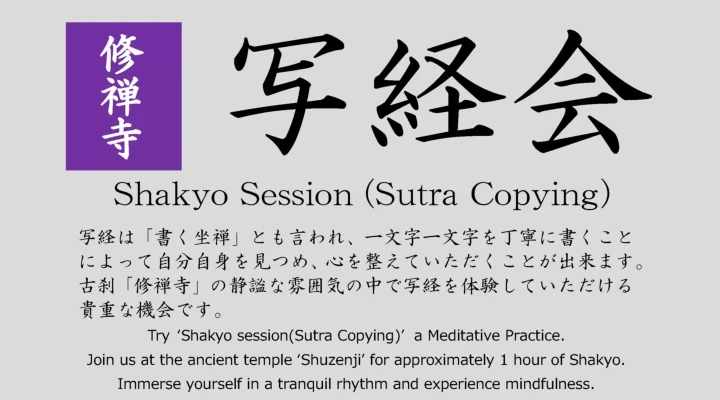
Often poetically referred to as "writing zazen," the practice of shakyo involves the meticulous, brush-stroke-by-brush-stroke transcription of Buddhist scriptures. Far more than a mere calligraphy exercise, sutra copying is a profound moving meditation designed to center the mind, calm the nervous system, and cultivate deep inner peace. By opening its doors for this specialized autumn session, Shuzenji Temple invites both domestic and international travelers to pause, breathe, and connect with centuries of Japanese spiritual heritage.
Executive Overview: Bridging Ancient Heritage and Modern Mindfulness
The upcoming workshop at Shuzenji Temple is meticulously designed to lower the barrier to entry for novices while preserving the authentic gravity of the spiritual tradition. Eschewing the need for intimidating traditional ink stones and animal-hair brushes that require advanced technical skill, the temple has opted to provide modern, user-friendly brush pens. This thoughtful accommodation ensures that even absolute beginners can step into the practice without anxiety over their calligraphic prowess.
Set against the vibrant backdrop of Izu’s early autumn foliage, the program is rigorously structured to maximize participant engagement without overwhelming the schedule. Priced at an accessible 2,000 yen per person, the all-inclusive fee covers the sutra-copying materials, admission to the temple’s esteemed Treasure Museum, an authentic temple seal (shuin), and a guided tour of the meticulously maintained temple gardens.
However, exclusivity is built into the fabric of the event. To preserve the meditative atmosphere and ensure personalized attention from the temple guides, capacity is strictly capped at just 12 participants. Furthermore, stringent eligibility criteria—restricting attendance to junior high school students and above, while noting accessibility limitations—underscore the temple’s commitment to maintaining a quiet, contemplative environment. Reservations are mandatory and must be coordinated through the Shuzenji SGG (Shuzenji Goodwill Guide) official portal, emphasizing the meticulous logistical planning underpinning this boutique cultural offering.
Detailed Chronology and Event Logistics
For travelers and mindfulness seekers planning to attend the October 2026 session, understanding the precise timeline and logistical framework is paramount. The event is structured to provide a comprehensive, unhurried cultural immersion over the course of approximately two hours.
The Schedule of Events
- Date: Sunday, October 11, 2026
- Reporting & Start Time: 10:00 AM sharp
- Total Duration: Approximately 2 hours (inclusive of introductory explanations, the 1-hour sutra-copying session, museum viewing, and garden tours)
Financial and Administrative Framework
- Participation Fee: 2,000 Japanese Yen (JPY) per person.
- Note on inclusions: The fee is all-inclusive, covering transcription materials, Treasure Museum entry, a collectible temple seal, and the garden tour.
- Payment Method: Cash only. Participants are strongly advised to secure exact change prior to arrival, as digital payment terminals and change-making facilities for large banknotes may not be readily available on-site within the historic temple office.
- Application Deadline: Saturday, October 10, 2026, at 9:00 PM (the night before the session). Late applications will not be processed under any circumstances due to strict material preparation limits.
Participant Requirements and Restrictions
While Shuzenji Temple prides itself on hospitality, historical architecture inherently presents physical barriers. Consequently, organizers have established clear parameters regarding safety and accessibility:
- Age Requirement: Restricted to junior high school students and above. This ensures that attendees possess the attention span and emotional maturity required for a silent, hour-long meditative exercise.
- Accessibility Notice: Participants in wheelchairs are unfortunately not permitted. The historic nature of the temple buildings includes traditional steps, raised thresholds, and uneven terrain that preclude safe wheelchair navigation within the specific administrative and exhibition zones utilized for the workshop.
- Reservation Confirmation Protocol: Submitting an inquiry through the reservation portal (
https://shuzenji-sgg.com/shakyo.html) does not immediately guarantee a seat. Reservations are officially confirmed only upon receipt of a direct reply and confirmation notice from Shuzenji SGG. Given the strict 12-person cap, prospective attendees are encouraged to secure their slots well in advance of the deadline.
Supporting Context & Metrics: The Historical Weight of Fukuchizan Shuzenji Temple
To fully appreciate the significance of participating in shakyo at Shuzenji, one must understand the profound historical lineage of the venue itself. Located at 964 Shuzenji, Izu City, Shizuoka Prefecture (Postal Code: 410-2416), Fukuchizan Shuzenji Temple is far more than a local landmark; it is a foundational pillar of regional history and spiritual development on the Izu Peninsula.
Foundation and Early Origins
The temple’s origins trace back deep into the Heian period. According to temple records, Shuzenji was founded in the second year of Daido (807 AD) by the legendary Buddhist monk Kobo Daishi Kukai (774–835), the visionary founder of the Shingon sect of Japanese Buddhism. During its formative years, the temple served as a vibrant center for esoteric Buddhist studies and mountain asceticism (shugendo).
Sectarian Evolution and Reconstruction
Over the centuries, Shuzenji bore witness to the shifting tides of Japanese feudal history. During the Kencho era (1249–1255), the temple underwent a major philosophical transition, shifting its affiliation to the Rinzai sect of Zen Buddhism.
![[Shizuoka/ Izu] October 11th (Sun) Sutra Copying Session at Shuzenji Temple (Reservations required)](https://resources.matcha-jp.com/resize/720x2000/2025/05/31-235020.webp)
Like many religious institutions of medieval Japan, Shuzenji was not spared the devastation of civil conflict. In 1409, the temple buildings were utterly reduced to ashes during regional warfare. However, the sacred site was later rescued from obscurity and magnificently rebuilt by Hojo Soun (1432–1519), the brilliant military strategist who laid the foundations for the Late Hojo clan and ruled Izu Province. Following this reconstruction, the temple transitioned once more, ultimately adopting the Soto sect affiliation that it maintains to the present day.
Modern Cultural Significance
Today, Shuzenji Temple occupies the geographic and cultural heart of the famous Shuzenji hot spring (onsen) town—frequently celebrated as the "Little Kyoto of Izu." Flanked by lush bamboo groves, historic ryokans, and the tranquil flow of the Katsura River, the temple serves as an anchor for tourism on the peninsula.
By integrating modern travelers into its living heritage through programs like the upcoming sutra-copying workshop, Shuzenji bridges a millennium of history, allowing contemporary visitors to tread the exact paths once walked by monks, warlords, and classical Japanese literary figures.
Official Statements and Cultural Commentary
Cultural heritage experts and tourism boards have increasingly emphasized the economic and social value of "slow tourism"—a movement that encourages travelers to engage deeply with local communities rather than merely ticking off sightseeing checkboxes. The introduction of structured, intimate workshops at temples like Shuzenji represents the gold standard of this philosophy.
In discussions surrounding the preservation of sacred spaces, temple administrators frequently highlight that shakyo is not intended to be a spectator sport or a commercial tourist trap. Rather, it is a living ritual.
"When an individual sits down with a brush pen to copy a sutra, they are entering into a dialogue with the past," notes a regional tourism coordinator familiar with the Izu heritage preservation projects. "The ink flows, the breathing slows down, and the ambient noise of the twenty-first century begins to fade. In an age where mental health challenges are at an all-time high, offering people a structured hour of enforced silence within a temple founded over twelve centuries ago is a profound public service."
Furthermore, the inclusion of the Treasure Museum tour and the garden walk within the modest 2,000-yen fee reflects an institutional philosophy prioritizing cultural education over revenue maximization. The Treasure Museum houses priceless artifacts, historical documents, and artistic relics tied to the Kamakura shogunate and the tragic history of the Minamoto clan—who had deep, often turbulent ties to Shuzenji.
Future Outlook: The Evolution of Contemplative Tourism in Shizuoka
As the tourism landscape continues to rebound and transform in the mid-2020s, destinations across Japan are shifting away from mass tourism models toward high-value, low-impact cultural experiences. Shizuoka Prefecture, traditionally celebrated for its iconic views of Mount Fuji and its sprawling green tea plantations, is rapidly establishing itself as a premier destination for holistic wellness and historical exploration.
The success of the October 11, 2026 sutra-copying session at Shuzenji Temple will likely serve as a blueprint for future programming. Industry analysts predict an exponential rise in demand for authentic, monk-led meditative retreats among international travelers seeking cultural authenticity. By maintaining strict caps on class sizes—such as the 12-person limit enforced here—cultural heritage sites can protect their fragile architecture from wear and tear while providing an intimate, high-quality experience that resonates deeply with participants.
For those fortunate enough to secure one of the twelve coveted spots for the autumn 2026 workshop, the experience promises to be transformative. It is an invitation to step outside the rushing current of modern life, sit quietly beneath the eaves of an ancient Soto Zen temple, and discover—stroke by stroke—the enduring power of stillness.
Quick Reference Guide for Attendees
- What: Sutra Copying (Shakyo) Workshop & Temple Tour
- Where: Fukuchizan Shuzenji Temple (964 Shuzenji, Izu City, Shizuoka Prefecture)
- When: Sunday, October 11, 2026, at 10:00 AM (Duration: ~2 hours)
- Cost: 2,000 JPY (Cash only; includes materials, museum entry, temple seal, and garden tour)
- Capacity: Maximum 12 people (Reservations mandatory via official portal)
- Eligibility: Junior high school students and above (Wheelchair access unavailable)
- Booking Link: https://shuzenji-sgg.com/shakyo.html









Belum ada komentar. Jadilah yang pertama berkomentar!