

Executive Overview
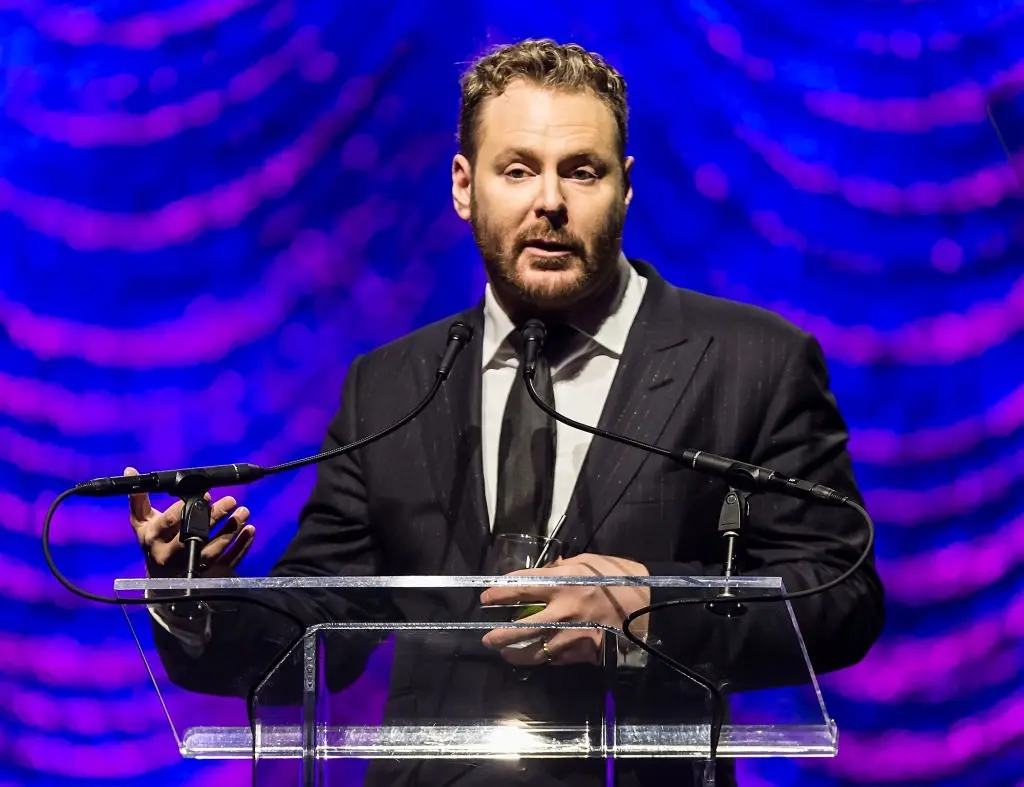
Two and a half decades after upending the global recording industry with the peer-to-peer file-sharing network Napster, tech billionaire and entrepreneur Sean Parker is staging a calculated return to the music business. This time, however, the playbook is entirely different. Instead of relying on the internet-era mantra of "move fast and break things" or asking for forgiveness rather than permission—a strategy that ultimately led to Napster’s high-profile legal demise in the early 2000s—Parker is taking a strikingly cooperative approach.
Now serving as a key figurehead and financial backer behind Stability AI, Parker is spearheading a deliberate pivot to transform the once-embattled image-generation startup into an authorized, compliant artificial intelligence powerhouse for the professional music industry.
The strategy materialized in spectacular fashion through a structural reorganization and a heavily backed funding campaign. Two years after stepping in to orchestrate an $80 million rescue operation for Stability AI—following a period of severe cash burn, internal executive turmoil, and the ouster of founder Emad Mostaque—Parker and newly appointed CEO Prem Akkaraju have pivoted the company toward audio generation.
In late August, Stability AI announced a massive $76 million funding round featuring direct investments from the "Big Three" major record labels: Sony Music Entertainment, Warner Music Group, and Universal Music Group. Crucially, these financial partnerships were paired with extensive data-licensing agreements, granting Stability AI legal access to vast commercial music catalogs to train its next generation of generative audio models.
Having already rolled out three advanced audio models and specialized AI music-editing software, Stability AI is positioning itself as an essential, litigation-free partner to major creative institutions. With upcoming feature releases poised to introduce multimodal inputs—allowing users to hum melodies or beatbox rhythm patterns directly into the software—Parker’s latest venture sits squarely at the bleeding edge of intellectual property law, generative technology, and commercial music production.
Detailed Chronology: From Napster’s Ashes to Stability’s Transformation
The Napster Precedent (1999–2001)
To understand Sean Parker’s current strategy, one must examine his formative years in technology. Alongside Shawn Fanning, Parker launched Napster in 1999 while still a teenager. The software allowed users to share MP3 files directly, bypassing traditional record stores and physical distribution. While wildly popular among consumers, the platform posed an existential threat to the Recording Industry Association of America (RIAA) and major labels, who swiftly filed devastating copyright infringement lawsuits. Napster was forced into bankruptcy by 2001. It was a textbook lesson in the perils of disrupting an entrenched industry without securing the rights of copyright holders.
The Wilderness Years and Tech Ascendancy
Following Napster, Parker became a central figure in Silicon Valley lore. He served as the first president of Facebook, helping guide its early monetization and corporate structure, and later co-founded Plaxo and Airtime, while becoming a prolific venture capitalist and philanthropist. Yet, his relationship with the entertainment and music industries remained complex, defined by his early role as the ultimate industry antagonist.
The Stability AI Crisis (2022–2024)
Fast-forward to the generative AI boom of the mid-2020s. Stability AI, the company behind the open-weights image generator Stable Diffusion, captured the world’s imagination. However, rapid growth gave way to severe operational friction. Driven by high computing costs, mounting copyright lawsuits from artists and stock photo agencies, and internal disagreements, the startup spiraled into crisis. Founder Emad Mostaque stepped down amid turmoil, leaving the company severely cash-strapped and teetering on the edge of insolvency.
The Rescue and Pivot (2024–2026)
Recognizing an opportunity to reshape the generative media landscape, Sean Parker stepped in alongside a consortium of investors to orchestrate an $80 million rescue package for Stability AI. Parker brought in his longtime friend and media executive Prem Akkaraju—former CEO of visual effects giant Wētā Digital—to take the reins as chief executive officer.
Under Akkaraju and Parker’s guidance, Stability AI executed a strategic pivot. While maintaining its foundation in open-source and commercial generative models, the company heavily prioritized audio engineering. By partnering directly with the major music conglomerates, Stability AI sought to neutralize the legal vulnerabilities that plagued competitors like Suno and Udio, both of which faced sweeping copyright lawsuits from major labels for allegedly training models on copyrighted tracks without authorization.
The August 2026 Funding Milestone
The culmination of this rehabilitation strategy arrived in late August 2026, when Stability AI closed a fresh $76 million funding round. Unlike standard venture capital injections driven solely by tech-focused funds, this round featured strategic capital from Sony, Warner, and Universal. These investments served as a public seal of approval, cementing Stability AI’s transition from an intellectual property pariah into an enterprise-grade, label-approved technology partner.
Supporting Context, Market Dynamics, and Metrics
The Generative Audio Gold Rush
The market for generative AI in music is expanding at an exponential rate. According to industry analyses, the global market for AI-driven audio software is projected to scale into a multibillion-dollar sector over the decade. Producers, film scorers, game developers, and independent artists are increasingly seeking tools to streamline asset creation, loop generation, and sonic experimentation.
However, the sector has been hampassed by legal uncertainty. The Recording Industry Association of America (RIAA) and major record labels launched aggressive legal campaigns against uncoordinated AI music startups, arguing that scraping copyrighted music databases without permission constitutes massive copyright infringement. Stability AI’s calculated decision to license catalogs before releasing commercial audio models effectively insulates it from the systemic legal risk facing its competitors.

Financial Breakdown of the Pivot
- Initial Rescue (2024): $80 million emergency funding round led by Sean Parker and aligned investors to stabilize operations following Emad Mostaque’s departure.
- Strategic Expansion Round (August 2026): $76 million secured from major institutional and strategic investors, prominently featuring Sony Music Entertainment, Warner Music Group, and Universal Music Group.
- Model Portfolio: Three specialized audio models released to date, accompanied by dedicated AI music-editing software suites capable of text-to-instrument generation and short snippet rendering.
Technical Evolution: From Text Prompts to Hummed Melodies
While early iterations of generative audio relied exclusively on text prompts (e.g., "Generate an upbeat 120 BPM synth-pop instrumental with a driving bassline"), Stability AI’s upcoming software updates are pushing into multimodal audio processing.
According to product roadmap disclosures, the next generation of Stability’s software will accept audio-based inputs. Creators will be able to hum a rough melody, tap out a rhythm on a desk, or beatbox a drum pattern into a microphone. The AI will then translate these raw human inputs into fully articulated, professionally mixed instrumental tracks or rhythmic layers. This bridges the gap between raw human creativity and machine-generated speed, positioning the tool as a collaborator rather than a replacement for human musicians.
Official Statements and Industry Perspectives
The partnership between Silicon Valley capital and major label intellectual property represents a profound philosophical shift in how the tech industry approaches creative disruption.
In a revealing interview with The Information, Sean Parker candidly reflected on his past mistakes, drawing a sharp contrast between his twenty-something self at Napster and his current role at Stability AI:
"Asking for forgiveness rather than permission didn’t work out so well last time around," Parker conceded, acknowledging the legal battles that dismantled Napster. "We are playing by the rules this time."
Parker’s sentiment is echoed by Prem Akkaraju, whose background in Hollywood visual effects bridges the traditional entertainment world with high-performance computing. Akkaraju emphasized that generative AI cannot succeed in the creative arts by alienating the very creators who build the culture. By working hand-in-hand with publishers and rights holders, Stability AI is attempting to build an ecosystem where technological innovation and copyright protection coexist.
Conversely, the broader music and tech communities remain deeply divided. Independent musicians and labor unions have voiced ongoing concerns regarding the long-term impact of generative models on session musicians, background vocalists, and copyright equity. Critics argue that even with major label blessing, training AI models on human art commodifies the creative output of generations past. However, major label executives have defended the deals, arguing that if generative AI is inevitable, participation and licensing are the only effective ways to protect artists’ economic interests and secure financial compensation.
Future Outlook: What Lies Ahead for Stability AI and Generative Music
As Stability AI integrates its newly acquired capital and licensed audio catalogs, the company faces both immense opportunity and rigorous execution challenges.
1. Enterprise Integration and DAW Adoption
For Stability AI’s music tools to achieve widespread commercial success, they must integrate seamlessly into existing digital audio workstations (DAWs) such as Ableton Live, Pro Tools, Logic Pro, and FL Studio. Rather than forcing producers to use standalone web interfaces, embedding these AI models directly into native plugin architectures will be critical to winning over professional producers and mix engineers.
2. Legal Precedent and Regulatory Scrutiny
While Stability AI’s direct-licensing deals with Sony, Warner, and Universal shield it from lawsuits by the Big Three, the broader legal landscape surrounding AI training data remains fluid. Courts are still grappling with the doctrines of "fair use" as applied to machine learning. Stability’s proactive approach may well become the gold standard blueprint for how tech startups must negotiate with legacy creative industries moving forward.
3. The Human-AI Collaborative Paradigm
Ultimately, Sean Parker’s second act in the music industry reflects a maturation of both the entrepreneur and the tech sector at large. The era of unilateral technological disruption—where internet platforms could flout copyright law with impunity—is drawing to a close.
By marrying high-powered generative audio research with legitimate enterprise partnerships, Parker and Stability AI are attempting to prove that the future of music production does not have to be a zero-sum war between artists and algorithms. Instead, as multimodal tools allow creators to shape AI models with their own hummed melodies and rhythmic beats, the horizon points toward a heavily integrated, legally sound collaborative future.








Belum ada komentar. Jadilah yang pertama berkomentar!