

Executive Overview
The mobile gaming landscape is on the cusp of a seismic shift, and Lenovo is positioning itself at the very vanguard of this evolution. Following the recent official teaser unveiling the striking aesthetic design of the upcoming Lenovo Legion Y90 gaming smartphone, the tech community has received a massive data dump detailing the device’s internal specifications. Originally surfacing via a prominent tipster on Weibo known as Panda is bald, these comprehensive hardware leaks have blown the lid off what consumers can expect from Lenovo’s next-generation flagship gaming machine.
In an era where smartphone manufacturers continually push the boundaries of performance, thermal management, and display technology, the Legion Y90 appears to be playing in a league of its own. Rather than offering incremental updates over its predecessor, Lenovo is reportedly packing desktop-grade capabilities into a pocket-sized chassis. From a sprawling 6.92-inch high-refresh-rate AMOLED panel to a staggering configuration of up to 22GB of effective RAM, the Legion Y90 is engineered from the ground up to eliminate bottlenecks, minimize latency, and deliver uncompromised frame rates for the most demanding mobile titles on the market.
This comprehensive report examines the leaked specifications of the Lenovo Legion Y90, contextualizes its hardware within the broader mobile gaming ecosystem, evaluates the thermal and battery architecture required to sustain such immense power, and explores what this device signals for the future of portable entertainment. As we await the official launch window projected for the first half of 2022—alongside its sibling, the Legion Y700 gaming tablet—the mobile industry is watching closely to see if Lenovo can successfully translate these elite paper specs into a dominant real-world performance.
Detailed Chronology: From Design Teasers to Comprehensive Hardware Leaks
To fully appreciate the trajectory of the Lenovo Legion Y90, it is essential to trace the timeline of information that has led to our current understanding of the device. The narrative began with calculated, official teasers from Lenovo’s mobile division, which provided enthusiasts with their first official glimpses of the smartphone’s chassis, rear camera module placement, and distinctive gaming-centric design language.
The Initial Design Reveal
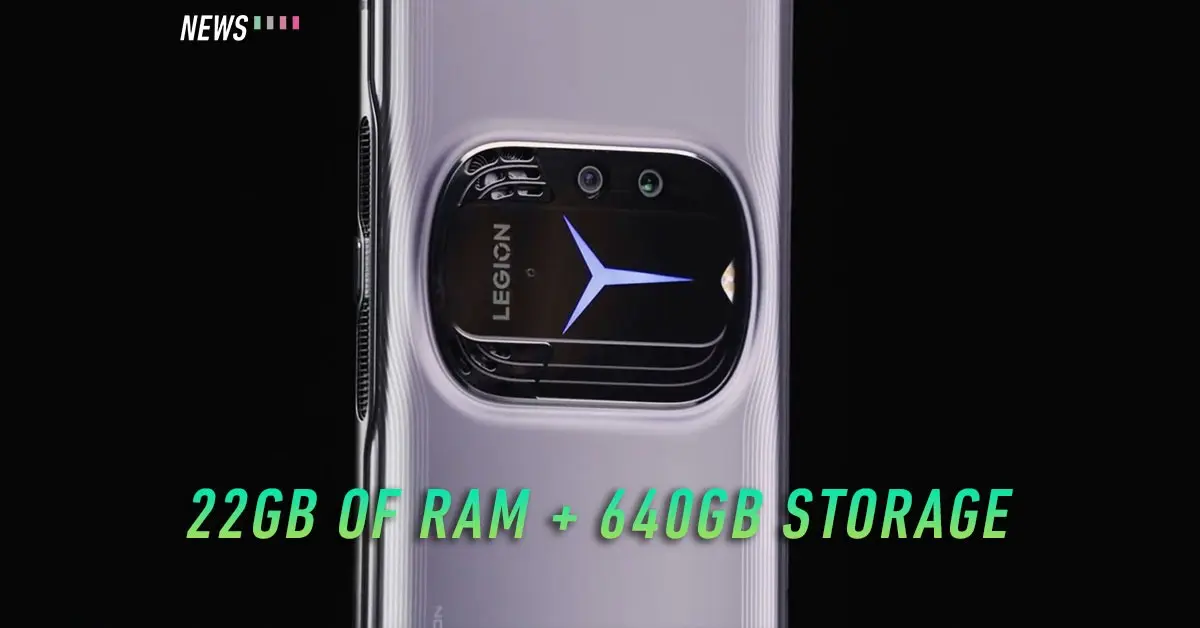
Lenovo’s early marketing strategy for the Legion Y90 focused heavily on visual identity. Gaming smartphones have historically polarized consumers with their aggressive, "gamer-centric" aesthetics—often featuring heavy angular lines, iridescent RGB backplates, and bulky camera bumps. The early design reveals for the Legion Y90 indicated that Lenovo was refining this approach. While retaining the structural integrity and aggressive ventilation necessary for a high-performance gaming phone, the visual language leaned toward a more balanced, futuristic symmetry.
The center-weighted design philosophy, a hallmark of previous Legion handsets, was once again front and center. This architectural choice is not merely cosmetic; it is fundamentally functional. By centralizing the heavy internal components, the device is engineered to rest comfortably in a landscape orientation, reducing wrist fatigue during extended gaming sessions.
The Leak: Panda is bald and Weibo Origins
While official teasers successfully generated consumer hype regarding the exterior, the internal anatomy of the Legion Y90 remained shrouded in mystery until the recent leak by Weibo user Panda is bald. Leaking out of China’s highly active tech-sphere, the detailed specifications sheet quickly spread across major tech publications, corroborating earlier industry rumors and providing concrete figures for the device’s display, chipset, memory configurations, and battery capacity.
The leaked promotional or internal documentation images provided a transparent look at the engineering targets Lenovo set for the Legion Y90. Rather than leaving enthusiasts to guess whether the device would feature minor upgrades, the leak revealed a maximum-effort configuration, confirming that Lenovo intends to challenge heavyweight competitors like ASUS ROG, RedMagic, and Black Shark directly.
Supporting Context & Metrics: Unpacking the Hardware Arsenal
A close inspection of the leaked data reveals a spec sheet that reads like a enthusiast’s wishlist. Every single subsystem of the Lenovo Legion Y90 has been meticulously optimized for high-performance computing, sensory immersion, and sustained endurance.
+-------------------------------------------------------------------------
|               LENOVO LEGION Y90: LEAKED SPECIFICATION MATRIX
+-----------------------+-------------------------------------------------
| Display               | 6.92-inch AMOLED, 144Hz Refresh Rate,
|                       | 720Hz Touch Sampling Rate
|-----------------------+-------------------------------------------------
| Processor (SoC)       | Qualcomm Snapdragon 8 Gen 1 (4nm)
|-----------------------+-------------------------------------------------
| Memory (RAM)          | 18GB physical RAM + 4GB Virtual RAM (Total 22GB)
|-----------------------+-------------------------------------------------
| Storage Capacity      | Up to 640GB
|-----------------------+-------------------------------------------------
| Battery & Charging    | 5,600mAh capacity with 68W Fast Charging
|-----------------------+-------------------------------------------------
| Cooling Technology    | Double Engine Air Cooling Technology
|-----------------------+-------------------------------------------------
| Audio & Haptics       | Dual Dolby Atmos Speakers, Dual X-Axis Motors
|-----------------------+-------------------------------------------------
| Physical Controls     | 2x2 Ultrasonic Shoulder Triggers
+-----------------------+-------------------------------------------------
The Visual and Tactile Interface: Display and Haptics
At the heart of the user experience is a massive 6.92-inch AMOLED display. For competitive mobile gamers, display real estate and responsiveness are critical metrics. The Legion Y90 panel does not disappoint, boasting a butter-smooth 144Hz refresh rate that ensures motion blur is virtually eliminated during fast-paced action sequences in titles like Call of Duty: Mobile, PUBG Mobile, and Genshin Impact.
Complementing the high refresh rate is an astonishing 720Hz touch sampling rate. This metric governs how many times per second the screen registers input from the user’s fingers. A higher touch sampling rate dramatically reduces input latency, ensuring that every swipe, tap, and multi-finger maneuver translates onto the screen with instantaneous precision.
To bridge the gap between visual input and physical feedback, Lenovo has integrated a dual X-axis linear motor system. X-axis motors are widely regarded as the gold standard for haptic feedback in modern smartphones, delivering crisp, nuanced vibrations that mimic mechanical clicks rather than the muddy buzz of older eccentric rotating mass (ERM) motors. Furthermore, the inclusion of 2×2 physical shoulder keys gives players console-like control schemes, transforming the edges of the phone into tactile L1/L2 and R1/R2 triggers.
Processing Might: Snapdragon 8 Gen 1 and 22GB of RAM
Under the hood, the Legion Y90 is powered by Qualcomm’s premier silicon: the Snapdragon 8 Gen 1 System-on-Chip (SoC). Built on an advanced 4nm manufacturing process, this processor features an ARM Cortex-X2 prime core alongside upgraded Adreno graphics architecture, offering a massive leap in both raw compute power and energy efficiency compared to previous generations.
However, raw processing power is meaningless if starved of memory bandwidth. Here, Lenovo has taken specs to an unprecedented extreme. The leaked documentation confirms a base configuration of 18GB of physical RAM. To push boundaries even further, the device supports 4GB of virtual RAM expansion, allowing the system to tap into storage space to push total available memory to an eye-watering 22GB. This massive memory pool ensures that background apps never get aggressively terminated, and memory-heavy gaming assets load instantaneously.
Storage capacity is equally impressive. Users can equip the Legion Y90 with up to 640GB of onboard storage. This colossal capacity ensures that gamers can keep an extensive library of high-fidelity titles—which frequently exceed 10GB to 20GB each—installed simultaneously without ever needing to worry about offloading data.
Endurance and Thermal Management: Battery and Cooling
High-performance components generate significant heat, and sustained performance requires elite thermal engineering. Gaming phones are particularly susceptible to thermal throttling, a phenomenon where the processor reduces its clock speed to prevent overheating. To combat this, the Legion Y90 features Double Engine Air Cooling Technology, a sophisticated active and passive cooling matrix designed to rapidly dissipate thermal energy away from the Snapdragon 8 Gen 1 chipset.
Powering this hardware assembly is a robust 5,600mAh battery. Mobile gaming is notoriously power-hungry, often draining standard smartphone batteries in a matter of hours. The 5,600mAh capacity provides a generous energy reserve for extended gaming sessions. When the battery eventually depletes, the included 68W fast charging technology ensures that downtime is kept to an absolute minimum, rapidly injecting life back into the dual-cell battery architecture.
For multimedia consumption outside of gaming, the device is equipped with dual Dolby Atmos stereo speakers, delivering expansive spatial audio that enhances movies, music, and gaming soundscapes alike.
Official Context and Ecosystem Strategy
The rollout of the Lenovo Legion Y90 does not occur in a vacuum; it is part of a broader, aggressive push by Lenovo to capture the hearts and minds of mobile enthusiasts and productivity-focused power users alike. Industry watchers have noted that the Legion Y90 is slated to launch alongside another highly anticipated device: the Lenovo Legion Y700 gaming tablet.
While the Legion Y90 caters to the user seeking an uncompromising smartphone experience, the Legion Y700 targets those who desire a larger form factor with unique productivity features, such as the ability to dynamically change aspect ratios for optimized gaming and media consumption. Together, these two devices solidify Lenovo’s ecosystem play, establishing the Legion brand not merely as a laptop and desktop sub-brand, but as a ubiquitous gaming powerhouse spanning multiple form factors.
Though Lenovo has yet to announce an exact, concrete release date beyond a broad "first half of 2022" window, the cadence of these leaks suggests that mass production is well underway and official commercial announcements are imminent.
Future Outlook: What the Legion Y90 Means for the Industry
The emergence of devices like the Lenovo Legion Y90 forces a re-evaluation of what a smartphone can and should be. For years, critics argued that specialized gaming phones were a niche gimmick, appealing only to a narrow demographic of hardcore mobile gamers. However, as mobile titles continue to close the graphical gap with traditional console and PC games, the hardware requirements for portable devices have converged with desktop computing standards.
Features once considered excessive—such as 18GB of RAM, 640GB of storage, 144Hz AMOLED displays, and active air-cooling technologies—are becoming the new benchmark for ultra-flagship performance. By pushing these specifications into the mainstream consciousness, Lenovo is driving innovation across the entire smartphone industry. Components developed or popularized by gaming phones frequently find their way into mainstream flagship devices in subsequent years, particularly regarding thermal dissipation and high-refresh-rate touch sampling.
Conclusion
As we look ahead to the official global unveiling of the Lenovo Legion Y90, anticipation within the tech community is palpable. If Lenovo can deliver on the promise of these leaked specifications while maintaining a competitive pricing strategy, the Legion Y90 will not only redefine the boundaries of mobile gaming performance, but it will also set a formidable benchmark that rival manufacturers will scramble to match throughout 2022 and beyond. Stay tuned as we continue to track developments, benchmark results, and official launch announcements surrounding Lenovo’s next-generation gaming titan.









Belum ada komentar. Jadilah yang pertama berkomentar!