

Executive Overview
The landscape of content creation, live streaming, and remote professional communication has shifted dramatically over the last half-decade. Creators, virtual educators, corporate executives, and gaming enthusiasts are no longer satisfied with the muddy, compressed video feeds historically associated with plug-and-play USB cameras. Historically, closing the fidelity gap between standard consumer peripherals and professional-grade mirrorless or DSLR setups required significant financial investment, complex capture card hardware, constant battery management, and convoluted software chains.
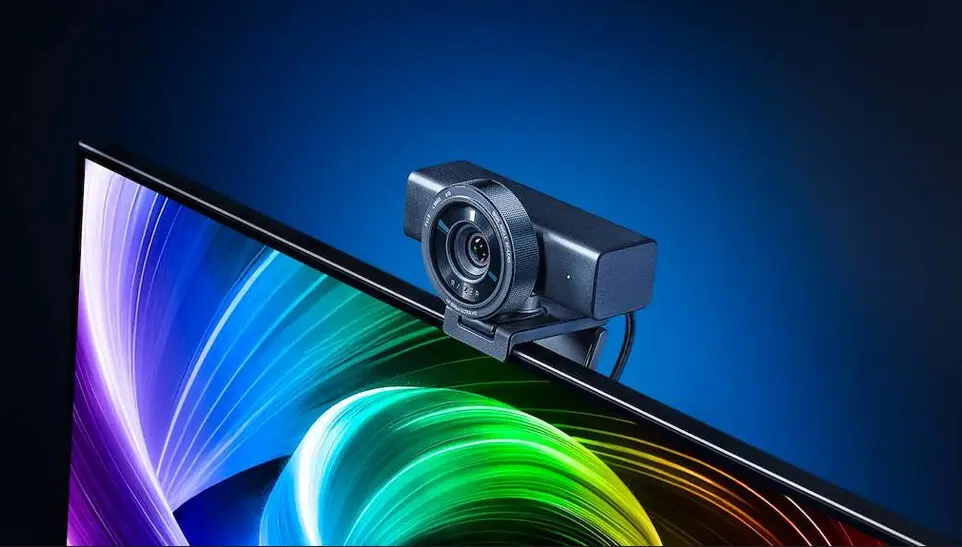
Enter the Razer Kiyo V2 Pro, a high-end professional webcam engineered specifically to bridge this divide. Designed from the ground up for content creators, live streamers, and professionals who demand uncompromised video clarity without the steep learning curve and spatial footprint of an interchangeable-lens camera ecosystem, the Kiyo V2 Pro enters a fiercely competitive market. Its headline-grabbing specification—4K video recording at a fluid 60 frames per second (fps)—is anchored by a heavy-hitting component: a Sony STARVIS 2 sensor. This sensor technology is traditionally reserved for high-end security and specialized imaging hardware renowned for exceptional low-light performance.
Beyond sheer pixel count and frame rates, Razer has packed the Kiyo V2 Pro with an intelligent feature set. This includes a wide-angle lens with low optical distortion, dynamic software-driven auto-framing, Ultra-High Dynamic Range (HDR) support, and intuitive one-click image enhancements. Furthermore, the inclusion of bundled access to Camo Pro expands its software utility, while practical physical design choices—such as a flexible universal pivoting mount and a twist-operated privacy shutter—address the day-to-day ergonomic needs of modern creators.
Priced at US$299.99 / €319.99, the Kiyo V2 Pro is unequivocally aimed at the premium tier of the peripheral market. This comprehensive review and news analysis will dissect the camera’s core technological architecture, evaluate its market positioning against traditional mirrorless alternatives, examine its software and physical attributes, and project its long-term impact on the streaming hardware ecosystem.
Detailed Chronology & Technological Evolution
To truly appreciate the engineering leap represented by the Kiyo V2 Pro, it is vital to trace the lineage of Razer’s webcam development and the broader industry progression toward high-framerate 4K desktop video.
The Evolution of the Kiyo Lineage
When Razer originally introduced the first-generation Kiyo, it revolutionized the streaming space by integrating a physical, adjustable ring light directly around the camera lens. It solved a universal problem for entry-level streamers: poor facial illumination in dim gaming rooms. However, as creator standards evolved, resolutions shifted from 720p and 1080p at 30fps toward high-definition 60fps standards.
Subsequent iterations, such as the Kiyo Pro, experimented with larger sensors (adopting STARVIS technology early on) to bypass the need for physical ring lights, focusing instead on pure optical sensor capability in low-light environments. Yet, true 4K capture at high frame rates remained elusive or prohibitively heavy on USB bandwidth compression algorithms.
The Birth of the Kiyo V2 Pro
The development cycle for the Kiyo V2 Pro represents a convergence of maturing USB data transfer protocols (such as USB 3.0/3.2 bandwidth standards), advancements in CMOS sensor manufacturing, and sophisticated on-board or host-side image processing pipelines. Razer’s engineering teams recognized that creators were encountering a major dilemma: upgrade to a US$1,000+ mirrorless camera setup that suffers from overheating risks, clean-HDMI capture card requirements, and dummy-battery charging hassles, or settle for 1080p webcams that look soft on modern high-resolution monitors.
By centering the Kiyo V2 Pro around the Sony STARVIS 2 sensor, Razer targeted the holy grail of desktop broadcasting: uncompressed or high-bitrate 4K video that maintains crisp detail, accurate color science, and minimal digital noise, even when streaming in a dimly lit room illuminated only by monitor glow and RGB peripherals. The official launch rollout established global availability through Razer’s direct channels and select retail partners, instantly staking a claim at the apex of the standalone webcam market.
Supporting Context & Metrics
Evaluating a piece of hardware as specialized as the Razer Kiyo V2 Pro requires a deep dive into its specifications, optical characteristics, and software ecosystem. Let us break down the core components that define this device.
1. The Sensor: Sony STARVIS 2 Architecture
At the heart of the Kiyo V2 Pro is the Sony STARVIS 2 illuminated CMOS sensor. Originally developed for advanced industrial and security applications where capturing usable color video in near-darkness is critical, STARVIS 2 brings massive improvements to backside-illuminated (BSI) pixel technology.
- Low-Light Performance: Traditional webcam sensors struggle in indoor environments with ambient or mixed lighting, resulting in heavy grain (luminance and chrominance noise) or aggressive noise-reduction algorithms that smear facial textures into a waxy blur. The STARVIS 2 sensor gathers significantly more photons per pixel, allowing the Kiyo V2 Pro to deliver clean, highly detailed low-light footage without requiring blinding studio softboxes.
- Dynamic Range: The sensor architecture inherently captures a wider range of light intensities, which directly feeds into the camera’s HDR capabilities.
2. Resolution, Frame Rate, and Field of View
- Resolution & Framerate: The ability to record and stream at 4K at 60fps is a monumental milestone for a plug-and-play USB webcam. While many competing cameras offer 4K, they are often bottlenecked at 30fps, resulting in noticeable motion blur and stutter during fast-paced gaming or animated head movements. Pushing 60 frames per second at full 4K resolution requires immense data throughput, ensuring buttery-smooth video feeds that match modern high-refresh-rate gaming monitors.
- Optical Design: The camera utilizes an 86-degree wide-angle lens. In content creation, ultra-wide lenses often suffer from severe barrel distortion (the "fisheye" effect), which warps background lines and deforms facial features when sitting close to the lens. Razer has engineered specialized optical elements to keep edge distortion rigorously under control, ensuring a wide, immersive view of the workspace or gaming setup while maintaining natural human proportions.
3. Intelligent Software and Image Processing
Hardware is only as good as the software driving it. Razer has equipped the Kiyo V2 Pro with a suite of intelligent processing tools:
- Automatic Framing: Utilizing software-driven digital pan, tilt, and zoom (PTZ), the webcam dynamically tracks the user within its 86-degree field of view, keeping them perfectly centered even if they shift or lean during a broadcast.
- One-Click Image Enhancement: For users who prefer not to tinker with complex ISO, shutter speed, and white balance settings, this feature automatically reads the environment and optimizes exposure, white balance, and noise reduction on the fly.
- Ultra-High Dynamic Range (HDR): Essential for creators sitting in front of bright windows or heavily backlit RGB backdrops, HDR preserves details in both hyper-bright highlights and deep shadow zones.
- Camo Pro Integration: Razer bundles access to Camo Pro, a robust third-party application suite that unlocks advanced webcam controls, granular image tweaking, and professional auto-framing capabilities.
4. Ergonomics, Mounting, and Privacy
- Universal Pivoting Mount: The physical chassis sits atop a flexible, highly adjustable pivoting mount compatible with standard computer monitors, laptops, and traditional photographic tripods. This gives creators the freedom to place the camera at eye-level atop a display or position it at dynamic angles around the room.
- Twist-Operated Privacy Shutter: Addressing growing consumer awareness regarding digital privacy and security, the Kiyo V2 Pro features a physical, twist-operated mechanical shutter built directly into the chassis. A simple twist completely blocks the lens, offering absolute peace of mind when the device is not in active use.
5. Pricing and Global Availability
The Razer Kiyo V2 Pro is currently available globally via Razer.com, flagship RazerStores, and authorized online and brick-and-mortar retail partners.
- Official Pricing: US$299.99 / €319.99.
- Note on Regional Markets: At the time of writing, regional pricing structures (such as official Malaysian Ringgit pricing) and local retail availability timelines have not yet been formally finalized or announced by Razer, though historical precedent suggests local releases will follow shortly through authorized regional distributors.
Official Statements & Industry Perspective
While manufacturers often market hardware using hyperbole, industry analysts and early technical reviews point to a clear shift in how creators view desktop peripherals.
Industry observers note that the sub-US$300 webcam category is undergoing a renaissance. For years, creators faced a binary choice: buy a mediocre webcam for US$100 that failed in low light, or spend upwards of US$800 to US$1,200 on a Sony or Canon mirrorless body, dummy batteries, micro-HDMI cables, capture cards, and prime lenses. While mirrorless cameras still hold the crown for maximum cinematic depth-of-field (bokeh), devices like the Kiyo V2 Pro narrow the operational gap significantly.
"Content creators are demanding simplicity without sacrificing production value," notes a leading hardware analyst specializing in creator economies. "The integration of industrial-grade sensor technology, like Sony’s STARVIS 2, into a USB form factor means creators can achieve broadcast-quality fidelity without cluttering their desks with heavy DSLR rigs and thermal management accessories."
Razer’s official product positioning emphasizes accessibility paired with uncompromising performance. By eliminating the friction points of traditional camera setups—such as battery drain during long streaming sessions, overheating risks, and complex software routing—Razer is positioning the Kiyo V2 Pro as the ultimate plug-and-play flagship for professional communicators.
Future Outlook: What the Kiyo V2 Pro Means for Creators
The launch of the Razer Kiyo V2 Pro is more than just a routine hardware refresh; it signals a broader trajectory for the future of digital communication and content creation.
1. The Death of the Complicated DSLR Rig for Mainstream Streamers?
While professional filmmakers and top-tier cinematic streamers will always rely on large-sensor interchangeable lens cameras for specific artistic shallow depth-of-field looks, the vast majority of educators, corporate professionals, VTubers, and mid-tier Twitch/YouTube creators do not need that level of complexity. The Kiyo V2 Pro proves that advanced CMOS sensor technology in a compact USB chassis can deliver 90% of the visual fidelity with 10% of the setup headache. Over the next few years, expect to see the adoption curve tilt heavily away from entry-level mirrorless setups and toward ultra-high-end USB webcams.
2. The Rise of AI-Driven and Sensor-Centric Peripherals
As neural processing units (NPUs) and advanced image signal processors (ISPs) become more integrated into computing hardware, webcams will continue to evolve past passive image capture devices. Features like dynamic auto-framing, real-time AI background removal, and adaptive low-light enhancement seen in the Kiyo V2 Pro are only the beginning. Future iterations will likely feature deeper operating system integrations, zero-latency HDR processing, and customizable presets tailored to specific streaming platforms.
3. Market Implications and Competitor Responses
With Razer planting its flag firmly at the US$299.99 price point with the Kiyo V2 Pro, rival peripheral giants (such as Logitech, Elgato, and Insta360) will undoubtedly feel pressure to respond with updated flagship offerings utilizing similar high-end sensor architectures. This healthy competition will ultimately benefit consumers, driving down the cost of premium imaging technology while accelerating innovation across the board.
Conclusion
The Razer Kiyo V2 Pro stands as a formidable achievement in desktop imaging engineering. By combining the raw power of a Sony STARVIS 2 sensor with uncompressed 4K 60fps recording, sophisticated low-light management, thoughtful physical design, and robust software support, Razer has crafted a definitive tool for modern creators. For streamers, educators, and professionals looking to elevate their video presence without diving into the deep, expensive waters of mirrorless camera ecosystems, the Kiyo V2 Pro justifies every dollar of its premium price tag.









Belum ada komentar. Jadilah yang pertama berkomentar!