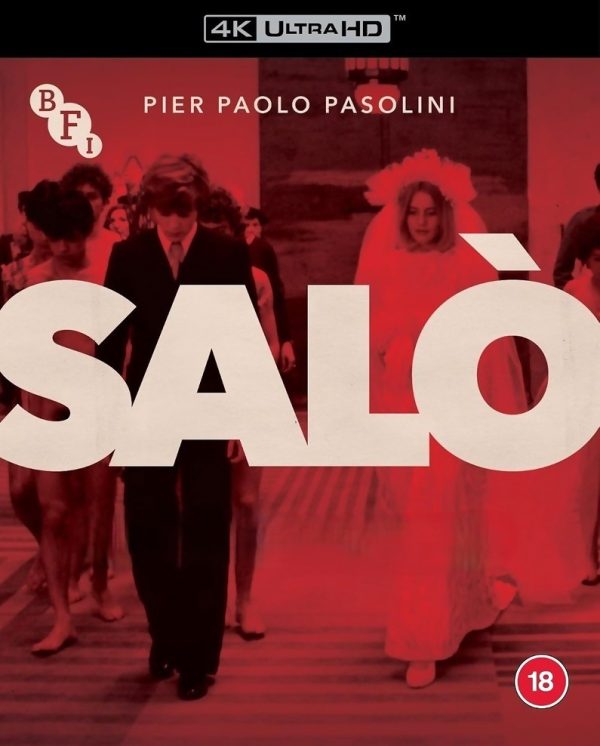
In what is bound to be heralded as one of the most significant and provocative physical media announcements of the decade, the British Film Institute (BFI) has officially scheduled a brand-new 4K restoration and release of Pier Paolo Pasolini’s final cinematic testament, Salò, or the 120 Days of Sodom (Salò o le 120 giornate di Sodoma). Long considered one of the most controversial, reviled, and fiercely debated films in the history of world cinema, Pasolini’s grueling adaptation of the Marquis de Sade’s infamously decadent 18th-century novel is set to debut on 4K Ultra HD on October 26, 2026.
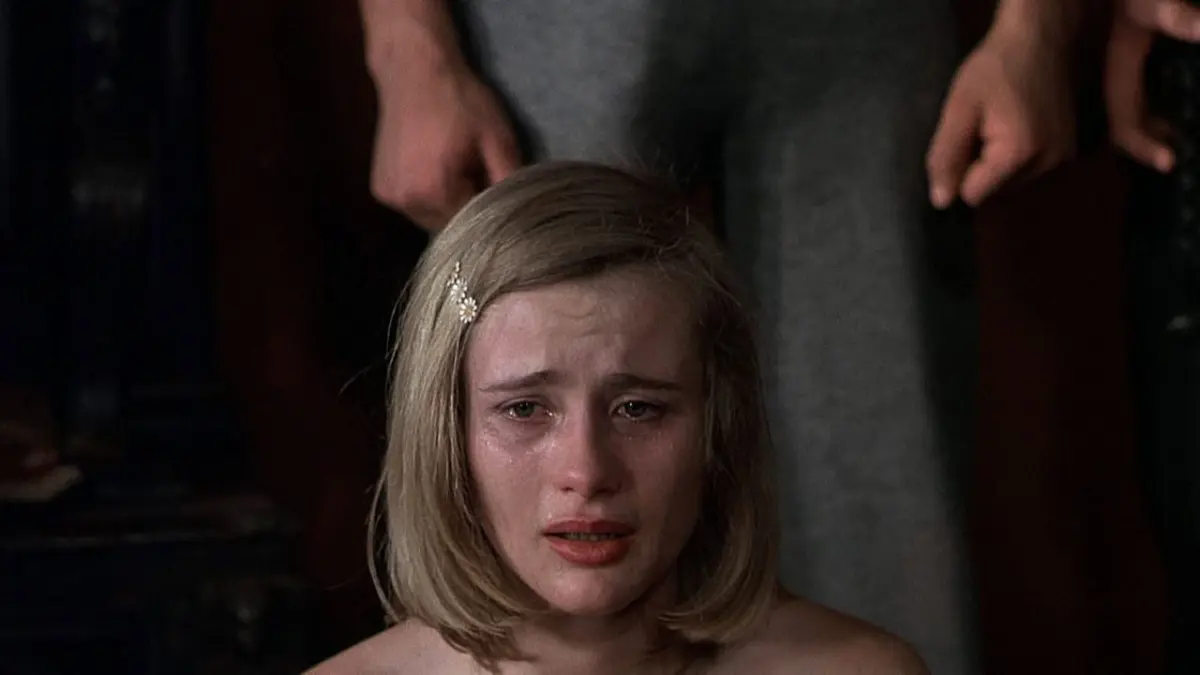
This upcoming BFI release promises to drag the uncompromising Italian auteur’s darkest vision out of the shadows and present it in unprecedented visual fidelity. Set against the grim backdrop of Benito Mussolini’s puppet regime—the Italian Social Republic, commonly referred to as the Republic of Salò—the film follows a group of elite libertines who abduct a group of local teenagers and subject them to harrowing, escalating acts of physical, mental, and sexual torture.
Despite enduring decades of institutional censorship, bans, seizures, and moral outrage across multiple continents, Salò has transcended its initial reputation as mere shock cinema to become widely recognized by film historians, critics, and theorists as a vital, culturally significant, and visually stunning masterpiece. This comprehensive report explores the announcement of the BFI’s new 4K restoration, the tumultuous history of the film, its deep socio-political underpinnings, and what this definitive physical release means for cinephiles and the legacy of one of modern art’s most fearless provocateurs.
Detailed Chronology: From Sade’s Manuscript to the BFI’s 4K Revival
To fully understand the gravity of the BFI’s new 4K restoration, one must trace a historical arc that spans more than two centuries of literary transgression and cinematic shockwaves.
The Literary Genesis (1785–1904)
The foundation of Salò lies in the feverish imagination of Donatien Alphonse François, better known as the Marquis de Sade. While imprisoned in the Bastille in 1785, Sade composed The 120 Days of Sodom on a continuous roll of paper. The narrative mechanism involves four wealthy, depraved libertines—representing the upper echelons of corrupted societal power—who retreat to a secluded castle with a harem of captive youths, subjecting them to escalating tiers of degradation over four months. Sade’s manuscript was lost during the storming of the Bastille and was not published until 1904, instantly cementing its status as a foundational text of literary extremity, transgression, and anti-bourgeois critique.
Pasolini’s Transposition and Production (1974–1975)
In the mid-1970s, Pier Paolo Pasolini—already celebrated and reviled for films like The Gospel According to Matthew, Teorema, and his "Trilogy of Life" (The Decameron, The Canterbury Tales, The Arabian Nights)—sought to make a film that would brutally dismantle the rising tide of consumer capitalism and what he termed the "new fascism" of modern Italy.
Pasolini transposed Sade’s aristocratic libertines into the fascist hierarchy of the Republic of Salò (1943–1945), Mussolini’s Nazi-backed puppet state in Northern Italy. Principal photography took place in early 1975 amidst a tense political climate in Italy. Pasolini utilized a cast of largely non-professional actors, combining visceral realism with a sterile, architectural mise-en-scène. Tragically, Pasolini was brutally murdered on the beach at Ostia on November 2, 1975, just weeks before Salò was scheduled to premiere, wrapping his final masterwork in an aura of profound martyrdom and enduring mystery.
The Global War of Censorship (1975–Present)
Upon its posthumous release, Salò triggered immediate, visceral legal and moral panic. Governments worldwide scrambled to suppress it:
Italy: The film was seized by authorities just days after its premiere, and director Pasolini and producer Alberto Grimaldi were subjected to obscenity charges. The film was officially banned in Italy for years before being cleared for re-release.
United Kingdom: The British Board of Film Censors (BBFC) refused to grant the film a certificate for theatrical distribution in 1976. It remained effectively banned in the UK until 2000, when it was finally passed uncut for home video release—though it continued to face fierce resistance from local councils and moral watchdog groups.
International Bans: Countries such as Australia, New Zealand, and various states across North America placed strict import bans, theatrical prohibitions, or heavy cuts on the film, creating a worldwide mythos of accessibility defined by bootleg VHS tapes and midnight screenings.
The BFI 4K Milestone (2026)
Decades after its turbulent birth, Salò has graduated from underground forbidden fruit to an accepted classic of the global cinematic canon, frequently appearing on prestigious lists of the greatest films ever made (including the Sight & Sound critics’ poll). The BFI’s announcement of a new 4K restoration marks the latest and most technologically advanced chapter in the film’s institutional rehabilitation, promising to reveal the meticulously composed frames, muted color palettes, and striking production design of Tonino Delli Colli’s cinematography as never seen before.
Supporting Context & Metrics: The Anatomy of a Masterpiece
Salò is frequently misunderstood by casual audiences as mere exploitation or torture porn. However, film scholars and cultural analysts consistently emphasize its dense allegorical framework. The following metrics and contextual points outline why the film continues to demand serious academic and critical engagement:
The Four Circles: Following the structural logic of Dante’s Inferno and Sade’s text, the film is divided into four distinct segments: The Anteinferno, The Circle of Manias, The Circle of Dung, and The Circle of Blood. This structural rigor elevates the film from a chaotic onslaught of abuse into a cold, methodical taxonomy of total power.
The Marxist and Semiotic Critique: Pasolini was not merely depicting cruelty for shock value; he was using Sade as a diagnostic tool. In Pasolini’s view, consumer capitalism and fascism share the same core mechanism: the commodification and absolute reduction of the human body into disposable property. The libertines represent the ruling class, treating the citizens (the teenagers) as raw materials to be consumed, discarded, and rendered meaningless.
Aesthetic Contrast: One of the film’s most unsettling qualities is its visual and auditory restraint. Set against lavish fascist architecture and accompanied by Ennio Morricone’s haunting, elegiac score, the atrocities unfold in clinical, brightly lit rooms. This deliberate distancing effect forces the viewer to confront the banality and administrative precision of institutional violence.
Critical Re-Evaluation: Over the past two decades, institutions like the BFI, the Criterion Collection, and international cinematheques have worked tirelessly to contextualize Pasolini’s oeuvre. Far from being dismissed as a cheap provocation, Salò is now widely studied in university film departments globally as a masterclass in political filmmaking, formal composition, and the ethics of representation.
Official Statements and Industry Reception
The announcement of the BFI’s 4K release has reignited discussions across the international film community regarding the preservation of politically volatile and difficult art.
In their official press release accompanying the October 2026 rollout, the BFI emphasized both the harrowing nature of the material and its indispensable cultural weight:
"Banned, censored and reviled the world over since its release, Pier Paolo Pasolini’s final and most controversial masterpiece is presented here in a new 4K restoration. The content and imagery of Salò is extreme: it retains the power to shock, repel and distress. But it remains a cinematic milestone: culturally significant, politically vital and visually stunning."
The statement continues to unpack the thematic core of the project, framing it through the lens of Pasolini’s fierce intellectual resistance:
"Based on a novel by the Marquis de Sade — and taking as its setting the miniature fascist republic which Mussolini established in Italy — this is a film about power, corruption, and the degradation of the human body. It is a devastating, angry cry from one of the most controversial auteurs in cinema history."
Independent film critics, physical media archivists, and directors have also voiced overwhelming support for the restoration. Film preservationists note that without institutional interventions by bodies like the BFI, masterworks of international art house cinema—particularly those dealing with controversial subject matter—risk deteriorating in regional archives or surviving only through compromised, low-resolution digital streams.
Future Outlook: The Legacy of Pasolini in the 4K Era
As physical media enthusiasts and cinephiles prepare for the October 26, 2026, release date, the conversation surrounding Salò shifts toward what this 4K Ultra HD edition will contain. While the BFI has yet to fully unveil the exhaustive list of special features, audio commentaries, and archival booklets that will accompany the package, anticipation is at a fever pitch.
The release arrives at a fascinating cultural juncture. In an era where discussions surrounding censorship, bodily autonomy, corporate overreach, and the re-emergence of authoritarian politics dominate global discourse, Salò feels less like a historical artifact of 1970s European cinema and more like an urgent, contemporary warning. Pasolini’s terrifying thesis—that absolute power reduces humanity to feces, flesh, and compliance—retains every ounce of its piercing clarity.
Furthermore, the BFI’s commitment to restoring Salò in 4K ensures that future generations of filmmakers, students, and radical thinkers will be able to engage with Pasolini’s final vision in the highest possible resolution. It stands as a testament to the fact that cinema, even at its most harrowing and uncomfortable, remains an essential mirror reflecting the darkest corners of human history and political structures.
Salò, or the 120 Days of Sodom will release on 4K Ultra HD from the BFI on October 26, 2026.






Belum ada komentar. Jadilah yang pertama berkomentar!