

Executive Overview
In the contemporary landscape of multi-million-dollar video game development, few topics spark as much fiery debate among players and critics alike as the phenomenon of "excessive handholding." As production budgets soar and publishers seek to maximize demographic reach, design philosophies have increasingly gravitated toward eliminating friction, ambiguity, and player confusion. From the intrusive, hyper-explicit puzzle hints delivered by companions in God of War: Ragnarok to the ubiquitous application of bright yellow paint indicating climbable ledges in titles like Stellar Blade—and instances of action blockbusters practically playing themselves during cinematic sequences—modern AAA design often betrays a profound anxiety that players might actually get stuck.
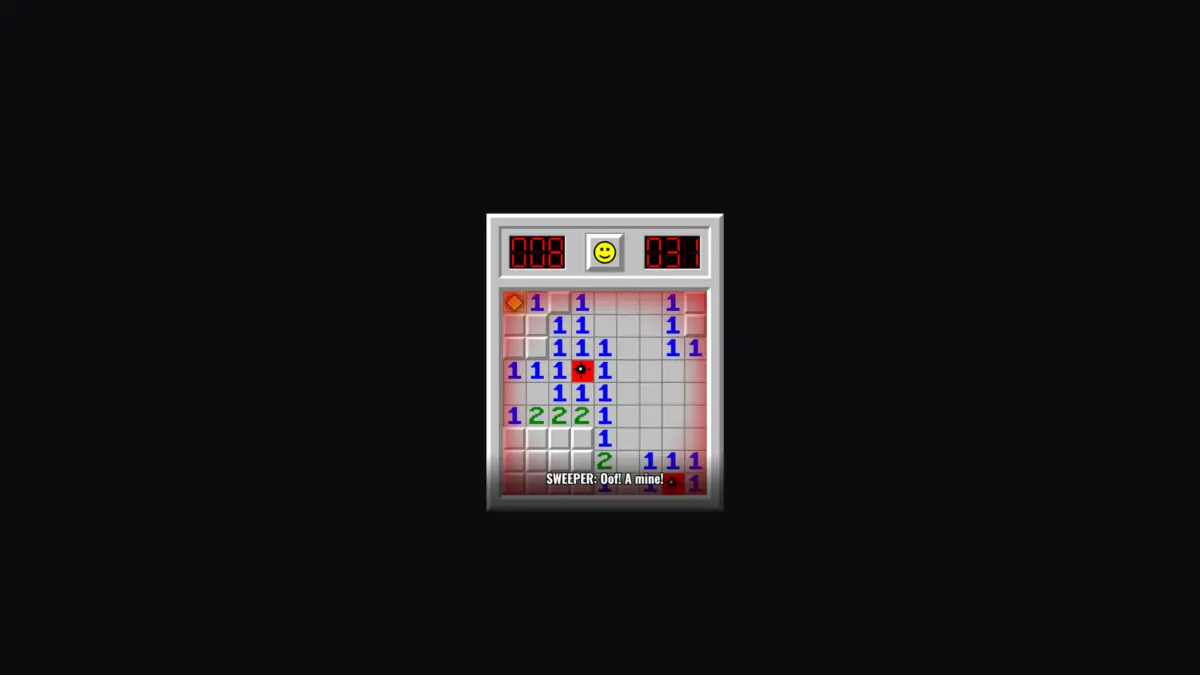
Enter Triple-A Minesweeper, a brilliant, highly concentrated satirical web game created by developer Mike Lacher. By taking the classic, minimalist puzzle logic of Windows’ legendary time-waster Minesweeper and subjecting it to the cynical, bloated trappings of a modern high-budget blockbuster, Lacher has crafted a masterpiece of interactive comedy. The game ruthlessly lampoons unskippable splash screens, intrusive tutorial companions, radiant navigation markers, constant contextual dialogue chatter, and the near-total removal of meaningful failure states.
Clocking in at roughly five minutes from start to finish, Triple-A Minesweeper is far more than a passing internet joke; it serves as a critical mirror held up to an industry grappling with the tension between cinematic accessibility and traditional player agency. This article explores the cultural and design context of modern handholding, breaks down the brilliant mechanical satire of Lacher’s project, examines the broader industry reactions, and evaluates what the future holds for balancing guidance with genuine discovery in video game design.
Detailed Chronology: The Evolution of Modern Game Guidance
To understand the cultural resonance of Triple-A Minesweeper, one must trace how the video game industry evolved from cryptic, open-ended exploration to structured, guided cinematic experiences.
The Era of Cryptic Challenge (1980s–1990s)
In the early decades of video gaming, ambiguity was a feature, not a bug. Games like the original Minesweeper (bundled widely with Microsoft Windows starting in 1990), Doom, Myst, and early text adventures demanded patience, spatial reasoning, and often physical companion strategy guides. Players were expected to fail, map out environments in their heads, and decipher rules through trial and error. If you hit a mine in standard Minesweeper, the game ended abruptly. There were no checkpoints, no friendly voices over the radio telling you where to click, and certainly no glowing yellow markers pointing out the safe squares.
The Shift Toward Cinematic Accessibility (Late 2000s–2010s)
As gaming transitioned from a niche hobby to the dominant global entertainment medium—surpassing both the film and music industries combined—target audiences expanded exponentially. Publishers recognized that a frustrated player is a player who turns off the console and never buys DLC. This realization sparked the mainstream integration of automated camera pans, on-screen waypoint markers, and contextual hint systems. While these tools were initially optional or subtly integrated, they gradually became foundational pillars of game architecture.
The Peak of "Yellow Paint" and Explicit Hints (2020s–Present)
In recent years, the pendulum has swung so far toward friction-elimination that it has sparked widespread player fatigue and internet meme culture. The introduction of bright yellow paint, chalk, or rope textures plastered exclusively onto interactive environmental geometry has become an industry-wide shorthand for "you can climb here." Simultaneously, games like Sony’s premier first-party narrative titles have leaned heavily into algorithmic hint systems, where companion characters blurt out puzzle solutions mere seconds after the player enters a room, robbing them of the satisfaction of deduction.
This brings us to the present day, where releases like Marvel’s Wolverine and other action-adventure flagships face community scrutiny for automating traversal and combat segments, reducing active player input to cinematic button prompts. It was within this exact cultural climate that Mike Lacher conceptualized and released Triple-A Minesweeper, capturing the zeitgeist of a frustrated player base yearning for the purity of classic design.
Supporting Context & Metrics: The Cost and Psychology of Frictionless Design
Why do multi-million-dollar studios continue to implement design choices that seasoned players frequently deride as patronizing? The answer lies in data, user testing, and psychological risk mitigation.
User Testing Metrics and Retention Rates
Major game publishers invest heavily in user research (UR) laboratories. During playtests with diverse demographics—ranging from hardcore enthusiasts to casual gamers who pick up a controller once a month—studios monitor metrics such as "time to frustration" and "churn rate."
UR data consistently shows that when a player gets stuck on a puzzle or environment traversal for more than 45 to 60 seconds without a clear directional cue, negative emotional sentiment spikes. More importantly, drop-off rates increase exponentially. For a AAA game operating on a $200 million-plus budget, a high churn rate in the opening hours translates directly to diminished digital storefront engagement, lower microtransaction sales, and poor word-of-mouth metrics. Consequently, designers lean toward explicit guidance to protect the investment of the broader player base.
The Mechanics of Triple-A Minesweeper
Lacher’s spoof brilliantly subverts every single one of these corporate risk-mitigation strategies:
- Unskippable Introductions: Upon launching the game, players are subjected to a barrage of fictitious middleware logos, publisher fanfare, and dramatic title cards, parodying the lengthy startup sequences of modern blockbusters.
- The Companion Character: Instead of jumping straight into a clean grid, a character named Nora greets the player, establishing high-stakes narrative urgency around the act of clearing digital mines.
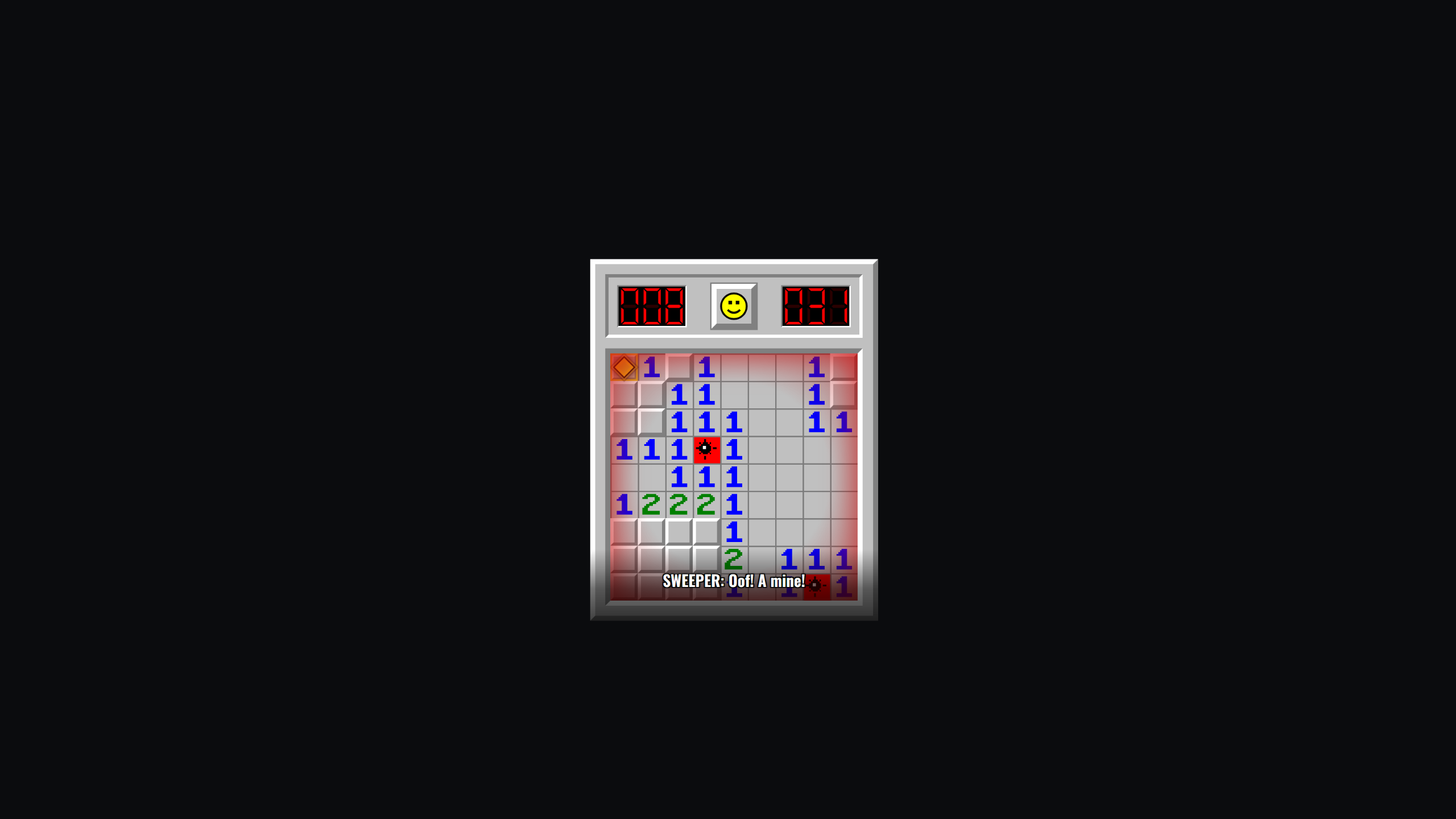
- The Radiant Beacon: A glowing, diamond-shaped yellow marker hovers precisely over the first safe square, ensuring zero cognitive load is required to start the game.
- Defanged Failure States: When you intentionally ignore the prompt and click on a mine, the game refuses to punish you. Instead, the protagonist ("The Sweeper") utters a nonchalant "Oof, a mine!" and play continues uninterrupted.
- Relentless Audio Chatter: If the player walks away or pauses, the Sweeper continuously vocalizes his mandatory objectives ("I need to sweep those mines"), backed up by bizarre audio intrusions from shadowy mobsters ("The Don") and local radio DJs, escalating until the noise becomes utterly unbearable.
Official Industry Perspectives and Criticisms
The discourse surrounding Triple-A Minesweeper touches on a broader, ongoing debate among game directors, developers, and industry journalists regarding how to respect player intelligence without alienating mainstream consumers.
Developers caught in the middle of this debate often emphasize the logistical nightmare of communicating spatial logic across millions of television sets, monitors, and disparate living-room setups. What looks blindingly obvious to an experienced game reviewer playing in a quiet, dark room on a high-refresh-rate monitor may be completely invisible to a tired parent playing for forty minutes on a dimly lit living-room television with glare from a window.
Industry veterans have frequently defended visual signposting like "yellow paint" as a necessary accessibility and readability tool. However, even sympathetic designers admit that modern execution has sometimes lost its subtlety. Instead of integrating navigational cues organically into the art direction—such as architectural lighting, natural sightlines, or distinct color palettes—studios often resort to applying uniform, jarring coats of paint that break narrative immersion.
Independent developers and satirists like Lacher use interactive projects to highlight this creative fatigue. By applying blockbuster conventions to a hyper-simplistic 1990s productivity app, Triple-A Minesweeper exposes the absurdity of treating a simple grid-based puzzle with the cinematic gravitas and protective handholding of an interactive movie.
Future Outlook: Finding the Balance Between Guidance and Discovery
As the gaming industry looks toward the horizon of hardware advancements—including AI-driven non-player characters, more immersive interfaces, and hyper-realistic graphics—the challenge of player guidance will only evolve.
Moving Beyond Yellow Paint and Spoilers
Several studios are already experimenting with more inventive solutions to player navigation and puzzle design. Rather than relying on intrusive companion voice lines or neon-colored ledges, future-forward design philosophies are exploring:
- Diegetic UI: Integrating information directly into the game world through wearable tech, environmental clues, or character animations rather than floating heads-up displays.
- Scalable Guidance Systems: Implementing robust difficulty toggles that allow players to turn off hint systems completely on a first playthrough, while keeping them available for those who need accessibility support.
- Dynamic Pacing: Designing environments with clear primary sightlines that naturally draw the player’s eye without requiring artificial markers.
The Enduring Value of Satire
While multi-million-dollar blockbusters will likely continue utilizing proven, albeit criticized, psychological retention techniques to safeguard their massive budgets, cultural touchstones like Triple-A Minesweeper ensure that developers remain self-aware. By gently poking fun at the industry’s deepest anxieties, Lacher’s satirical creation reminds players and creators alike of the simple, unadulterated joy of figuring things out for oneself.
Ultimately, games are at their best when they trust the player to take a leap into the unknown—even if that means risking an "Oof, a mine!" along the way.








Belum ada komentar. Jadilah yang pertama berkomentar!