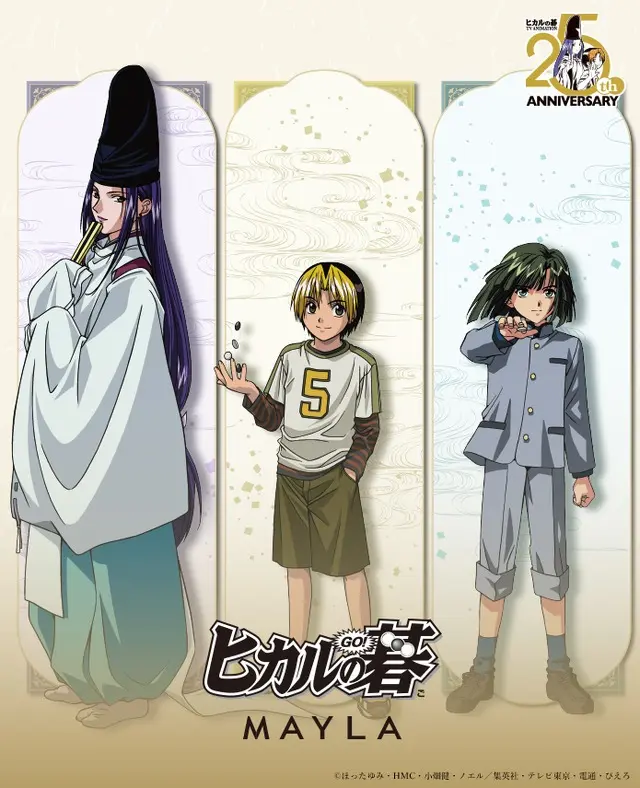
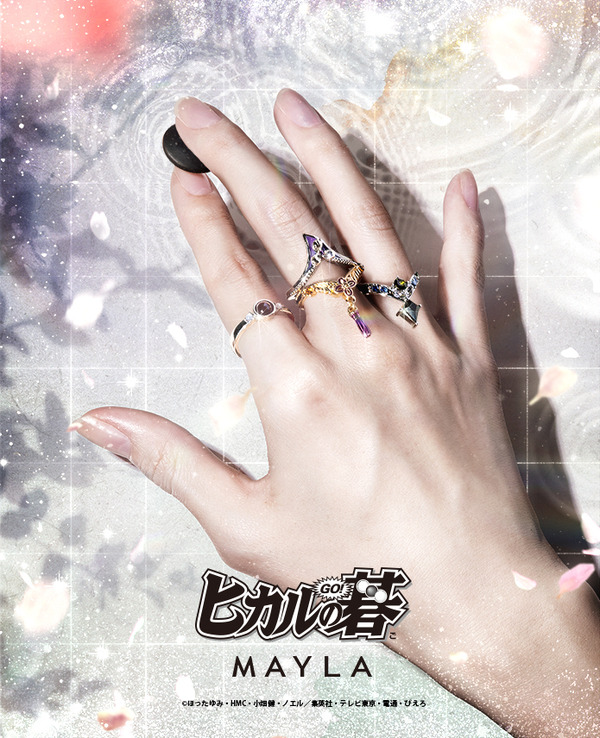
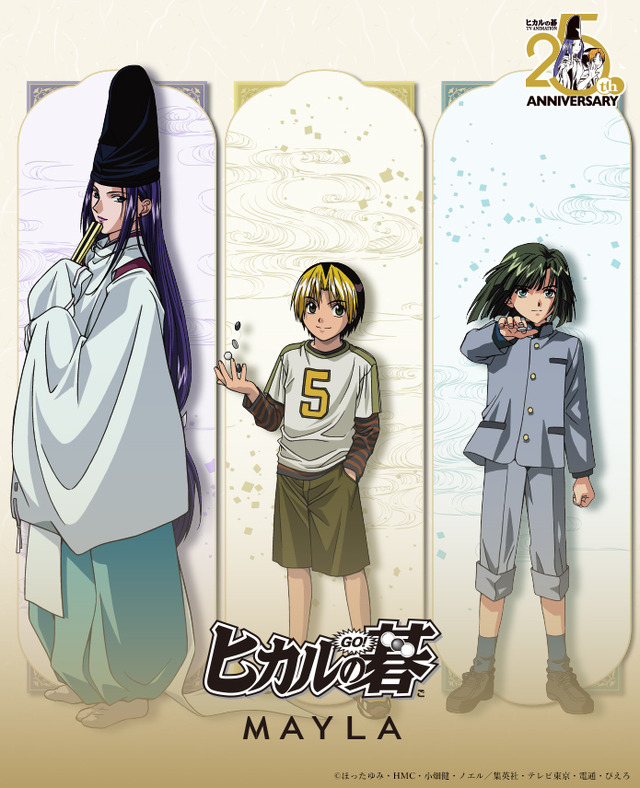
Japanese luxury fashion brand MAYLA—operated under the philosophy of creating design pieces that "raise your body temperature by 2°C" (Taion ga 2-do agaru)—has officially launched a commemorative merchandise collaboration celebrating the enduring legacy of the seminal anime and manga franchise Hikaru no Go. Titled the "Hikaru no Go Iconic Story Ring Object," this bespoke six-piece ring collection translates the philosophical depth, rivalries, and character arcs of the classic series into haute fashion accessories.
Available exclusively as a complete six-ring collector’s set priced at ¥22,000 (tax included, plus a domestic flat-rate shipping fee of ¥600), the limited pre-order window opened on October 9 at 17:00 JPY and will run through November 9 at 17:00 JPY. Manufactured for high-end anime aesthetic collectors, the set offers fans a tangible connection to the story’s central motifs: the ancient game of Go, the transcendental bond between spirit and pupil, and the relentless pursuit of the "Divine Move" (Kami no Itte).
The release marks a significant milestone in anime licensing strategy as the franchise approaches the 25th anniversary of its television broadcast debut in October 2026. By translating iconic narrative moments into fine wearable art, MAYLA continues its dominance in the adult luxury subculture market, appealing directly to nostalgic Millennial and Gen Z fans who grew up with the series during its initial broadcast boom in the early 2000s.
The inception, cultural evolution, and modern resurgence of Hikaru no Go span nearly three decades of media history, driving both a revitalization of traditional board games and establishing new paradigms for sports and competitive manga.
1998–2003: Manga Serialization and the Cultural Go Boom
Written by Yumi Hotta and illustrated by Takeshi Obata—who would later achieve global renown as the artist of Death Note and Bakuman—Hikaru no Go debuted in Shueisha’s Weekly Shonen Jump in December 1998. Supervised by professional female Go player Yukari Yoshihara (née Umezawa), 6-dan, the narrative turned an ancient, notoriously complex board game into a high-stakes dramatic tournament saga.
The plot follows Hikaru Shindo, an ordinary sixth-grade student who discovers an ancient Go board in his grandfather’s attic. He inadvertently awakens the spirit of Fujiwara no Sai, an ethereal Go master from the Heian period who was wrongly accused of cheating and committed suicide, remaining tethered to the earthly plane to seek the legendary "Divine Move." Sai’s passion slowly ignites Hikaru’s own innate genius, sparking an intense rivalry with child prodigy Akira Toya and pushing Hikaru toward a professional career.
Produced by Studio Pierrot and directed by Susumu Nishizawa and Jun Kamiya, the anime adaptation premiered on TV Tokyo on October 10, 2001. Running for 75 episodes until March 2003, the series achieved widespread critical acclaim, earning a prestigious Shogakukan Manga Award and the Tezuka Osamu Cultural Prize Creative Award.
The anime adaptation triggered a historic real-world phenomenon: hundreds of thousands of children across Japan, South Korea, China, and Western nations began learning Go, causing beginner board sales to soar and youth Go clubs to experience unprecedented registration surges.
2020–Present: Live-Action Adaptations and Legacy Commemorations
The franchise’s reach extended into international live-action media with a critically acclaimed 2020 live-action drama adaptation produced in China (Hikaru no Go / Qi Hun), which earned praise for faithfully capturing the emotional core of Hotta and Obata’s work. Stage play adaptations and orchestral concerts followed, cementing the IP’s position as a timeless cultural asset.
October 2026 Horizon: The 25th Anime Anniversary Era
As the 25th anniversary of the anime’s original television broadcast approaches on October 10, 2026, rights holders—including Shueisha, TV Tokyo, Dentsu, and Studio Pierrot—have begun executing a curated licensing roadmap. The MAYLA ring set serves as a flagship piece within this early commemorative rollout, bridging past nostalgia with modern luxury design.
FRANCHISE TIMELINE & MILESTONES
--------------------------------------------------------------------------------
1998 (Dec)  | Manga serialization begins in 'Weekly Shonen Jump'
2001 (Oct)  | TV Anime adaptation premieres on TV Tokyo (Studio Pierrot)
2003 (Mar)  | TV Anime concludes after 75 episodes; manga wraps at 23 volumes
2003 (May)  | Awarded Tezuka Osamu Cultural Prize (Creative Award)
2020 (Oct)  | Live-action Chinese web drama adaptation released to rave reviews
2026 (Oct)  | Upcoming 25th Anniversary of the TV Anime Debut
--------------------------------------------------------------------------------
Supporting Context & Metrics
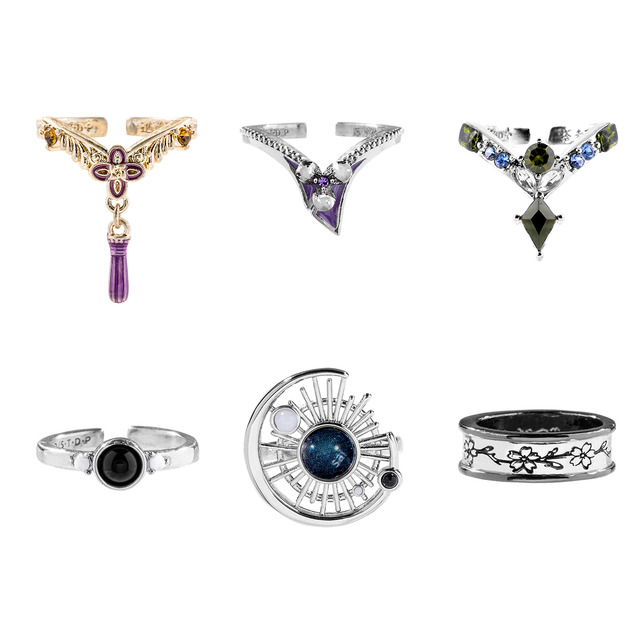
The "Hikaru no Go Iconic Story Ring Object" stands out not merely as merchandise, but as an architectural translation of character relationships and narrative motifs into wearable jewelry. MAYLA’s design department engineered six unique ring styles that can be worn individually or stacked to create symbolic story combinations.
                       +-----------------------------------+
                       |   MAYLA 6-RING COLLECTION STRUCTURE |
                       +-----------------------------------+
                                         |
         +-------------------------------+-------------------------------+
         |                               |                               |
  [CHARACTER TRINITY]             [GAME ELEVATION]               [JOURNEY & TIME]
  • Hikaru Shindo Ring            • Go Stone Grid Motif          • Cosmos / Universe Motif
  • Fujiwara no Sai Ring          • Board Pattern Ring           • Spring Sakura Motif
  • Akira Toya Ring
Individual Ring Motif Breakdown
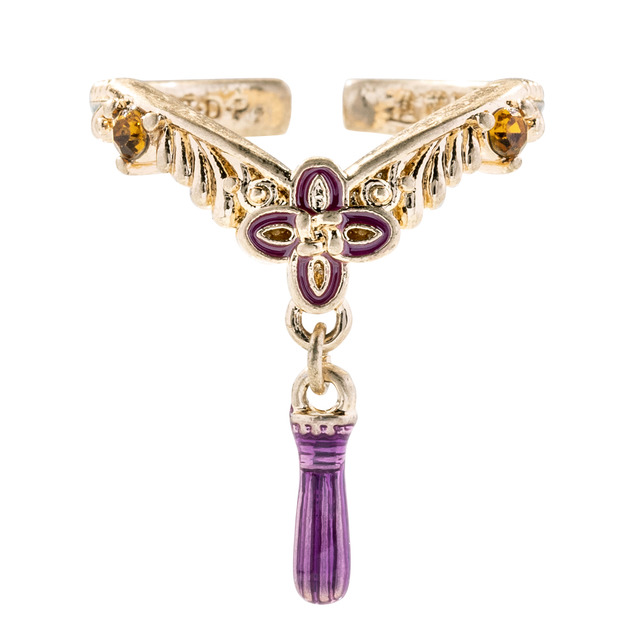
Hikaru Shindo Motif Ring: Features warm golden-yellow hues and sharp angular line work inspired by Hikaru’s signature two-toned front hair dye and dynamic growth. The structural metal framing reflects his energetic, evolving playstyle.
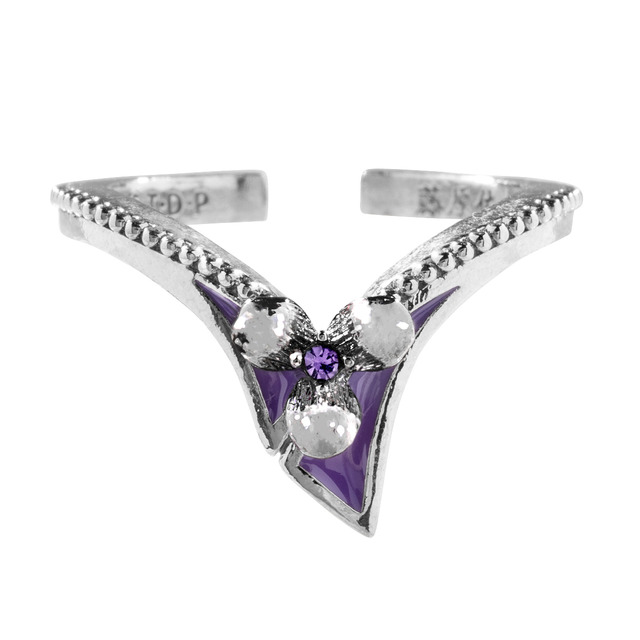
Fujiwara no Sai Motif Ring: Centered around an intricate Heian-style lotus flower motif in soft purples and iridescent metals, evoking Sai’s refined attire, quiet elegance, and spectral presence.
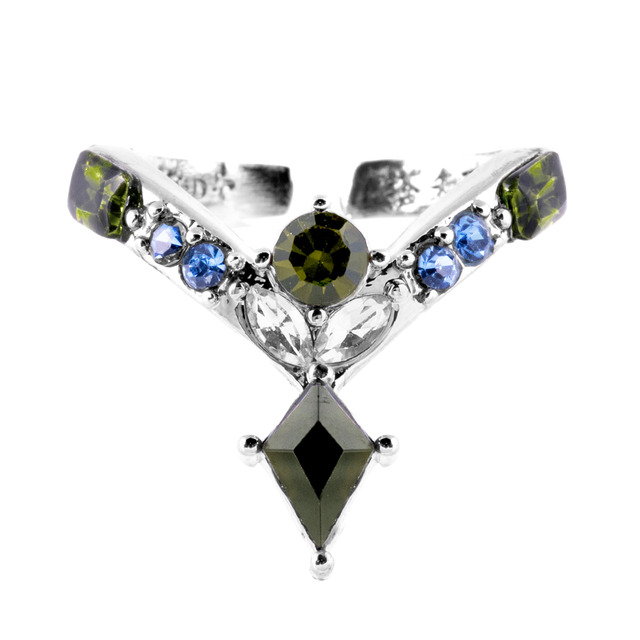
Akira Toya Motif Ring: Incorporates deep emerald green, black, and silver tones, directly mirroring Akira’s stoic composure, pristine hair aesthetic, and relentless, uncompromising focus.
Go Stone & Grid Ring: Features stark black-and-white stone arrangements offset against a geometric grid design, representing the literal battlefield where minds collide.
Cosmic / Universal Depth Ring: Imbued with deep midnight blue hues and starlight stone accents, symbolizing the iconic artistic sequence where Hikaru and Sai view the Go board as an infinite, starry universe.
Spring Sakura Motif Ring: Detailed with delicate cherry blossom engravings, paying homage to the spring season when Hikaru passed his professional qualification exam and took his first decisive step toward independence.
Commercial Metrics and Sales Structure
MAYLA’s distribution model for this collection emphasizes exclusivity and complete artistic integrity:
Package Model: The item is sold exclusively as a consolidated 6-ring box set. Individual rings are not available for standalone purchase, ensuring collectors receive the complete narrative construct.
Pricing Point: At ¥22,000 JPY, the collection is positioned within the mid-tier luxury sector, leveraging high-grade alloys, custom synthetic stones, and specialized enamel work.
Presentation Packaging: Each set comes housed in a custom-designed collector box emblazoned with official gold-foil branding, suited for display as an art object when not being worn.
COLLECTION DESIGN BREAKDOWN
--------------------------------------------------------------------------------
Ring Design Motif    | Primary Color Palette  | Key Visual Element
--------------------------------------------------------------------------------
Hikaru Shindo        | Gold / Black           | Asymmetric front-fringe accent
Fujiwara no Sai      | Royal Purple / Silver  | Heian lotus & fan filigree
Akira Toya           | Emerald Green / Dark   | Precision-cut dual stones
Go Stone Grid        | Onyx White & Black     | Chessboard/Grid stone mounts
Cosmos / Universe    | Galaxy Blue / Crystal  | Celestial stone cluster
Sakura / Journey     | Rose Gold / Pink       | Cherry blossom petal engraving
--------------------------------------------------------------------------------
Official Statements & Brand Philosophy
MAYLA’s operational identity rests on transforming high-concept pop culture properties into sophisticated fashion artifacts. Known for their high-heeled shoes, hair ribbons, and fine jewelry, the brand has built a distinct niche in Japan’s luxury merchandise landscape.
A representative from MAYLA emphasized the emotional philosophy driving the project:
"Our brand slogan, ‘Raises body temperature by 2°C,’ is about creating items that trigger an immediate, physical sensation of excitement and elegance when seen or worn. With ‘Hikaru no Go,’ we were tasked with honoring a masterpiece that defined an era. Go is a game of black and white, yet the emotions surrounding it are immensely colorful. Through these six rings, fans can physically carry the bond between Hikaru, Sai, and Akira on their fingers—a delicate blend of Heian period tradition and modern competitive passion."
Licensing representatives from Shueisha and Studio Pierrot noted that adult-targeted apparel and accessories represent a core pillar of their archival catalog management strategy:
"As fans who discovered ‘Hikaru no Go’ during its original run have matured into adult consumers, there is a growing demand for subtle, high-quality items that express fondness for the series without being overly graphic. MAYLA’s interpretation captures the artistic soul of Takeshi Obata’s illustrations and Yumi Hotta’s worldbuilding in a format that seamlessly fits into daily high-fashion wardrobes."
Future Outlook & Industry Trends
The Rise of Adult-Targeted Anime Couture
The launch of the Hikaru no Go ring set aligns with a broader trend across the Japanese entertainment industry: the monetization of classic franchises through high-end, adult-oriented fashion. Brands like MAYLA, SuperGroupies, and U-Treasure have transformed character merchandise from conventional plastic figures and keychains into gold jewelry, tailored coats, and luxury timepieces.
This market shift is driven by demographics:
Purchasing Power: Fans who followed Hikaru no Go in Weekly Shonen Jump during the early 2000s are now in their late 20s to mid-40s, possessing significant disposable income.
Subtle Nostalgia: Adult fans prefer "stealth" merchandise—items featuring sophisticated designs that reference character lore through color palettes and subtle motifs rather than overt logo placement.
DEMOGRAPHIC & MARKET TRAJECTORY
--------------------------------------------------------------------------------
Phase 1 (2001–2005) | Primary Audience: School-age youth & teenagers
                    | Core Goods: Manga volumes, trading cards, Go beginner sets
--------------------------------------------------------------------------------
Phase 2 (2010–2018) | Primary Audience: Young adults
                    | Core Goods: DVD box sets, anniversary artbooks
--------------------------------------------------------------------------------
Phase 3 (2020–Pres) | Primary Audience: Established adult professionals
                    | Core Goods: High-fashion couture, fine jewelry, stage plays
--------------------------------------------------------------------------------
Anticipated Anniversary Milestones
With the pre-order window closing on November 9, manufacturing will begin immediately to satisfy orders ahead of the 2025–2026 fiscal year. Industry analysts predict that the success of this ring set will pave the way for additional high-end collaborations—including apparel, fountain pens, and traditional lacquerware Go accessories—leading directly into the franchise’s quarter-century celebration in late 2026.
As ancient tradition meets modern craftsmanship, Hikaru no Go continues to prove that like a perfectly played stone on a wooden board, true art endures across generations.








Belum ada komentar. Jadilah yang pertama berkomentar!