


Executive Overview
As Hollywood remains locked in a contentious debate over the ethical, artistic, and economic implications of artificial intelligence in filmmaking, actor, producer, and entrepreneur Mark Wahlberg has staked out a pragmatic middle ground. Taking the stage at the prestigious TechCrunch Disrupt conference, Wahlberg offered a nuanced perspective that cuts through the industry’s polarized rhetoric. Rather than viewing artificial intelligence as an existential threat to human creativity or an unmitigated panacea for studio bottom lines, the veteran box-office draw advocates for a balanced approach: utilizing AI as a powerful behind-the-scenes enhancement tool while fiercely preserving the primacy of human storytelling.
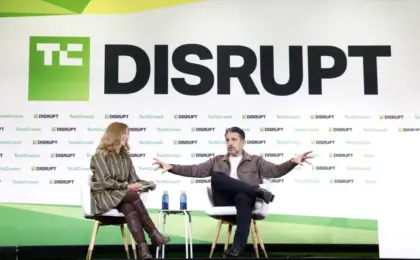
Wahlberg’s insights carry substantial weight given his multifaceted footprint in the entertainment and business ecosystems. As an angel investor, producer, and star of high-profile blockbusters, his embrace of specific AI applications signals a shifting tide in how legacy talent perceives emerging technologies. During a wide-ranging conversation with TechCrunch Editor-in-Chief Connie Loizos, Wahlberg revealed plans to leverage generative computing to elevate the production value of his upcoming biopic on baseball legend Pete Rose. Furthermore, he addressed the frontier of digital replicas, expressing a surprising openness to allowing an AI likeness of himself to carry on his creative legacy long after he departs the screen.
This comprehensive report examines Wahlberg’s strategic vision for AI in cinema, exploring how practical visual effects applications are reshaping blockbuster budgets, the evolving landscape of digital actor licensing via facilities like the Creative Artists Agency (CAA) Vault, and the broader philosophical questions facing an industry grappling with immortal digital avatars.
Detailed Chronology: From Practical Effects to Generative Horizons
To understand Wahlberg’s perspective on modern computational tools, it is essential to contextualize his career within the historical evolution of cinematic technology. Throughout his decades-long tenure in Hollywood, Wahlberg has witnessed—and starred in—some of the most significant technological milestones in modern filmmaking.
The Evolution of Cinematic Technology
Reflecting on his career trajectory, Wahlberg noted that he hit his stride during an era defined by groundbreaking technological shifts. He recalled the release of benchmark cinematic achievements like Steven Spielberg’s Jurassic Park and Wolfgang Petersen’s The Perfect Storm, periods when computer-generated imagery (CGI) transitioned from experimental novelties to the backbone of blockbuster filmmaking.
"I’ve done big, effects-driven movies," Wahlberg told the TechCrunch Disrupt audience. "I think I was in that kind of sweet spot when the first Jurassic Park was made, or when Perfect Storm came out, and you had that wave, the 100-foot wave that was in the trailer. Those are cutting-edge moments in technology with computer-generated images."
However, the actor drew a sharp line between the pioneering visual effects of the 1990s and early 2000s and the oversaturated, effects-heavy slate that dominated subsequent decades. According to Wahlberg, the relentless pursuit of spectacles over substance ultimately compromised the artistic integrity of many studio releases.
"Now, I think it’s hard to do that, so I’m not so passionate about effects-driven movies per se, as opposed to real storytelling," he emphasized.
The TechCrunch Disrupt Revelation
Wahlberg’s appearance at TechCrunch Disrupt marked a pivotal moment for tech-media engagement with top-tier Hollywood talent. Shifting from retrospective analysis to forward-looking strategy, the actor detailed how his upcoming projects will incorporate modern digital tools.
At the center of this strategy is his highly anticipated biographical film about Pete Rose, the controversial Major League Baseball icon. Producing and starring in the title role, Wahlberg acknowledged the financial constraints inherent in capturing historical athletic eras with absolute historical fidelity. Rather than relying on prohibitively expensive physical set construction or traditional post-production methods, Wahlberg and his production team are actively exploring AI-driven background and environment enhancements.
The revelation underscores a growing trend among pragmatic producers: utilizing generative systems not to replace the human element of cinema, but to solve logistical and budgetary bottlenecks that have historically plagued period pieces and biographical dramas.
Supporting Context & Metrics: The Economics and Ethics of AI in Cinema
Wahlberg’s commentary arrives at a critical juncture for the entertainment industry. The integration of artificial intelligence into film and television production has been a central flashpoint in labor relations, most notably highlighted by the historic Screen Actors Guild-American Federation of Television and Radio Artists (SAG-AFTRA) and Writers Guild of America (WGA) strikes. Studios and creatives continue to negotiate the delicate boundaries surrounding consent, compensation, and the preservation of human labor in the age of generative models.
Budgetary Realities and Production Efficiency
The economic pressures facing modern studios cannot be overstated. With production budgets for tentpole films frequently soaring past the $200 million mark, executives are under intense pressure to optimize expenditures. Wahlberg’s approach to the Pete Rose biopic illustrates how AI can serve as an economic multiplier:

- Stadium Reconstruction: Recreating historical ballparks with period-accurate crowds, lighting, and architecture typically requires massive investments in physical set design, digital compositing, and hundreds of background extras. AI-assisted environment enhancement can streamline these processes.
- Risk Mitigation: By optimizing background elements and scaling digital assets efficiently, independent producers and major studios alike can allocate more capital toward top-tier talent and rigorous script development.
The Rise of Digital Cloning Facilities
The conversation naturally turned toward the emerging infrastructure designed to capture and preserve human performances. When Editor-in-Chief Connie Loizos asked Wahlberg if he had visited the CAA Vault—a secure digital preservation facility operated by Creative Artists Agency that captures actors’ physical dimensions, facial expressions, micro-movements, and vocal patterns—Wahlberg admitted he had not yet toured the site.
Nevertheless, his openness to the concept signals a profound philosophical shift among A-list performers. Facilities like the CAA Vault represent the institutionalization of digital immortality, allowing actors to secure their intellectual property and likeness rights for future generations. While many in the industry view such technologies with deep suspicion—fearing that digital doubles could eventually displace living actors—Wahlberg views the digital likeness model through a lens of legacy, family stewardship, and audience demand.
Official Statements & Industry Perspectives
The dichotomy between replacing human creativity and enhancing technical execution formed the core of Wahlberg’s manifesto at TechCrunch Disrupt. His statements provide a clear roadmap for how forward-thinking artists can navigate the technological revolution without sacrificing artistic soul.
On Generative Scriptwriting vs. Practical Enhancement
Wahlberg was unambiguous regarding the boundaries of acceptable AI deployment in the creative writing process. While he embraces digital tools for environmental rendering, he draws a hard line at generative text replacing human screenwriters.
"I don’t think you should just, you know, put an idea into ChatGPT and it puts out a script, and then you should go make that and not use real actors. But if you can use it to enhance what you’re doing, I’m all for that."
This distinction addresses the core anxieties of the WGA. By separating the conceptual and narrative foundations of filmmaking—which Wahlberg insists must remain fundamentally human—from the logistical and visual scaling of post-production, the actor outlines a sustainable framework for technological coexistence.
On Posthumous Performance and Family Stewardship
Perhaps the most headline-grabbing portion of Wahlberg’s address centered on his willingness to authorize an AI replica of himself to star in projects after his lifetime. Addressing the longevity of intellectual property and beloved characters, Wahlberg pointed to his animated series Ted as a prime example of a franchise that could theoretically persist across generations.
"I would be interested because I think in the future, if that’s where things go, it would be cool that my children or my grandchildren could be in charge of my likeness and my image, and hopefully put me in some good movies. It’ll be interesting to see where things go."
Elaborating on the potential continuation of characters like Ted via digital likenesses, Wahlberg added:
"I think it’s cool if I’m no longer able to do it or don’t exist, and if it could continue and people want to see it, I think it’d be interesting to see where things go. I think there’s certain things from my childhood that I wish still existed and were still a part of my life […] I wouldn’t be opposed to it. I think people are going to have massive opportunities to watch whatever it is they want, and if there’s a real audience for that, they should be entitled to have what they want to see."
This perspective reframes digital cloning not as a corporate tool designed to cut out living talent, but as an extension of an actor’s estate—managed by descendants to honor a creative legacy while satisfying consumer demand.
Future Outlook: Navigating the Next Era of Filmmaking
As the dust settles on recent labor disputes and the technological capabilities of generative AI continue to accelerate at an exponential rate, Mark Wahlberg’s intervention at TechCrunch Disrupt offers a constructive blueprint for the entertainment industry.
Key Takeaways for the Future of Cinema
- Demarcation of Responsibilities: The industry must maintain strict ethical and legal barriers that protect human writers, directors, and actors from displacement while encouraging the adoption of AI tools for visual effects, rendering, and logistical optimization.
- Generational IP Management: The framework of family-managed digital likenesses—overseen by children or grandchildren rather than corporate entities alone—could pioneer a new paradigm for posthumous performance rights.
- Audience-Centric Delivery: As consumer choice expands and platforms multiply, the demand for continuous storytelling will inevitably push the boundaries of traditional production models, making tools like digital likeness preservation an inevitable fixture of modern entertainment portfolios.
Ultimately, Wahlberg’s philosophy serves as a reminder that technology is neither inherently good nor evil; its value is defined entirely by its application. By insisting that storytelling remains the heartbeat of cinema while remaining fearless in the face of computational innovation, Wahlberg positions himself not just as a Hollywood icon, but as a pragmatic architect of the future of entertainment.







Belum ada komentar. Jadilah yang pertama berkomentar!