

Executive Overview
To the average consumer, video game development often resembles a process conducted inside an impenetrable black box. A finished title emerges onto digital storefronts as a polished, cohesive entity, inviting a simple, binary judgment from its audience: good games are presumed to be the product of smooth, frictionless development cycles, while bad games are written off as casualties of internal chaos.
Yet, the reality of modern game design—particularly within the high-risk realm of survival horror—is rarely so clean-cut.
The creation of The Outlast Trials, the terrifying multiplayer offshoot of Red Barrels’ acclaimed horror franchise, stands as a prime example of this paradox. Hailed by critics as a sickeningly brilliant triumph of cooperative dread, the game is widely celebrated for its ability to weaponize psychological terror and visceral discomfort against groups of players. But beneath its blood-soaked surface lies a harrowing six-year development cycle defined by false starts, creative overreaches, scrapped prototypes, and agonizing course corrections.
In a recent, candid interview with GameSpot, Red Barrels co-founder Philippe Morin pulled back the curtain on the studio’s arduous journey, characterizing the timeline simply as "a fucking long time." What began as a nebulous pitch for a multiplayer cooperative Outlast experience ballooned into a multi-year gauntlet that required the Montreal-based developer to completely rethink its design philosophy, abandon deeply ingrained mechanics, and narrowly avert disaster after a near-complete build failed catastrophically during internal playtesting.
Today, The Outlast Trials stands tall as a thriving, albeit evolving, live-service juggernaut pulling in concurrent player bases that routinely hover around 20,000 users. Its commercial and critical vindication, however, was preceded by a mountain of discarded prototypes and existential development dread. This is the inside story of how Red Barrels survived a six-year descent into madness to build one of the most effective co-op horror games of the modern era—and the complex, ongoing fallout that continues to shadow its success.
Detailed Chronology: Six Years in Development Hell
The Genesis of Cooperative Terror
When Red Barrels first conceptualized The Outlast Trials, the landscape of survival horror was undergoing a seismic shift. The studio had cemented its reputation as a pioneer of modern, adrenaline-fueled stealth horror with 2013’s Outlast and its 2017 sequel, Outlast 2. Both titles were single-player masterpieces of vulnerability, forcing players to navigate pitch-black corridors armed with nothing more than a handheld camcorder and a dwindling supply of night-vision batteries.
However, repeating the exact same single-player formula for a third major outing carried diminishing returns. The industry was increasingly leaning toward social, shared-space gaming experiences. The team at Red Barrels began asking a dangerous question: Could the helpless, white-knuckle panic of Outlast be translated into a cooperative space where players could scream, strategize, and suffer together?
The initial answer was a resounding, yet paralyzing, yes.
Transitioning from tightly scripted, linear single-player narratives to an open-ended, replayable multiplayer framework proved to be an engineering and design nightmare. For the first several years, the project existed largely as a conceptual moving target. According to Morin, the team produced what he politely described as "a shit-ton of prototypes."
The Overambition Trap
The core stumbling block during the early years of development was a classic trap of game design: overambition in the pursuit of mechanical novelty. Eager to create a game that players could return to endlessly, Red Barrels leaned heavily into systemic game design.
In their quest for infinite replayability, the developers attempted to make the environments, AI behaviors, and encounter structures entirely systemic and randomized. They wanted every single trial to feel wildly unpredictable, ensuring that veteran players could never fully memorize the layout of their torment.
However, in pushing the mechanics toward systemic randomness, the team inadvertently compromised the atmospheric DNA that made Outlast special in the first place. The project was drifting away from the meticulously paced, psychologically oppressive horror that fans expected, morphing instead into an increasingly chaotic, disjointed sandbox.
The 4-Year False Dawn and the Pivot
By the four-year mark, the pressure within Red Barrels had reached a boiling point. The team had successfully cobbled together a complete, playable build of the game—one that theoretically possessed all the features required to ship. To all outward appearances, the finish line was finally in sight.
Then came the playtests.
When external and internal testers finally got their hands on the four-year build, the response was decisively lackluster. The systemic, randomized mechanics that the team had spent years engineering simply weren’t translating into compelling horror. The game lacked the deliberate pacing, oppressive atmosphere, and psychological weight of its predecessors. Instead of feeling like a terrifying descent into a Cold War-era psychological torture facility, it felt mechanical and sterile.
Faced with a devastating realization, Red Barrels made the courageous, albeit bruising, decision to hit the reset button on key pillars of the design.
"We went too far trying to make it systemic, random, and trying to reach our ultimate goal of infinite replayability," Morin admitted to GameSpot. "We needed to come back to something that maybe added less replayability, but definitely felt more like Outlast."
This realization forced the studio to dial back its systemic ambitions, rein in the randomness, and refocus heavily on curated, terrifying set-pieces, deeply disturbing atmospheric storytelling, and tightly balanced cooperative puzzles. It was a painful regression in terms of timeline, but it was the vital catalyst that ultimately saved the project from mediocrity.
Supporting Context & Metrics: From Rejection to Juggernaut
The internal struggles at Red Barrels mirror a broader, historical hostility that the franchise has faced from the traditional publishing sector. Reflecting on the origins of the IP, Morin revealed a striking historical irony: when the studio was first pitching the original Outlast a decade ago, virtually no major publisher wanted to touch it. Convinced that single-player horror without combat was a dead-end commercial prospect, publishers repeatedly turned the studio away.
Undeterred, Red Barrels self-funded and released the original title, sparking a horror revolution that would eventually accumulate an astounding 60 million players across the franchise’s lifespan.
When The Outlast Trials finally debuted in early access before its full 1.0 release, it faced the immense challenge of proving that horror could successfully scale to a multiplayer audience without losing its teeth. The gamble paid off exponentially. Today, the game maintains a robust, highly active community. During peak hours, concurrent player counts on platforms like Steam routinely hover around the 20,000 mark, a phenomenal retention rate for a niche, mature-rated cooperative horror title.
However, the game’s massive success has also introduced new fronts of friction between the developers and their dedicated community. As the title has evolved into a sprawling live-service ecosystem requiring a steady stream of fresh content, operational pressures have begun to show at the seams.
Most notably, recent updates have thrust Red Barrels into the modern cultural and technological crossfire regarding generative artificial intelligence. The community recently erupted into heated debates across platforms like Reddit following discoveries regarding the use of AI-generated imagery within aspects of the game’s development pipeline. While the studio has utilized various tools to navigate the immense production demands of a live-service schedule, players remain sharply divided over the ethical and artistic implications of utilizing AI-generated assets in a premiere commercial title—proving that even after escaping development hell, modern game development brings an entirely new set of modern trials.
Official Statements and Industry Insights
The transparency offered by Philippe Morin during his retrospective interviews provides a rare, unvarnished look at the emotional and financial toll exacted by modern game development. Rather than painting a glossy picture of seamless creative synergy, Morin’s admissions underscore the messy, iterative reality of crafting interactive entertainment.
"It took six years to get from the vague notion of a co-op Outlast to something ready for early access," Morin noted, encapsulating a sentiment shared by many veteran studio leads navigating the ballooning costs and timelines of the 2020s.
Industry analysts have pointed to Red Barrels’ journey as a masterclass in creative pivoting. Too often, development studios double down on failing systems out of fear of sunk costs, pushing broken or misdirected concepts across the finish line to disastrous critical and commercial reception. By possessing the institutional humility to acknowledge that a four-year-old build was fundamentally missing the mark, Red Barrels spared The Outlast Trials from becoming a cautionary tale of overambition.
Furthermore, Morin’s reflections highlight the delicate tightrope walk developers face when expanding beloved single-player franchises into multiplayer or live-service spaces. The eternal tug-of-war between systemic replayability—which keeps players engaged for hundreds of hours—and curated narrative atmosphere—which preserves the emotional identity of a franchise—remains one of the toughest design equations in the industry.
Future Outlook: What Lies Ahead for Red Barrels?
As The Outlast Trials continues to pull in impressive numbers and cement its status as a cornerstone of modern co-op horror, the shadow of its grueling development cycle raises important questions about the future of the franchise.
Chief among these is the status of the mainline series. Prior to the explosive pivot toward The Outlast Trials, fans universally assumed that Red Barrels’ next major project would be Outlast 3, a direct narrative continuation of the chilling lore established in the first two installments. However, due to the unexpected, consuming success of Trials—and the immense infrastructural demands of maintaining a live-service game with continuous updates, seasonal events, and community feedback loops—Outlast 3 has seemingly been placed on the backburner.
For a mid-sized independent studio like Red Barrels, managing a thriving live-service title while simultaneously incubating a massive single-player narrative epic is a monumental resource allocation challenge. The studio must now weigh the lucrative, ongoing engagement of The Outlast Trials against the fierce hunger of single-player purists eagerly awaiting the next chapter in the overarching Outlast mythology.
Whatever path Red Barrels chooses to walk next, the trials—both literal and metaphorical—that went into forging their latest masterpiece have left an indelible mark on the studio. They have emerged from a six-year crucible not only with a commercially vindicated horror juggernaut, but with hard-earned wisdom regarding the limits of systemic design, the necessity of rigorous playtesting, and the enduring power of staying true to a creative identity.
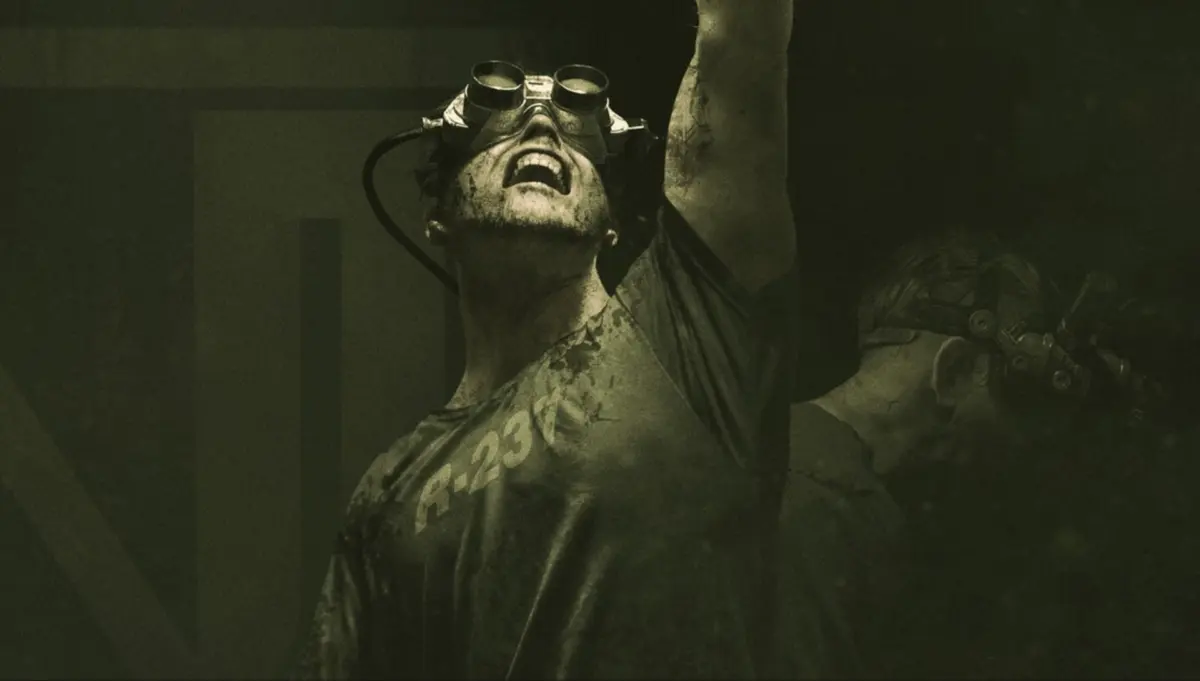
For the players strapped into the night-vision goggles of the Sinyala Facility, the nightmares may be endless, but for Red Barrels, the nightmare of development hell has finally, mercifully, come to an end.




Belum ada komentar. Jadilah yang pertama berkomentar!