

Executive Overview
In the volatile ecosystem of contemporary alternative music, few outfits command the cultural oxygen currently inhaled by Geese. The Brooklyn-based experimental rock quartet—all barely into their early twenties—find themselves walking the precarious tightrope between underground critical darlings and bonafide mainstream phenomena. This tension was palpable during their blistering, three-night residency at Los Angeles’ historic Hollywood Forever Cemetery from October 15 to October 17, 2026.
For an industry perpetually mourning the death of traditional rock ‘n’ roll, Geese represents a thrilling, unpredictable anomaly. Yet, their meteoric rise has not been without its anxieties. Following frontman Cameron Winter’s burgeoning solo acclaim—cemented by his 2026 Live at Carnegie Hall album and accompanying concert film directed by auteur Paul Thomas Anderson—a familiar dread has rippled through the fandom. Purists and early adopters whisper the age-old rock liturgy: Will success spoil Geese? Will Winter’s gravitational pull eclipse the collaborative friction that birthed their best work?

These questions hung heavy in the October air among the mausoleums and palm trees of Hollywood Forever. Yet, as the band took the stage night after night, executing a masterclass in tension, release, and blistering musicianship, such existential anxieties evaporated. Geese are currently operating at the absolute peak of their powers. They are loud, erratic, fiercely intelligent, and utterly essential—a band whose live show acts as a baptismal fire for a new generation of rock fans experiencing the visceral, bruising communal joy of a mosh pit for the very first time.
Detailed Chronology: The Three-Night Hollywood Forever Residency
Running a tight, uncompromising 80 minutes each evening—commencing precisely at 8:10 PM and concluding at 9:30 PM—Geese’s sets offered a masterclass in concision. In an era where jam bands and legacy acts stretch performances well past the two-hour mark, Geese proved that heavy, rich musical ideas are best delivered with the punch of a prize-fighter.

The Support: Bill Orcutt’s Masterclass in Minimalism
Before Geese claimed the stage, the evening was spiritually prepared by alt-rock veteran Bill Orcutt. Armed with nothing more than an electric guitar, no vocals, and an absolute disregard for conventional song structures, Orcutt performed a hypnotic 45-minute opening set each night.
To the uninitiated standing near the drink stands, it was ambient noise; to those pressed against the barricade, it was a revelation. Channeling the spirit of Jimi Hendrix’s deconstructionist performance of "The Star-Spangled Banner," Orcutt played entirely toward feeling. Starting with a blank sonic canvas, he constructed meticulous, minor-key masterpieces note by erratic note, proving to be the ideal avant-garde palette cleanser before Geese’s high-octane theatricality.

Night One: The Skittering Awakening
Opening with "Long Island City Here I Come"—the final, jittery, start-stop track from their acclaimed 2025 LP Getting Killed—the first night felt initially tentative. Winter prowled the stage like a cat emerging from the shadows, testing the boundaries of the venue’s acoustics.
However, by the time the band transitioned into the holy trinity of the record’s second, third, and fourth tracks: "Cobra," "Husbands," and the title track "Getting Killed," the crowd had transformed into a churning, ecstatic sea of bodies. Younger fans, many experiencing their first real mosh pit, collided in a daze of breathless euphoria. The night closed with the soaring, anti-authoritarian anthem "Taxes," leaving the amphitheater electrified.

Night Two: Dark Metamorphosis and Ramones Interpolations
Night two flipped the script immediately. Abandoning "Long Island City" as an opener, Geese struck a heavier, moodier chord by launching straight into "Taxes." A wordless, atmospheric opening minute lent the track an eerie, Cure-like gloom before breaking into a torrent of kinetic energy.
Mid-set, the band delivered one of the residency’s most memorable musical detours during a searing rendition of "2122," seamlessly interpolating the Ramones’ classic "Now I Wanna Sniff Some Glue." The night also introduced deep cuts like "Space Race" from their 2023 EP 4D Country, showcasing the band’s expanding stylistic range. The evening concluded not with "Taxes," but with a ferocious take on "Au Pays du Cocaine," punctuated by a take-no-prisoners, adrenaline-fueled drum solo from Max Bessin.

Night Three: The Crescendo of Comfort
By the third and final night, the initial performance jitters had entirely melted away. Winter offered rare spoken greetings to the crowd, while guitarist Emily Green toyed playfully with micro-melodies between songs.
The setlist reclaimed "Long Island City Here I Come," turning it into a blistering, 12-minute beast. Mid-set highlights like "Bow Down"—punctuated by a textbook "Rock and Roll Pause" that suspended the entire cemetery in agonizing, beautiful silence before Green unleashed a face-melting guitar solo—demonstrated a band locked into telepathic synchronicity. Fans locked arms during the crystalline balladry of "Domoto" and screamed the lyrics of "I See Myself" directly into the eyes of complete strangers.

The Encores: Scorched Earth and Extemporaneous Rants
Across all three nights, the encore remained identical in structure yet wildly variable in execution: a ten-plus-minute incinerating run-through of "Trinidad."
On nights one and two, Winter used the sprawling bridge to deliver surreal, extemporaneous spoken-word monologues. Night one featured a bleakly humorous confession about "losing it all on DraftKings, putting it all on the Ethereum," while night two birthed the instant-classic line: "Well guess what buddy, there’s a Carl’s Jr. in the AIRPORT." By night three, he reined the vocals back into the structured track, stretching the syllables like elastic until the band finally evaporated into the night, leaving the audience in a breathless puddle of exhaustion.

Supporting Context & Metrics: The Anatomy of Geese’s Rise
To understand Geese’s current cultural footprint, one must look at the trajectory that brought them from a nascent Brooklyn indie project to the vanguard of modern rock.
| Metric / Milestone | Data Point | Significance |
|---|---|---|
| Debut Album | Projector (2021) | Established their early post-punk bona fides; now entirely absent from live sets as the band considers themselves sonically evolved. |
| Sophomore Breakthrough | 3D Country (2023) | Broadened their palette into cosmic Americana and progressive rock; tracks like "Crusades" and "Cowboy Nudes" remain live staples. |
| Critically Acclaimed LP | Getting Killed (2025) | Cemented their status as experimental rock innovators, yielding fan-favorite anthems that structure their current live pacing. |
| Crossover Milestone | Live at Carnegie Hall (2026) | Cameron Winter’s collaboration with director Paul Thomas Anderson, signaling individual pop-cultural crossover appeal. |
| Residency Scope | Hollywood Forever (Oct 15–17, 2026) | Three consecutive sold-out nights drawing a predominantly Gen-Z audience into a historic, unconventional performance space. |
The demographic makeup of the Hollywood Forever crowd offers a crucial metric for the health of contemporary rock. Up front, the barricade was dominated by teenagers and twenty-somethings—an audience bridging the gap between emo-adjacent digital natives and old-school rock purists. For many, these shows served as their inaugural introduction to the rituals of live rock: the collective surge of the mosh pit, the vulnerability of crowd-surfing, and the unifying catharsis of communal volume.

Official Statements and Industry Reception
While management and publicists have largely framed Geese’s recent milestones as a natural evolution, critics and insiders have engaged in fierce debates regarding the band’s internal dynamics.
In a recent industry roundtable discussing the crossover appeal of modern indie acts, veteran music journalist Marcus Vance noted:

"Geese are experiencing the classic ‘frontman dilemma.’ Cameron Winter possesses the rare, caustic charisma of a 1970s rock icon. The industry wants to package him as a solo auteur—as evidenced by the PTA-directed Carnegie Hall film—but the true magic of Geese lies in the volatile, four-way chemical reaction between Winter, Emily Green, Max Bessin, and the rest of the ensemble. If the machine tries to isolate Winter, they risk killing the golden goose."
Despite these industry anxieties, the band members themselves continue to project a gritty, blue-collar dedication to their craft. In brief, off-the-cuff remarks captured during their Los Angeles residency, Winter downplayed the high-art framing of their recent achievements, telling the Hollywood Forever audience: "We’re just trying to play these songs loud enough so the ghosts wake up."

Future Outlook: Growing Pains and the Road Ahead
As Geese transitions from a scrappy underground secret to an arena-capable powerhouse, they are inevitably encountering the growing pains associated with professionalized touring.
Navigating the Machinery of Stardom
For a band accustomed to managing their own gear and roughing it on the indie circuit, the introduction of modern tour infrastructure—roadies handing them fresh guitars after every song, high-end production elements—is a double-edged sword. Certain creative choices during the residency highlighted this transitional friction. For instance, moments when Winter abandoned his front-and-center mic duties to sit at the keyboard alongside touring keyboardist Sam Revaz occasionally sapped the stage’s kinetic energy. Winter is at his most magnetic when standing unencumbered with a guitar or shaking a tambourine, embodying the nervous energy of a live wire.

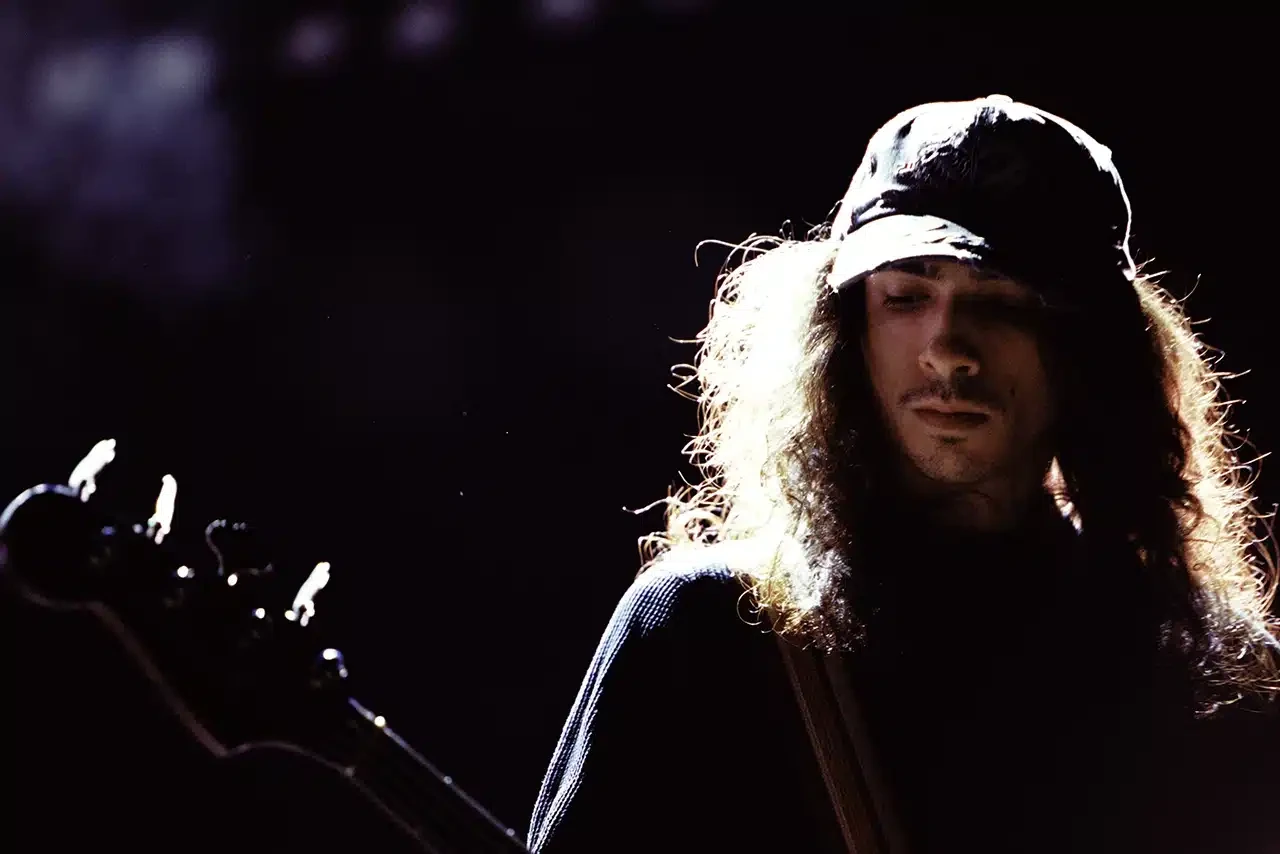
Similarly, the lighting design at Hollywood Forever relied heavily on backlighting, casting the four members in striking, moody silhouettes. While aesthetically pleasing, fans expressed a desire to clearly see the expressions of the musicians as they navigated their intricate fretboard gymnastics.
The Verdict: Leave Them Wanting More
These minor critiques, however, are hallmarks of a band in real-time evolution. Confidence will inevitably settle into routine, and as Geese learns to inhabit their expanding footprint, they will undoubtedly refine their stage production.

Yet, there is a distinct, lightning-in-a-bottle magic to their current phase—a sweet spot where the band is just as bewildered by their sudden, explosive fame as their most devoted fans are. By keeping their Hollywood Forever sets strictly to an intense, perfectly portioned 80 minutes, Geese proved that they understand the cardinal rule of culinary and musical indulgence: like rich foie gras, you do not overfeed the audience until they are sick; you leave them desperate for a second helping.
Even after three consecutive nights of blistering rock ‘n’ roll, the crowd was left in a frenzied puddle, desperate for more. If Geese can maintain this razor-sharp balance between experimental ambition and raw, visceral garage-band energy, rock music’s future is not only safe—it is in terrifyingly good hands.



Belum ada komentar. Jadilah yang pertama berkomentar!