

Executive Overview
The sprawling, intricate multiverse of Marvel Comics has long relied on a foundational premise: what if a single, pivotal moment in history had unfolded differently? For decades, the publisher’s iconic What If… imprint has peeled back the layers of established continuity to examine dystopian alternate realities, tragic miscalculations, and triumphant alternate victories. Next week, Marvel’s speculative storytelling reaches a chilling new threshold with the release of What If…?: X-Men #1, arriving in comic book shops on Wednesday, August 26, 2026.
Written and conceptualized to subvert the very bedrock of mutant mythology, this high-stakes one-shot special poses a deeply disturbing question: What if Cassandra Nova had successfully killed Professor Charles Xavier in the womb?
By eradicating the foundational visionary of mutant-human coexistence before either twin ever took a breath, the narrative strips away the moral compass, philosophical guidance, and defensive fortress that the X-Men have relied upon for generations. In this grim alternate reality, the absence of Charles Xavier does not merely result in a leaderless mutant race; it births a terrifying authoritarian regime under the absolute control of Cassandra Nova. Telepaths are no longer symbols of extraordinary potential or misunderstood evolution; they are hunted game, living subjects of brutal experimentation, and raw materials for a horrific grand design.

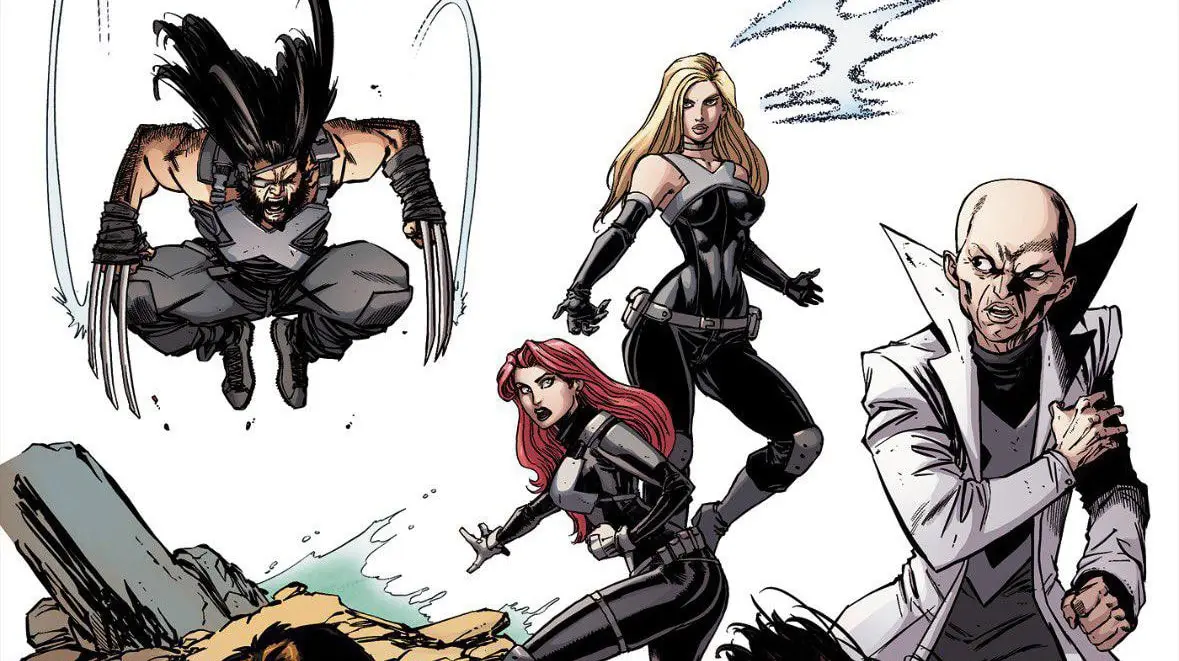
As Marvel prepares to unleash this dark speculative tale, early previews reveal a landscape of absolute terror, featuring iconic mutants pushed to their absolute limits. With powerful telepaths Jean Grey and Emma Frost desperately fleeing the clutches of a tyrannical Nova, What If…?: X-Men #1 promises to be one of the most intellectually challenging and visually arresting comic book releases of the year.
Detailed Chronology: The Anatomy of a Broken Timeline
To fully grasp the apocalyptic stakes of What If…?: X-Men #1, one must examine the profound weight of Charles Xavier and Cassandra Nova’s shared genesis. In canonical Marvel continuity, Cassandra Nova is a "mummudrai"—a parasitic, astral life-form that attaches itself to a twin in the womb. Recognizing the immense, god-like psionic potential of the fetus that would become Professor X, Nova attempted to destroy him before birth. In the primary Earth-616 timeline, Xavier fought back psychically, seemingly destroying her physical form and leaving her a disembodied, vengeful consciousness until her eventual return in Grant Morrison’s legendary New X-Men run.
This new one-shot special obliterates that hard-fought victory.

The Womb-Time Assassination
In the divergence point for What If…?: X-Men #1, Cassandra Nova’s prenatal assault is completely successful. Charles Xavier dies before drawing his first breath. Without Xavier’s formidable intellect to balance the psychic ecosystem or establish the Xavier Institute for Higher Learning, the ideological trajectory of mutant-kind is catastrophically altered.
Without the Dream of Coexistence—the gentle philosophy of peace and integration championed by Xavier—humanity’s fear of mutants hardens into institutionalized, unchecked fascism far earlier and more violently than in the mainstream timeline. More importantly, Cassandra Nova survives, unfettered and possessing immense psychic mastery, establishing herself not as an adversary to be overcome, but as the supreme architect of a mutant nightmare.
The Rise of the Telepathic Hegemony
Without Xavier to mentor, shelter, and unify the world’s most powerful young minds, the mutant community fractures and falls prey to Nova’s global apparatus. The issue’s official synopsis outlines a deeply unsettling status quo:

"In a world where Cassandra Nova killed Charles Xavier in the womb, telepaths are hunted and experimented on — and what she’s making from them is far worse than what she’s taking."
Nova has weaponized the very essence of mutant consciousness. Telepaths across the globe are rounded up, their minds probed, broken, and re-engineered. Rather than using their gifts to bridge understanding between species, Nova is harvesting their psychic energies to construct an unimaginable biological and psionic weapon. The nature of these experiments hints at a dark perversion of Cerebro and mutant cloning technology, designed to subjugate both human and mutant populations entirely under her hive-mind control.
The Great Escape: Jean Grey and Emma Frost
Amidst this totalitarian landscape, hope flickers through two of the most formidable psychic powerhouses in comic book history: Jean Grey and the White Queen, Emma Frost. In the standard timeline, Jean and Emma have often shared a complex, deeply contentious relationship, frequently clashing over ideology, leadership, and their connections to Cyclops.

Here, bound by mutual survival and the shared trauma of Nova’s sadistic laboratories, they are forced into an alliance of absolute necessity. The preview pages showcase a harrowing, high-octane breakout as Jean and Emma manage to shatter the constraints of Nova’s subterranean facilities and flee into the shadows of a hostile world.
Yet, escape is merely the beginning of the nightmare. Cassandra Nova does not tolerate defiance. The issue’s logline delivers an ominous warning: “When telepaths Jean Grey and Emma Frost escape, Cassandra Nova will stop at nothing to bring them back! Bring on Cassandra’s X-Men!”
Nova has formed her own twisted iteration of the superhero team—not a band of noble protectors fighting for a world that hates and fears them, but an enslaved, brainwashed strike force of corrupted mutant icons forced to hunt down their own kind.

Supporting Context & Metrics: The Legacy of What If…?
The What If… banner holds a storied and prestigious history within the halls of Marvel Comics. Introduced in 1977 with What If? #1—which famously asked "What If Spider-Man Had Joined the Fantastic Four?"—the anthology series has served as a vital creative sandbox for writers and artists to push boundaries without disrupting primary continuity.
A Tradition of High-Stakes Speculation
Over the decades, the imprint has generated some of the most memorable and beloved stories in comic book history, including:
- What If? Vol. 1 #32 (1982): "What If the Avengers Had Lost the Kree-Skrull War?"
- What If? Vol. 2 #105 (1998): Introducing May Parker, the daughter of Peter Parker and Mary Jane Watson, who would later take up the mantle of Spider-Girl and anchor the longest-running female-led superhero series at Marvel.
- What If? Age of Apocalypse (2006): Exploring alternate paths where monumental crossover events spun out of control, resulting in total planetary devastation.
The revival of these concepts as high-profile one-shots allows modern creators to tackle complex psychological themes with contemporary artistic techniques. What If…?: X-Men #1 leans heavily into psychological horror, body horror, and systemic oppression, themes that have always underpinned the X-Men mythos, but dialed up to an eleven in the complete absence of Xavier’s moral anchor.

The Creative Weight of Cassandra Nova
Ever since her debut in New X-Men #114 (2001) by Grant Morrison and Frank Quitely, Cassandra Nova has remained one of the most terrifying villains in the Marvel Universe. As a mummudrai possessing Xavier’s genetic material, she represents the ultimate perversion of the mutant dream—malice incarnate wrapped in the visage of genetic kinship.
By centering a What If… story entirely around her uninhibited victory, Marvel taps into a goldmine of dramatic tension. Without Xavier to temper her or act as a mirror to her cruelty, Nova operates at the absolute apex of her horrific potential, making her a villain of genuinely apocalyptic proportions.
Official Statements & Promotional Insights
While Marvel Comics has kept specific plot twists tightly under wraps to preserve the impact of the release, promotional materials distributed ahead of the launch emphasize the bleak, psychological nature of the narrative.

Editors and creators working within the current X-office have frequently noted that the modern era of mutant storytelling thrives on exploring alternate governance and philosophical corruption—themes heavily explored during the Krakoan Age and its aftermath. What If…?: X-Men #1 acts as a dark mirror to those themes, demonstrating precisely what happens when the foundational dream of peaceful coexistence is eradicated before it can even be articulated.
In statements accompanying the initial issue solicitations, Marvel highlighted the terrifying nature of "Cassandra’s X-Men"—a corrupted roster of characters designed to challenge everything fans know about mutant loyalty, heroism, and family. The visceral artwork showcased in the preview pages—depicting sterile, horrific laboratory environments, desperate escapes through desolate urban landscapes, and the cold, unyielding gaze of Cassandra Nova—signals a book that refuses to pull its punches.
Future Outlook: Ripple Effects in the Multiverse
As comic book enthusiasts eagerly await the arrival of What If…?: X-Men #1 on Wednesday, August 26, 2026, speculation is already swirling regarding whether this one-shot will remain a standalone cautionary tale or if it might spawn further explorations into Nova-dominated realities.

Exploring the Multiverse of Mutant Misery
The modern Marvel multiverse has proven to be infinitely elastic. With storylines frequently revisiting alternate earths through multiversal incursions and cross-dimensional travel, the fate of the world depicted in What If…?: X-Men #1 serves as a stark reminder of how fragile the Earth-616 status quo truly is. If a single prenatal event can turn saviors into slaves and visionaries into tyrants, it forces readers to re-evaluate the tenuous nature of heroism in every reality.
The Ultimate Test for Jean and Emma
For fans of Jean Grey and Emma Frost, this issue represents a masterclass in character dynamics. Stripped of institutional backing, safe havens, and the comfort of numbers, the two omega-level (or near-omega) telepaths must rely entirely on their wits, raw power, and an uneasy partnership to survive. How they navigate the psychological torture of Cassandra Nova’s regime—and whether they can liberate their enslaved peers—will define the emotional core of the book.
Conclusion
What If…?: X-Men #1 is shaping up to be an essential read for longtime X-Men devotees and casual fans alike. By taking two of the most influential figures in mutant lore—Charles Xavier and Cassandra Nova—and subverting their shared origin in the most brutal way imaginable, Marvel Comics has crafted a chilling, high-stakes narrative that promises to linger in the minds of readers long after the final page is turned.

Be sure to pick up What If…?: X-Men #1 when it hits comic book stores and digital platforms on Wednesday, August 26, 2026, and witness firsthand the terrifying dawn of a world without a Professor X.




Belum ada komentar. Jadilah yang pertama berkomentar!