For the modern commuter, public transportation is a daily exercise in patience, social tolerance, and olfactory survival. Whether it is an overcrowded subway carriage, a delayed regional rail service, or a turbulent domestic flight, shared transit routinely exposes passengers to the unpredictable habits of fellow travelers. While driving offers a sense of autonomy—granting the operator full control over the route, the soundtrack, and the cabin environment—surrendering one’s safety to public infrastructure carries an inherent risk.
Yet, what is an irritating morning delay for the everyday worker becomes prime narrative real estate for Hollywood screenwriters. The inherent claustrophobia, forced proximity, and lack of escape routes make public transport the ultimate crucible for dramatic tension. From real-world historical tragedies to high-concept supernatural and action thrillers, filmmakers have repeatedly turned planes, trains, buses, and boats into arenas of survival.
This comprehensive review examines ten essential cinematic journeys from hell, analyzing how master filmmakers like James Cameron, Bong Joon-ho, and Wes Craven weaponized public transportation to terrify audiences and redefine the thriller genre.
Detailed Chronology: Ten Definitive Cinematic Journeys From Hell
1. The Multi-Modal Misadventure: Planes, Trains and Automobiles (1987)
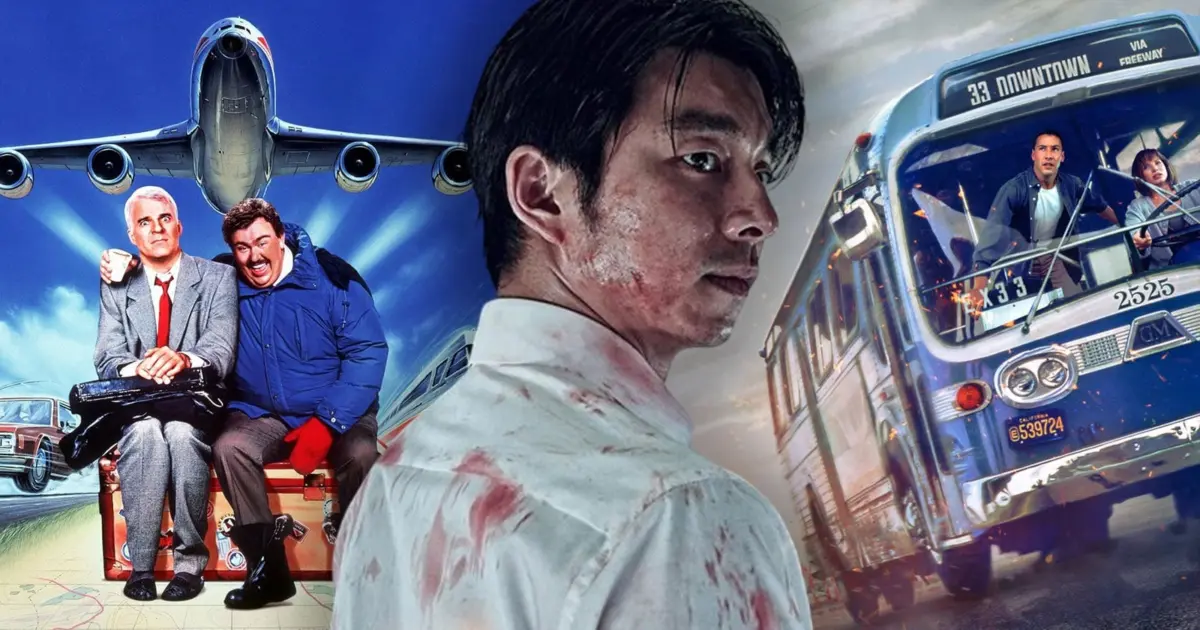
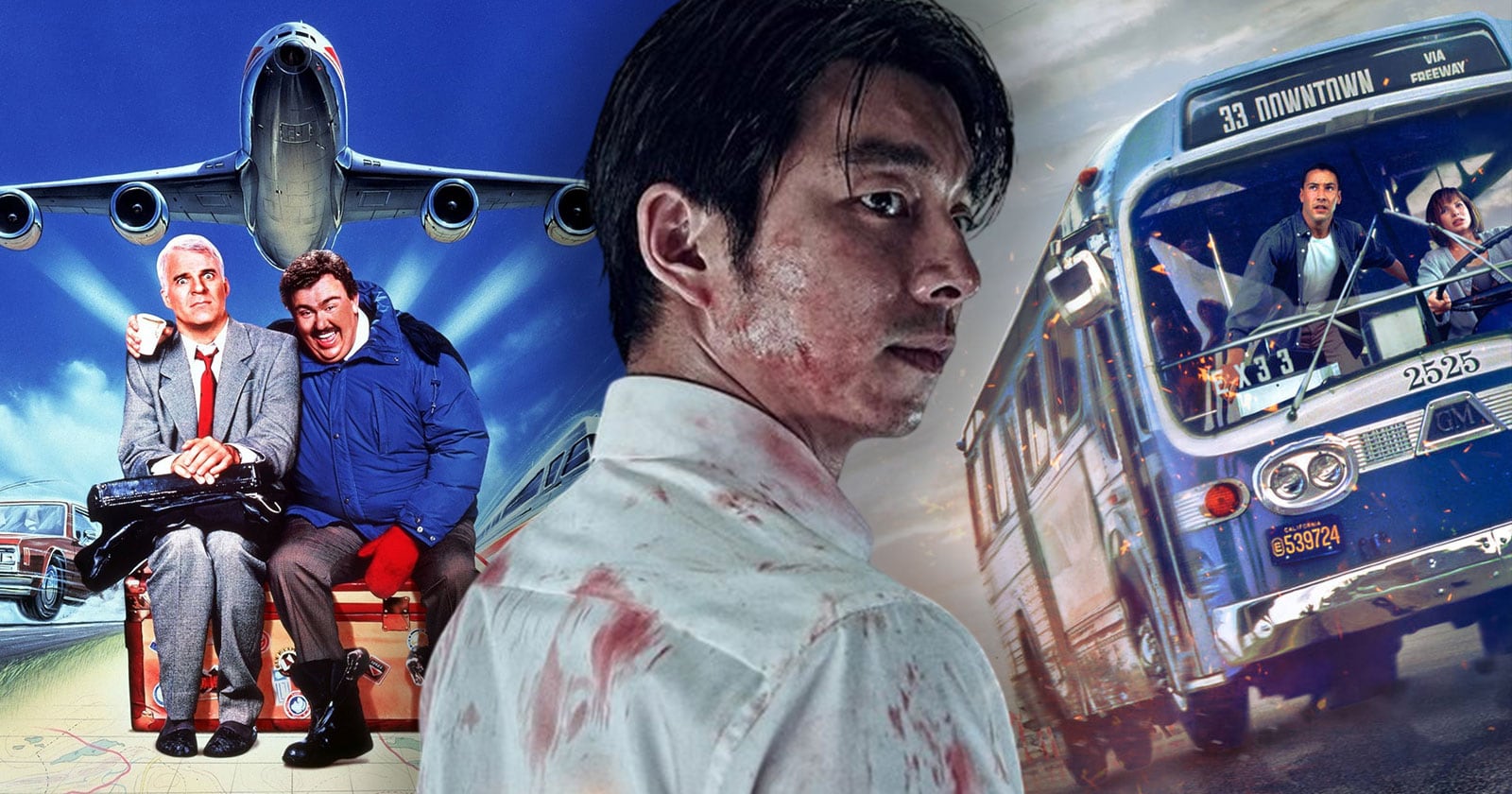
Director John Hughes shifted focus from suburban teenagers to exhausted adults in this ultimate comedy of transit errors. Stuck-up marketing executive Neal Page (Steve Martin) finds himself locked in a relentless battle of seating roulette and travel disruptions as he attempts to fly home to Chicago for Thanksgiving. Plagued by cancelled flights, rerouted paths, and a string of nightmarish vehicles—including a burnt-out rental car and a freezing meat wagon—Page is forced into the company of Del Griffith (John Candy), an eccentric shower-curtain ring salesman.
While the film ultimately concludes on a poignant, emotionally resonant note, the journey itself serves as an exhaustive catalogue of every logistical failure known to modern travel.
2. High-Speed Hostage Crisis: Under Siege 2: Dark Territory (1995)
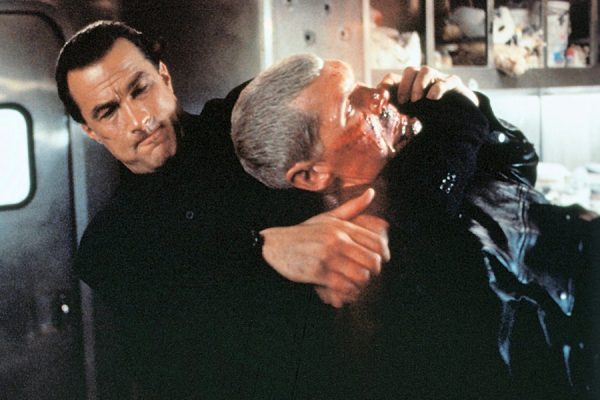
Capitalizing on the massive commercial success of his 1992 naval blockbuster, action star Steven Seagal shifted his battlefield from a battleship to a luxury passenger train crossing the Rocky Mountains. In Under Siege 2, international terrorists hijack the Grand Continental, utilizing a hijacked military satellite weapon to threaten the United States.
Enter Casey Ryback (Seagal), an unassuming cook who just happens to be a retired Navy SEAL. While the film lacks the pristine cinematic execution of its predecessor, it captures a very specific breed of public transport nightmare: being trapped in a moving metal tube with heavily armed mercenaries while a brooding action hero violently dismantles the carriage around you.
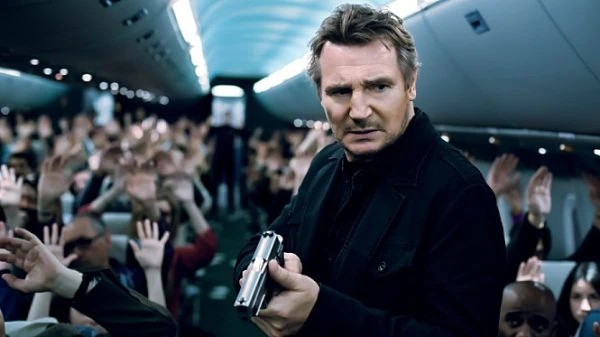
3. The 40,000-Foot Setup: Non-Stop (2014)
Directed by Jaume Collet-Serra, Non-Stop pairs Liam Neeson with a classic high-altitude conspiracy. Neeson stars as Bill Marks, a jaded, alcoholic federal air marshal aboard a non-stop commercial flight from New York to London. Midway through the journey, Marks begins receiving encrypted text messages on his secure phone demanding a $150 million ransom be transferred to an offshore account, or a passenger will be executed every 20 minutes.
To compound the psychological pressure, the real-time clues systematically frame Marks himself as the primary hijacker. The film serves as a masterclass in claustrophobic paranoia, transforming the neutral territory of a commercial airliner into a ticking time bomb.
4. The Maiden Voyage Catastrophe: Titanic (1997)
No discussion of catastrophic transport journeys is complete without James Cameron’s monumental historical epic. Chronicling the maiden voyage of the RMS Titanic in 1912, the film anchors its grand-scale tragedy in a cross-class romance between aristocrat Rose DeWitt Bukater (Kate Winslet) and drifting artist Jack Dawson (Leonardo DiCaprio).
While the love story provides the emotional vehicle, the true protagonist of the second half is the ship itself. Cameron’s meticulous blend of cutting-edge digital effects and massive physical scale brought the historic iceberg collision and subsequent sinking to life with visceral, heartbreaking authenticity, cementing the voyage as history’s most infamous transport failure.
5. The Nocturnal Cab Ride from Hell: Collateral (2004)
Michael Mann redefined the neo-noir thriller by shrinking the scale of a cinematic catastrophe down to the interior of a Los Angeles taxicab. Jamie Foxx stars as Max, a mild-mannered, long-serving cab driver dreaming of starting his own limousine business. His nightly routine is shattered when he picks up Vincent (Tom Cruise), a silver-haired, cold-blooded contract killer visiting LA to wipe out five witnesses in a federal drug trial.
Forced to act as Vincent’s chauffeur through the sprawling, neon-lit labyrinth of the city, Max’s routine shift becomes a harrowing overnight battle for survival. Mann’s early adoption of high-definition digital cameras lends the film a gritty, documentary-like immediacy that turns an ordinary cab ride into an urban nightmare.
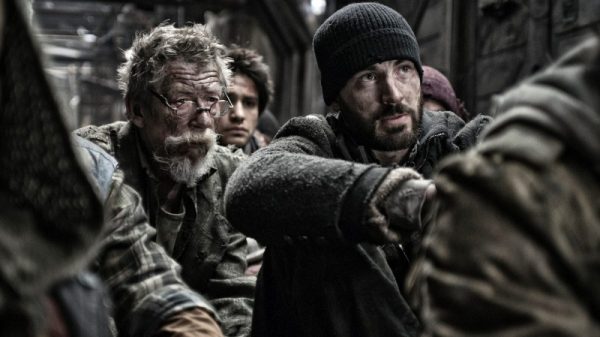
6. The Perpetual Dystopian Circuit: Snowpiercer (2013)
What happens when a train journey never stops? In Bong Joon-ho’s visionary sci-fi masterwork Snowpiercer, a failed global climate experiment plunges the Earth into a new ice age, wiping out all life except for the inhabitants of a massive, perpetually moving train powered by a sacred perpetual-motion engine.
Inside this closed ecosystem, a rigid class system has formed: the elite live in luxury at the front of the train, while the impoverished masses languish in squalor at the back. Led by Curtis Everett (Chris Evans), the tail-section passengers launch a violent, carriage-by-carriage revolution to seize control of the engine. The film brilliantly uses the linear architecture of a train to visualize social stratification and claustrophobic warfare.
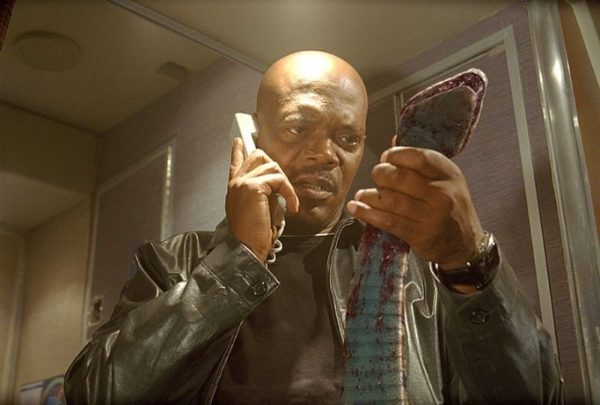
7. High-Altitude Serpent Infestation: Snakes on a Plane (2006)
Director David R. Ellis leaned entirely into creature-feature camp to deliver one of the most self-aware genre films of the 2000s. Samuel L. Jackson stars as FBI agent Neville Flynn, tasked with escorting a murder witness from Hawaii to Los Angeles aboard a commercial flight. Unbeknownst to the crew, an assassin has loaded the cargo hold with hundreds of venomous, aggressive snakes liberated with pheromones to ensure they attack the passengers.
The resulting chaos combines absurd practical creature work with Jackson’s unforgettable, meme-generating dialogue. It remains the definitive cinematic warning against booking budget airlines.
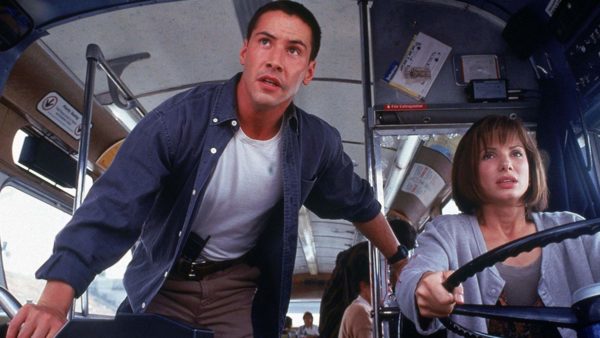
8. The 50 MPH Speed Limit: Speed (1994)
Jan de Bont’s directorial debut is widely regarded as one of the most perfectly paced action films of the 1990s. Keanu Reeves stars as Jack Traven, an LAPD SWAT officer who thwarts an initial extortion attempt by a bitter, retired bomb squad officer named Howard Payne (Dennis Hopper). Seeking revenge, Payne rigs a city bus with an explosive device programmed to detonate if the vehicle’s speedometer drops below 50 miles per hour.
With Sandra Bullock stepping in as Annie Porter—the passenger forced to take the wheel through the winding streets and highway gaps of Los Angeles—Speed turns a routine municipal commute into a masterclass in sustained kinetic tension.
9. The Undead Express: Train to Busan (2016)
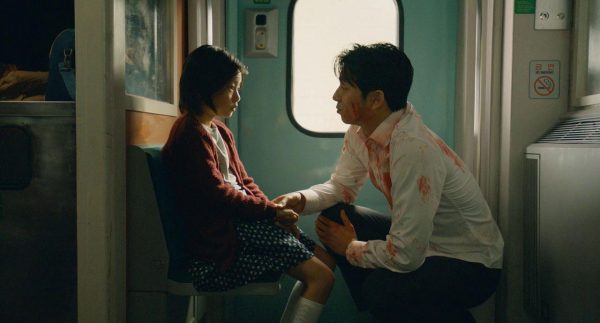
Sang-ho Yeon revitalized the modern zombie subgenre by trapping his characters inside the high-speed KTX train racing from Seoul to Busan. When a mysterious viral outbreak suddenly sweeps across South Korea, a workaholic father (Gong Yoo) and his young daughter find themselves fighting for survival alongside a disparate group of passengers as infected individuals infiltrate the carriages.
The film strips away the luxury of open space, forcing characters to navigate narrow aisles, luggage racks, and glass doors while evading fast, hyper-aggressive zombies. Beyond the visceral thrills, Train to Busan delivers a potent emotional critique of human selfishness during societal collapse.
10. The Red-Eye Conundrum: Red Eye (2005)
Wes Craven proved his mastery of suspense outside the traditional slasher subgenre with this taut, single-location psychological thriller. Rachel McAdams stars as Lisa Reisert, a hotel manager boarding a red-eye flight home to Miami. Shortly after takeoff, the charming man seated next to her, Jackson Rippner (Cillian Murphy), reveals his true identity as an operative for an assassination cell.
Rippner holds Lisa’s father hostage, using him as leverage to force her to use her position at the luxury hotel to reassign a visiting government official to a vulnerable room. Trapped at 30,000 feet with nowhere to run, Lisa must orchestrate a quiet, high-stakes resistance inside the confines of an economy cabin.
Supporting Context & Metrics: The Psychology of Transit Anxiety
The enduring popularity of the public transport thriller points to a deeper psychological phenomenon known among behavioral sociologists as "enclosed space vulnerability." Unlike open-air environments where an individual retains freedom of movement, shared transit systems create artificial communities bound by rigid schedules, physical proximity, and institutional rules.
Film Title
Primary Mode of Transport
Core Threat / Conflict
Narrative Tone
Planes, Trains and Automobiles
Multi-modal (Plane, Train, Car, Bus)
Incompatible personalities & logistics
Comedy / Drama
Under Siege 2: Dark Territory
Passenger Train
Terrorist hijacking & satellite weapon
Action
Non-Stop
Commercial Airliner
Extortion & psychological framing
Mystery Thriller
Titanic
Ocean Liner
Iceberg collision & structural sinking
Historical Epic / Romance
Collateral
Taxicab
Contract killer holding driver hostage
Neo-Noir Thriller
Snowpiercer
Dystopian Train
Class revolution in a frozen wasteland
Sci-Fi Action
Snakes on a Plane
Commercial Airliner
Venomous biological attack
Action / Camp Horror
Speed
City Bus
Pressure-sensitive bomb (50 mph limit)
Action / Thriller
Train to Busan
High-Speed Rail
Zombie viral outbreak
Horror / Action
Red Eye
Commercial Airliner
Extortion & political assassination plot
Psychological Thriller
Data compiled from box office tracking and genre analyses indicate that films set within confined vehicular spaces consistently outperform standard location thrillers in terms of perceived tension. The limitation of movement forces screenwriters to rely heavily on razor-sharp dialogue, psychological manipulation, and creative environmental problem-solving rather than sprawling CGI set pieces.
Official Statements and Industry Insights
Industry analysts and veteran filmmakers have frequently noted the unique technical challenges involved in shooting within the tight dimensions of vehicles.
In retrospective interviews regarding the production of Non-Stop, director Jaume Collet-Serra emphasized the physical constraints of working on a replica Boeing 767 set:
"When you are shooting inside an aircraft cabin, you lose all traditional camera placements. You cannot pull back, you cannot establish wide spatial awareness without invading the ceiling or cutting through walls. That physical restriction forces you to focus entirely on the actors’ faces, the shift in their body language, and the claustrophobia closing in around them. The set becomes a character that actively tries to suffocate the narrative."
Similarly, production designers for films like Snowpiercer highlighted the engineering feats required to simulate motion within a linear set design:
"Building a train that has to feel like it is barreling across a frozen wasteland at hundreds of miles per hour—while housing hand-to-hand combat, political debates, and dramatic revelations—requires meticulous planning. Every car had to be visually distinct yet structurally tethered to the overarching metal spine of the train to maintain the illusion of an unbroken, endless journey."
Future Outlook: The Evolution of Transit Thrillers
As public transportation infrastructure evolves in the real world—with the rise of high-speed magnetic levitation trains, autonomous commercial vehicles, and expanding commercial spaceflight—the cinematic landscape of transit horror is poised for expansion.
Future screenwriters are already looking toward emerging technologies for inspiration. Concepts involving cyber-attacks on driverless mass-transit networks, oxygen depletion on commercial sub-orbital space liners, and automated algorithmic train systems hijacked by rogue artificial intelligence represent the next frontier of commuter anxiety.
Until those technologies become standard, however, everyday travelers stepping onto their morning bus, regional train, or red-eye flight will likely continue to glance sideways at their fellow passengers with a lingering, cinematic paranoia. After all, as Hollywood has repeatedly demonstrated, you never truly know who—or what—is sitting right next to you.
What is your absolute favorite film set on public transport? Let the editorial team know via our social channels @FlickeringMyth. Written by Tom Jolliffe.












Belum ada komentar. Jadilah yang pertama berkomentar!