

Executive Overview
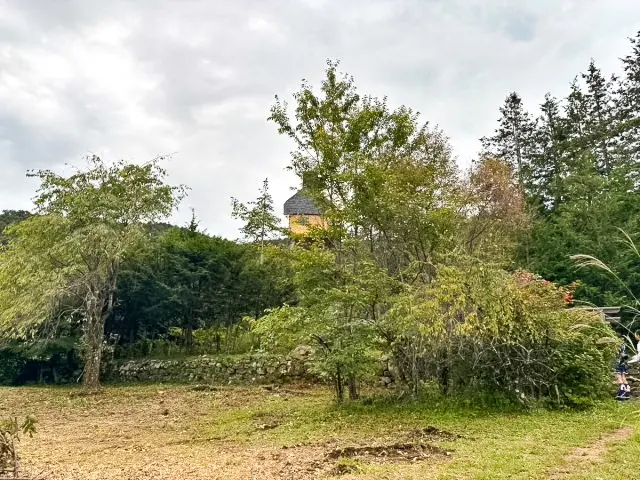
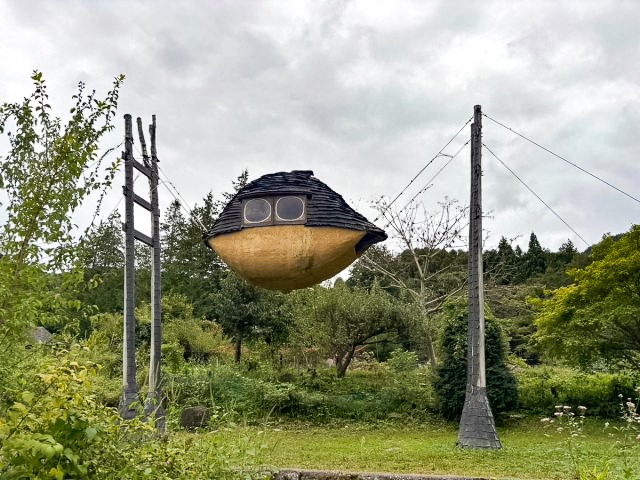
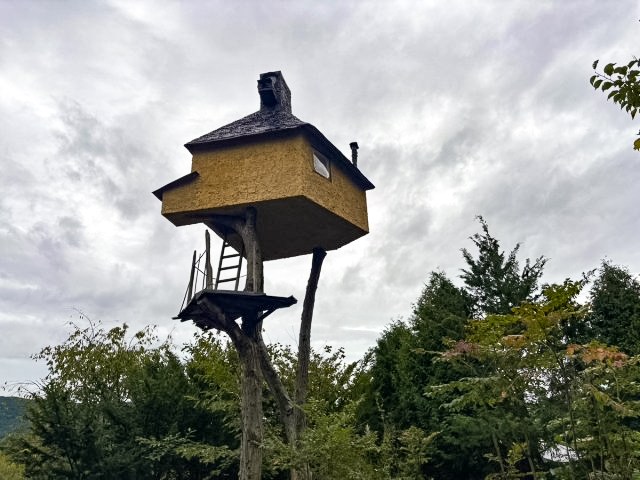
Tucked away in the serene, verdant landscapes of Chino City within Nagano Prefecture, Japan, lies a surreal architectural enclave that feels less like a product of modern engineering and more like a hand-drawn cell from a Studio Ghibli masterpiece come to life. Known globally for defying conventional spatial rules, this off-the-beaten-path cultural destination centers around the whimsical creation known as the Sora Tobu Dorobune—translated literally as the "Flying Mud Boat."
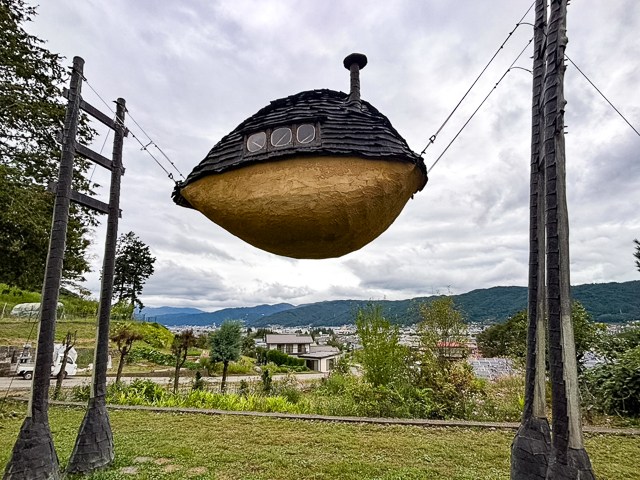
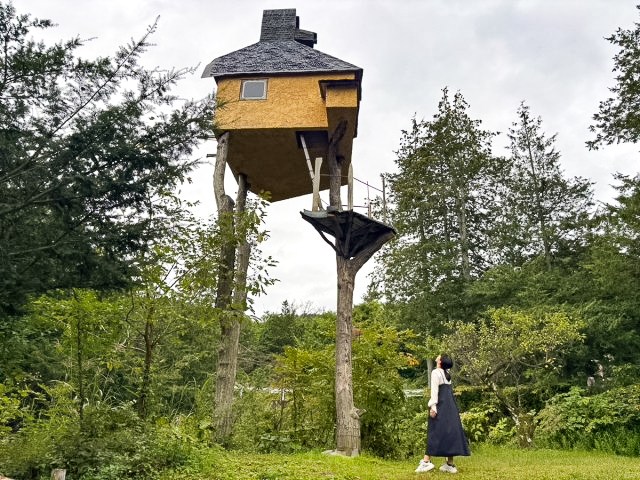
Designed by visionary architect and architectural historian Terunobu Fujimori, this suspended teahouse is part of a provocative trio of experimental structures that challenge how humanity interacts with the natural verticality of the earth. Alongside its neighbors—Takasugian (the "Too-High Teahouse") and Hikusugian (the "Too-Low Teahouse")—the Flying Mud Boat represents a radical departure from rigid urban planning, offering an intimate, whimsical meditation on nature, gravity, and traditional Japanese hospitality (chanoyu).
While these structures remain primarily visual spectacles for casual visitors—with interiors strictly reserved for specialized guided tours—their very presence in rural Nagano has transformed a quiet provincial plot into a pilgrimage site for international architecture enthusiasts, folklorists, and travelers searching for the fantastical hidden in plain sight.
Detailed Chronology: The Evolution of Fujimori’s Aerial Vision
From Student Aspirations to Architectural Reality
The conceptual roots of the Flying Mud Boat extend far deeper into the past than its 2010 construction date implies. Terunobu Fujimori harbored a persistent architectural obsession since his university days: the desire to construct a habitable structure that appeared completely untethered from the ground, floating effortlessly in midair. For decades, this vision remained a theoretical exercise, a daydream of suspended timber and earth.
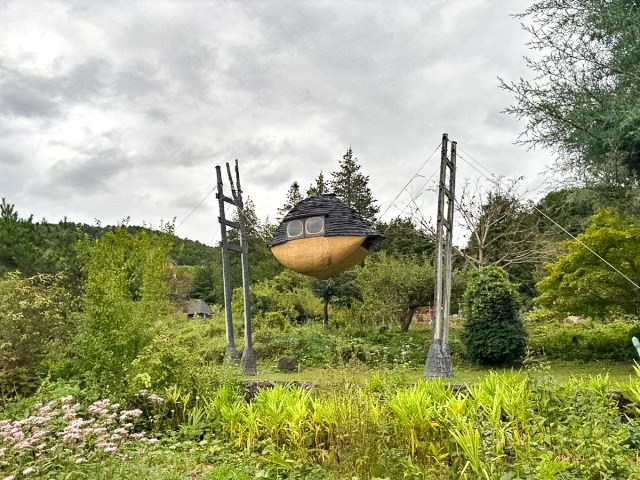
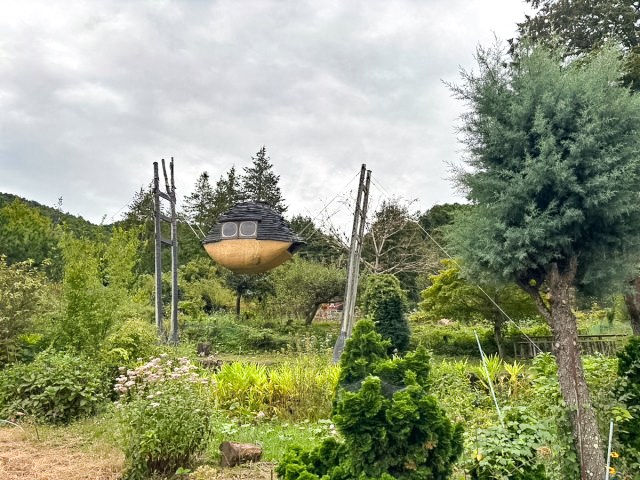
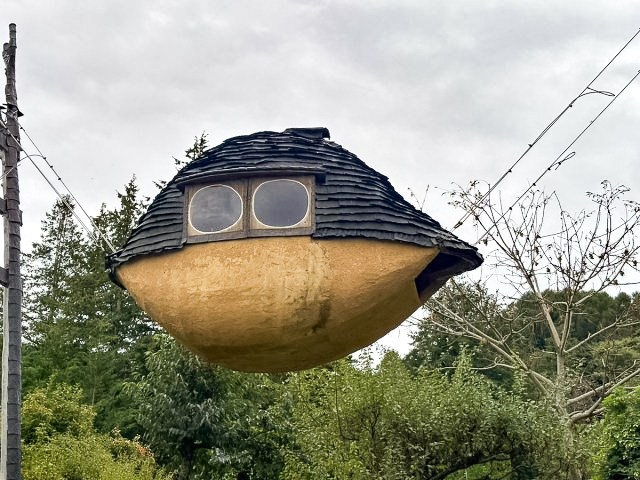
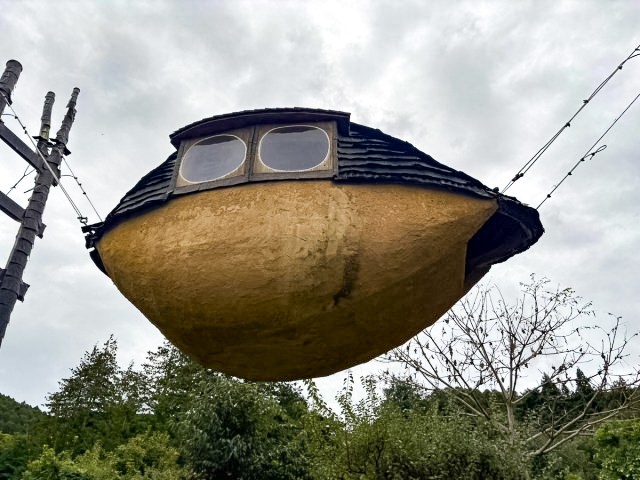
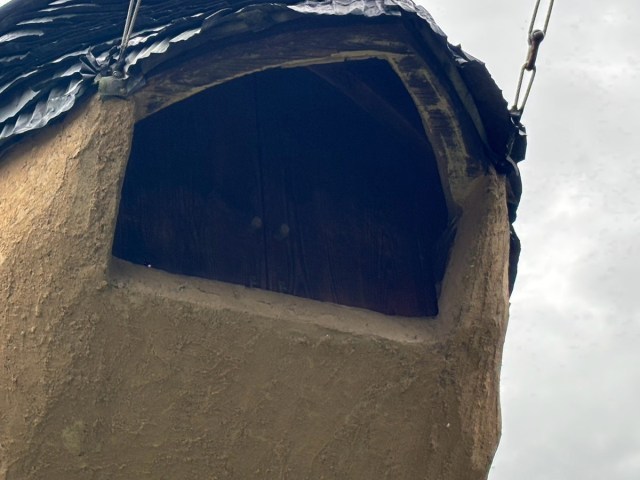
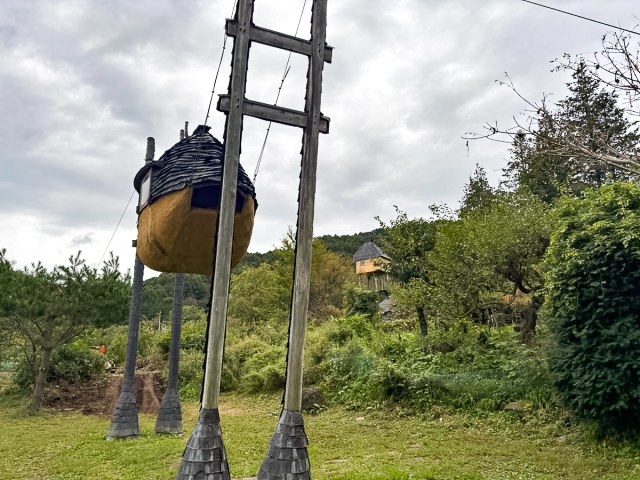
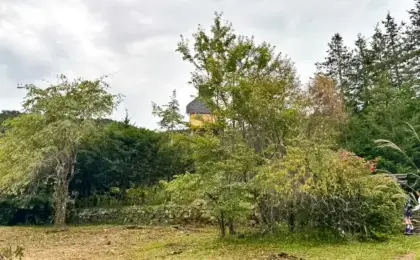
It wasn’t until 2010, coinciding with a major design exhibition, that Fujimori was finally granted the creative and structural freedom to materialize his lifelong ambition. Utilizing a complex matrix of hidden steel support cables and tension wires anchored to the surrounding topography, the architect engineered a boat-like hull fashioned from traditional earthen materials (dorobune translates to "mud boat"). From a distance, the illusion is uncanny: the vessel hangs suspended against the backdrop of Nagano’s dense foliage, swaying imperceptibly with the mountain breezes as if it had dropped anchor in an ocean of green canopy.
The Trilogy of Extremes in Chino City
The Flying Mud Boat does not stand alone; it shares its plot of land in Chino City with two conceptual prequels and companions that define Fujimori’s career-long interrogation of altitude.
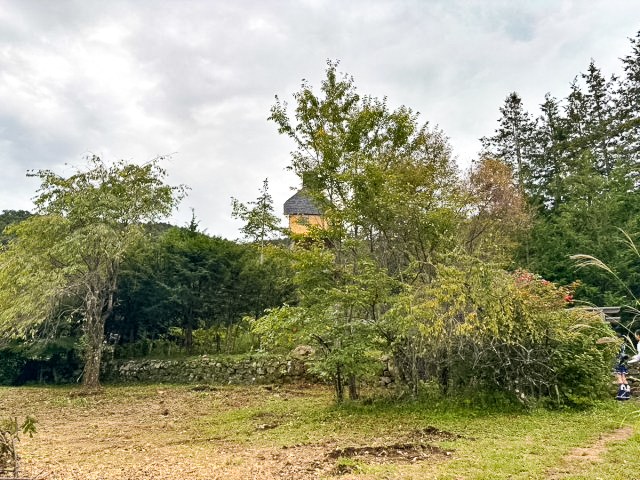
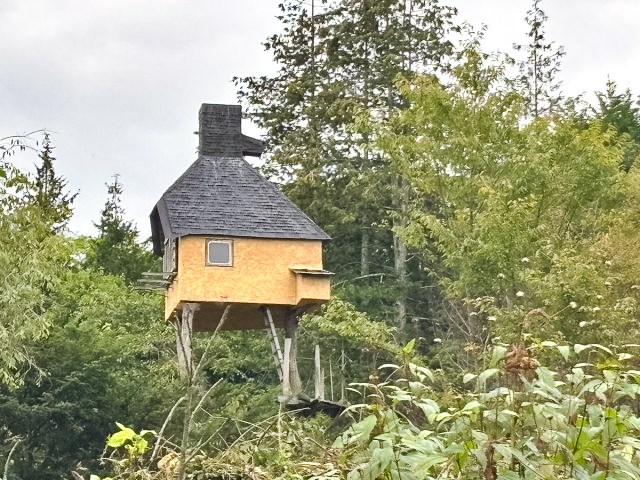
- Takasugian ("Too-High Teahouse"): Constructed prior to the Flying Mud Boat, this staggering architectural feat perches high in the treetops, supported precariously atop two living tree trunks. The structure is so aggressively elevated that it commands a terrifying view of the valley below. Its audacity famously earned it a spot on TIME magazine’s prestigious compilation of the "Top 10 Most Dangerous Buildings in the World," a list led globally by the Leaning Tower of Pisa. Despite its alarming aesthetic, rigorous engineering ensures its absolute stability, though simply gazing up at it from the forest floor is enough to induce vertigo.
- Hikusugian ("Too-Low Teahouse"): Serving as a deliberate spatial foil to the vertigo-inducing height of Takasugian, the Too-Low Teahouse plunges in the opposite direction. Partially excavated and built directly into or just beneath the surface of the earth, Hikusugian sits quietly in the literal shadow of its towering sibling.
- The Flying Mud Boat (Sora Tobu Dorobune): Bridging the vertical spectrum entirely, the Flying Mud Boat achieves what neither extreme could—complete liberation from both the treetops and the soil, hovering suspended in the open air via an intricate web of invisible and visible tension wires.
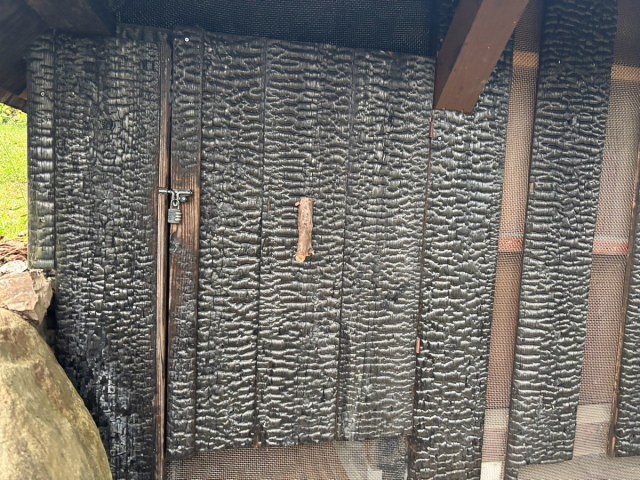
Complementing these structures is a nearby community center also designed by Fujimori, which further showcases his signature aesthetic: charred cedar cladding (yakisugi), raw mud walls, copper roofs adorned with living vegetation, and organic forms that embrace structural imperfections as organic art.
Supporting Context & Metrics: Architecture, Materiality, and Global Acclaim
The Philosophy of Terunobu Fujimori
To understand why these teahouses evoke such profound emotional responses, one must understand Terunobu Fujimori’s unique trajectory. Before becoming a practicing architect in his 40s, Fujimori was an esteemed architectural historian specializing in modern Japanese urban planning and unorthodox building traditions. His transition into design was driven by a rejection of sterile, corporate modernity in favor of what he calls "Jomon-style" or primitive architecture—structures that reconnect modern humans with the elemental building blocks of mud, wood, charcoal, and straw.
Fujimori’s teahouses are functional spaces built for the traditional Japanese tea ceremony. However, they strip away the austere, rigid minimalism of classic samurai tea rooms and replace them with a playful, fairy-tale vernacular. The exterior walls are typically finished with hand-applied plaster and mud, while roofs often sprout native grasses, ferns, or even full-sized trees, allowing the buildings to decompose and assimilate gracefully into the natural ecosystem over time.
Key Metrics & Site Specifications
- Location: Miyagawa 389-1, Chino City, Nagano Prefecture, Japan (Nagano-ken, Chino-shi, Miyagawa 389-1).
- Primary Structures: Sora Tobu Dorobune (Flying Mud Boat), Takasugian (Too-High Teahouse), Hikusugian (Too-Low Teahouse), and an adjacent Fujimori-designed community pavilion.
- Construction Year (Flying Mud Boat): 2010.
- Global Recognition: Takasugian internationally recognized by TIME magazine as one of the "Top 10 Most Dangerous Buildings in the World."
- Access Level: Grounds are accessible for external viewing; interior entry to the teahouses is strictly restricted to pre-arranged, seasonal guided tours utilizing specialized scaling ladders.
Official Statements & Cultural Reception
Local tourism boards and architectural preservation societies in Nagano Prefecture have increasingly recognized the cultural significance of Fujimori’s enclave in Chino City. While the city is historically renowned for its Jomon-period archaeological artifacts and proximity to the Yatsugatake Mountains, the modern architectural interventions by hometown-affiliated and globally celebrated designers like Fujimori have introduced a new demographic of cultural tourists to the region.
In statements regarding the maintenance of these unconventional sites, local administrators emphasize that the structures are engineered with strict safety standards despite their fragile, storybook appearance. "The engineering calculations behind the Flying Mud Boat and Takasugian are meticulously executed," notes architectural conservation literature associated with the regional municipality. "What looks precarious is actually a masterclass in modern tension physics masked by primitive craftsmanship."
Visitors and architectural journalists who make the pilgrimage to Chino City frequently report a sense of cognitive dissonance upon arrival. Reporting for regional travel desks, journalists have described the site as "a psychological reset button," where the rigid geometry of urban life is entirely dismantled by structures that appear to have sprouted organically from the soil or floated down from a mythological sky.
Future Outlook: Preservation and Tourism in Rural Nagano
As global interest in off-the-beaten-track travel accelerates, destinations like the Flying Mud Boat face a delicate balancing act. On one hand, increased digital visibility through travel blogging and social media platforms drives vital economic interest and cultural appreciation to rural Nagano Prefecture. On the other hand, the fragile nature of earthen architecture, living-roof systems, and suspended wooden hulls requires rigorous, ongoing conservation efforts.
Local stakeholders and preservation committees are currently exploring sustainable tourism frameworks that will allow travelers to continue experiencing the wonder of Fujimori’s creations without compromising the structural integrity of the teahouses or disrupting the tranquil rural community of Chino City. Future initiatives are expected to include expanded educational programming, improved digital booking systems for seasonal interior tours, and enhanced botanical landscaping to support the natural weathering processes integral to Fujimori’s design philosophy.
For travelers yearning to step outside the well-worn tourist corridors of Tokyo and Kyoto, the Flying Mud Boat stands as an enduring testament to the power of imagination—proving that with enough vision, even a humble teahouse can take flight.







Belum ada komentar. Jadilah yang pertama berkomentar!