

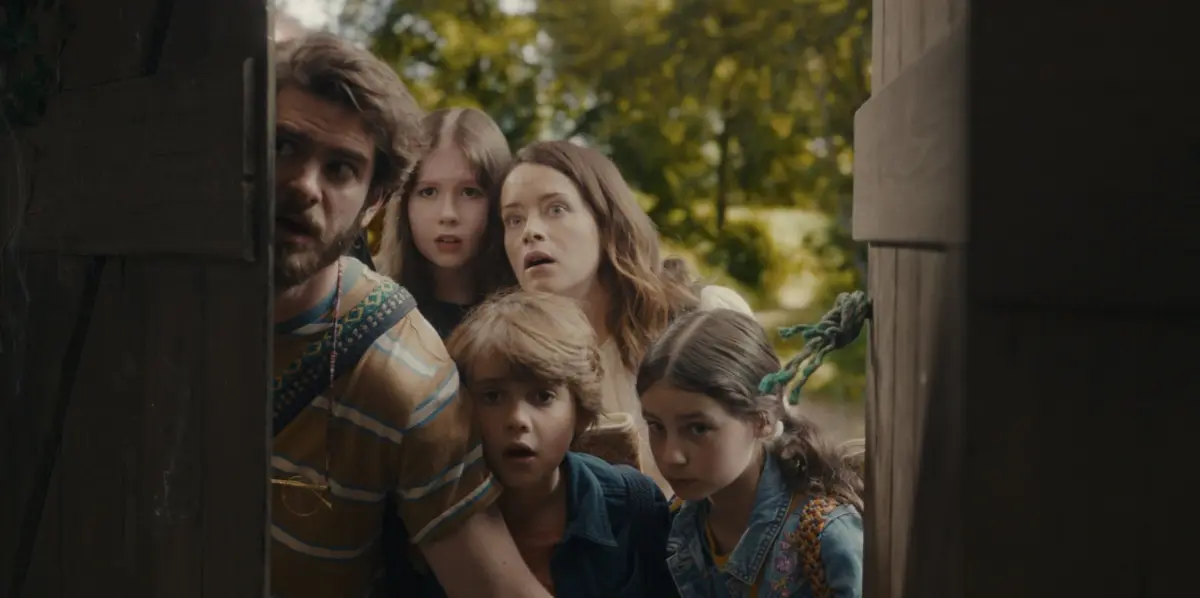
Executive Overview
In an era dominated by CGI-heavy spectacles, sterile cinematic universes, and repetitive, shot-for-shot live-action remakes, the arrival of The Magic Faraway Tree (2026) feels like a breath of fresh, pine-scented air. Directed by Ben Gregor and adapted for the screen by Simon Farnaby, this splashy, cozy, and profoundly imaginative family film breathes new life into Enid Blyton’s legendary 20th-century literary series. At its core, the film is an earnest plea for human imagination and deep-rooted familial connection, directly challenging the isolating, addictive pull of modern digital technology.
Bolstered by an extraordinary, star-studded ensemble cast—including Andrew Garfield, Claire Foy, Nicola Coughlan, Nonso Anozie, Jessica Gunning, Dustin Demri-Burns, and Judi Dench—the film successfully bridges the gap between classic children’s literature and contemporary anxieties. Rather than leaning on digital shortcuts, The Magic Faraway Tree champions practical effects, meticulous set design, and detailed costuming, echoing the tactile cinematic magic of 1980s and 1990s family favorites. As it charts the Thompson family’s journey from digital saturation to rustic wonder, the film offers a masterclass in how timeless source material can be thoughtfully modernized without losing its original soul.
Detailed Chronology: The Narrative Journey of the Thompson Family
Act I: Modern Discontent and the Great Escape
The story opens in the pressure cooker of modern urban life, introducing the Thompson family at a distinct emotional and existential impasse. Parents Tim (Andrew Garfield) and Polly (Claire Foy) are profoundly unfulfilled. Polly has just thrown her career into chaos by impulsively quitting her job; her resignation follows the startling discovery that a smart refrigerator she helped design had been secretly equipped with invasive security cameras. (This high-tech surveillance artifact features an amusing, deadpan vocal cameo by Judi Dench).

Meanwhile, their children are thoroughly consumed by various forms of modern technology, detached from the physical world around them. Desperate for a reset, Tim proposes a radical departure. Taking inspiration from a literal family dream book, he uproots the household, moving them to a remote, rustic countryside home where they can pursue an ambitious, old-fashioned entrepreneurial goal: creating, perfecting, and launching their very own brand of artisanal tomato sauce.
Act II: The No-Wi-Fi Reality and the Discovery of the Canopy
Upon arrival, the "spacious home" turns out to be little more than a sprawling, drafty barn devoid of modern amenities—most critically, Wi-Fi. The local landlord, a delightfully goofy character struggling with English, is utterly baffled when asked about internet connectivity. While the children throw immediate tantrums over their enforced digital detox, Tim and Polly double down, insisting that true beauty and magic lie just beyond their doorstep in the surrounding woods.
True to the book’s promise, the magic is real. The youngest sibling, Fran (Billie Gadsdon), wanders back into the woods to return a dropped purse to a mysterious stranger. That stranger is none other than Silky, a sprightly fairy played with effervescent charm by Nicola Coughlan. Silky, thrilled to have company, introduces Fran to the vibrant, idiosyncratic community inhabiting the upper reaches of the ancient, towering tree outside.
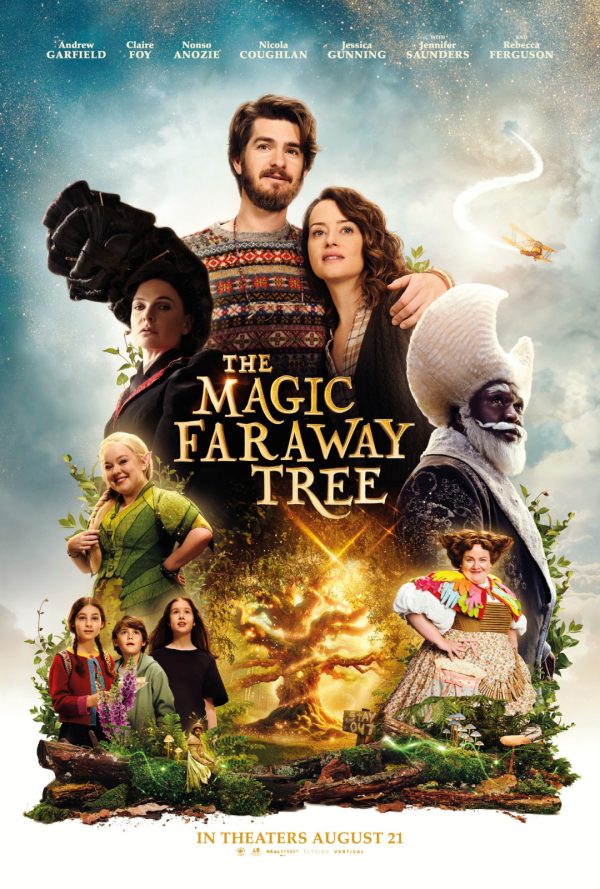
Act III: Ascending the Branches and Meeting the Residents
Fran’s ascent up the mystical trunk serves as the audience’s gateway into Blyton’s wildly inventive universe. She encounters the tree’s eccentric inhabitants:
- Moonface (Nonso Anozie), the wise and steady leader of the group, complete with a distinctly round, expressive headpiece.
- Dame Washalot (Jessica Gunning), whose name accurately forecasts her daily chores, and who undergoes a quiet, moving character arc about breaking free from subservience.
- Saucepan Man (Dustin Demri-Burns), completely encased in clanging cookware—a monumental feat of practical costuming that presented unique, rewarding challenges for the film’s sound-mixing and physical performance teams.
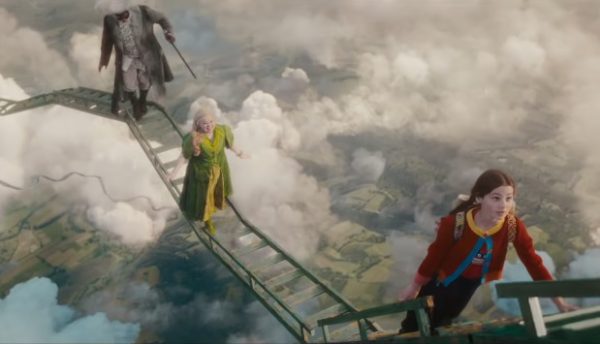
The tree itself is a living vessel, spinning on its axis to transport its residents—and eventually, the skeptical older Thompson children, Beth (Delilah Bennett-Cardy) and Joe (Phoenix Laroche)—to an ever-rotating array of fantastical lands. Each world acts as a breathtaking showcase for detailed production design and old-school craftsmanship, evoking the whimsical, unpredictable spirit of Roald Dahl adaptations.
Act IV: Peril, Climax, and Familial Reconciliation
As the children dive deeper into these surreal dimensions, a familiar tension takes root: the anxiety that the young visitors will inevitably grow up, outgrow the magic, and leave the fantasy creatures behind. This bittersweet undercurrent adds emotional weight to the adventure.
In the magical realm’s final sequence, a brief narrative conflict arises with the introduction of an antagonist played by Rebecca Ferguson. Though her screen time is limited to roughly five minutes, Ferguson makes a striking impression in elaborate villainous attire, successfully generating high-stakes peril for the film’s climax. Ultimately, however, the true victory is emotional rather than physical. The children use the magic of their journeys not to escape reality, but to solidify their bond as siblings, support their parents’ eccentric tomato sauce venture, and heal the fractures within their modern family unit.
Supporting Context & Metrics: Crafting a Practical Wonderland
The Cast and Crew
- Director: Ben Gregor
- Screenplay: Simon Farnaby (adapted from Enid Blyton’s book series)
- Production Companies & Distribution: Positioned as a major family tentpole release for 2026.
- Starring Ensemble: Billie Gadsdon (Fran), Nicola Coughlan (Silky), Delilah Bennett-Cardy (Beth), Phoenix Laroche (Joe), Nonso Anozie (Moonface), Andrew Garfield (Tim), Claire Foy (Polly), Jessica Gunning (Dame Washalot), Dustin Demri-Burns (Saucepan Man), Rebecca Ferguson (Antagonist), and cameo voice work by Judi Dench.
Practical Magic vs. Digital Fatigue
One of the most notable production metrics of The Magic Faraway Tree is its heavy reliance on practical effects, physical sets, and tangible costumes over green-screen reliance. In an industry where family films routinely default to generic digital rendering, Gregor and his crew made a conscious artistic choice to build the physical world.
The costume department, in particular, faced extraordinary design hurdles—ranging from Nonso Anozie’s headpieces to Dustin Demri-Burns’ interlocking metal wardrobe of saucepans. This dedication to tactile filmmaking anchors the picture in a nostalgic aesthetic reminiscent of classic 1980s and 1990s live-action fantasy cinema, proving that physical craftsmanship yields a far more immersive viewing experience.
Official Statements and Creative Insights
Reflecting on the thematic resonance of the project, screenwriter Simon Farnaby and director Ben Gregor have frequently emphasized the cultural necessity of reclaiming childhood imagination in the digital age.
"We didn’t set out to make a lecture about screen time," production notes indicate, "but rather an invitation to look up. Enid Blyton understood that children possess an infinite capacity for wonder if you simply give them the space—and the silence—to let their minds wander."
Critics and early industry reviewers have also drawn fascinating thematic parallels between The Magic Faraway Tree and other 2026 family releases, such as Pixar’s Toy Story 5. While entirely coincidental in their scheduling, both films engage in a timely cultural conversation about how technology threatens to sever children from organic play, tactile storytelling, and authentic emotional connections.
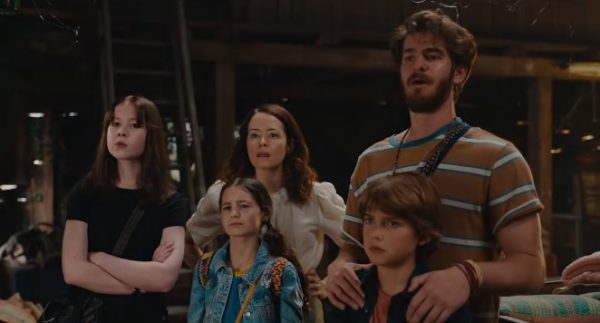
Furthermore, casting directors and producers have praised the chemistry between Garfield and Foy, whose portrayals of burnt-out parents navigating mid-life disillusionment ground the fantastical elements in genuine, relatable domestic drama.
Future Outlook: The Legacy of Blyton in Modern Cinema
The release of The Magic Faraway Tree in 2026 marks a pivotal turning point for adaptations of classic British literature. For decades, Hollywood studios have struggled to translate Enid Blyton’s whimsical, highly surreal concepts to the screen without Westernizing them into generic fantasy tropes or relying too heavily on uninspired CGI.
By prioritizing eccentric character design, practical craftsmanship, heartfelt domestic comedy, and an anti-technological thematic core, Ben Gregor’s film establishes a new benchmark for family entertainment. Should the film perform as strongly at the global box office as early critical consensus suggests, it opens the door wide for potential sequels exploring the vast catalog of Blyton’s mystical worlds—proving once and for all that audiences of all ages are deeply hungry for cinema that values imagination over algorithms.








Belum ada komentar. Jadilah yang pertama berkomentar!