

Executive Overview
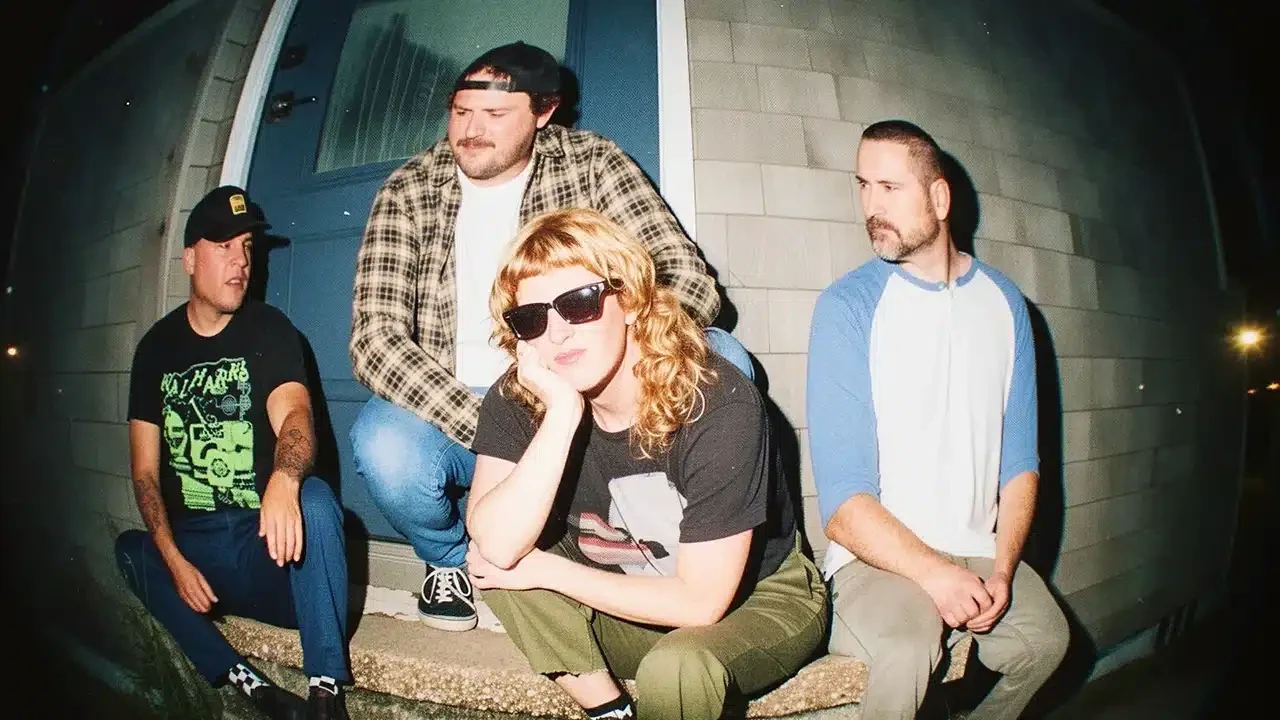
While metropolitan cultural hubs like Chapel Hill and Asheville traditionally dominate conversations surrounding North Carolina’s rich musical heritage, a quieter, more resolute force has been quietly brewing on the state’s remote coastline. Hailing from the isolated barrier island town of Kill Devil Hills, the indie-rock quartet Cor de Lux has chosen to intentionally fly under the radar. Far from the saturated tastemaker circles of the Triangle or the Blue Ridge, the band has carved out an uncompromising lane entirely on their own terms.
Their third full-length studio album, Year of the Horse, stands as a masterclass in modern guitar-driven music—an exhilarating, abrasive yet deeply melodic swirl reminiscent of post-hardcore pioneers like Unwound, Dinosaur Jr., and Sonic Youth. Yet, beneath the dense layers of feedback and jagged time signatures lies an uncommon emotional gravity. Propelled by the dual-vocal interplay of co-founders Dawn Moraga and Tim Lusk, the record bridges the gap between Sonic Youth’s detached cool and radical vulnerability.
This piece explores the trajectory of Cor de Lux: from DIY operators navigating the psychic weight of grassroots self-promotion to landing a coveted spot on the legendary independent imprint Ipecac Recordings. Featuring production from underground royalty J. Robbins and deeply personal songwriting rooted in the realities of working-class American life, this is the story of how a "baby band" from a three-hour-isolated beach town became the needle in the haystack that captivated the alternative music world.
Detailed Chronology: From Isolated Jams to Ipecac Recordings
To understand Cor de Lux’s distinct sonic footprint, one must first understand geography. Kill Devil Hills is not an easy place to plug into a bustling regional touring circuit. It is a geographically isolated outpost where creative isolation can either stunt a project or serve as a vital protective shield. For Moraga, who handles guitar and lead vocals alongside Lusk, that distance has been a blessing in disguise.
"We have a scene, but it’s very small here. Even Raleigh is three hours away. If we were going to see bands every weekend, I wonder if it would have influenced us to sound a certain way," Moraga reflects. "I think that maybe the protection of that, just having our own space here, suits us."
Rather than outsourcing their creative impulses to metropolitan trends, Cor de Lux developed their craft organically. Eschewing the conventional method of an individual songwriter bringing fully formed demos to the table, the quartet relies entirely on communal, in-the-room composition. Drawing a direct methodological page from post-hardcore architects like Fugazi and Unwound, the band builds their songs brick by brick through unstructured jamming.
"We’ve never been a band that writes songs and brings them to the table," Moraga explains. "Sometimes it takes a while, but we play, and we make decisions about the song in real time. I love the song-building process. There might be some wrong notes, but the energy is there."
The Breakthrough Encounter
For years, Moraga managed nearly every administrative facet of the band herself—booking shows, managing press lists, and directly contacting music journalists and underground radio hosts. Armed with a hard-earned directory of college and independent radio contacts, her grassroots outreach even managed to secure airtime on punk icon Henry Rollins’ influential radio broadcast.
"I messaged him, and I said, ‘I love your brain. I don’t understand how you remember everything, but we’re a baby band. Here’s our music,’" Moraga recalls. Within an hour, Rollins replied positively, setting the stage for their national footprint to expand.
However, the pivotal catalyst that bridged the gap between regional DIY band and national signee came unexpectedly at North Carolina’s annual Hopscotch Music Festival. While wearing a merchandise shirt from Michigan indie fixture Tyvek, Moraga struck up a conversation with musician Fred Thomas (known for his work with Protomartyr, Tyvek, and Winged Wheel).
Unaware at first that Thomas was the man behind the shirt, Moraga voiced her exhaustion over the industry’s unspoken rules and her reluctance to aggressively pitch labels. Thomas offered a counter-perspective that changed everything, encouraging her to shed her self-imposed guilt and actively place their music in front of record executives.
Emboldened by Thomas’s advice, Moraga began carefully shopping the band’s catalog. After considering several boutique labels she deeply admired—including Exploding in Sound and the late, lamented Trouble in Mind—she took a longshot gamble on Ipecac Recordings. Known as the home of iconoclastic acts like the Melvins, The Jesus Lizard, Mr. Bungle, and ISIS, Ipecac represented the holy grail of heavy, uncompromising alternative music.
To her astonishment, the label listened.
"I was in the middle of the coffee shop when I got the email, and I screamed really loud," Moraga says. "We turned out to be the needle in the haystack. It feels good because it didn’t come from a connection. Our music really did stand out."
Supporting Context & Metrics: The Production and Aesthetic of Year of the Horse
Year of the Horse is not merely a triumph of signing logistics; it is an artistic high-water mark for the band, heavily elevated by their choice of production. To capture their blistering live energy, Cor de Lux enlisted legendary producer J. Robbins—frontman of Jawbox and Burning Airlines, whose sonic fingerprints are stamped across some of the most critically revered independent releases of the last three decades.
Working out of the studio with Robbins provided a masterclass in efficiency and emotional resonance for the band.

"He let us do our own thing, and he would suggest something to try out. It was like a very mellow experience," Moraga notes. "He is a patient, nice dude. We had the best time working with him."
Confronting Realities: The Story Behind "Strawberry"
While the album’s instrumentation draws clear stylistic bloodlines from late-80s and 90s noise-rock and post-hardcore, its lyrical content anchors it firmly in the complexities of adult life. Among the album’s most emotionally resonant centerpieces is the track "Strawberry," a song directly tackling Moraga’s complicated, estranged relationship with her father.
Rather than taking a reductive or purely condemnatory stance on familial dysfunction, the track explores the fragile nuances of human frailty.
"I haven’t had a strong relationship with him, but I’ve come to appreciate him, even though he is a homeless drug addict who lives in Baltimore," Moraga reveals. "I visited him to try to help. In doing so, I realized that he’s this really sweet, kind person. He has a problem, but he is not a bad human. So I wrote the song because I wanted a message for people who have experienced that with parents, but I wasn’t condemning the parents either."
This empathetic realism runs counter to the easy cynicism often found in modern indie rock. When Moraga attempted to intervene as a savior, her father gently rebuffed the notion, content with his community of neighbors whom he helped with household chores. "Drug addiction sucks, but he’s not an evil person," she emphasizes.
Similarly, standout tracks like "Ping Pong" dissect the quiet erosions and deep-seated complexities of grown-up partnerships, utilizing dual-vocal arrangements that balance Lusk’s and Moraga’s distinct timbres into a cohesive, bleeding-edge narrative.
Official Statements & Industry Positioning
Joining a roster historically populated by veterans of the underground presents an interesting positioning challenge for a relatively young band. Yet, Ipecac’s artist-first ethos proved to be an ideal match for Cor de Lux’s fiercely independent ethics.
When finalizing the partnership, Moraga approached the label with absolute transparency:
"I was so blunt, so honest. I said I don’t know how many pre-sales we’re gonna get, but we will tour the hell out of the record, and we sell a lot of merch at every show. Ipecac understood that 99% of the world doesn’t know who we are. They understand this is a slow road."
This refreshing directness stands in stark contrast to modern industry pressures dictating that artists generate viral, manufactured content for platforms like TikTok.
"Ipecac is the best label that we could have gotten on because they are not trying to get us to do fake shit on TikTok. They just care about music," Moraga states. The partnership carries a surreal weight for the rest of the band, particularly guitarist Tim Lusk, a lifelong devotee of Ipecac flagship artists like Faith No More. "Our guitar player Tim gets teary-eyed when we do interviews about that… This really tripped him out."
Future Outlook: Balancing Art, Labor, and Momentum
As Year of the Horse continues to garner widespread critical acclaim as one of the definitive indie-rock records of its release cycle, Cor de Lux remains grounded in the realities of working-class musicianship. The members continue to meticulously balance demanding day-to-day employment and personal responsibilities with their relentless drive to write and rehearse.
Despite these time constraints, the creative floodgates have opened wide. The momentum generated by their time with J. Robbins and their subsequent signing has accelerated their collaborative songwriting process.
"We do practice as often as we can, but if we could get two nights back to back, we could probably write many more songs. We already have four new songs since recording Year of the Horse," Moraga shares, noting that these new compositions lean heavily into the unvarnished rawness of album cuts like "The Cringe."
For a band that deliberately chose the path less traveled—hiding away on the windy shores of the Outer Banks rather than chasing clout in established urban meccas—Cor de Lux proves that authenticity cannot be faked, accelerated, or manufactured. By remaining steadfast to their community roots, trusting their collective intuition, and treating their listeners with profound emotional intelligence, Cor de Lux has secured their place as one of the most vital, uncompromised rock bands operating today.






Belum ada komentar. Jadilah yang pertama berkomentar!