

Executive Overview
For decades, the real-time strategy (RTS) genre has lived and died by the strength of its single-player campaigns. While competitive multiplayer communities provide the enduring, long-tail engagement that keeps titles like StarCraft II alive for upwards of sixteen years, it is the initial narrative hook—the grand, scripted single-player romp—that first seduces millions of players into the fold. For the Warhammer 40,000 universe, a franchise with a notoriously rich, sprawling lore base, translating the tactical depth of the tabletop game into an engaging digital campaign has always been a delicate tightrope walk.
Enter Warhammer 40,000: Dawn of War 4. Developed by King Art—a studio that previously earned critical acclaim with titles like Iron Harvest, which drew heavy conceptual cues from the original Relic-developed Dawn of War games—this upcoming entry carries immense expectations. Following the divisive reception of Dawn of War 3, which leaned heavily into MOBA-esque mechanics and alienated long-time purists, the pressure on King Art to deliver a true return to form has been monumental.
Having spent hands-on preview time across two of the game’s four primary factions—the brutalist Orks and the zealous Adeptus Mechanicus—alongside a condensed two-mission prologue featuring the Astra Militarum, it is clear that those fears can finally be laid to rest. Dawn of War 4 possesses the "juice." It successfully marries the tactile, chaotic destruction characteristic of the grimdark setting with modern RTS design sensibilities, bringing back beloved legacy mechanics like physical cover and squad customization while innovating with smart campaign branching and resource loops.
Detailed Chronology: Campaign Hands-On and Faction Mechanics
The Greenskin Wave: Orks, WAAAGH!s, and Brutal Versatility
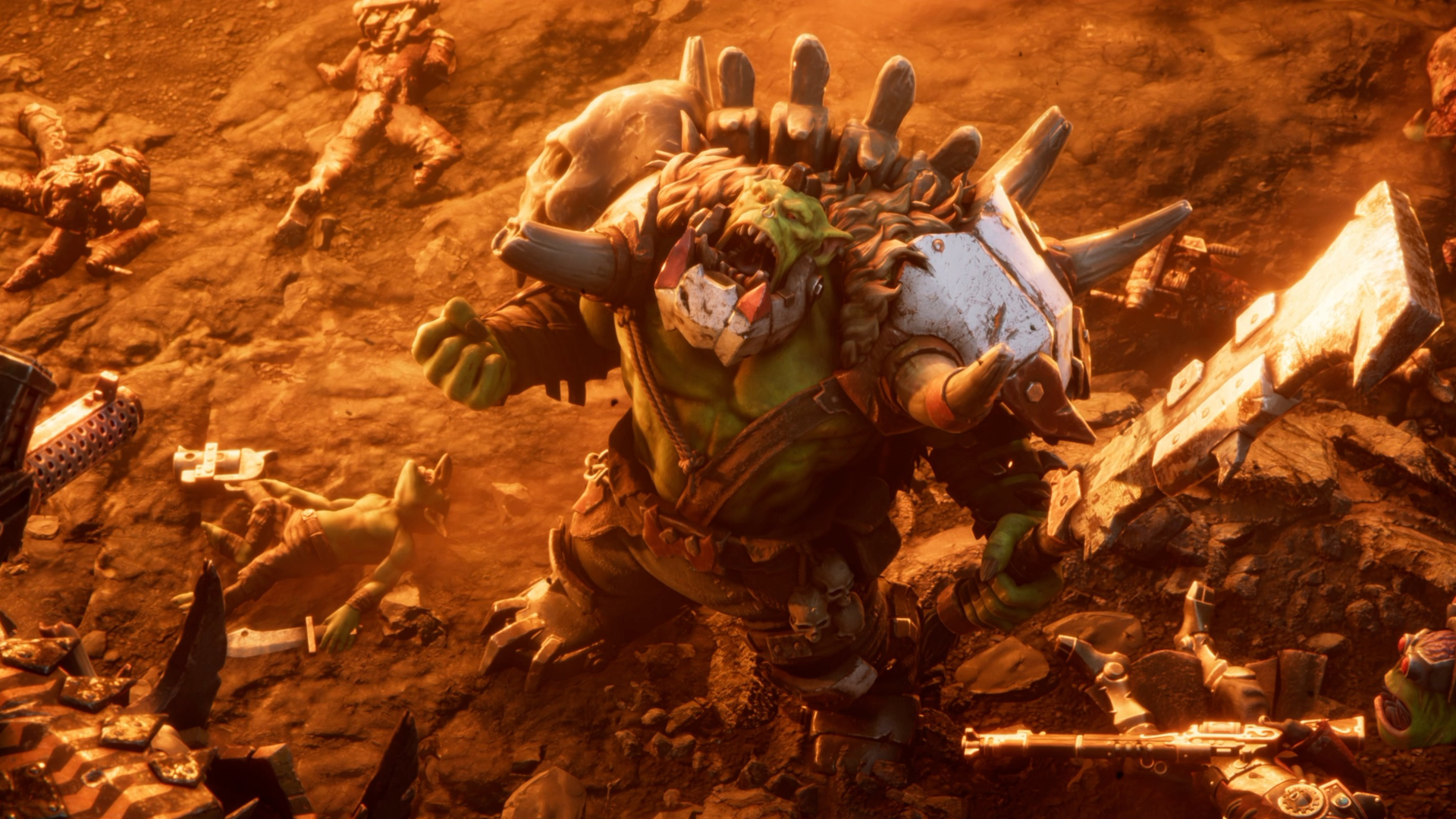
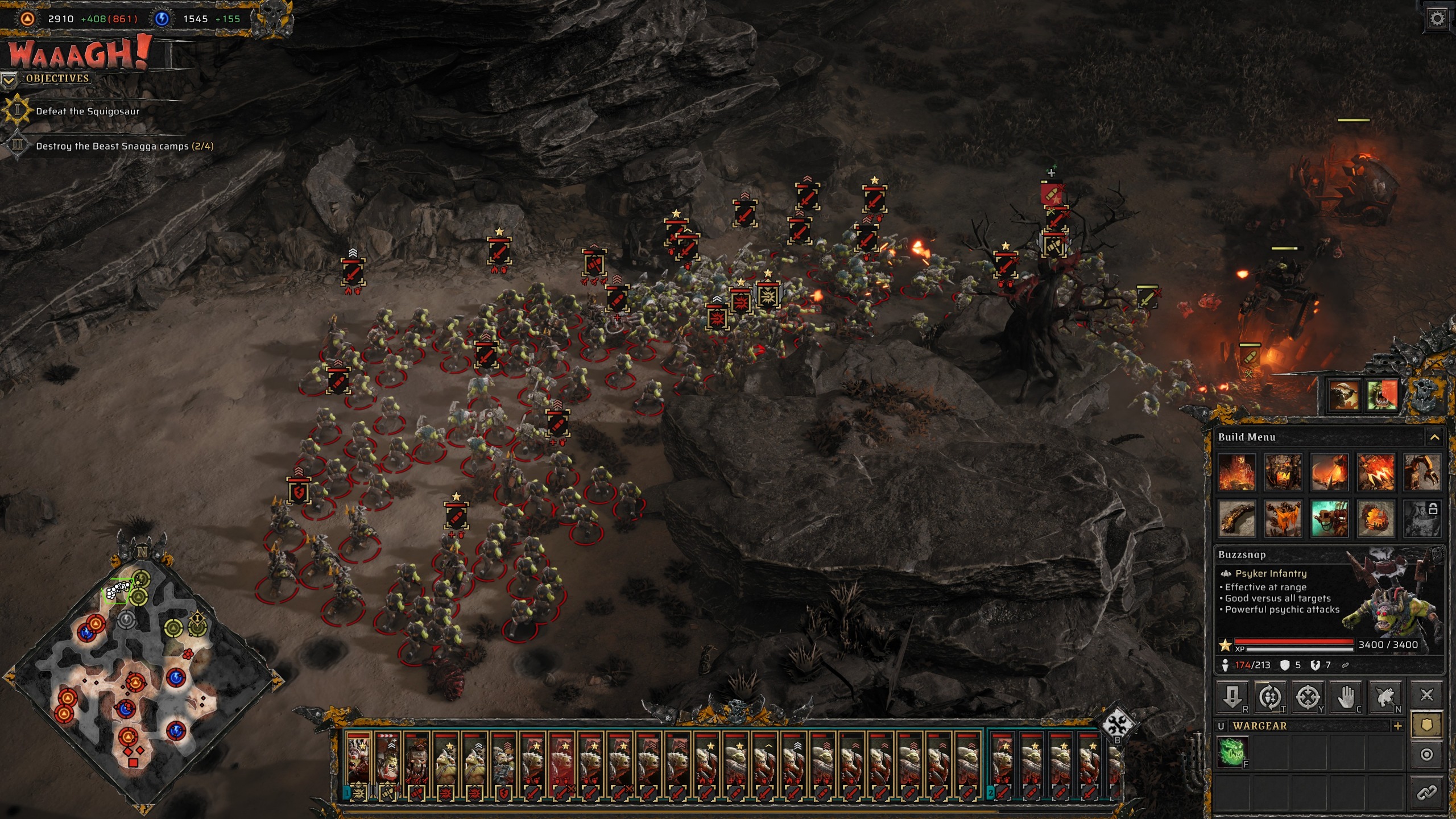
Kicking off the chronological campaign experience with the Orks serves as a masterclass in onboarding. The greenskins are inherently the most straightforward faction in Dawn of War 4: their units and infrastructure are the cheapest on the roster, allowing players to spin up a basic fighting force within minutes of stepping onto a map. For those whose primary objective is to "smash stuff up," the Orks deliver immediately.
However, simplicity does not equal a guaranteed steamroll. Charging blindly into an entrenched enemy position will melt an Ork army faster than it was assembled. While Orks are hardly renowned as the galaxy’s premier intellectuals, their raw, visceral rage is tempered by a low, cunning ruthlessness—a thematic nuance that the campaign narrative exploits brilliantly.
To maximize the green tide, players must engage in proper reconnaissance. Scouting opposition forces determines not only which unit templates to draft into service, but also dictates individual wargear configurations. True to the tabletop experience, Dawn of War 4 offers granular customization, allowing commanders to swap out weapons on individual units dynamically to counter specific battlefield threats—such as outfitting heavy infantry to punch through armored plating or swapping close-quarters choppas for shootas to manage swarms.
The Race for Kronos
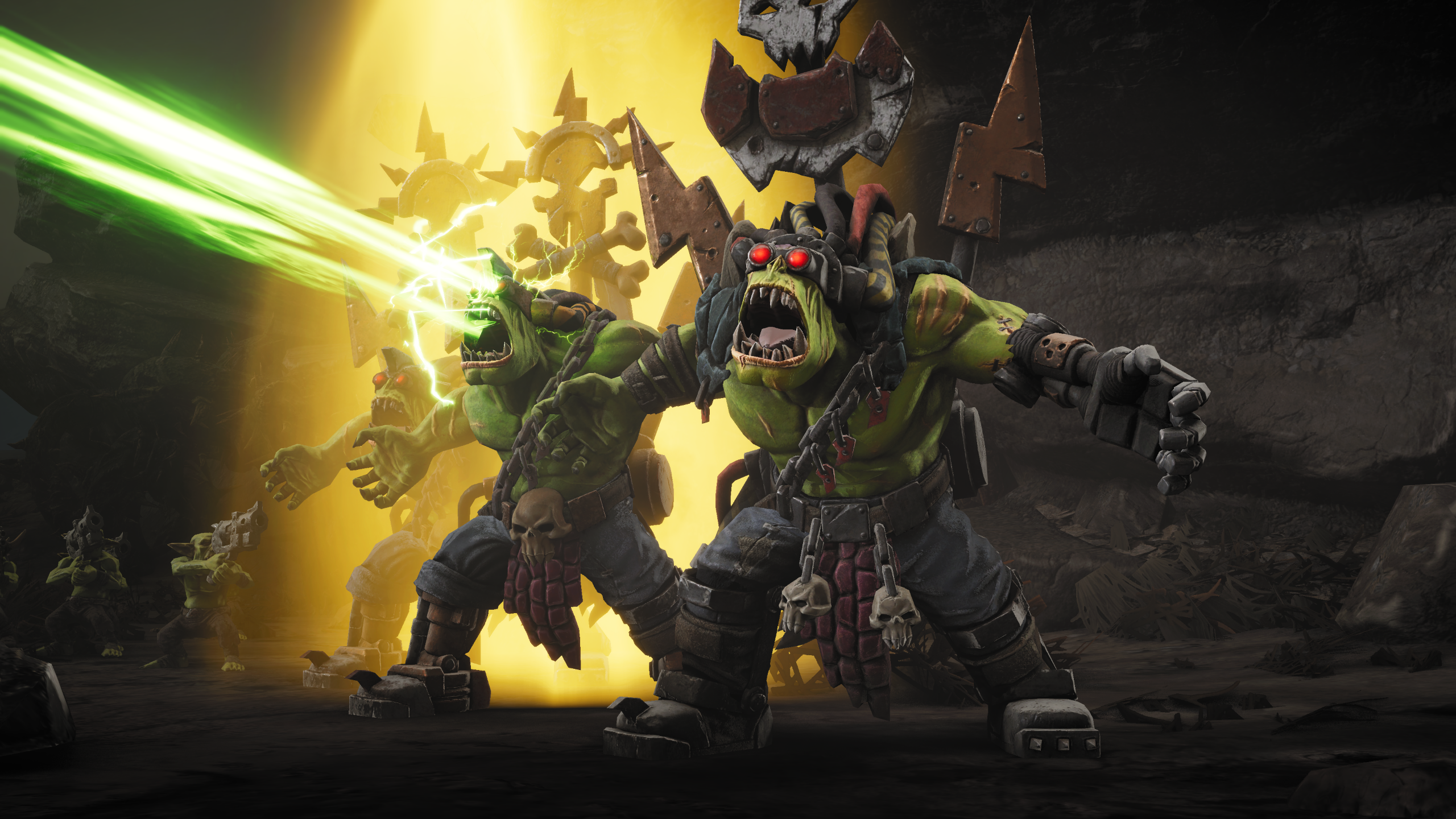
The narrative kicks off as local planetary Orks find their violent dominance interrupted by space-faring invaders dropping directly from orbit. A familiar face for veterans of the franchise steps up to claim the world of Kronos as his own, rubbing the native Orks the wrong way and sparking a brutal civil war amongst the greenskins.
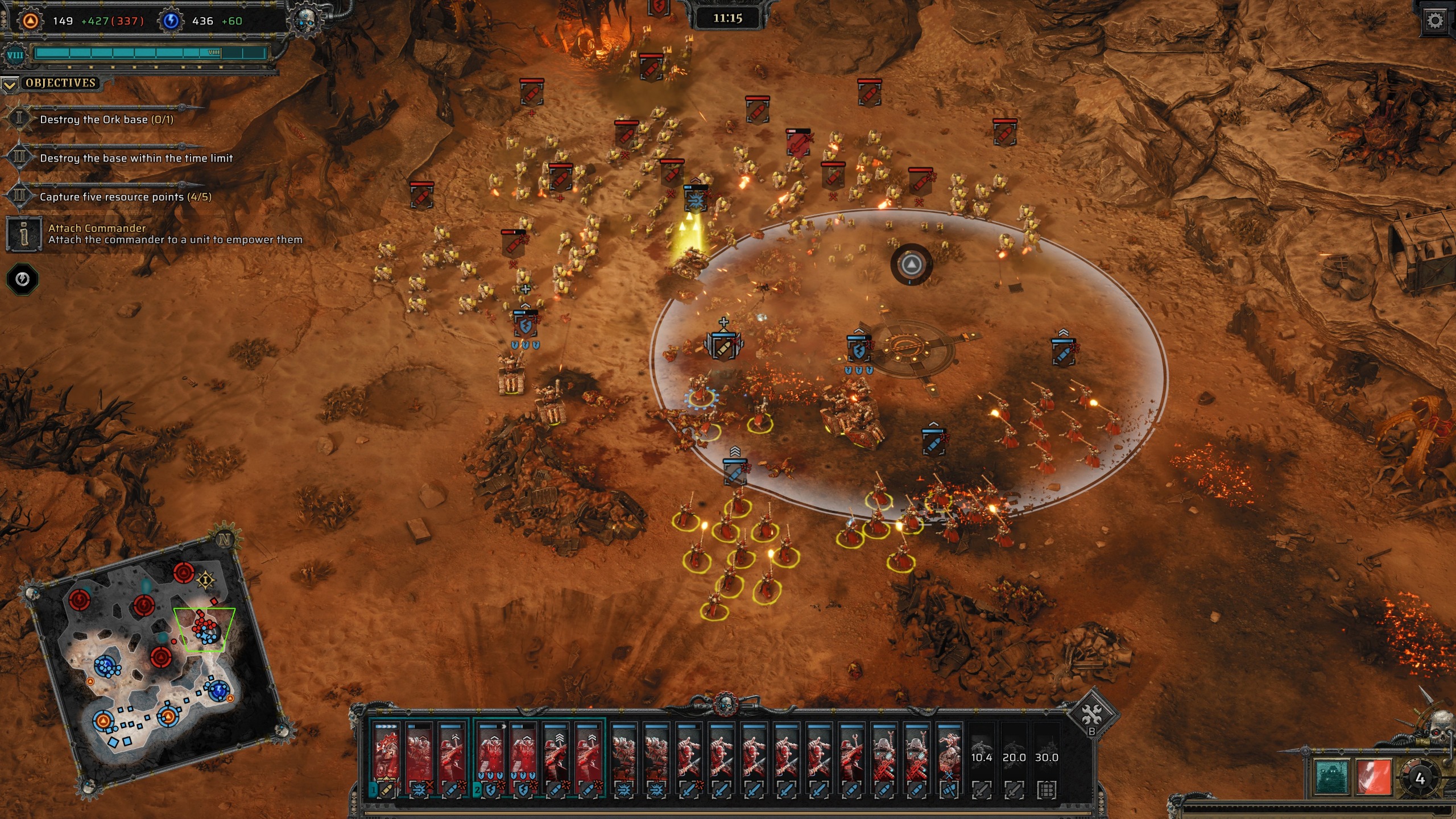
This internal factional friction anchors one of the campaign’s standout moments: a high-stakes, race-to-the-finish mission where the player’s local warband must outpace an rival Ork faction to smash an Adeptus Mechanicus base first. The victorious side earns supreme command—not that Orks are particularly bound by notions of sportsmanship or honored agreements.
The map design for this race is exceptional. It borrows subtle cues from the MOBA genre with its distinct parallel lane setup, yet expands into wide open arenas capable of sustaining massive base-building efforts, vicious chokepoints, and elevated structural heights that demand specialized vertical units like Stormboyz to scale.
While players are initially cordoned off into separate paths, the user interface tracks the competition in real time, driving a psychological sense of urgency. More effective than the UI, however, is the visual feedback: catching glimpses of the rival green horde carving its way up the parallel path lights a fire under the player’s maneuvers. At the northern and southern extremes of the map, the lanes intersect, opening up prime opportunities for backstabbing, ambushes, and chaotic three-way clashes where the player finds themselves ground down between human defenders and rival Orks.
The Adeptus Mechanicus: Precision, Noosphere, and the Omnissiah
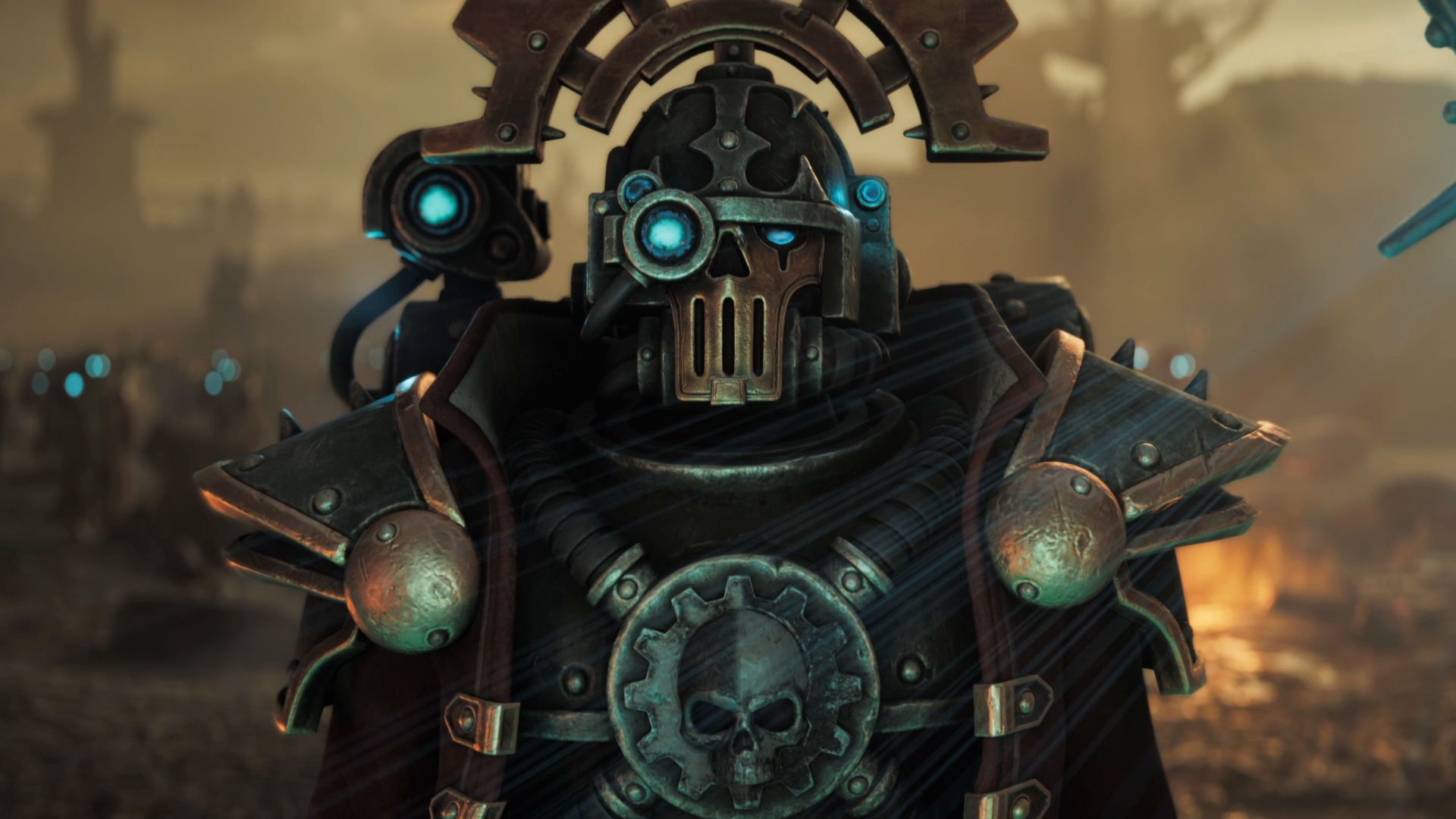
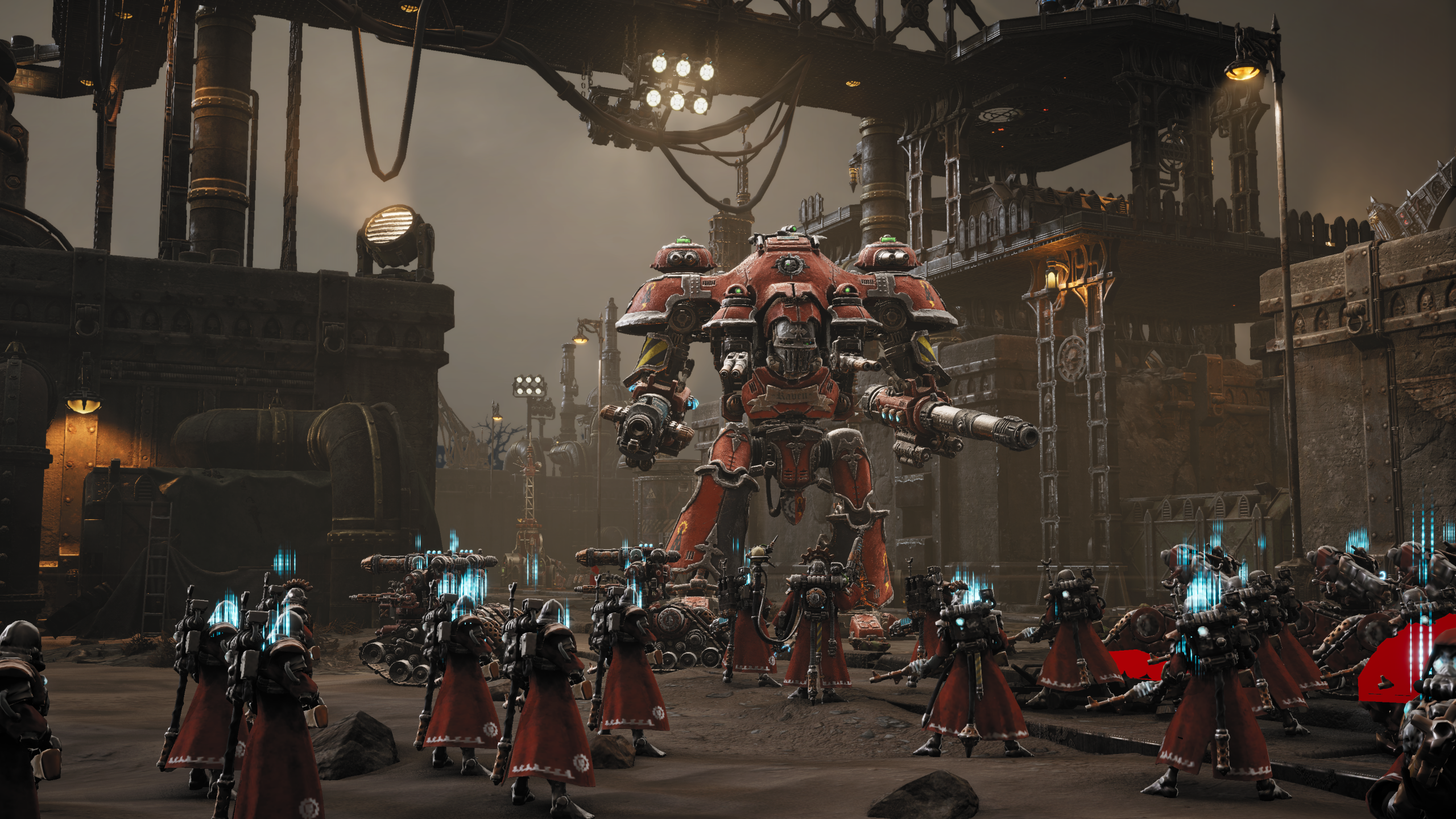
Transitioning from the anarchic brutality of the Orks to the Adeptus Mechanicus campaign delivers a profound tonal shift. Making their long-awaited debut as a playable faction in the Dawn of War series, the tech-priests act as a scalpel compared to the Ork’s blunt power hammer.
Centered around techno-archaeology, forbidden knowledge, and immortal machines, the Adeptus Mechanicus campaign focuses on thwarting the reawakened Necron forces on Kronos. Structurally, the campaign mirrors the Ork experience by introducing a major internal ideological split early on, forcing players to choose between two divergent sub-factions and commanders, each unlocking distinct missions and narrative beats.
Unlike the rapid, expendable spam of the Ork war machine, the Adeptus Mechanicus operate with deliberate, methodical pacing. They are an undeniable ranged powerhouse from the outset, though complemented early on by stealthy melee units like the Sicarian Ruststalkers—deadly operatives capable of infiltrating enemy lines to lock down ranged gunlines or butcher foes hunkered down in defensive positions.
The Noosphere Network
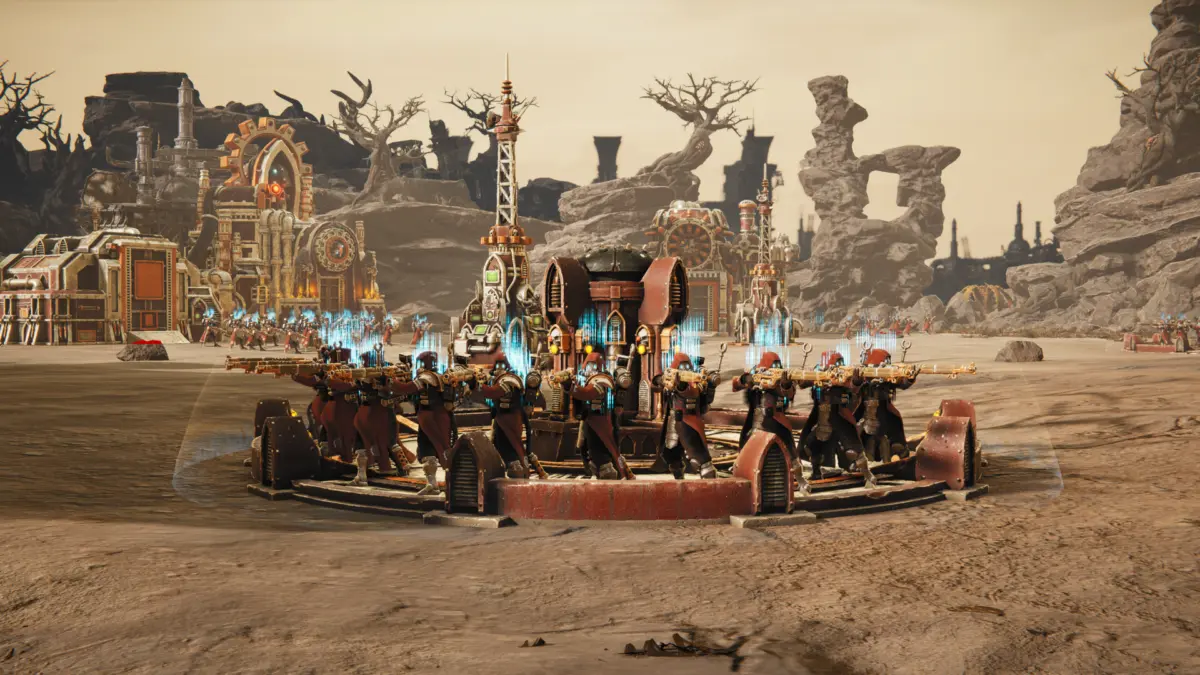
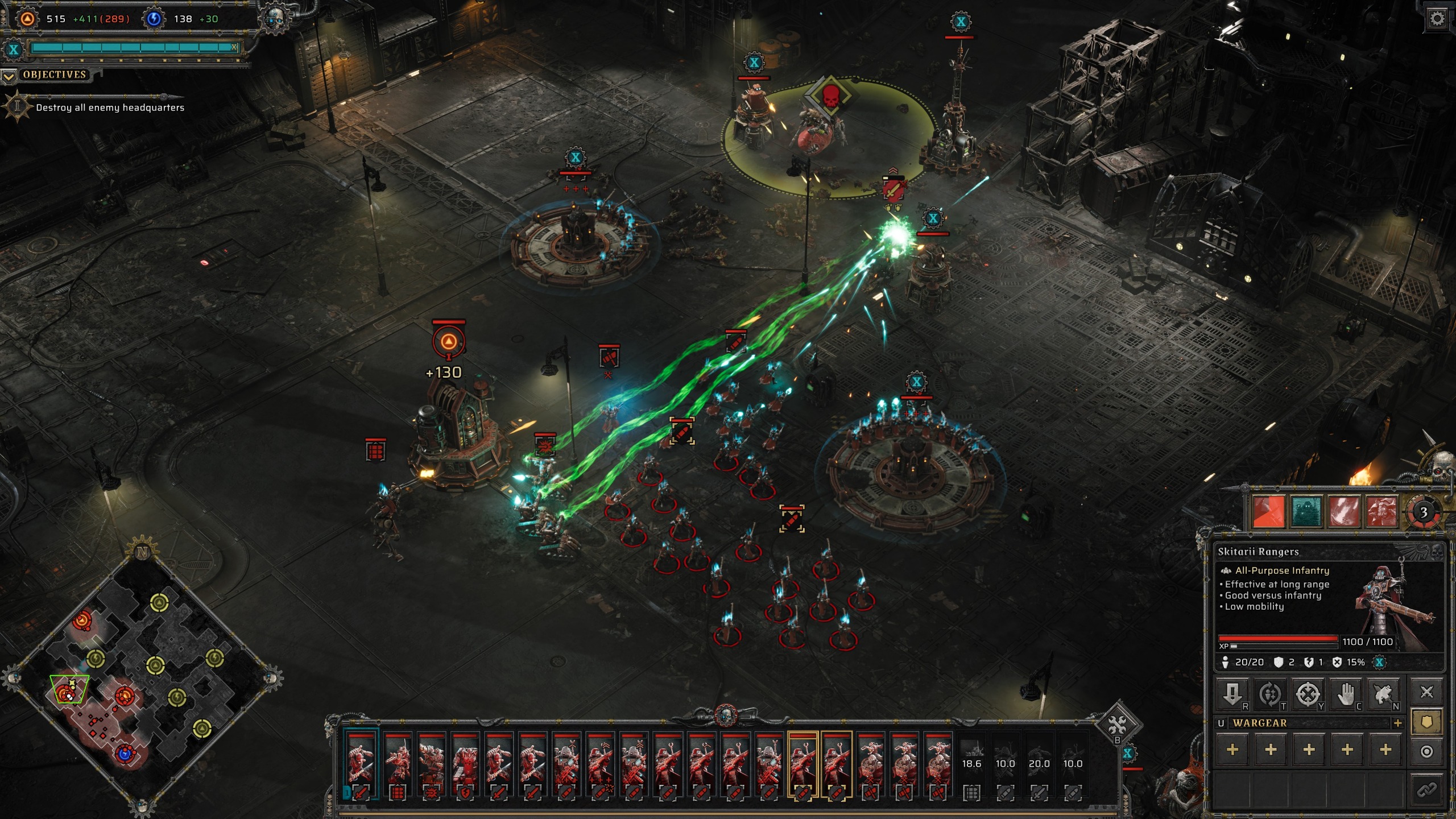
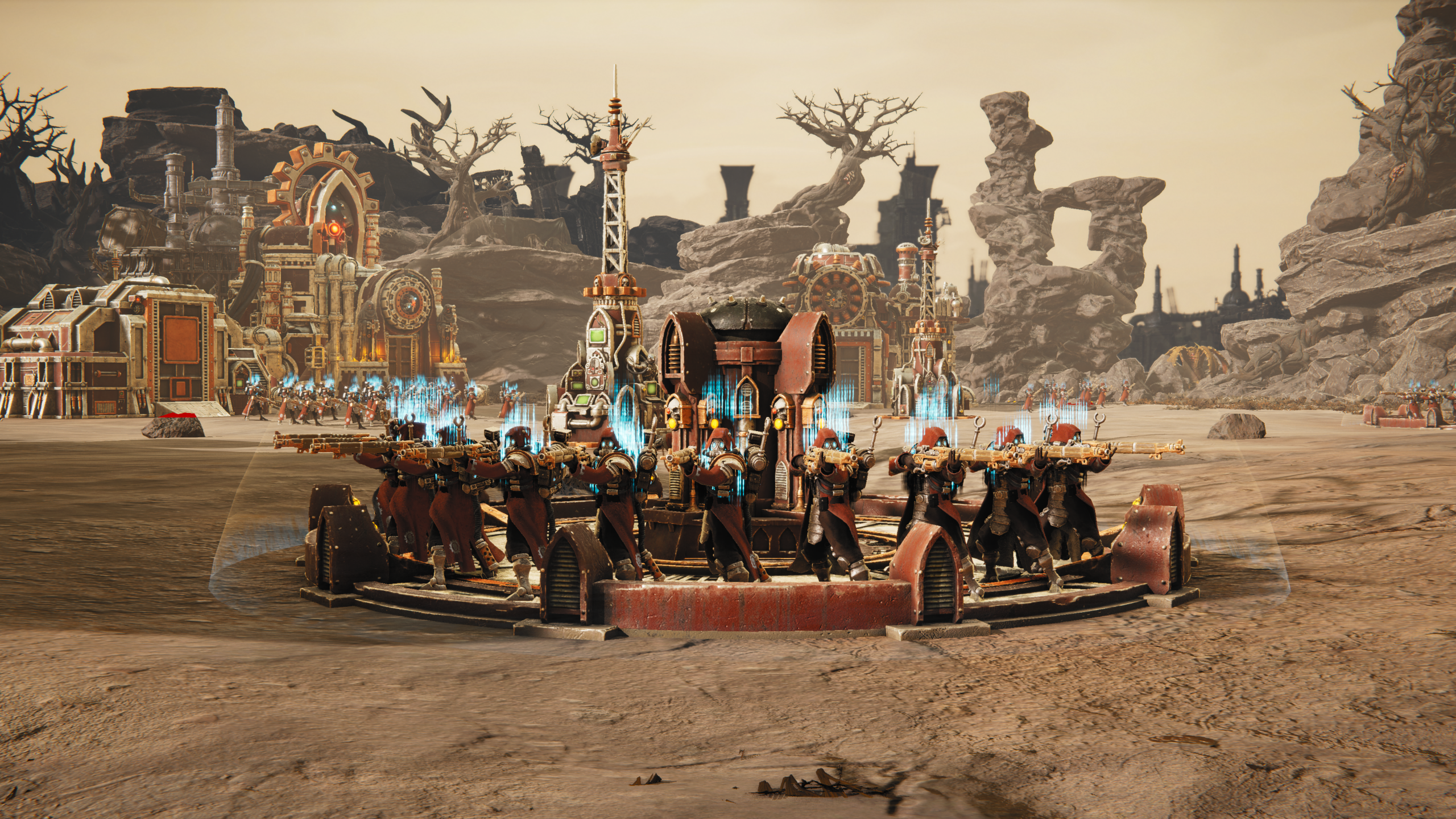
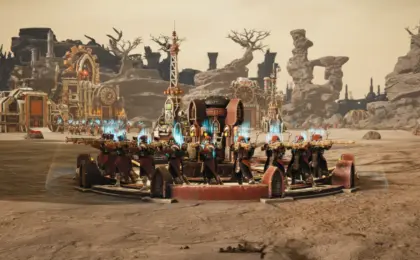
The beating heart of the Adeptus Mechanicus mechanical loop is the Noosphere Network. This systemic infrastructure digitally links the faction’s buildings, defensive turrets, and field generators, projecting sweeping efficiency buffs across their bases and field armies.
Using network relays, players can project this digital lattice across vast stretches of the map, ensuring that forward operating bases and defensive perimeters reap the computational rewards. This mechanic introduces a brilliant risk-and-reward gameplay loop:
- The Benefit: Expanding the Noosphere unlocks high-tier end-game units, advanced research trees, and sweeping operational efficiencies.
- The Risk: The larger the network, the more vulnerable it becomes. Every remote relay must be actively defended. If an opportunistic enemy seizes or destroys a critical relay node deep in enemy territory, the entire logistical network can collapse, plunging the player’s front lines into operational disarray.
Supporting Context & Metrics: The Return of Cover and Tabletop Authenticity
For longtime fans of the franchise, one of the most contentious elements of Dawn of War 3 was its wholesale abandonment of foundational tactical mechanics established in the first two entries—most notably, the dynamic cover system. Relic’s third installment attempted a watered-down alternative utilizing localized, pre-designated capture points that projected temporary shields. These locations were sparse, heavily scripted, and ultimately rendered irrelevant by fast-paced mission designs that required constant forward momentum.
Dawn of War 4 rectifies this misstep emphatically. Cover is back, and it matters immensely.
Mechanics of the Battlefield
Every map features strategically placed barricades that serve dual purposes:
- Defensive Anchors: During scripted campaign encounters, barricades typically telegraph incoming enemy charges, providing vital survival bonuses to stationary ranged units.
- Tactical Vulnerability: While cover significantly mitigates incoming ballistic damage, it is not an invincible fortress. Barricades remain vulnerable to concentrated melee assaults, flanking maneuvers, and direct explosive ordinances like grenades.
Different factions interact with the environment in thematic ways:
- Orks retain the capacity to throw together crude barricades dynamically anywhere on the map.
- Adeptus Mechanicus deploy high-tech Emanatus Field Generators. Unlike directional barriers, these technological marvels project a 360-degree sphere of protection, absorbing melee damage while shielding garrisoned units from incoming fire from all angles.
Beyond static cover, defensive depth is further augmented by faction-specific technologies such as the Adeptus Mechanicus Void Shield. This impenetrable barrier completely partitions a base from external fire; incoming units must physically breach the perimeter and step inside the threshold before they can project attacks, at which point they can be swarmed and dismantled.
Command Points and Stratagems
Bridging the gap between the digital RTS and the physical tabletop experience, Dawn of War 4 integrates a robust Command Point (CP) economy. Earned by capturing and holding strategic points across the map, CP fuels game-changing Stratagems.
Whether a player chooses to summon explosive Squigs into an enemy backline, drop orbital reinforcements that vaporize anything caught in the landing zone, or trigger a psychic WAAAGH! to hyper-buff an entire Ork army, Stratagems consistently deliver high-impact narrative and tactical payoffs.
Official Statements and Industry Context
King Art’s approach to modernizing the intellectual property has garnered cautious optimism from the broader strategy community. Speaking on the studio’s design philosophy, developers have emphasized that capturing the tactile weight of unit collisions was a core engineering priority. The studio expanded its synced-animation system—traditionally reserved strictly for spectacular kill-moves in older titles—so that ongoing melee scrums feel physically tangible, even if units occasionally trade blows with exaggerated flair.
The "Two Cakes" Phenomenon: Addressing the Total War 40k Elephant in the Room
No discussion of a modern Warhammer 40,000 strategy game can occur without addressing the looming shadow of Creative Assembly’s rumored Total War: Warhammer 40,000. Industry pundits have frequently questioned whether an upcoming Total War adaptation might overshadow King Art’s release.
The development team, however, remains entirely unperturbed, framing the situation through the lens of the internet’s favorite adage: this is a case of "holy shit, it’s two cakes."
The distinction between the two franchises lies in their core DNA:
- Dawn of War 4 is a classic, pure RTS. It focuses on structured, predominantly linear single-player campaigns, tight base-building economies, and intimate narrative storytelling on a tactical scale.
- Total War 40k (by nature of its lineage) is expected to lean toward grand strategy sandbox campaigns paired with massive, open-field real-time tactical battles, traditionally eschewing traditional base construction in favor of continental empire management.
These are fundamentally distinct sub-genres catering to different cravings within the strategy ecosystem. For strategy enthusiasts, having two major, high-budget digital interpretations of the 40k universe active on the horizon represents a golden renaissance rather than a zero-sum conflict.
Future Outlook
As Dawn of War 4 barrels toward its official launch window with only a couple of months remaining in its development cycle, the foundation laid by King Art looks exceptionally sturdy. By intelligently splitting campaign paths to encourage replayability, reintroducing tactical depth through dynamic cover and the Noosphere network, and preserving the chaotic, lore-accurate personality of factions like the Orks and Adeptus Mechanicus, the title is well-positioned to heal old wounds left by its predecessor.
For fans of tabletop miniature gaming, rich science-fiction lore, and classic base-building RTS combat, the future has rarely looked so grim—or so entertaining. Between upcoming digital adaptations and an expanding physical product line from Games Workshop, bank accounts across the Warhammer community may soon find themselves facing their own localized heresy trials.



Belum ada komentar. Jadilah yang pertama berkomentar!