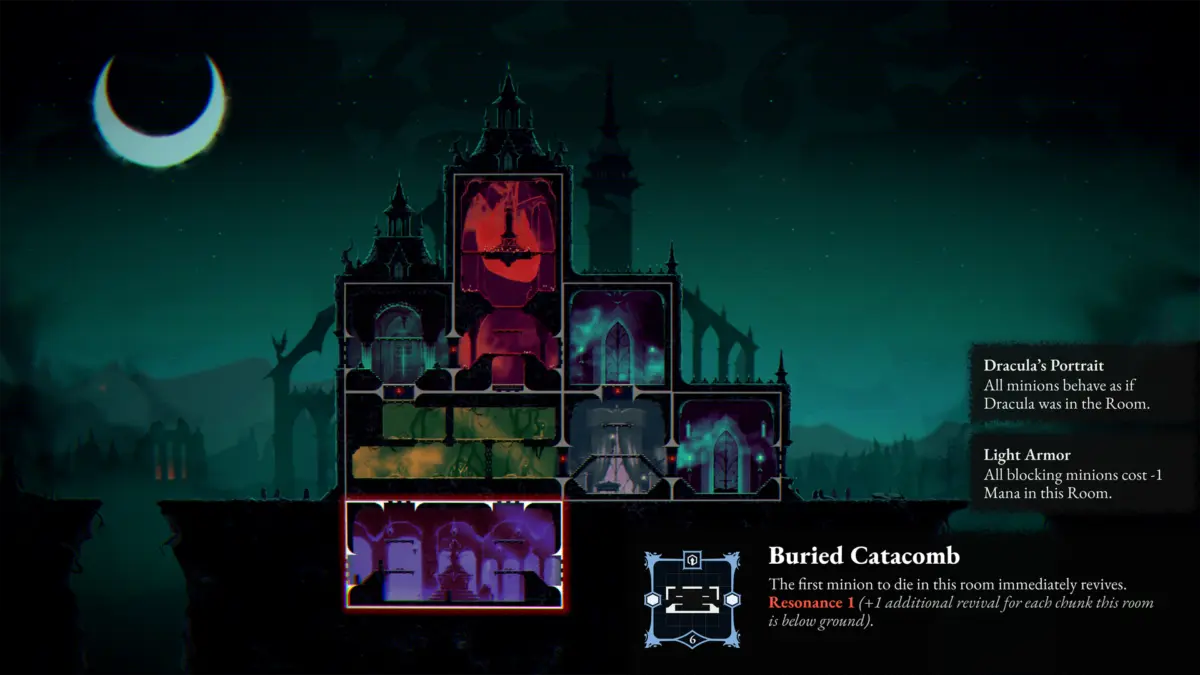
The video game industry is facing a paradigm shift, and not for the better. Digital Sun Games, the celebrated independent studio behind acclaimed titles like Moonlighter and Cataclismo, has officially canceled the wide public playtest for its upcoming "tower defensevania" roguelike, ReVamp.
The catalyst for this unprecedented decision is the recent deployment of advanced artificial intelligence models—specifically Anthropic’s Claude Opus 5.5. The unprecedented leap in AI capability has triggered a digital gold rush of hasty code generation, automated reverse-engineering, and "vibe coding." Consequently, storefronts like Steam and Roblox are experiencing an unprecedented deluge of low-effort clones, decompiled assets, and derivative slop.
For a studio with a decade of accumulated industry trust and roughly 250,000 wishlists for its upcoming title, the risk of having its concepts and underlying code pilfered within days—or even hours—of a public build release has become too high. Digital Sun’s choice to scrap a major Steam playtest in favor of a tightly controlled, manual-access Discord playtest underscores an alarming new reality: game developers can no longer safely share their work-in-progress builds with the public without fearing predatory, AI-accelerated copycats.
Detailed Chronology: How the ReVamp Playtest Collapse Unfolded
The sequence of events leading up to Digital Sun Games’ public reversal highlights the breakneck speed at which generative AI is disrupting traditional software development pipelines.
The Buildup to the Playtest
For months, Digital Sun Games had been gearing up for a traditional, large-scale public playtest on Steam for ReVamp, a mechanically rich genre-mashing project slated for a March 2027 release. The studio followed standard indie development playbooks, anticipating tens of thousands of participants to help stress-test systems, gather macro-level telemetry, and build organic community momentum through Steam’s established infrastructure.
The Catalyst: The Opus 5.5 Avalanche
The landscape shifted dramatically following the rollout of more powerful, reasoning-capable AI models. Studios across the indie sphere began reporting a sudden surge of low-effort, rapidly produced clones. These tools allow opportunistic bad actors to ingest publicly available demos, decompile code bases, and generate functionally identical or visually confusing copycat games in a fraction of the time it would normally take.
Faced with the prospect of competing against fast-to-market clones before ReVamp could even hit its official release window, Digital Sun’s leadership realized that a public Steam demo was no longer a viable community-building tool.
The Pivot to Discord and NDAs
Earlier this week, Digital Sun’s marketing manager, Israel Mallén, confirmed the abrupt cancellation of the public Steam playtest. Rather than calling off playtesting entirely, the studio pivoted to an enclosed, manual-vetting system hosted on Discord.
Instead of welcoming tens of thousands of anonymous users via Steam, the studio will restrict access to a few hundred players. Participants must now undergo manual approval, have their server activity scrutinized, and sign Non-Disclosure Agreements (NDAs). While this protects the code, it severely hampers the studio’s reach, feedback loops, and marketing potential.
Supporting Context & Metrics: The "Vibe-Coded" Slop Economy
To understand why Digital Sun and other indie developers are hitting the panic button, one must look at the broader metrics of modern digital storefronts.
The Steam Next Fest Deluge
Recent industry reports have highlighted staggering metrics on platforms like Steam. During recent iterations of events like Steam Next Fest, curators and developers alike noted over 8,000 active demos—a vast ocean of content increasingly diluted by what insiders call "vibe-coded slop." These are games whipped up by opportunistic actors leveraging LLMs and automated generation tools to churn out superficial experiences designed to capture accidental clicks, capitalize on search engine optimization (SEO) keyword stuffing, or steal the intellectual property of genuine developers.
The Vulnerability of Indie Studios
While AAA publishers often possess legal departments robust enough to swat away egregious copyright infringements, small and medium-sized independent developers operate on razor-thin margins. Digital Sun Games acknowledges that they enjoy a comfortable buffer:
Wishlists: Over 250,000 eager players tracking ReVamp.
Track Record: A decade of industry experience with commercial successes like Moonlighter and Cataclismo.
However, Mallén emphasized that if a studio of their size and stability feels vulnerable, fledgling developers—those launching their very first commercial titles—face an existential threat. For a newcomer without a pre-existing community, the fear of AI-driven cloning is enough to deter them from showing their games to the world entirely.
Official Statements and Developer Insights
In an exclusive exchange, Israel Mallén shed light on the mechanics of this decision, the limitations of current digital storefronts, and the psychological toll this climate takes on creators.
On the Marketing and Exposure Toll
Scaling down from a massive Steam playtest to a tightly guarded Discord group has immediate commercial ramifications. Mallén noted:
"Yes, it affects us a lot, mostly in terms of how many people we can actually reach. We had tens of thousands of people signed up for the original Steam playtest. Moving it to Discord means we’re looking at a playtest of a few hundred people at best, since we’re granting access manually."
Steam’s native infrastructure provides few tools to vet individual users beyond country-based access blocks. Developers cannot differentiate between an active, supportive community member who leaves constructive reviews and a burner account created solely to scrape a build.
"With how fast reverse engineering and recompiling tools have gotten, putting a build in front of that many people this early feels too big a risk. It exposes us to someone lifting the idea, or even shipping something similar to ReVamp before we’re ready to launch."
On an Unprecedented Industry Climate
Having spent ten years releasing critically acclaimed games, Digital Sun had never experienced this level of anxiety over community engagement. Mallén remarked:
"If you can’t show your game to the world without fearing it’ll be cloned, something’s broken. We think platforms need to put real protections in place for original work, so developers can keep sharing their games with fans normally."
On Storefront Responsibilities
When asked how companies like Valve and other digital storefront operators can combat the AI cloning wave, Mallén admitted that the solutions are complex and require cooperative industry-wide dialogue. However, storefronts hold the ultimate gatekeeper position:
"Storefronts are probably in the best position to act, since builds already go through them. On the playtest side, more tools to vet who gets access—like account age, playtime, or review history—would let developers keep testing in public more safely."
Future Outlook: What Lies Ahead for Indie Game Development?
The chilling effect of AI-led cloning threatens to fundamentally alter how independent games are marketed, tested, and released over the next several years.
The Death of Early Public Demos
If platform holders fail to implement robust anti-piracy, anti-decompilation, and identity-verification protocols, the industry faces a bleak trajectory:
Delayed Visibility: Public playtests and demos will be pushed much closer to a game’s actual launch date.
Loss of Collaborative Development: Demos will transition from genuine community-driven refinement tools into rigid, sterile marketing drop-offs.
Stifled Innovation: Developers working on simpler mechanics, minimalist art styles, or easily digestible gameplay loops will bear the brunt of the risk, leading to self-censorship and a homogenization of indie concepts.
A Call for Platform-Level Protections
Digital Sun Games’ decision to pull ReVamp out of the public eye should serve as a wake-up call for digital marketplaces. Without technological and policy interventions from companies like Valve, Epic Games, and Roblox, the democratization of game creation via AI threatens to destroy the very indie ecosystem that feeds it.
Until real safeguards emerge, creators will continue to retreat behind closed doors—protecting their codebases, guarding their builds, and changing the collaborative spirit that has defined independent game development for decades.







Belum ada komentar. Jadilah yang pertama berkomentar!