


Executive Overview
Remedy Entertainment has long occupied a singular space in the video game industry. Known for crafting dense, reality-warping narratives that blend psychological horror with philosophical inquiry—ranging from Max Payne and Alan Wake to 2019’s breakout hit Control—the Finnish studio has consistently rejected conventional design tropes in favor of auteur-driven world-building. Now, following an exclusive investigative visit by the PC Gaming Show team to Remedy’s headquarters in Finland, the studio has declassified comprehensive insights into its most ambitious project to date: Control Resonant.
Slated for release on September 24, Control Resonant is an action role-playing game (ARPG) that shifts the franchise’s perspective away from the subterranean labyrinth of the Oldest House and onto the surreal, nightmarish streets of an altered Manhattan, New York. Stepping into the protagonist role is Dylan Faden, the dangerously powerful brother of Federal Bureau of Control (FBC) Director Jesse Faden. Awakening from a coma, Dylan finds that the parasitic entity known as the Hiss has breached containment, spilling out into the open world alongside a terrifying new geometric anomaly called "the Patterning."
Moving toward a semi-open-world structure, Control Resonant promises a blend of unconventional game design, mathematical sound design, and surrealist visual inspiration drawn from M.C. Escher and psychological cinema. With non-linear boss encounters, physics-defying mechanics, and a philosophical approach to world-building that avoids the pitfalls of franchise fatigue, Control Resonant is shaping up to be a watershed moment for Remedy Entertainment. Pre-orders are currently live on Steam ahead of the game’s imminent launch.
Detailed Chronology: From the Cell to the Streets of Manhattan
To fully grasp the narrative stakes of Control Resonant, players must look back at the events of the original 2019 title. For the majority of Control, Dylan Faden was kept in a heavily secured isolation cell deep within the Federal Bureau of Control’s headquarters, the Oldest House. Burdened by volatile paranormal capabilities and heavily corrupted by the Hiss—a multidimensional resonance that turns humans into hostile, chanting drones—Dylan served as both a tragic victim and a lingering threat.
When the dust settled on the original game and its subsequent expansions, the fate of the FBC and the Faden siblings remained a focal point of Remedy’s interconnected universe (the Remedy Connected Universe, linking Control and Alan Wake). Control Resonant picks up with Dylan waking from a prolonged coma, free from the immediate absolute control of the Hiss, yet fundamentally altered by his past possession.
Upon surveying the wider world, Dylan discovers that the containment breach has extended far beyond the brutalist architecture of the Oldest House. The Hiss are now running rampant through the urban canyons of Manhattan. However, the Hiss are not the only terror plaguing New York. Simultaneously, an otherworldly phenomenon designated as "the Patterning" has descended upon the island.
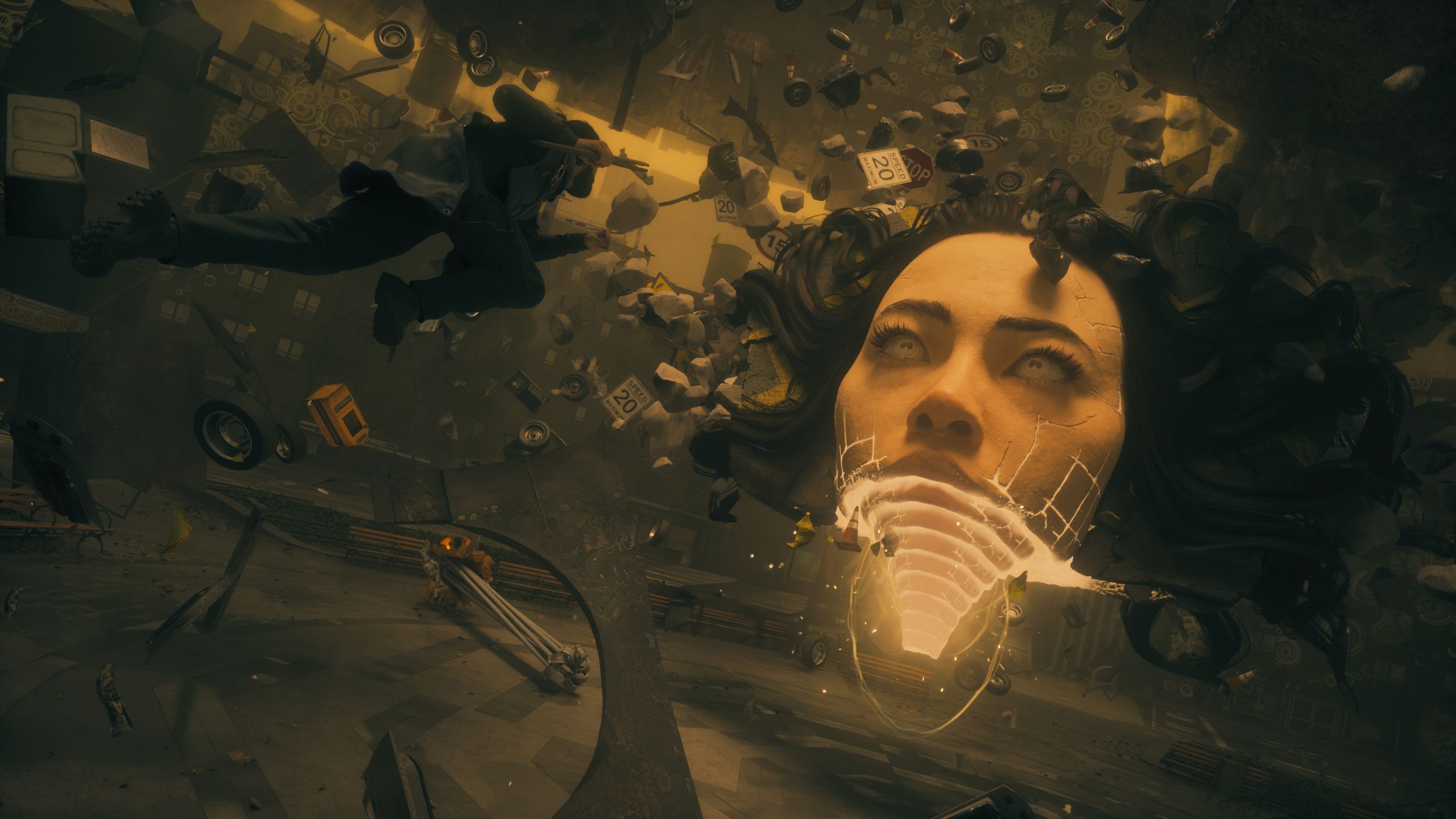
Unlike the invasive, parasitic nature of the Hiss, the Patterning actively restructures reality itself. It warps human biology, twisting unfortunate citizens into monstrous entities, and deforms the physical environment in ways that defy classical physics. Buildings, light, and time are subjected to algorithmic corruption, turning Manhattan into a living, breathing labyrinth of surreal geometry. Dylan must navigate this altered metropolis, grapple with his own re-emerging identity, and determine the fate of a world caught between two distinct supernatural apocalypses.
Supporting Context & Metrics: Designing the Impossible
Breaking the Mold: Artistic and Mechanical Influences
One of the most striking revelations from Remedy’s developer deep-dive is the studio’s deliberate avoidance of contemporary video game influences during the conceptualization of Control Resonant. Art Director Elmeri Raitanen noted that modern game development often suffers from an echo chamber effect, where studios play it safe, resulting in titles that "resemble each other quite a lot."
To sidestep this homogenized approach, Remedy turned to avant-garde and classical sources of inspiration:
- M.C. Escher: The legendary Dutch graphic artist’s work heavily informed the architecture and spatial logic of altered Manhattan, where up is down, walls become floors, and perspective loops endlessly.
- A Field in England: Ben Wheatley’s hypnotic, historically psychedelic film provided tonal inspiration for the psychological disorientation experienced by characters within altered spaces.
- Paprika: Satoshi Kon’s acclaimed surrealist anime film influenced how reality and dreams bleed into one another under the influence of the Patterning.
Mechanically, this translates into traversal and combat systems that break standard design paradigms. Creative Director Mikael Kasurinen emphasized that the anomaly affects fundamental constants of reality: "It’s not simply a matter of ordering things in a predictable way, it’s affecting the people… It affects time, it affects light." Because gravity and spatial geometry are unstable, Dylan possesses the ability to seamlessly shift gravity, walking along walls and ceilings, rendering conventional spatial orientation obsolete.
Non-Linear Boss Encounters and Emergent Gameplay
A major evolution for Control Resonant over its predecessor is its adoption of a more open-world design philosophy, particularly regarding boss encounters. Lead Level Designer Anne-Marie Grönroos detailed how the game handles the "Resonants"—humans who have been radically mutated by the Patterning into monstrous bosses.
Rather than forcing players down a rigid, linear path of mandatory boss fights in a specific order, Control Resonant introduces player agency into the progression loop:
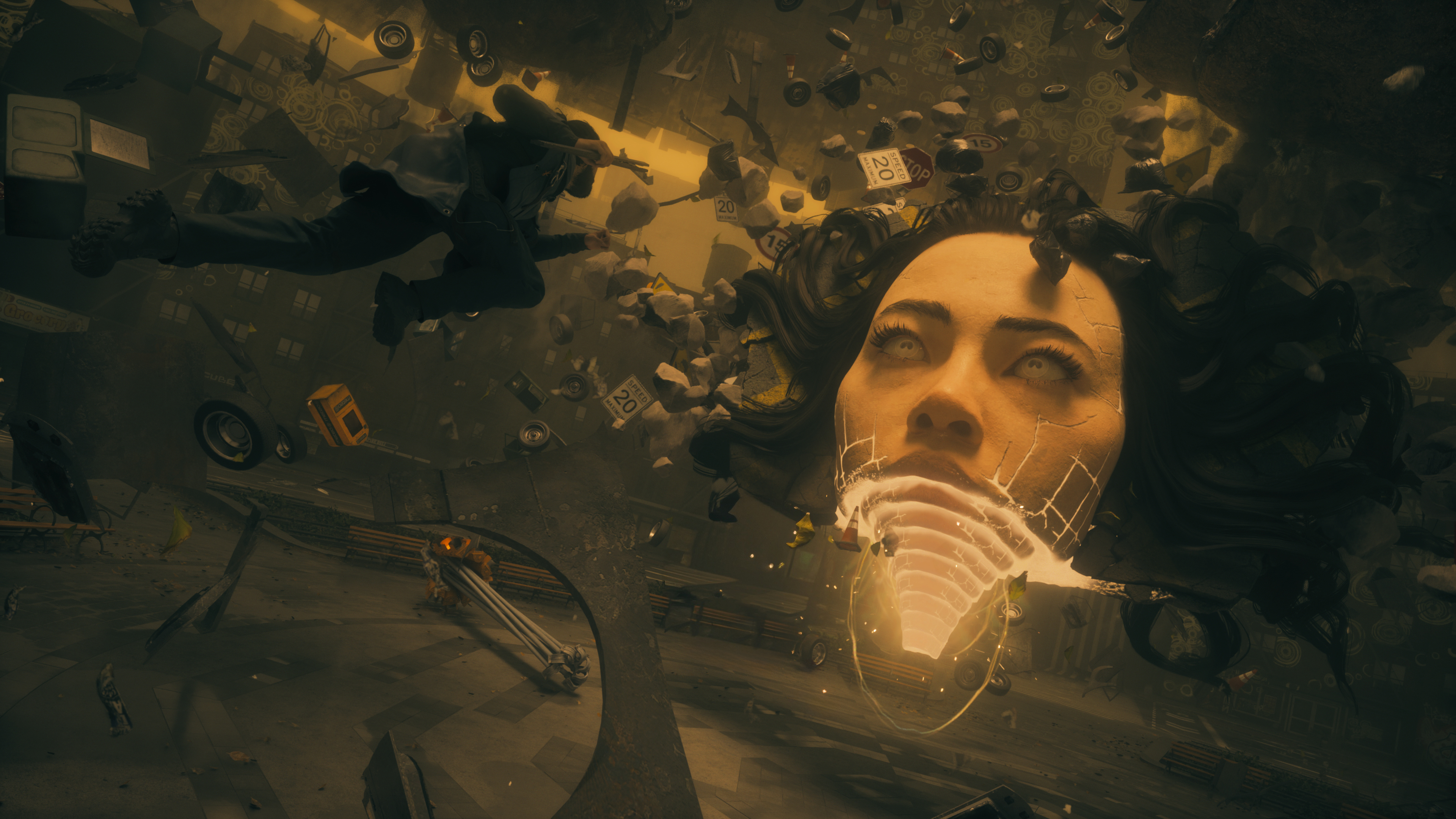
- Optional Confrontations: While the game may require a baseline number of defeated bosses to progress the main narrative, the total number of available Resonants scattered across Manhattan exceeds that requirement.
- Power Absorption: Defeating these monstrous bosses allows Dylan to harvest and assimilate their unique supernatural abilities.
- Variable Player Builds: Because the sequence of boss encounters is largely up to the player, the development team cannot predict precisely which powers a player will possess at any given point in the game.
This non-linear design leads to wildly unpredictable playtester experiences. During development, the team observed one playtester who completely bypassed acquiring the gravity-shifting ability until deep into the late-game stages—a testament to the emergent freedom the open structure permits. Remedy anticipates that this variability will give rise to creative, highly unorthodox challenge runs when the global community gets their hands on the game.
The Auditory Architecture: Mathematics and Sine Waves
The design of Control Resonant extends far beyond visual and mechanical marvels into the realm of sound engineering and musical composition. Composer Petri Alanko revealed the painstaking detail behind the game’s audio landscape, particularly focusing on the sonic identity of the boss fights and Dylan’s personal evolution.
For the fight against a tragic Resonant who was once a professional dancer caught in Manhattan during the onset of the Patterning, Alanko looked to the kitchen for inspiration:
- Fibonacci Rhythm: Alanko raided his own kitchenware to craft percussion loops based on the Fibonacci sequence ($1, 1, 2, 3, 5, 8, 13, 21$, etc.). This mathematical progression creates an eerie, hypnotic cadence that mirrors the unnatural, algorithmic nature of the Patterning.
- Motion Capture Authenticity: To ensure the dancer-turned-monster’s movements felt authentic before and during her transformation, Remedy collaborated with professional modern dancers.
Furthermore, Dylan’s character arc—finding an identity independent of Hiss possession—is reflected in his sonic profile. Having essentially undergone a supernatural rebirth, Dylan’s initial acoustic footprint is composed entirely of sine waves, the most fundamental and mathematically pure form of audio. As Dylan evolves, developing greater mastery over his powers and shedding his trauma, his audio signature incorporates increasingly complex frequencies, textures, and tonal layers.
Official Statements & Creative Vision
Remedy Entertainment’s leadership has been vocal about the broader strategic vision behind Control Resonant. While the narrative places Dylan Faden front and center, the studio is actively working to ensure the Control universe does not fall into the trap of insular, family-centric storytelling reminiscent of franchises like Star Wars.
Creative Director Mikael Kasurinen articulated this philosophy during the developer interviews:
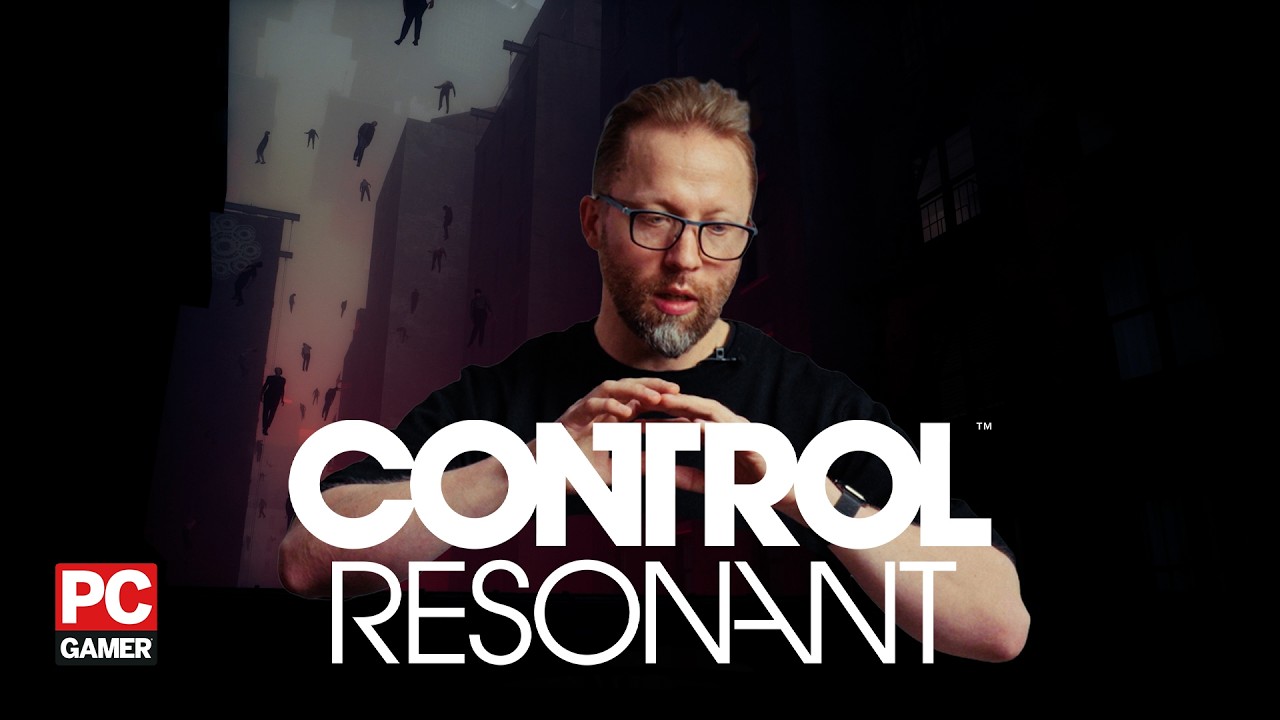
"I envision a whole world, filled with different stories and characters. We took inspiration from pen-and-paper roleplaying games, and we want to create a universe with rules, but where players can see it from different perspectives."
By treating the FBC and its paranormal anomalies as a vast sandbox rather than a narrow narrative pipeline, Remedy is setting the stage for a sprawling multimedia universe. The inclusion of pen-and-paper RPG sensibilities implies a respect for lore consistency coupled with player-driven freedom—an ethos that has defined the studio’s recent output.
Future Outlook
As the September 24 release date approaches, anticipation among the PC gaming community is reaching a fever pitch. With pre-orders now active on Steam, players are preparing to step into the gravity-defying, algorithmically warped streets of Manhattan.
The transition from the confined, brutalist corridors of the Oldest House to an expansive, non-linear urban environment represents a massive mechanical leap for Remedy. By pairing avant-garde visual inspirations with deeply experimental mechanics—such as Fibonacci-based musical combat and variable boss progression—Control Resonant positions itself not merely as a sequel, but as a bold reinvention of the ARPG genre.
Fans eager for a closer look at Remedy’s ongoing projects should also mark their calendars for upcoming industry events. The PC Gaming Show Tokyo Direct, airing on September 20, promises additional coverage and insights just days before Control Resonant officially launches into the anomalous unknown.








Belum ada komentar. Jadilah yang pertama berkomentar!