

Executive Overview
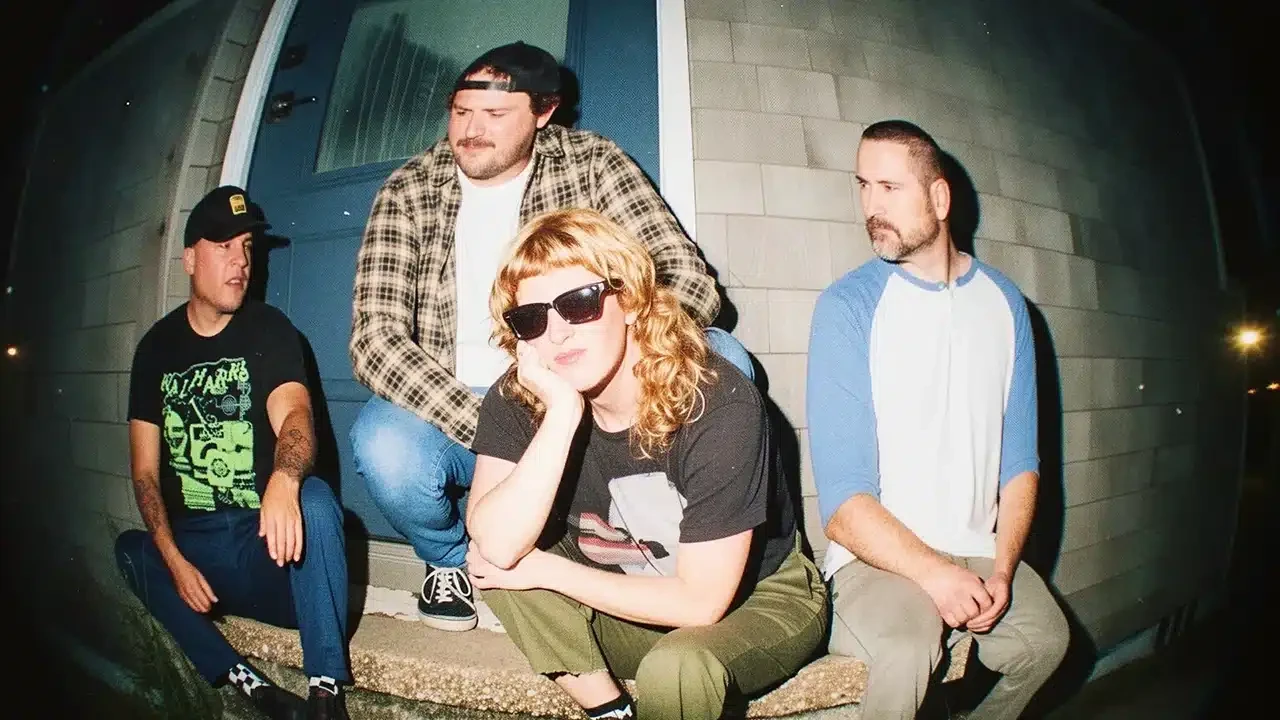
While metropolitan hubs like Chapel Hill and Asheville traditionally dominate the North Carolina music narrative, a vital, bracing current of modern indie rock is quietly originating from the windswept isolation of Kill Devil Hills. Here, far removed from the networking circuits and trend-chasing ecosystems of the state’s larger cultural centers, the quartet known as Cor de Lux has spent years forging a distinct, uncompromising sound.
That artistic isolation—steeped in coastal quietude and geographic remove—has culminated in Year of the Horse, the band’s third full-length album and their debut for the legendary, eclectic imprint Ipecac Recordings. An exhilarating, dynamic collision of post-hardcore dissonance, shoegaze swirl, and melodic muscle, the record recalls the golden era of touchstones like Unwound, Dinosaur Jr., and Sonic Youth. Yet, beneath the roaring guitars and intricate rhythms lies a profound emotional core. Fronted by the dual-vocal attack of Dawn Moraga and Tim Lusk, Cor de Lux balances sonic devastation with striking, unguarded human vulnerability.
The story of Cor de Lux is not one of calculated industry maneuvering, but rather of accidental discovery, grassroots resilience, and a stubborn refusal to compromise artistic integrity. From cold-calling indie icons to recording with punk royalty J. Robbins, the band’s journey to Ipecac is a masterclass in how authentic, unmanufactured music can still cut through the noise of the modern digital landscape.
Detailed Chronology: From Outer Banks Obscurity to Ipecac’s Ranks
The Coastal Sanctuary of Kill Devil Hills
Geography dictates culture, and for Cor de Lux, being based in Kill Devil Hills—a remote town on North Carolina’s Outer Banks—has been both a logistical hurdle and a creative shield. In a state where cities like Raleigh and Durham pulse with regular touring acts and hyper-active scenes, Kill Devil Hills offers a blank canvas.
"We have a scene, but it’s very small here. Even Raleigh is three hours away. If we were going to see bands every weekend, I wonder if it would have influenced us to sound a certain way," reflects lead singer and guitarist Dawn Moraga. "I think that maybe the protection of that, just having our own space here, suits us."
This geographical detachment allowed the band to organically develop a democratic, room-based songwriting methodology reminiscent of post-hardcore pioneers like Fugazi. Rather than individual members bringing fully formed demos to the table, Cor de Lux builds their tracks collaboratively in real time.
"We’ve never been a band that writes songs and brings them to the table," Moraga explains. "Sometimes it takes a while, but we play, and we make decisions about the song in real time. I love the song-building process. There might be some wrong notes, but the energy is there."
The Catalyst: Hopscotch and Fred Thomas
For years, Cor de Lux operated entirely on a DIY axis, handling their own publicity, booking, and radio outreach. Moraga famously maintained a personal database of college radio DJs, an effort that once yielded a surprise placement on Henry Rollins’ radio broadcast after she cold-messaged the punk icon with a note praising his intellect.
However, the turning point that would eventually catch the attention of Ipecac Recordings began quite accidentally at the Hopscotch Music Festival in Raleigh. While wearing a t-shirt representing the Michigan indie project Tyvek, Moraga crossed paths with musician Fred Thomas (known for his work with Protomartyr, Tyvek, and Winged Wheel)—though she was initially unaware of his musical pedigree.
During a conversation about the frustrations of operating without label support, Thomas challenged Moraga’s hesitation to actively shop her band’s music. While Moraga wrestled with lingering DIY guilt—the persistent underground anxiety surrounding the concept of "selling out"—Thomas encouraged her to push past those reservations.
Emboldened by the advice, Moraga began casting lines into the indie label ecosystem. She reached out to admired independent fixtures like Exploding in Sound, mourned the impending closure of Trouble in Mind, and even solicited Eric Bachmann for advice on connecting with Sub Pop. Finally, as a long shot, she submitted material to Ipecac Recordings—a label celebrated for housing iconic, left-of-center acts such as the Melvins, The Jesus Lizard, Mr. Bungle, and ISIS.
The Breakthrough Email
The response exceeded all expectations. While working remotely from a local coffee shop, Moraga received an affirmative reply from the label, prompting an involuntary shriek of disbelief.
"I was in the middle of the coffee shop when I got the email, and I screamed really loud," she recalls. "We turned out to be the needle in the haystack. It feels good because it didn’t come from a connection. Our music really did stand out."
Signing to Ipecac positioned Cor de Lux as an outlier: a relatively fresh name joining a roster of foundational alternative rock royalty. Yet, the partnership proved symbiotic. Moraga approached the label with absolute transparency regarding their commercial standing, promising relentless touring and aggressive merchandise sales rather than inflated pre-sale metrics.
For guitarist Tim Lusk—a longtime devotee of Ipecac flagship band Faith No More—the reality of the signing remains surreal. "Our guitar player Tim gets teary-eyed when we do interviews about that because he grew up listening to Faith No More," Moraga notes. "This really tripped him out."
Supporting Context & Metrics: The Anatomy of Year of the Horse
Production and Sound: The J. Robbins Touch
To capture the expansive, searing sonic architecture of Year of the Horse, Cor de Lux enlisted renowned producer J. Robbins, famed as the frontman of Jawbox and Burning Airlines, and celebrated behind the mixing board for his work on some of the most influential indie-rock releases of the past three decades.
Working with Robbins proved to be an exercise in creative liberation. Rather than imposing an artificial sheen or over-producing the tracks, Robbins fostered a collaborative, low-pressure environment that prioritized raw band chemistry.

"He let us do our own thing, and he would suggest something to try out," Moraga says of the sessions. "It was like a very mellow experience. He is a patient, nice dude. We had the best time working with him."
Lyrical Vulnerability: Inside "Strawberry"
Musically, Year of the Horse delivers a masterclass in dynamic tension, driven by the dual vocal interplay of Moraga and Lusk. Where historical dual-vocal outfits like Sonic Youth often leaned into a detached, cool cynicism, Moraga and Lusk lace their compositions with stark emotional exposure.
This is nowhere more evident than on the album’s standout track, "Strawberry," a song that tackles the deeply complicated terrain of familial estrangement. The track serves as a meditation on Moraga’s relationship with her unhoused, drug-addicted father living in Baltimore.
"I haven’t had a strong relationship with him, but I’ve come to appreciate him, even though he is a homeless drug addict who lives in Baltimore," Moraga shares candidly. "I visited him to try to help. In doing so, I realized that he’s this really sweet, kind person. He has a problem, but he is not a bad human. So I wrote the song because I wanted a message for people who have experienced that with parents, but I wasn’t condemning the parents either."
The visit disrupted preconceived notions of playing the savior. Instead, Moraga discovered a man integrated into a community where he performed odd jobs and household projects for neighbors who genuinely cared for him.
"When I went to see him, he told me he was fine living the way he does," she explains. "Then he introduced me to all these people he helps with chores and house projects, and they all love him. I was hoping to swoop in and fix the situation, to be the savior, but that is not what he wants. We still don’t have a great relationship. Drug addiction sucks, but he’s not an evil person."
Official Statements & Industry Perspectives
The partnership between Cor de Lux and Ipecac Recordings represents a refreshing counter-narrative in an industry increasingly obsessed with algorithmic optimization, short-form video content, and manufactured virality.
-
On Industry Pressures vs. Authentic Artistry:
"Ipecac is the best label that we could have gotten on because they are not trying to get us to do fake shit on TikTok. They just care about music." — Dawn Moraga
-
On Overcoming DIY Dogma and Self-Doubt:
"I like booking our shows, so at first, having a booking agent made me feel guilty. However, I do like having a radio PR person. Before this, I did everything myself. I have all the DJs’ contacts." — Dawn Moraga
-
On the Value of Geographic Isolation:
"I think that maybe the protection of that, just having our own space here, suits us." — Dawn Moraga
Future Outlook: The Road Ahead
Despite achieving a long-sought-after milestone with their signing to Ipecac and the widespread critical acclaim of Year of the Horse, Cor de Lux remains grounded in the realities of working-class artistry. Balancing full-time lives, jobs, and family responsibilities with their creative output, the band continues to squeeze rehearsal time out of packed schedules.
Yet, the creative engine shows no signs of slowing down. The kinetic, real-time songwriting process that birthed their latest record has already yielded fresh material.
"We do practice as often as we can, but if we could get two nights back to back, we could probably write many more songs. We already have four new songs since recording Year of the Horse," Moraga reveals.
Comparing these nascent compositions to early-album highlights like "The Cringe," Moraga notes that the band’s trademark rawness remains intact. As they prepare to hit the road to introduce Year of the Horse to new audiences across the country, Cor de Lux stands as proof that meaningful art does not require the validation of a bustling urban center. By guarding their creative autonomy, embracing vulnerability, and trusting the integrity of their own output, the Outer Banks quartet has successfully mapped a path entirely of their own making.



Belum ada komentar. Jadilah yang pertama berkomentar!