

Executive Overview
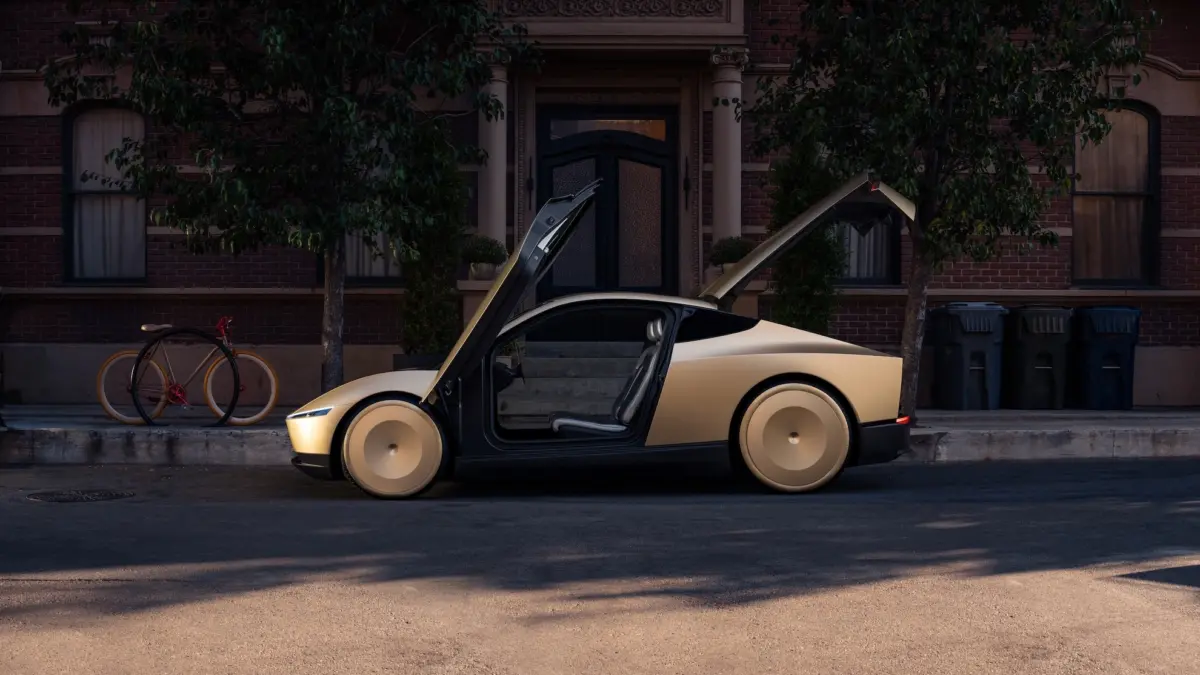
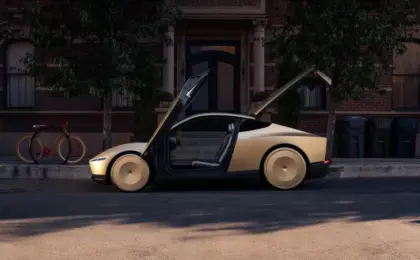
Tesla has officially announced its intention to begin selling its striking, gold-hued autonomous Cybercab to third-party customers by the end of the year. The revelation, made during the company’s third-quarter earnings call by Vice President of Engineering Lars Moravy, signals a major pivot in Tesla’s commercial strategy. For years, the electric vehicle giant’s autonomous aspirations centered primarily on transforming consumer-owned vehicles into self-driving taxis via over-the-air software updates. Now, the company is preparing to release a purpose-built, dual-occupant vehicle that completely lacks a steering wheel, accelerator pedals, and other traditional manual controls.
However, this aggressive commercial timeline unfolds amid mounting regulatory uncertainty. The National Highway Traffic Safety Administration (NHTSA) has launched a federal safety investigation into whether the Cybercab complies with existing Federal Motor Vehicle Safety Standards (FMVSS). These longstanding rules mandate physical driver-centric controls and traditional safety features, setting up a high-stakes collision between Silicon Valley’s rapid innovation cycle and Washington’s rigorous safety oversight.
Compounding these regulatory headwinds are shifting timelines for Tesla’s broader ecosystem. While third-party fleet buyers may soon gain access to the standalone Cybercab, everyday Tesla owners longing for true, unsupervised autonomy face yet another delay. CEO Elon Musk confirmed that an unsupervised version of the company’s Full Self-Driving (FSD) software will not reach consumer vehicles until the second quarter of next year. As Tesla balances its "transport-as-a-service" business model with the physical and legal realities of autonomous deployment, the coming months will test the viability of the company’s driverless future.
Detailed Chronology: From Concept to Commercialization
To understand the weight of Tesla’s latest announcement, it is necessary to examine the trajectory of the company’s robotaxi ambitions. For the better part of a decade, CEO Elon Musk painted a picture of a shared mobility economy driven by existing Tesla owners.
The Evolution of the Robotaxi Dream
- The Early Vision: Musk originally promised that millions of Tesla vehicles equipped with hardware suites would appreciate in value, transforming into autonomous money-makers for their owners while parked. Owners would simply toggle a switch in the Tesla app to dispatch their cars into a ride-hailing network.
- The Software Bottleneck: Despite countless over-the-air updates, the promised land of fully autonomous, unattended driving remained out of reach. Today’s consumer-facing system, marketed as Full Self-Driving (Supervised), requires constant human supervision, keeping the liability squarely on the driver.
- The Shift to Dedicated Hardware: Recognizing the limitations of retrofitting consumer cars for commercial robotaxi duty, Tesla shifted gears toward a dedicated platform. This culminated in the unveiling of the Cybercab—a futuristic, two-seater vehicle devoid of a steering wheel or pedals—designed from the ground up for commercial ride-hailing.
The Austin Rollout and Third-Party Sales
The timeline accelerated rapidly in the late third quarter. Following a high-profile launch event in Austin, Texas, Tesla surprised industry watchers by quietly circulating interest forms for third-party entities wanting to buy and operate their own Cybercab fleets.
During the Q3 earnings call, Lars Moravy clarified how this rollout will occur in practice. Initially, the production units rolling off assembly lines are earmarked exclusively for Tesla’s proprietary robotaxi fleet. As manufacturing capacity scales and the company gathers operational data, Tesla will gradually expand distribution to external buyers.
"As that fleet grows, we will mainly deliver fully designed autonomous vehicles to our customers, starting small," Moravy explained. "We will scale as we learn about delivery, ownership, and fleet management of autonomous vehicles."
Supporting Context & Metrics: The Mechanics of "Transport-as-a-Service"
Tesla’s push into the commercial ride-hailing sector represents a structural shift from a traditional automotive manufacturer to a service-oriented technology provider. Elon Musk drew a sharp line during the earnings call between vehicles intended for private ownership and those engineered exclusively for public transportation fleets.
Ownership vs. Ride-Hailing
- Consumer Models: Vehicles like the Model 3, Model Y, and the upcoming Roadster remain anchored to the traditional consumer ownership model. They are personal assets meant to be driven, maintained, and treasured by individuals.
- The Cybercab Exception: The Cybercab, conversely, is explicitly categorized as a dedicated fleet asset. Musk noted that the vehicle is designed strictly for "transport as a service" (TaaS).
- Corporate Dominance: "The vast majority of the Cybercab stuff will be essentially Tesla-owned and transported as a service," Musk remarked, acknowledging that while third-party fleet operators will be permitted to purchase units, the overarching ecosystem will likely be dominated by enterprise-scale deployments rather than individual consumer garages.
The Consumer Disconnect
This commercial bifurcation creates an intriguing paradox for loyal Tesla enthusiasts. If current schedules hold, enterprise fleet operators and third-party buyers will be able to purchase a dedicated autonomous Cybercab and run it as a commercial taxi service before individual Tesla owners gain access to truly unsupervised self-driving capabilities in their own personal cars.
While everyday owners continue to rely on FSD (Supervised)—a system requiring constant human attentiveness despite viral videos testing its boundaries—commercial operators utilizing the Cybercab will bypass the steering wheel entirely.
Official Statements and Regulatory Standoffs
The ambition of deploying a steering-wheel-free vehicle on public roads has inevitably drawn intense scrutiny from federal safety regulators. The intersection of technological disruption and government oversight has established a tense regulatory landscape.
The NHTSA Investigation
Just hours after the Cybercab fleet commenced public street testing in Austin last month, the National Highway Traffic Safety Administration (NHTSA) announced it had opened a formal investigation into the vehicle.
Federal Motor Vehicle Safety Standards (FMVSS) have historically required every motor vehicle operated on public roads to feature manual fallback controls—including brake pedals, steering columns, and physical rearview and side mirrors. Traditionally, automakers operate on a self-certification model, legally attesting that their vehicles comply with these federal rules. Tesla applied this same self-certification framework to the Cybercab.
However, because current regulatory frameworks do not cleanly accommodate vehicles entirely devoid of manual controls, NHTSA’s investigation aims to scrutinize the technical data and compliance processes Tesla relied upon when certifying the vehicle.
Shifting Regulatory Winds
The regulatory climate is not entirely hostile to Tesla’s vision. Recognizing the rapid advance of autonomous vehicle (AV) technology, the Department of Transportation recently proposed stripping away traditional brake pedal requirements for vehicles designed explicitly for autonomous operation—a move widely interpreted as a regulatory tailwind for Tesla and other AV developers.
Even with potential policy shifts on the horizon, the immediate outcome of the NHTSA inquiry carries immense weight. If federal regulators determine that Tesla’s self-certification process was legally or technically flawed, it could temporarily halt or entirely derail the deployment of the Cybercab, throwing the company’s aggressive end-of-year sales and fleet-scaling timelines into jeopardy.
Future Outlook: Navigating the Road Ahead
As Tesla approaches the final stretch of the year, the company stands at a historic crossroads. The execution of the Cybercab strategy will test not only Tesla’s manufacturing capabilities and software prowess, but also its ability to navigate a complex, highly regulated federal framework.
Key Milestones to Watch
- End-of-Year Deliveries: Whether Tesla can successfully transition the Cybercab from internal fleet testing to actual third-party customer deliveries by the close of the year remains the immediate litmus test for engineering leadership.
- Q2 2027 Unsupervised FSD Rollout: Musk’s projection of releasing unsupervised FSD to consumer vehicles in the second quarter of next year represents another critical hurdle. Given a history of delayed autonomy timelines, consumer and investor patience will be tested.
- Regulatory Resolution: The findings of the ongoing NHTSA investigation will ultimately dictate the legal viability of operating a steering-wheel-free vehicle on American roadways, setting a powerful precedent for the entire autonomous vehicle industry.
Ultimately, Tesla is attempting to rewrite the rules of modern transportation. Whether the Cybercab becomes the cornerstone of a profitable, autonomous mobility network or a casualty of regulatory friction will depend entirely on how swiftly the company can reconcile its Silicon Valley innovation ethos with the unyielding safety mandates of federal authorities.



Belum ada komentar. Jadilah yang pertama berkomentar!