

Executive Overview
The video game industry has weathered many corporate earthquakes over the years, but few closures sting quite as sharply as the demise of BioWare. Electronic Arts (EA)—which acquired the legendary role-playing game developer in 2007 as part of its massive $650 million buyout of BioWare’s parent company, Pandemic Studios/Elevation Partners—has officially pulled the plug on the studio.
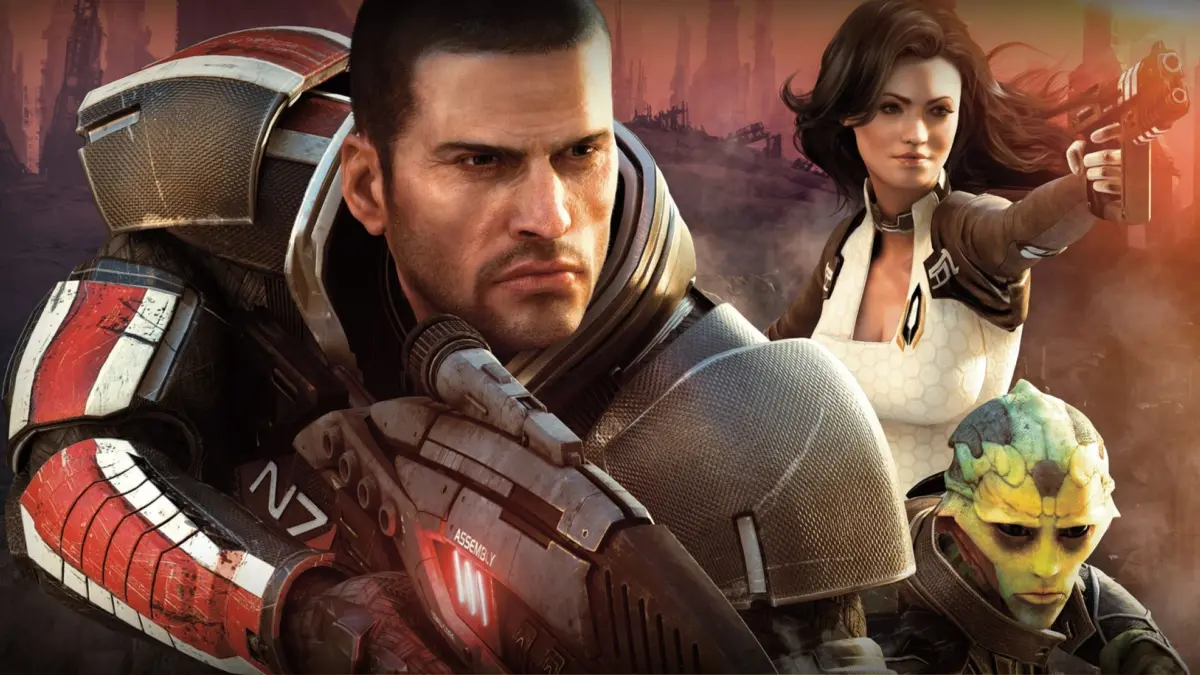
While the closure does not instantly obliterate BioWare’s intellectual properties, it marks a profound inflection point. EA retains the rights to powerhouse franchises like Mass Effect and Dragon Age, yet the immediate casualties are severe: the next mainline Mass Effect game has been quietly cancelled, and the studio responsible for architecting the modern narrative-driven RPG has been wiped from the map.
Despite the studio’s shuttering, the multimedia machine grinds forward. Sources close to production have confirmed to IGN that Amazon Prime Video’s live-action Mass Effect television series—first put into motion in 2024—is still moving ahead. Set safely after the events of the original trilogy, the show will sidestep the awkward marketing reality of promoting a universe built by a studio that no longer exists.
Yet, the timing casts a long shadow over the adaptation. The closure of BioWare is the culmination of years of corporate restructuring, creative friction, and a fundamental mismatch between a legendary developer’s artistic ambitions and a mega-publisher’s bottom-line fiscal demands. As EA pivots hard into its most reliable, hyper-monetizable verticals—sports titles, The Sims, and military shooters—the death of BioWare stands as a stark reminder of the corporate calculus dominating modern AAA game development.
Detailed Chronology: From Golden Age to Corporate Erasure
To understand how BioWare reached its terminal state, one must look back at the trajectory that defined the studio as a pioneer of computer role-playing games (CRPGs). Founded in 1995 by medical doctors Ray Muzyka and Greg Zeschuk in Edmonton, Alberta, BioWare rapidly ascended industry ranks.
The Golden Era of Narrative Dominance
- 1998–2003: BioWare put itself on the map with Baldur’s Gate and Neverwinter Nights, proving that complex, tabletop-style rulesets could translate into massive commercial and critical successes on PC. Their collaboration with LucasArts on Star Wars: Knights of the Old Republic (2003) cemented their reputation as masters of branching narratives, character chemistry, and player-driven morality.
- 2007–2012: Following the launch of Mass Effect (2007)—their first major release under EA’s corporate umbrella—BioWare dropped consecutive masterclasses in world-building. Dragon Age: Origins (2009) and Mass Effect 2 (2010) are still frequently cited as high-water marks for the entire RPG genre.
The EA Era and the Beginning of Friction
The friction between BioWare’s traditional development philosophy—which relied on immense creative exploration, massive writing teams, and long production cycles—and EA’s corporate structure began to show in the early 2010s. Muzyka and Zeschuk departed the company in 2012, effectively closing the chapter on the studio’s foundational leadership.
- 2014: Dragon Age: Inquisition won Game of the Year at The Game Awards, but behind the scenes, the development cycle was fraught with engine troubles (EA’s mandate to use the DICE-developed Frostbite engine) and intense crunch.
- 2017: Mass Effect: Andromeda launched to a deeply polarized reception. Plagued by animation bugs, rushed milestones, and tonal shifts, the game damaged the infallible sheen of the Mass Effect brand, leading EA to place the franchise on indefinite ice.
- 2019: Anthem arrived as a catastrophic misfire. Conceived as a live-service cooperative action RPG to chase industry trends, the game was a product of years of internal indecision, panic re-tooling, and a fundamental misunderstanding of what made BioWare special. Former lead producers later noted that its iconic flying mechanic—while fun—was a symptom of systemic design disarray, as the rest of the game’s architecture failed to accommodate the consequences of vertical mobility.
The Final Chapters: The Veilguard and the End
Most recently, Dragon Age: The Veilguard spent nearly a decade in development hell. Originally conceived as a live-service multiplayer game before being pivoted back into a single-player action RPG midway through its lifecycle, the title launched to middling reviews. While some praised its combat and art direction, others lamented its tonal departure from Origins.
Rather than viewing The Veilguard as a miracle product that survived a chaotic, shifting mandate, reports suggest EA internally pinned the blame on its lack of live-service integration. Shortly after, the final axe fell, and BioWare was officially shuttered.
Supporting Context & Metrics: EA as a "Hedge Fund with a Video Game Hobby"
The post-mortem on BioWare is inextricably linked to how EA manages its creative assets. Former senior figures have been remarkably candid about the systemic issues plaguing the publisher-developer relationship over the last decade.
Mark Darrah, a former executive producer on the Dragon Age franchise who spent decades at BioWare, famously described EA’s corporate ethos with striking bluntness:
"Someone once described to me EA as a hedge fund with a videogame hobby that it wished it didn’t spend so much money on. And I think that remains true."
This sentiment underlines a structural paradox. When EA acquired BioWare in 2007, it inherited a studio culture geared toward deep, deliberate, narrative-heavy projects that required substantial capital and years of iteration. In contrast, modern public-facing publishers operating under shareholder pressures prioritize predictable, high-frequency revenue streams.
The Cost of the Frostbite Mandate
A recurring theme in BioWare’s decline was EA’s corporate-wide push to standardize game engines. Forcing BioWare to abandon their proprietary tools in favor of EA DICE’s Frostbite engine—built primarily for first-person shooters like Battlefield—proved disastrous. Frostbite lacked native support for RPG elements like inventory management, save systems, branching dialogue trees, and party member scripting.
As a result, developers spent years engineering basic tools from scratch just to make simple features function, crippling the creative output of teams working on both Dragon Age: Inquisition and Anthem.
Brain Drain and "Spinning Plates"
According to post-mortems shared by former staff, BioWare spent its final years in a state of constant firefighting—spinning plates while starved of top-tier talent. As industry compensation shifted and crunch culture faced well-deserved scrutiny, veteran developers fled the studio. The institutional knowledge that once birthed universes like Mass Effect slowly evaporated, replaced by a revolving door of contractors and temporary management teams attempting to hit impossible publisher milestones.
Official Statements and Industry Reaction
The gaming community and industry peers have reacted to BioWare’s closure with a mixture of profound grief and sharp critique.
While official statements from EA have been sparse—framed largely around corporate restructuring and "focusing on our highest-potential owned IP"—competitors and alumni have been far more vocal. Notably, CD Projekt Red leadership recently paid public tribute to BioWare, crediting the studio’s early work as a crucial North Star that helped bring The Witcher franchise to life two decades ago. The sentiment echoed across the industry: almost every modern Western narrative RPG owes some ideological debt to the blueprints BioWare drew in the late 1990s and 2000s.
Regarding the upcoming Amazon Prime Video Mass Effect series, showrunners and executive producers have assured fans that the project remains safe. Set in the post-trilogy era, the series will aim to chart its own course through the galaxy rather than attempting to meticulously recreate Commander Shepard’s specific path, granting the writers much-needed creative breathing room.
Future Outlook: What Comes Next for EA and the RPG Genre?
With BioWare officially closed and its next major projects—including the nascent Mass Effect sequel—scrapped, EA’s trajectory moving forward is starkly predictable.
As noted by industry analysts, EA’s future chapter will double down on low-risk, high-return pillars: massive sports franchises like EA Sports FC and Madden, evergreen cash cows like The Sims, and proven shooter properties. Narrative-driven, single-player RPGs—genres that require monumental financial investment, multi-year production windows, and massive writing teams—are increasingly viewed by the publisher’s board as high-variance gambles not worth the corporate headache.
The Bitter Irony of the Prime Video Series
In this light, the Prime Video Mass Effect series feels less like a celebration of the franchise’s legacy and more like a final extraction of value—wringing the last drops of profitability from a dry towel before sealing the coffin. If the show succeeds, it will likely be driven by external creators and showrunners whom EA can sparsely claim credit for fostering.
The True Legacy of BioWare
Ultimately, BioWare’s physical studio doors may be locked, but its true legacy will live on through the developers it inspired and the emotional resonance of the universes it built. The studio that taught generations of gamers that choices matter, that companions can feel like real friends, and that galaxies are worth saving, leaves behind a bittersweet void.
As the industry looks to the horizon, the question remains: if a studio with BioWare’s pedigree and historic commercial track record cannot survive the relentless financial pressures of modern AAA publishing, what hope do smaller, risk-taking single-player developers have in tomorrow’s landscape?






Belum ada komentar. Jadilah yang pertama berkomentar!