

Executive Overview
The artificial intelligence boom is often framed as a software revolution, a battle of algorithms fought by frontier model developers racing toward artificial general intelligence. But behind the consumer-facing chatbots and enterprise copilots lies a massive, capital-intensive physical reality: an unprecedented global construction project encompassing silicon chips, high-density server racks, power-hungry data centers, and specialized cloud providers known as "neoclouds."
Unlike previous technology cycles—such as mobile applications or Software-as-a-Service (SaaS)—which allowed startups to scale rapidly with modest capital expenditures, the AI era requires staggering sums of upfront financing. Entering this capital vacuum is private equity giant Blackstone. Managing a staggering $1.3 trillion in assets, the firm has strategically positioned itself at the absolute center of the AI infrastructure race.
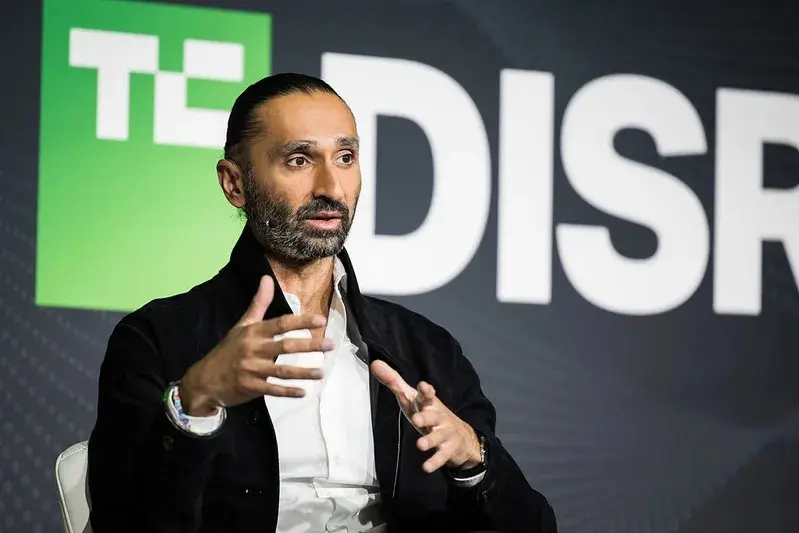
Speaking on stage at TechCrunch Disrupt, Blackstone veteran Jas Khaira detailed how the firm is writing checks across the entire AI ecosystem. From issuing multi-billion-dollar debt facilities to specialized neoclouds and financing hyper-scale data centers to investing directly in frontier model applications, Blackstone is asserting its dominance. Earlier this year, the firm launched Blackstone N1 (BXN1), a San Francisco-based central hub dedicated to its AI initiatives, led by Khaira himself, who relocated from New York to be at the epicenter of the movement.
However, this high-stakes game of compute financing is not without peril. As macroeconomic pressures mount—marked by rising interest rates, stubbornly high inflation, and escalating credit spreads—the massive debt burdens accumulated by AI infrastructure operators have begun to rattle public markets. CoreWeave’s debt has ballooned to roughly $50 billion, leading to stock sell-offs, while Nvidia-backed Firmus recently scrapped its multi-billion-dollar initial public offering (IPO).
Despite these market jitters, Blackstone remains bullish. Firm executives argue that fears of a systemic credit crunch akin to the 2008 financial crisis are overblown, pointing out that the underlying compute is ultimately tied to the balance sheets of the world’s most creditworthy tech giants. As Blackstone balances aggressive infrastructure lending with strategic joint ventures like "Ode" with Anthropic, the firm’s playbook offers a definitive window into how private capital is shaping the architecture of the modern intelligence economy.
Detailed Chronology: How Blackstone Became the Banker to the AI Boom
The Genesis: The CoreWeave Breakthrough (2023)
The foundation of Blackstone’s modern AI credit strategy was laid in 2023, immediately following the seismic launch of OpenAI’s ChatGPT. As global demand for high-performance Nvidia GPUs exploded overnight, a nascent neocloud provider named CoreWeave found itself sitting on explosive demand but lacking the traditional balance sheet strength required by legacy banking institutions.
At the time, CoreWeave possessed a mere $30 million in revenue and minimal profitability. Yet, the company approached Blackstone seeking a staggering $2.3 billion loan.
Rather than viewing the request as pure speculative risk, Blackstone pioneered a novel financing structure. The firm analyzed CoreWeave’s situation through a dual lens: evaluating the considerable intrinsic market value of the physical Nvidia GPUs being pledged as collateral, while heavily weighing the revenue security provided by binding, long-term contracts with blue-chip customers like Microsoft.
This transaction changed the game. It established the playbook for how Blackstone and other credit institutions would subsequently inject billions of dollars into CoreWeave and its burgeoning rivals. By tethering the risk profile to the investment-grade creditworthiness of the end-client (such as Microsoft or Meta) rather than solely the early-stage borrower, Blackstone unlocked a secure, highly lucrative asset class.
Scaling Up: The Neocloud Credit Expansion and Firmus ($10 Billion Facility)
Following its success with CoreWeave, Blackstone accelerated its capital deployment across the neocloud landscape. Neoclouds—specialized cloud providers that rent out dedicated AI GPU infrastructure to startups and enterprises—continued to face insatiable demand for compute.
Earlier this year, Blackstone partnered with venture firm Coatue to co-lead a massive $10 billion credit facility for Firmus, an Australian energy-efficient GPU provider backed by Nvidia. This financing was designed to help Firmus rapidly scale its physical footprint to meet international demand for AI processing power.
Simultaneously, Blackstone launched BXN1 in San Francisco to streamline its expanding portfolio. Through BXN1, Blackstone made major equity and strategic investments, including a $5 billion commitment to Crux AI, a neocloud launched in partnership with Google to commercialize custom Tensor Processing Units (TPUs). Blackstone also backed Etched, a four-year-old specialized chip startup whose rapid developmental milestones have captured the attention of enterprise investors.
The Recent Correction: Debt Bloat and Scrapped IPOs
The aggressive accumulation of debt that fueled the neocloud boom, however, has recently encountered severe market headwinds.
In late 2026, CoreWeave’s cumulative debt load skyrocketed to approximately $50 billion. This rapid accumulation of leverage drew sharp public scrutiny from prominent investors. Altimeter Capital founder Brad Gerstner warned in a televised CNBC interview that the heavy reliance on GPUs as collateral was losing its luster, noting that physical hardware alone was no longer sufficient to justify ultra-cheap debt in a tightening monetary environment.
The market contagion quickly spread to equity markets. CoreWeave shares experienced a drawdown of over 20% in a matter of days. Meanwhile, Firmus was forced to shelve its highly anticipated IPO on the Australian Securities Exchange, abandoning its target valuation of roughly $30 billion.
Jas Khaira addressed the canceled listing head-on at TechCrunch Disrupt, admitting that "ultimately, the market wasn’t there at that valuation, and so I think as a result, that deal didn’t get done." He noted that investors are aggressively reassessing the proper pricing and valuations for neocloud operators as macroeconomic realities catch up with Silicon Valley optimism.
Supporting Context & Metrics: The Mechanics of Compute Finance
To fully grasp Blackstone’s market position, one must examine the macroeconomic environment and the underlying metrics driving the firm’s lending behavior.
- Assets Under Management (AUM): Blackstone commands a staggering $1.3 trillion in AUM, giving the firm unmatched liquidity and dry powder to execute transactions that traditional venture capital and commercial banking sectors cannot match.
- Scale of Compute Ownership: As Jas Khaira proudly noted on stage, Blackstone is currently "the largest owner of compute outside of the hyperscalers today," controlling extensive stakes in neo-clouds, data centers, and silicon infrastructure.
- CoreWeave Debt Trajectory: From an initial $2.3 billion loan in 2023 backed by $30 million in revenue, CoreWeave’s total debt burden has ballooned to roughly $50 billion, highlighting the capital-intensive nature of scaling GPU clusters.
- Firmus Credit Facility: A $10 billion credit facility co-led by Blackstone and Coatue aimed at scaling energy-efficient infrastructure in the Asia-Pacific region.
- The "Ode" Joint Venture: A $1.5 billion initiative launched in mid-2026 by Blackstone, Anthropic, and Hellman & Friedman to deploy forward-deployed AI engineers directly into enterprise workflows.
Macroeconomic Pressures: Rising Rates and Widening Spreads
The market jitters affecting neocloud operators are not happening in a vacuum. Khaira explained that a convergence of macroeconomic factors has increased the cost of capital across the board:
- Interest Rate Volatility: Central bank interest rates ticked upward, signaling that borrowing costs will remain elevated for the foreseeable future.
- Persistent Inflation: Hotter-than-expected inflation metrics have dashed hopes for near-term monetary easing.
- Surging Credit Spreads: Lenders are charging higher risk premiums on top of elevated base interest rates. Khaira pointed out that even trillion-dollar tech titans like Meta and Microsoft are facing a wider cost of capital when pricing debt for massive infrastructure builds.
Official Statements and Industry Perspectives
The discourse surrounding AI debt has polarized financial markets, pitting traditional credit managers against venture capital skeptics.
Jas Khaira on Blackstone’s Differentiated Advantage
Addressing how Blackstone distinguishes itself from standard venture capitalists, Khaira emphasized the firm’s flexibility and focus on compute-backed credit structures:
"We’re the largest owner of compute outside of the hyperscalers today, whether it’s investments in neo clouds, investments in data centers, and being able to use that compute strategically to support companies."
On the underwriting side, Khaira explained that Blackstone protects its downside by rigorously analyzing the end-client’s financial health:
"One of the primary things that we’re looking to is the nature of the customer. And if the customer is an investment-grade customer — let’s say it’s Microsoft or let’s say it’s Meta — the risk gets priced relative to that customer."
Dismissing Systemic Risk Concerns
Addressing doom-mongers who warn that the towering debt piles of AI infrastructure providers could spark a modern credit crisis, Khaira forcefully pushed back against comparisons to the 2008 global financial meltdown:
"This doesn’t feel like something where you’ve got 2008 banks that are shaky credits… Instead, because the vast majority of data centers are built for hyperscalers, the debt financing them is ultimately backed by the most creditworthy companies in the world."
Skepticism from the Market
Contrasting Khaira’s measured optimism, critics point out that the velocity of infrastructure accumulation is outpacing enterprise revenue realization. Brad Gerstner’s public critique—that GPU collateral alone is "not good enough anymore" for securing cheap leverage—reflects a growing consensus that the era of effortless, unbridled debt financing for AI startups has come to a close.
Future Outlook: Implementation, ROI, and the Next Trillion-Dollar Frontier
As the initial frenzy of infrastructure accumulation matures, Blackstone is shifting its gaze toward the next critical phase of the artificial intelligence revolution: enterprise implementation and tangible return on investment (ROI).
Building compute infrastructure is only half the battle; ensuring that traditional corporations can successfully integrate these frontier models into their legacy workflows is where the long-term value lies. This realization prompted the formation of Ode, the $1.5 billion joint venture between Blackstone, Anthropic, and Hellman & Friedman. By embedding forward-deployed engineers directly into organizations—beginning with Blackstone’s vast portfolio of 280 private companies—Ode aims to bridge the gap between raw compute and operational efficiency.
When asked whether Blackstone-owned companies are observing genuine financial returns from their AI deployments, Khaira offered a pragmatic assessment. He conceded that while ROI is unquestionably materializing, it is currently "uneven." He described enterprise technology adoption as following a "sawtooth-type pattern"—a trajectory that, to short-term skeptics, can periodically resemble an oversupply of compute before organizational adoption catches up.
Looking Ahead
The coming years will test the resilience of Blackstone’s credit model. As interest rates settle at higher plateaus and the market aggressively prices risk for neocloud operators, weaker players unable to secure investment-grade contracts will likely fall by the wayside or undergo painful debt restructurings.
However, for a financial titan like Blackstone—armed with $1.3 trillion in dry powder, deep partnerships with hyperscalers, and a diversified strategy spanning debt, equity, and operational implementation—the current market correction may ultimately serve as a powerful consolidation filter. By financing the physical backbone of the AI revolution while simultaneously engineering its enterprise adoption, Blackstone is cementing its role not just as a financier of the present, but as the enduring architect of the AI future.







Belum ada komentar. Jadilah yang pertama berkomentar!