

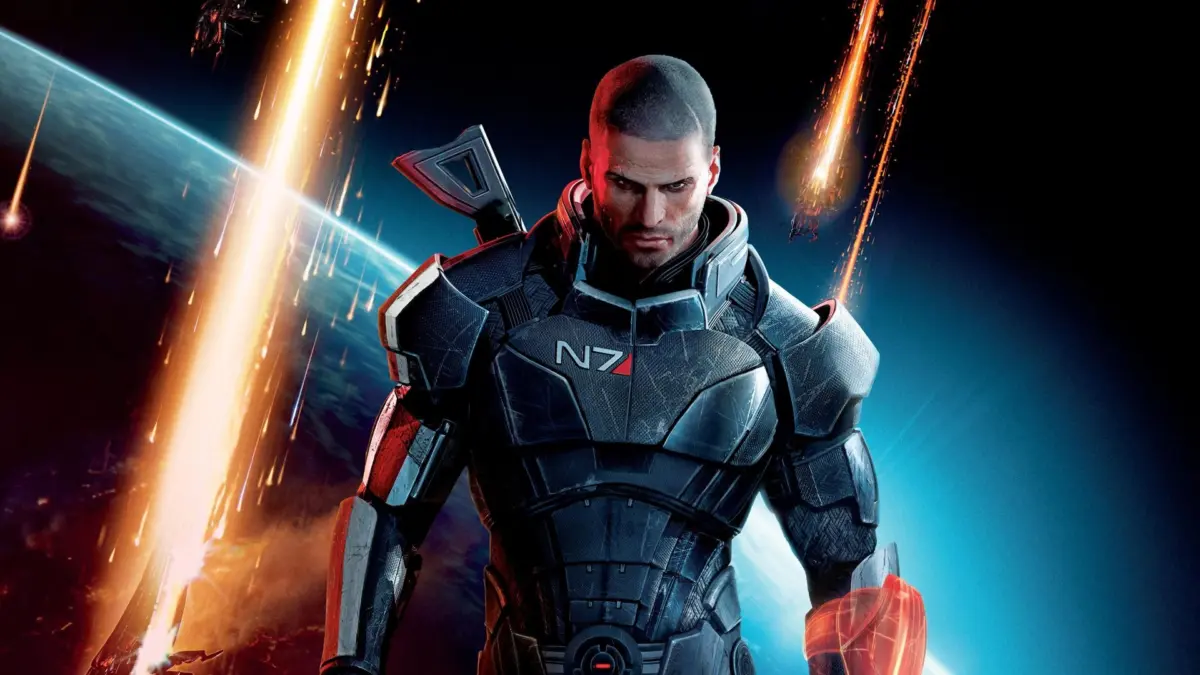
Executive Overview
The video game industry has weathered numerous seismic shocks over the decades, but few moments carry the emotional and cultural weight of BioWare’s closure. Following a massive corporate restructuring led by Electronic Arts (EA)—sparked by its acquisition involving Saudi Arabia’s Public Investment Fund (PIF) and supporting investment firms—the legendary role-playing game (RPG) developer has been officially shuttered. More than 400 developers have lost their jobs as EA pivots its business model away from narrative-driven single-player epics toward hyper-lucrative live-service shooters and annualized sports franchises.
Among the casualties of this corporate realignment is the next entry in the critically acclaimed Mass Effect franchise, tentatively referred to as Mass Effect 4. Prior to the studio’s sudden closure, a lean and dedicated core team of approximately 50 developers was quietly building what many hoped would be a triumphant return to form for the sci-fi epic.
New insights from veteran developer Tony de Waal—who served as cinematic supervisor across a career spanning nearly three decades at BioWare—have shed light on what the studio was cooking behind closed doors. Drawing inspiration from modern RPG masterpieces like Larian Studios’ Baldur’s Gate 3 and CD Projekt Red’s upcoming and ongoing projects, the Mass Effect 4 team was aiming to deliver unprecedented player autonomy and choice, all while honoring the legacy of the original Commander Shepard trilogy. Tragically, fans will never get to experience this ambitious vision, marking a dark day for narrative gaming.
Detailed Chronology: From The Veilguard to the End of BioWare
To understand the tragedy of Mass Effect 4’s cancellation, one must look at the grueling road BioWare traveled leading up to its final days. The studio’s recent history is defined by towering technical hurdles, shifting corporate mandates, and an intense, uphill battle to recapture the magic of its golden era.
The Frostbite Struggle and Dragon Age: The Veilguard
Before transitioning fully to pre-production on the next Mass Effect, BioWare poured its collective energy into Dragon Age: The Veilguard. As the studio’s second major project utilizing EA and DICE’s proprietary Frostbite engine—an engine notorious for its hostility toward traditional RPG frameworks—development was nothing short of a "herculean effort."
According to de Waal, the technical acrobatics required to bring The Veilguard to life tested the limits of even the most dedicated workaholics at the studio. Managing variable player character models across more than three hours of dynamic cinematics while tracking countless conditional states for the game’s sprawling, high-stakes ending required extraordinary engineering wizardry. Despite these systemic hurdles, the team managed to ship a polished experience, proving that BioWare’s talent for cinematic storytelling remained intact even under duress.
Pivoting to the Stars: The Genesis of Mass Effect 4
With The Veilguard out the door, a small group of veterans shifted their focus back to the stars. This core unit of roughly 50 developers began exploring what the next generation of Mass Effect could achieve.
Freed from the immediate crunch of launching a massive franchise tentpole, the team engaged in deep creative reflection. They observed the shifting landscape of the RPG genre—specifically noting how developers like Larian and CD Projekt Red were elevating player agency, complex branching narratives, and reactive game worlds. Armed with these insights, BioWare set out to push Mass Effect to unprecedented heights while preserving the narrative DNA of the original trilogy.
Supporting Context & Metrics: The Anatomy of a Corporate Pivot
The closure of BioWare is not an isolated incident; it represents a broader, systemic shift within Electronic Arts and the wider AAA gaming landscape. As economic pressures mount and investor expectations lean heavily toward predictable, high-margin revenue streams, traditional single-player RPG development has fallen out of favor in corporate boardrooms.
The Numbers Behind the Restructuring
- 400+ Layoffs: The restructuring wave at EA resulted in the sudden termination of hundreds of talented developers, wiping out decades of institutional knowledge housed within BioWare.
- 50 Developers: The remarkably small, agile team size operating on Mass Effect 4 prior to cancellation, attempting to punch above their weight class to deliver a next-gen sci-fi masterpiece.
- Nearly 3 Decades: The tenure length of veteran staff members like Tony de Waal, who witnessed BioWare’s rise from an ambitious independent Canadian studio to an industry-defining titan, and ultimately, its absorption and dissolution by a multinational conglomerate.
The Rise of Live-Service Dominance
EA’s post-acquisition strategy has made its priorities painfully clear. During investor briefings following the restructuring, company leadership laid out a predictable path forward: gun-based shooters and sports titles remain firmly under the microscope for expansion, while costly, time-intensive story-driven single-player games are increasingly viewed as financial liabilities.

For an industry that once celebrated BioWare as a pioneer of branching dialogue wheels, emotional companion arcs, and sweeping space operas, the corporate pivot toward live-service monetization feels like the end of an era.
Official Statements and Insider Perspectives
The human cost of BioWare’s closure has begun to surface through heartfelt tributes and professional appeals shared across social and professional networks like LinkedIn. The narrative emerging from former employees paints a picture of a studio filled with passionate creators who were denied the chance to finish their work.
In a widely shared post, Tony de Waal reflected on his time with the studio and the heartbreak of the cancellation:
"I was one of the lucky ones who stayed with BioWare to start on the next Mass Effect [after The Veilguard], where I believe we were making something special: a level of autonomy and choice that no other game has been able to match. We saw what Larian and CD Projekt were bringing to the table with their latest offerings, and started down a path to bring Mass Effect to the next level while remaining true to the Trilogy."
De Waal emphasized the immense talent housed within the smaller post-restructuring team, noting that these developers were consistently "punching above their weight" to create something extraordinary.
"I’m sad you won’t ever get to see what we were cooking, and sad for the small, talented group of devs who were all punching above their weight to make something special. Please consider those who stayed with BioWare until the very end. They are truly some of the most talented people I’ve had the pleasure of working with throughout my career."
Now, like hundreds of his peers, de Waal faces the daunting task of navigating an increasingly volatile job market. His open call to the industry highlights the precarious nature of game development today, where decades of expertise can be rendered unhoused overnight due to corporate portfolio rebalancing.
Future Outlook: What Does This Mean for RPGs?
The death of BioWare marks a profound turning point for the video game industry, leaving a void that few studios are equipped to fill. For decades, BioWare set the gold standard for cinematic role-playing games, pioneering franchises like Baldur’s Gate (in its original incarnation), Star Wars: Knights of the Old Republic, Dragon Age, and Mass Effect.
The Industry Fallout
- The Loss of Cinematic RPG Pacesetters: With BioWare gone, the pipeline for high-budget, story-driven sci-fi and fantasy RPGs narrows significantly. While independent developers and studios like Larian continue to push boundaries from the isometric perspective, AAA cinematic RPGs are becoming an endangered species.
- Talent Dispersion: The silver lining—if one can be found—is that hundreds of elite developers, artists, writers, and engineers are now entering the talent pool. Studios wise enough to capture these seasoned professionals will undoubtedly benefit, though the loss of collective studio synergy is irreplaceable.
- The Uncertain Future of Mass Effect: For now, Commander Shepard’s universe has been put back into cryogenic freeze. Whether EA eventually dusts off the intellectual property to hand it to another studio remains to be seen, but any future project will lack the foundational vision of the creators who birthed the galaxy in the first place.
Ultimately, the story of Mass Effect 4‘s cancellation is a cautionary tale about the intersection of art and corporate finance. It reminds us that behind every corporate press release about "portfolio optimization" and "strategic realignment" are real artists who poured their lives into building worlds for millions of players—worlds that, in the blink of an eye, can be erased forever.








Belum ada komentar. Jadilah yang pertama berkomentar!