

Executive Overview
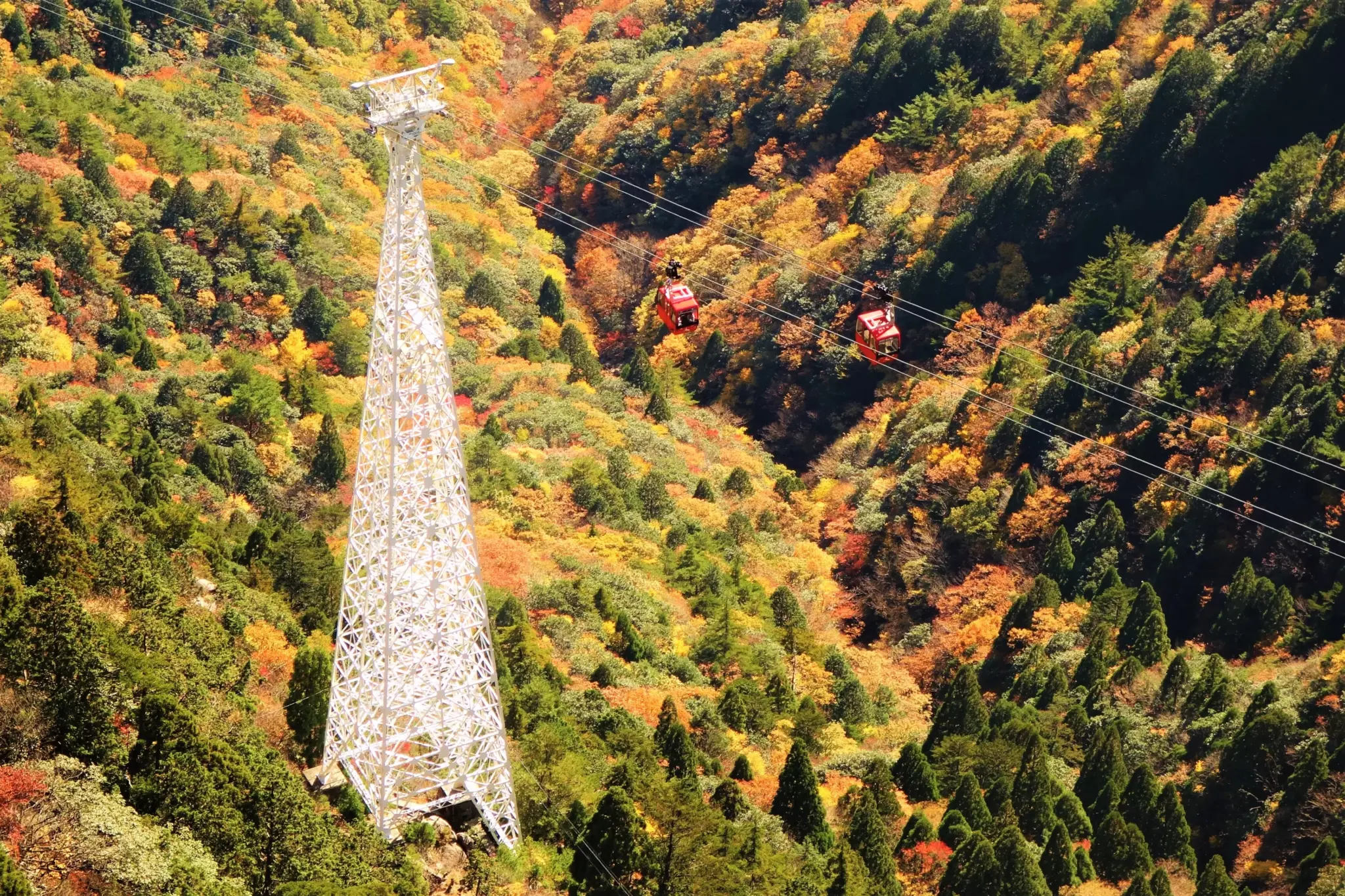
Autumn in Japan is globally celebrated as a season of profound visual transformation, where mountainsides erupt into brilliant tapestries of crimson, amber, and gold. While traditional hotspots in Kyoto and Tokyo often capture international headlines, discerning travelers and domestic leaf-peepers increasingly look toward the rugged topography of Mie Prefecture to experience the season’s earliest alpine displays. Rising 1,212 meters above sea level, Mt. Gozaisho stands as a premier destination for witnessing this autumnal shift, offering an accessible yet breathtaking wilderness experience within easy reach of major urban hubs like Nagoya and Osaka.
At the heart of this seasonal migration is the iconic Gozaisho Ropeway, a marvel of engineering that effortlessly transports visitors from the temperate base to the brisk, crisp microclimate of the summit park. Because of the dramatic elevation gain, autumn arrives on Mt. Gozaisho significantly earlier than in the surrounding lowlands. The seasonal progression begins in late October at the mountaintop and slowly descends down the slopes, culminating in a vibrant finale at the historic hot spring town of Yunoyama Onsen by late November.
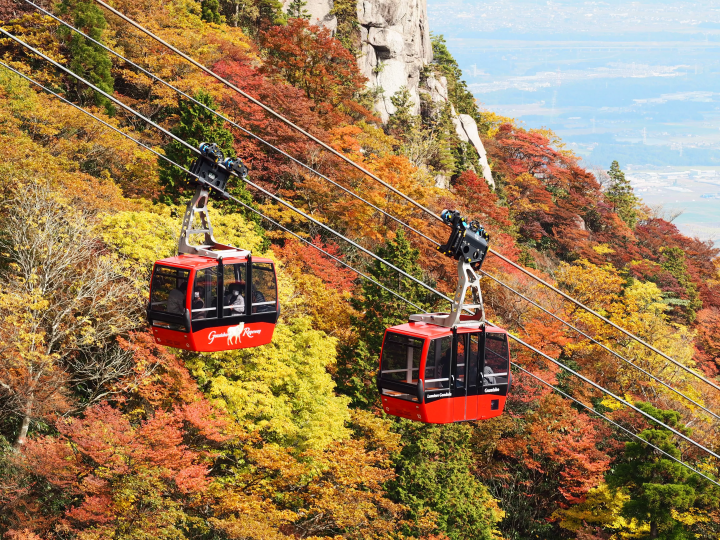
This comprehensive report examines the logistical framework, botanical mechanics, and cultural significance of the Mt. Gozaisho autumn foliage season. Beyond detailing the optimal viewing windows, fare structures, and culinary highlights—such as the famous Gozaisho Curry Udon—this feature addresses the modern challenges of regional tourism, including infrastructure congestion, eco-friendly transit solutions, and recent developments like the newly opened "COCORRU Terrace." Designed for travelers seeking both authoritative guidance and an immersive narrative, this article serves as the definitive guide to conquering the peaks of Mie Prefecture during its most photogenic season.
Detailed Chronology: The Progressive Descent of the Autumn Front
The seasonal transformation of Mt. Gozaisho is not a singular, uniform event; rather, it is a dynamic, multi-week progression governed by elevation, temperature gradients, and botanical diversity. Understanding this timeline is essential for travelers hoping to catch the peak viewing windows.
Phase 1: The Summit Ignition (Late October)
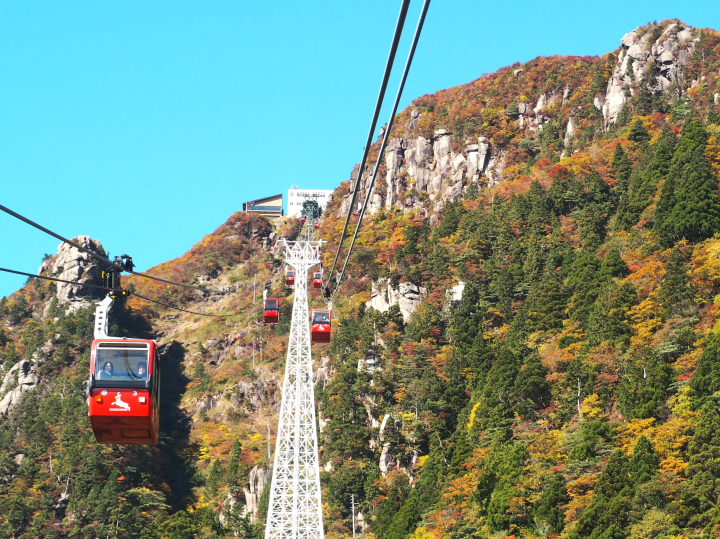
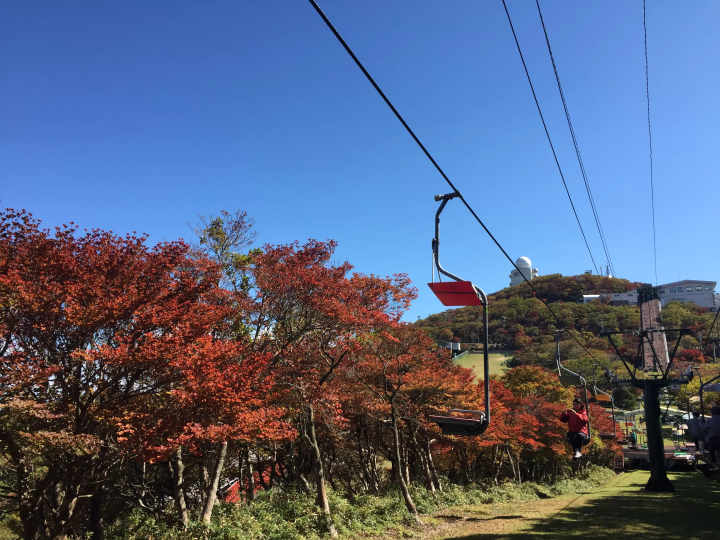
The autumn phenomenon on Mt. Gozaisho officially commences around October 20th at the Summit Park. Situated at an altitude exceeding 1,200 meters, this plateau experiences sudden and sharp temperature drops during the night, contrasting with crisp, low-temperature autumn days. This specific climatic pattern triggers the rapid production of anthocyanin pigments within the leaves of the local flora, setting off a chain reaction that transforms the mountaintop into a sea of deep crimson.
The undisputed stars of this early phase are the members of the Ericaceae (heath) plant family. Summit Park is densely populated by native species, including red azaleas (Rhododendron), white azaleas, and Enkianthus campanulata (known locally in Japan as dotsutsuji). When these azalea leaves reach their peak color around late October, the landscape adopts a breathtakingly intense red hue that blankets the rocky alpine terrain. Visitors taking the ropeway’s mountaintop park station down to the middle elevations during this window are treated to dramatic vistas of colored foliage juxtaposed against rugged rock faces.
Phase 2: The Mid-Mountain Tapestry (Early to Mid-November)
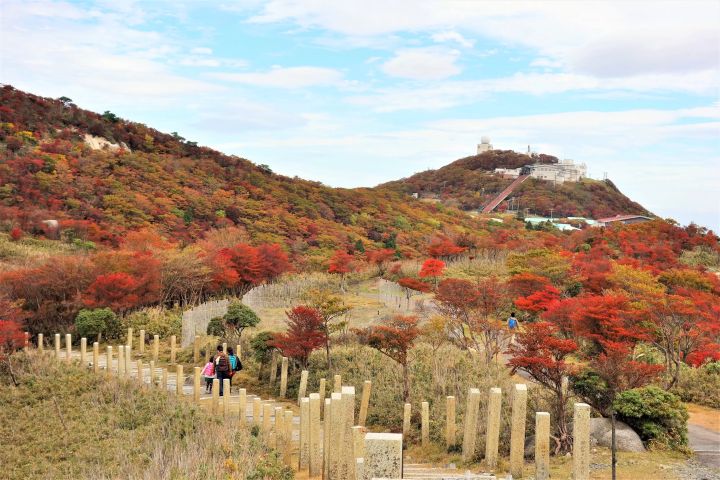
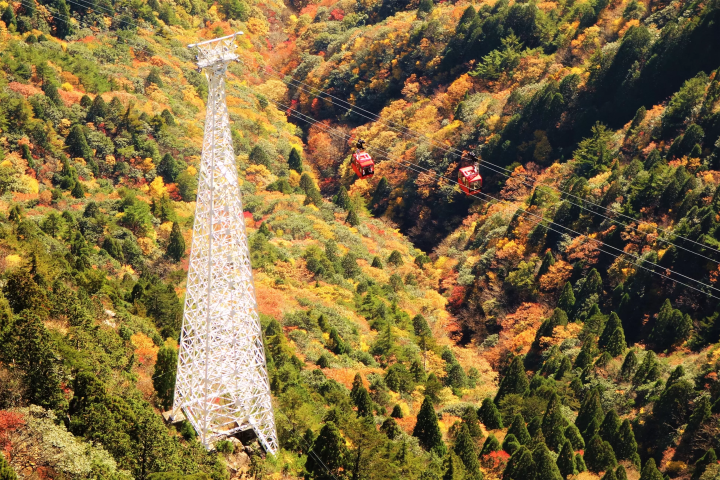
As October transitions into November, the "autumn foliage front" steadily marches downward, sweeping across the middle slopes of the mountain. During this phase, the landscape transforms into a rich, multi-layered tapestry of oranges, yellows, and deep browns.
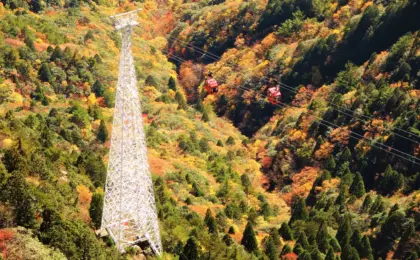
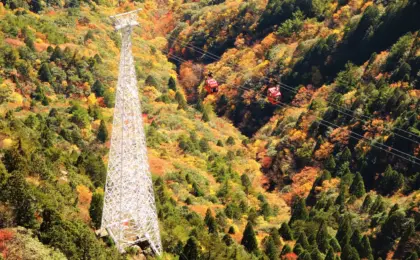
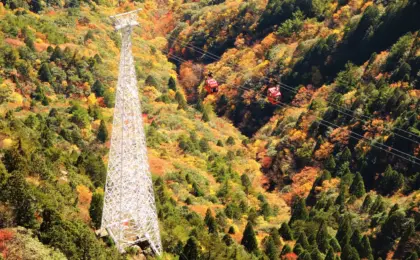
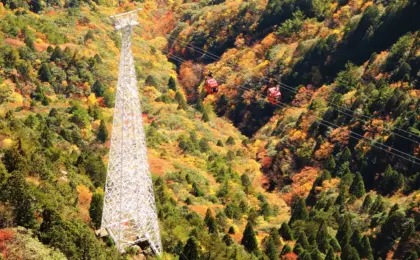
A standout location during this period is the valley surrounding "Tower No. 6," a prominent symbol tower of the Gozaisho Ropeway infrastructure. Here, the dense deciduous forests—comprising Japanese maples, beeches, and birches—create a complex, interwoven pattern of warm hues that unfold directly beneath the suspended cable cars. The visual interplay between the soaring industrial architecture of the ropeway towers and the untamed wilderness below offers a striking juxtaposition that attracts photographers and nature enthusiasts alike.
Phase 3: The Thermal Finale at Yunoyama Onsen (Late November)
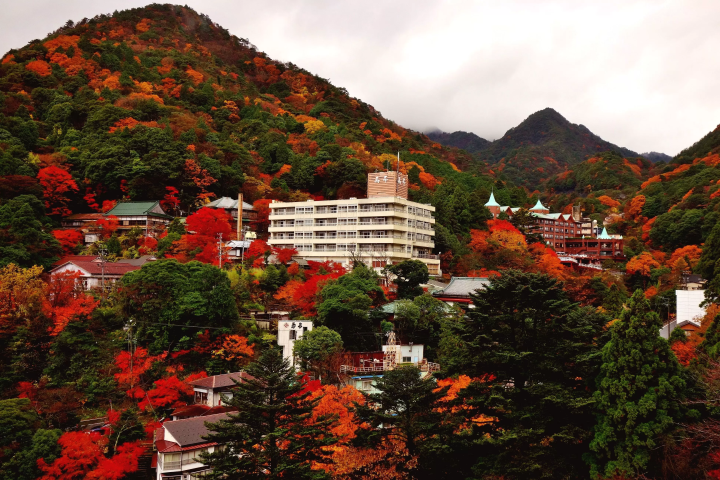
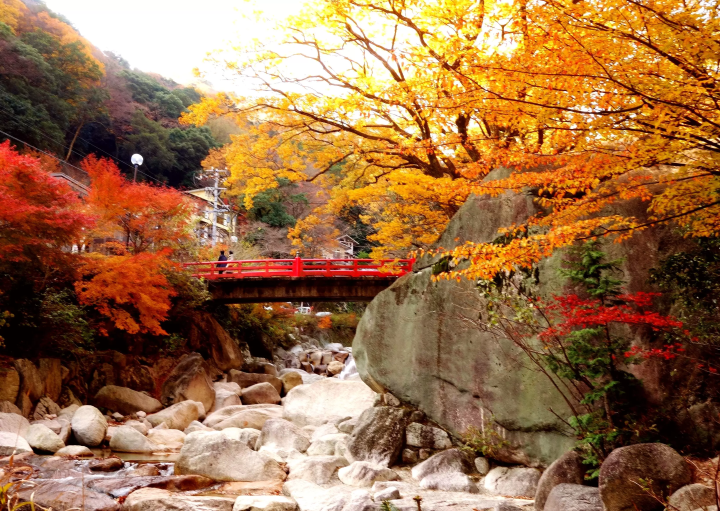
The final chapter of the Mt. Gozaisho autumn spectacle plays out at the foot of the mountain in Yunoyama Onsen. By late November, the deciduous trees lining the clear mountain streams running through the hot spring town reach their peak vibrancy.
The transformation of Yunoyama Onsen is nothing short of magical. Towering maple trees arch over riverbanks and historic ryokan properties, their fiery orange and scarlet leaves reflecting off the pristine waters. For travelers, this phase provides a restorative conclusion to an alpine journey, allowing visitors to transition directly from brisk mountain air into mineral-rich thermal waters surrounded by glowing autumn canopies.
Supporting Context & Metrics: Logistics, Infrastructure, and Economic Impact
A successful journey to Mt. Gozaisho requires careful planning, particularly given the high volume of visitors drawn to the region during the peak autumn window. The following metrics, technical specifications, and transit pathways outline the logistical framework governing the destination.
The Gozaisho Ropeway: Specifications and Fare Structure
Operating since 1959, the Gozaisho Ropeway remains the primary arterial connection linking the base of the mountain to the summit.
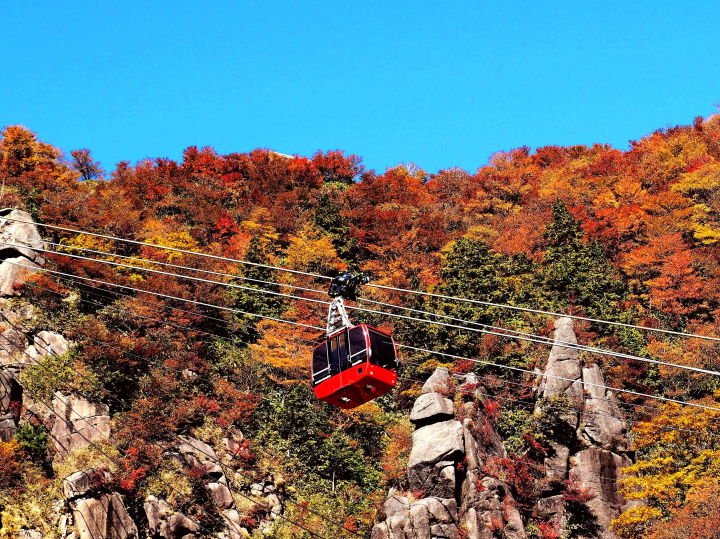
- Length and Duration: The ropeway spans a considerable distance, climbing steadily over rugged terrain and offering passengers a bird’s-eye view of the unfolding seasonal colors.
- Pricing Architecture: Round-trip tickets are competitively priced at 2,600 yen for adults (ages 13 and over) and 1,300 yen for children (ages 4 to 12). Toddlers aged 1 to 3 ride free of charge.
- The Sightseeing Lift: For visitors wishing to explore the Summit Park further, a single-seater chairlift operates between the Ropeway Sanjo Park Station and the true summit of Mt. Gozaisho. Covering a 500-meter span in approximately 8 minutes, the lift offers an immersive ride directly through vibrant azalea colonies. Fares are standardized at 400 yen one-way and 700 yen round-trip for all passengers aged 4 and above.
Seamless Multimodal Transit Corridors
Accessibility is one of Mt. Gozaisho’s greatest competitive advantages, drawing day-trippers from both Nagoya and Osaka. However, navigating the transit network requires precision to avoid costly delays.
- Trunk Railway Access: Travelers departing from either Nagoya or Osaka must route their journey via the Kintetsu Railway network, targeting Kintetsu Yokkaichi Station as the primary regional node. Economical options such as the Kintetsu Rail Pass are strongly recommended for international visitors to maximize cost efficiency.
- The Yunoyama Line Transfer: From Kintetsu Yokkaichi Station, passengers must transfer immediately to the Kintetsu Yunoyama Line, riding it to its final terminal stop: Yunoyama Onsen Station. (Investigative Warning: Travelers must strictly avoid trains bound for JR Yokkaichi, as the Japan Railways station is located at a significant distance from the Kintetsu terminal, causing severe itinerary disruptions).
- Bus Connection: Upon arriving at Yunoyama Onsen Station, travelers step directly onto the Mie Kotsu Bus, taking the route bound specifically for "Yunoyama Onsen Gozaisho Ropeway Mae." The bus journey takes a mere 10 minutes, depositing passengers practically at the entrance of the ropeway station.
Total Transit Blueprint: [Kintetsu: Yokkaichi Station] ➔ (26 min) ➔ [Kintetsu: Yunoyama Onsen Station] ➔ (10 min) ➔ [Mie Kotsu Bus: Yunoyama Onsen Gozaisho Ropeway Mae] ➔ (Immediate Access) ➔ [Gozaisho Ropeway].
Official Statements & Cultural Insights: Culinary and Architectural Enhancements
Tourism development on Mt. Gozaisho balances the preservation of its natural alpine environment with the introduction of modern guest amenities designed to enhance the visitor experience.
Culinary Traditions at Restaurant "Nature"
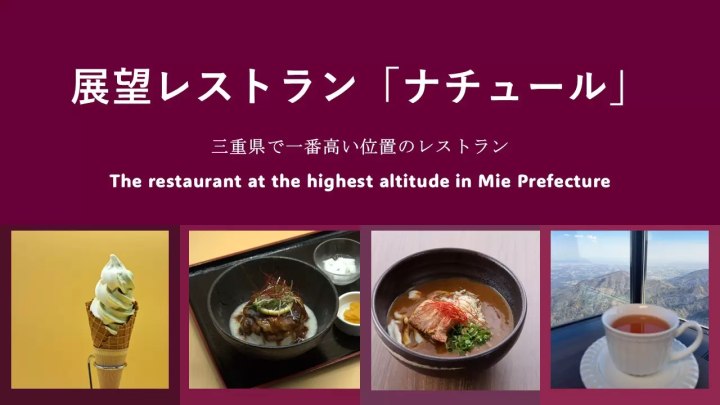
At the apex of the mountain within the Summit Park, the observation restaurant "Nature" anchors the culinary experience. Operating against a backdrop of sweeping panoramas that extend as far as the Japanese Alps on clear days, the establishment serves a curated menu of seasonal delicacies and regional comfort foods.
Foremost among these is the legendary Gozaisho Curry Udon. Crafted specifically to combat the brisk mountain temperatures, this dish features thick, chewy udon noodles submerged in a rich, aromatic curry broth infused with local spices and seasonal ingredients. Alongside specialty sweets and hot beverages, Restaurant "Nature" serves as a vital thermal and culinary refuge for hikers and sightseers navigating the chill of high altitudes.
Modern Innovations: The Debut of "COCORRU Terrace"
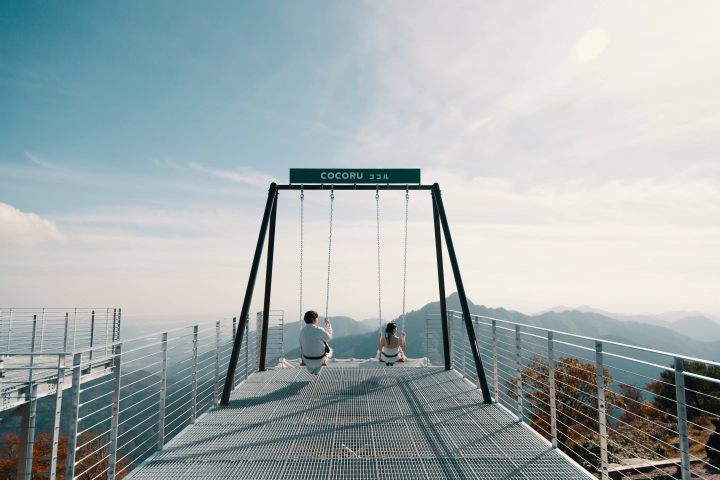
To further elevate the cultural and aesthetic appeal of the mountain park, management introduced a major infrastructural addition: "COCORRU Terrace," which officially opened on October 31, 2025.
Positioned strategically within Gozaisho-dake Mountain Park, COCORRU Terrace was conceived as a premier, Instagrammable vantage point. The facility offers unobstructed sightlines across the expansive Ise Shima region of Mie Prefecture. A centerpiece of the terrace is its high-altitude observation swing, engineered to provide visitors with an adrenaline-pumping experience that combines the thrill of flight with a dramatic, uninterrupted panorama of the surrounding valleys. According to park officials, the terrace successfully bridges the gap between traditional nature appreciation and contemporary, photogenic travel trends, inviting guests to linger longer and engage deeply with the mountain’s topography.
Future Outlook: Managing Crowds and Sustainable Tourism
As Mt. Gozaisho solidifies its reputation as a premier autumn destination within the Kansai and Chubu corridors, regional planners and transport authorities face the ongoing challenge of managing seasonal congestion.

The Shift Toward Green Transit
During peak weekends in late October and throughout November, the narrow roadways winding up toward Yunoyama Onsen frequently experience severe traffic bottlenecks. In response, official tourism boards and transport operators have issued strong policy recommendations:
- Weekday Travel Prioritization: To mitigate overcrowding at the ropeway terminals and summit walking trails, visitors with flexible schedules are strongly encouraged to plan their ascents during mid-week windows (Tuesday through Thursday).
- Public Transit Mandates for Weekends: For visitors locked into weekend or holiday itineraries, authorities actively discourage private vehicle usage. The implementation of integrated Kintetsu rail and Mie Kotsu bus schedules is designed to absorb high volumes of travelers without contributing to highway gridlock. Future municipal planning outlines potential expansions of shuttle capacities and incentivized park-and-ride schemes at regional railway hubs like Yokkaichi.
Strategic Base camps: The Role of Yokkaichi
For travelers seeking a comprehensive regional experience, strategic lodging choices can dramatically improve the logistical flow of an extended Mie Prefecture itinerary. Properties such as the Sanko Inn Yokkaichi Ekimae, located adjacent to Kintetsu Yokkaichi Station, serve as ideal operational basecamps. Offering immediate access to the Kintetsu transit network, these properties facilitate seamless day trips not only to Mt. Gozaisho and Yunoyama Onsen but also to broader cultural touchstones across Mie Prefecture, including the Ise Grand Shrine and the coastal expanses of Toba.
Conclusion
Mt. Gozaisho’s autumn foliage season represents a harmonious convergence of geography, meteorology, and thoughtful tourism infrastructure. From the fiery blaze of the summit azaleas in late October to the serene, riverside maple displays of Yunoyama Onsen in late November, the mountain offers an evolving narrative of seasonal change. By leveraging modern transit corridors, engaging with contemporary attractions like COCORRU Terrace, and respecting the logistical advisories designed to protect the local ecosystem, travelers are guaranteed an authoritative, deeply rewarding encounter with one of central Japan’s most magnificent natural spectacles.





Belum ada komentar. Jadilah yang pertama berkomentar!