

Published: October 22, 2026
Author: Tech & Venture Desk
Executive Overview
In a milestone development that underscores a profound structural pivot within Silicon Valley venture capital, Andreessen Horowitz (a16z) announced on Thursday that it is officially rebranding its premier digital asset unit. Formerly known as a16z Crypto, the division will now operate under the name a16z Frontier.
Launched in 2018 and helmed by general partner Chris Dixon, the unit has been arguably the single most influential institutional backer of the blockchain ecosystem. Over the course of five dedicated funds, the practice has amassed nearly $10 billion in capital commitments, supporting foundational industry giants such as Coinbase, among dozens of other high-profile protocols and Web3 startups.
However, the decision to drop "Crypto" from the unit’s flagship moniker speaks volumes about the changing technological landscape. For years, a16z—alongside competing venture capital powerhouses—grappled with the inherent limitations of pushing blockchain utility beyond traditional financial rails, speculative trading assets, and niche decentralized finance (DeFi) applications. While the firm insists it is not abandoning the asset class entirely, the rebranding formally broadens the team’s investment mandate. Moving forward, a16z Frontier will actively target cutting-edge domains sitting at the bleeding edge of computer science, including advanced artificial intelligence, robotics, and next-generation decentralized networks that bridge human and machine interactions.
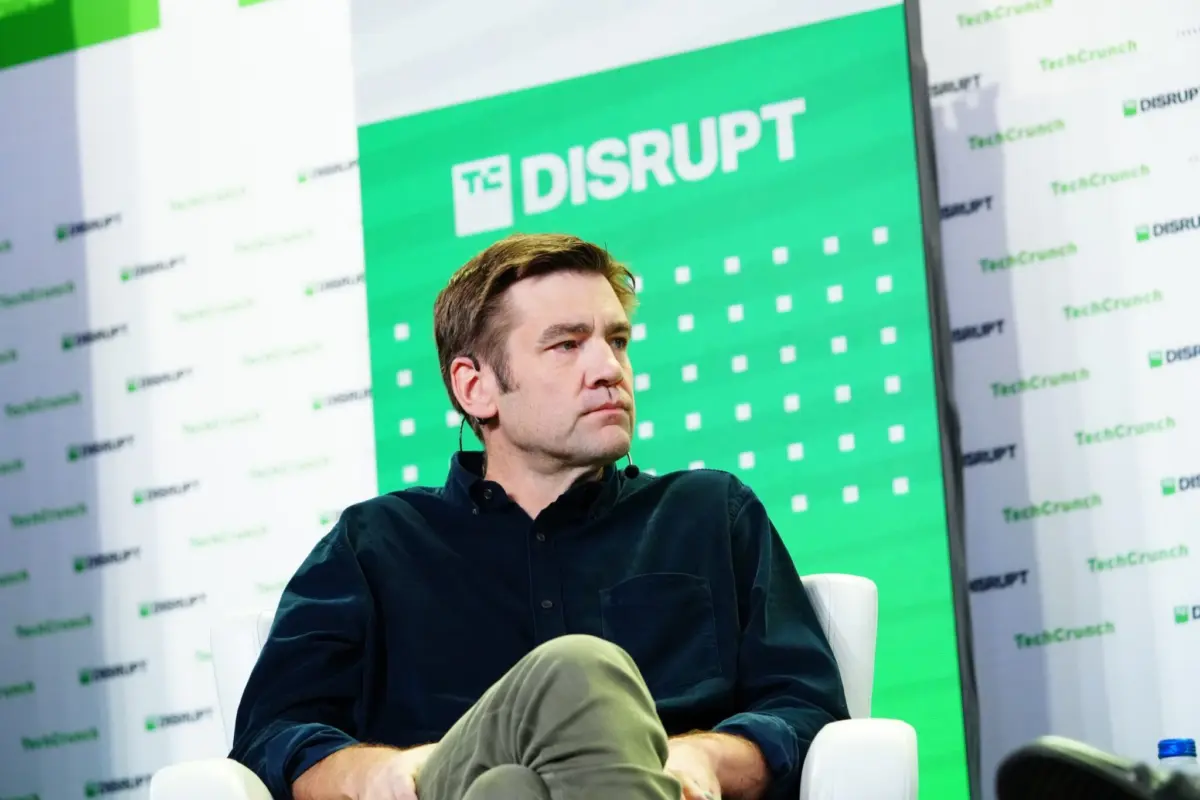
Simultaneously, the reorganization coincides with key leadership shifts. Alongside Dixon, the rebranded unit will be driven by general partners Eddy Lazzarin and Guy Wuollet. Meanwhile, high-profile investor Ali Yahya—who originally joined the firm’s crypto strategy as its inaugural investor in 2017—has officially departed the organization.
Detailed Chronology: The Rise, Peak, and Evolution of a16z Crypto
The Genesis (2013–2018)
Andreessen Horowitz’s journey into the decentralized web did not begin with a dedicated fund, but rather through early, visionary bets. Marc Andreessen and Ben Horowitz recognized the transformative potential of Bitcoin as early as 2013, participating in early rounds for companies like Coinbase.
By 2018, the crypto landscape had matured enough to warrant dedicated institutional capital. Recognizing that generalist funds could not adequately navigate the regulatory, cryptographic, and economic nuances of token-based networks, the firm launched its first dedicated crypto fund, raising $350 million. This established a new paradigm: venture capital firms building specialized pods explicitly designed to hold tokens, run validator nodes, and actively participate in protocol governance.
The Bull Market Super-Cycle and Megafund Era (2021–2022)
The strategy reached its zenith during the pandemic-era zero-interest-rate policy (ZIRP) boom. In June 2021, amidst a staggering bull run, a16z closed its Crypto Fund III at a massive $2.2 billion, setting a record for the largest crypto-focused venture fund in history at the time.
Just one year later, in May 2022, even as early cracks began to show in the broader macroeconomic environment, the firm doubled down by announcing a staggering $4.5 billion crypto fund. This pool brought their total capital raised for the sector to over $7.6 billion across four funds. The thesis was clear: Web3 represented the next major computing platform shift, akin to the transition from desktop computing to mobile.
The Bear Market Reality Check and Pivot (2023–2025)
The subsequent crypto winter, compounded by high-profile industry implosions (such as FTX, Celsius, and Terra/Luna) and aggressive regulatory crackdowns by the U.S. Securities and Exchange Commission (SEC), forced venture firms to reassess. While a16z continued to deploy capital, the day-to-day utility of blockchain technology faced intense scrutiny. Critics argued that despite billions invested, consumer adoption remained sluggish, plagued by poor user experiences, security exploits, and a persistent "solution in search of a problem" narrative.
Concurrently, the meteoric rise of generative artificial intelligence in late 2022 and 2023 captured the global imagination—and the lion’s share of venture capital. AI demonstrated immediate, tangible utility for enterprises and consumers alike, overshadowing the speculative nature of many crypto projects.

The Rebrand to a16z Frontier (October 2026)
By late 2026, the writing was on the wall. The cognitive dissonance of housing a sprawling, multi-technology investment thesis under a narrow "Crypto" banner became untenable. By shedding the restrictive label, a16z has formally signaled that its scope now encompasses the broader frontier of human ingenuity, where AI, robotics, and cryptography converge.
Supporting Context & Metrics: By the Numbers
To understand the scale of this transition, one must examine the quantitative footprint of the operation:
- Total Capital Raised: Nearly $10 billion deployed or managed across five distinct fund cycles since 2018.
- Flagship Investments: Coinbase (one of the most successful venture exits in tech history), Solana, OpenSea, Alchemy, Dapper Labs, and numerous foundational Layer-1 and Layer-2 protocols.
- Leadership Structure: Led by veteran tech investor Chris Dixon, alongside general partners Eddy Lazzarin and Guy Wuollet.
- The AI Shift: While a16z maintains a separate, dedicated AI investment practice, the new "Frontier" mandate explicitly creates a bridge for investments where AI models intersect with decentralized networks, cryptography, and autonomous machine economies.
Official Statements and Industry Reactions
In a comprehensive blog post accompanying the rebrand, Chris Dixon articulated the philosophy behind the transition. Rather than retreating from blockchain, Dixon framed the move as an evolution of how foundational technologies interact.
"For nearly a decade, our mission has been to back technologies that empower builders and decentralize power structures," Dixon wrote. "While blockchain remains a vital engine for economic coordination, the frontier of technology has expanded. Today, the most profound breakthroughs occur at the intersection of artificial intelligence, advanced robotics, and novel network architectures. By becoming a16z Frontier, we are aligning our name with our broader ambition: backing the networks—both human and machine—that will define the next century."
Despite emphasizing new frontiers, Dixon was careful to reassure the crypto faithful that blockchain technology has not been abandoned. He noted that distributed ledgers remain uniquely positioned to "give new networks native economic capabilities," providing secure, trustless settlement layers for autonomous AI agents and automated machine-to-machine transactions.
Industry analysts have reacted with a mix of pragmatism and validation. Venture capital observers point out that rebranding is rarely just cosmetic; it reflects underlying shifts in limited partner (LP) expectations. Institutional investors—pension funds, university endowments, and sovereign wealth funds that back VC funds—are increasingly demanding diversified exposure to foundational AI and robotics, making a narrow "crypto-only" classification an operational bottleneck.
Future Outlook: What ‘a16z Frontier’ Means for the Tech Ecosystem
The birth of a16z Frontier points to several broader trends shaping the future of venture capital and technology over the next decade:
1. The Convergence of AI and Cryptography
One of the primary theses driving a16z Frontier will likely be the intersection of artificial intelligence and blockchain technology. As generative AI models proliferate, issues surrounding data provenance, copyright, deepfakes, and autonomous agent payments have taken center stage. Cryptographic solutions—such as zero-knowledge proofs (ZKPs)—and decentralized ledgers are increasingly viewed as the structural antidote to AI-generated verification problems, offering verifiable proof of authenticity and a native currency for autonomous software agents.
2. The Rise of Autonomous Machine Networks
As robotics and IoT (Internet of Things) mature, machines will increasingly need to transact with one another autonomously without human friction. Traditional banking rails are too slow and bureaucratic for machine-speed transactions. Distributed economic networks could provide the native settlement layers required for this future machine economy.
3. A Maturing Venture Landscape
The pivot by a bellwether firm like Andreessen Horowitz signals the end of the "monoculture" crypto fund era. Generalist firms are recognizing that future technological paradigms will not occur in silos. By tearing down artificial boundaries between crypto, AI, and hardware, a16z Frontier is positioning itself to capture the holistic architecture of the next computing era—whatever form it ultimately takes.








Belum ada komentar. Jadilah yang pertama berkomentar!