

Japan has long nurtured a distinct, heartwarming subculture of anonymous philanthropy, where acts of altruism are carried out under the guise of legendary masked icons. From the nationwide phenomenon of "Tiger Mask"—in which anonymous donors leave expensive randoseru (school backpacks) for orphans—to rarer, tongue-in-cheek appearances by characters like Jason Voorhees delivering school supplies, these modern folk heroes capture the nation’s imagination.
Chief among these benevolent phantoms is "Gekko Kamen" (Moonlight Mask), the archetype of Japanese masked superheroes. Originating from the groundbreaking 1950s tokusatsu television series, this motorcycle-riding crusader of justice has inspired a real-world tradition. For over half a century, on New Year’s Eve, a mysterious donor has left envelopes of collected coins at police outposts on Sado Island, Niigata Prefecture, earmarked for traffic accident orphans.
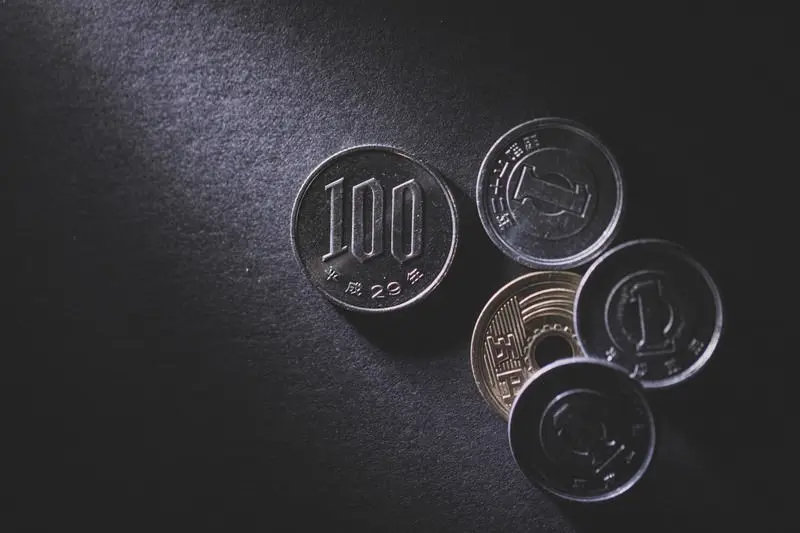
However, a dramatic shift in this decades-long pattern recently stunned local law enforcement and captured the public’s attention. On October 19, in an unprecedented departure from tradition, two separate envelopes bearing the signature and classic sentiment of Moonlight Mask were discovered on the Japanese mainland in Niigata City. Unlike the traditional year-end contributions, these envelopes contained modest sums of loose change totaling just 539 yen (roughly $3.50 USD).
This unexpected occurrence has sparked a wave of nationwide media coverage, online debate regarding the cost of living and the nature of giving, and a profound reaction from local authorities who have vowed to respect the anonymity of a modern legend. This report delves into the chronology of the recent discoveries, the cultural weight of the Moonlight Mask tradition, the financial and logistical breakdown of the donations, official police responses, and what this enduring legacy means for the future of grassroots philanthropy in Japan.
Detailed Chronology
The unfolding of the October 19 events marked a historic break from a 52-year precedent. To understand the gravity of the recent discovery, it is essential to trace the timeline of both the historical tradition and the recent mainland anomalies.
The Sado Island Legacy (1974–Present)
Since 1974, local authorities stationed on Sado Island, a picturesque and historically rich destination off the coast of Niigata Prefecture, grew accustomed to a reliable holiday tradition. Every December 31st, amidst the biting winter cold and preparations for the New Year, police officers would discover small caches of money left anonymously at local precincts and boxes.
Accompanying these funds was invariably a handwritten note, rendered in meticulous script, reading:
“These are coins I collected, one by one every day. I’d be happy if it can help those suffering due to traffic accidents, even if just a little.”
The notes were uniformly signed “Gekko Kamen” (Moonlight Mask). Over the decades, these contributions grew in volume. While early donations were modest, historical logs indicate that in later years, the year-end Sado Island drops reached amounts as high as 30,010 yen, reflecting a dedicated, long-term saving habit by the anonymous benefactor. Police, honoring the spirit of the gesture, consistently funneled these funds into prefectural programs supporting children orphaned by vehicular accidents.
The October 19 Mainland Anomalies
The established rhythm of the Sado Island tradition was shattered on the morning of October 19. For the first time in over five decades, the footprint of Moonlight Mask crossed the waters from Sado Island to the Niigata mainland.
- Incident One (Niigata City Patrol Car): Early in the morning, a police officer stationed at a precinct in Niigata City approached his parked patrol car. Tucked securely under the windshield wiper was a plain paper envelope. Upon inspection, officers discovered cash totaling 240 yen (approximately $1.53 USD). Written across the front of the envelope was the familiar, time-tested message: “I’d be happy if it can help those suffering due to traffic accidents, even if just a little.”
- Incident Two (Shirone Chuo Police Box): Just hours later, approximately 1.5 kilometers away from the first location, officers at a small neighborhood koban (police box) in the Shirone Chuo district of Niigata City discovered a second envelope. This package contained 299 yen (approximately $1.99 USD) in loose change, accompanied by an identical handwritten note bearing the Moonlight Mask moniker.
In both instances, exhaustive reviews of surrounding security footage and neighborhood inquiries yielded the same result: no witnesses had observed anyone approaching the vehicles or police boxes to drop off the envelopes. The precision, timing, and identical phrasing confirmed that whoever orchestrated the Sado Island traditions was now actively operating on the mainland—and doing so outside of the traditional New Year’s Eve window.
Supporting Context & Metrics
The sheer discrepancy between the historical donations and the recent mainland drop has fueled intense public discussion across Japanese media platforms and social networks. Analyzing the metrics of these donations provides a fascinating window into the economics and psychology of the act.
Financial Breakdown of the October 19 Drops
To contextualize the sums donated on October 19, one must evaluate their purchasing power within the contemporary Japanese economy:
- First Envelope: 240 yen
- Second Envelope: 299 yen
- Total Combined Contribution: 539 yen (approx. $3.52 USD)
To put this into perspective, 539 yen is insufficient to purchase a standard value meal or combo at fast-food chains like McDonald’s in Japan. It can buy a couple of canned beverages from a vending machine or a basic convenience store onigiri (rice ball) and bottled green tea.
Public Reaction and Online Discourse
When local news outlets, including UX News, picked up the story, it quickly trended across Japanese social media and aggregate forums like Jin115. Observers were deeply divided in their interpretations, leading to a spectrum of commentary ranging from humorous bewilderment to profound empathy:
- Economic Strain vs. Fixed Income: Several commenters pointed out the shifting economic realities of Japan. “I guess the rising cost of living is even putting a strain on Moonlight Mask,” wrote one user, while another speculated, “This person must be pretty old by now. That was probably a good amount of money in their day.” Given that the original TV show aired in the late 1950s, an individual inspired by the show during their youth would likely be in their seventies or eighties today, potentially living on a fixed pension where saving small amounts of loose change represents a genuine, daily sacrifice.
- The Debate Over Utility and Harassment: While the vast majority praised the gesture, a minority of internet users questioned the practicality of processing such small amounts. One commenter mused, “I want to say the amount isn’t important, but at a certain point wouldn’t this be considered a form of harassment?” This sentiment was swiftly shouted down by defenders who emphasized the purity of the intent. As another user noted, “Only a horrible person would laugh at a gesture like this.”
- The License Plate Fan Theory: In a display of deep pop-culture literacy, one eagle-eyed commenter sparked a minor debate by claiming, “539 was the license plate number of Moonlight Mask’s motorcycle! Do your homework before shooting off your mouths?!”
While this theory suggested the 539-yen total was a deliberate numerical homage, deep-dive investigations by tokusatsu historians revealed a slight discrepancy. Archival research into the 1950s television series shows that Moonlight Mask’s road-legal motorcycle bore the license plate numbers Mu-8323 or 8328 (difficult to verify definitively due to the grainy, low-frame-rate cameras of the era). Furthermore, within the narrative of the series, private detective Juro Iwai is heavily implied to be the man behind the mask, though the credits famously list the actor’s identity simply as a question mark ("?").
Despite the license plate theory being mathematically unaligned with the actual props, the dedication of the fanbase highlights how deeply ingrained the lore of Moonlight Mask remains in the Japanese consciousness.
Official Statements
Local law enforcement agencies, traditionally bound by strict procedural protocols, have adopted a surprisingly romantic and protective stance regarding the anonymous benefactor.
Deputy Chief Ryo Takahashi of the Niigata Minami Police Precinct addressed the media following the recovery of the October 19 envelopes. Confirming that the department would honor the donor’s explicit wishes by transferring the 539 yen to authorized traffic accident orphan funds, Takahashi offered a statement that resonated deeply with the public:
"I am deeply moved by this person’s unending concern for the victims of car accidents. Because they are a hero, we are not investigating to uncover their true identity."
This official position underscores a unique cultural understanding in Japan, where institutions often choose to preserve the magic of folklore rather than reduce every public interaction to a bureaucratic investigation. By classifying the donor as a "hero" rather than an anonymous tipster or potential security anomaly, the Niigata Minami Police have ensured that the spirit of Moonlight Mask remains untainted by red tape.
Future Outlook
The sudden shift of Moonlight Mask from Sado Island to the Niigata mainland raises intriguing questions about the future of this half-century-old tradition.
As the anonymous donor—presumably an elderly citizen who grew up watching the black-and-white broadcasts of the 1950s series—ages, their physical mobility may be declining. The expansion of the drop sites from a localized island post to multiple mainland locations in Niigata City could indicate that the donor has relocated to the mainland, or that copycats inspired by the original legend are beginning to take up the mantle.
Regardless of whether the envelopes are the work of a single aging pioneer or a newly inspired generation of masked philanthropists, the cultural impact remains unaltered. In an era often dominated by digital transactions, algorithmic fundraising, and hyper-publicized corporate philanthropy, the image of an elderly citizen meticulously collecting coins day by day, sealing them in paper envelopes, and leaving them quietly on a police car windshield offers a powerful counter-narrative.
It serves as a poignant reminder that true altruism is measured not by the sheer magnitude of the financial contribution, but by the depth of empathy behind it. As long as there are those who suffer—and as long as the spirit of postwar television heroes continues to inspire ordinary citizens to do extraordinary things—Moonlight Mask will ride on, proving that every little bit truly helps in the ongoing quest to right the wrongs of society.









Belum ada komentar. Jadilah yang pertama berkomentar!