

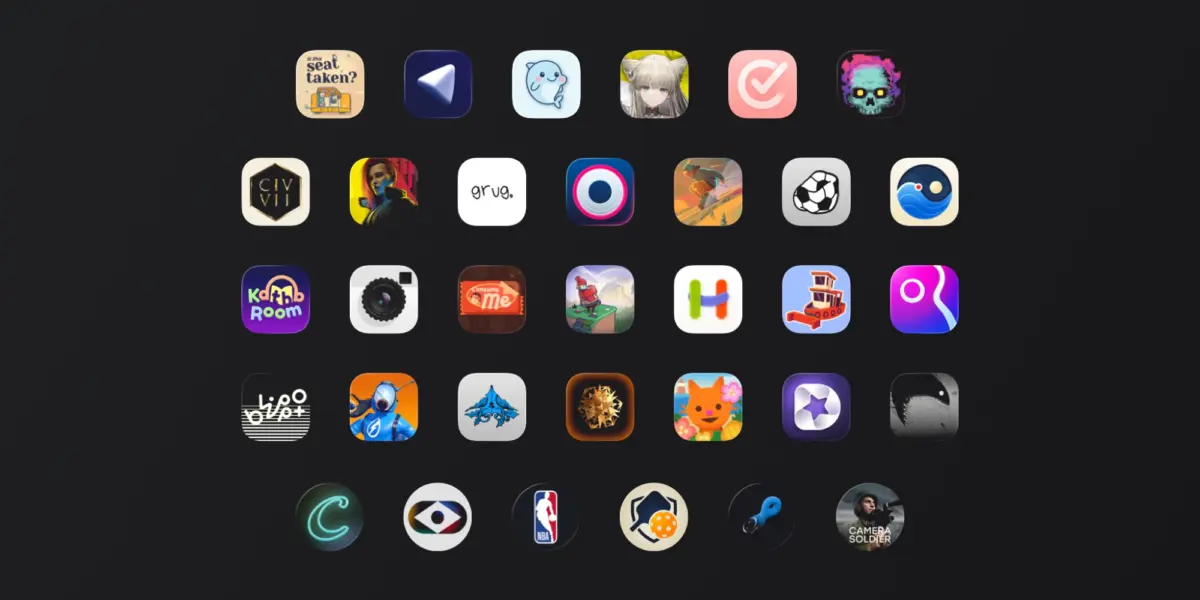
As the technology community counts down the days to Worldwide Developers Conference (WWDC) 2026, Apple has officially set the stage for its annual celebration of software excellence. Following the dispatch of official media invites for the keynote event, the Cupertino-based tech giant has revealed the shortlisted contenders for the prestigious Apple Design Awards (ADAs) 2026.
Highlighting the pinnacle of creativity, technical ingenuity, and user-centric design across the App Store ecosystem, this year’s list features 36 stellar finalists competing across six distinct categories. These developers and studios represent the absolute best of what is possible when human imagination meets state-of-the-art Apple hardware and software architecture.
Executive Overview
The Apple Design Awards have long served as a definitive barometer for mobile and desktop software trends. They celebrate applications and games that push the boundaries of what is technically achievable on iOS, iPadOS, macOS, watchOS, and visionOS.
For 2026, the competition is broken down into six foundational pillars:
- Delight and Fun
- Inclusivity
- Innovation
- Interaction
- Social Impact
- Visuals and Graphics
Each category features a balanced mix of three standout applications and three compelling games. However, because several pioneering titles have demonstrated excellence across multiple disciplines, the total count of distinct finalists lands just shy of the maximum 36, reflecting rare versatility among this year’s elite creators.
As winners are slated to be announced in the coming weeks leading up to the WWDC keynote, the tech industry is already dissecting what these nominations reveal about the trajectory of software design, spatial computing, accessibility, and immersive device integration.
Detailed Chronology: The Road to the 2026 Apple Design Awards
The journey toward the Apple Design Awards is a rigorous, year-long evaluation process conducted by the secretive and discerning Apple Design Awards committee.

Phase 1: Continuous App Store Monitoring (Q1–Q4 2025)
Throughout the previous calendar year, Apple’s editorial and engineering teams continuously monitor the App Store ecosystem. They track emerging trends, adoption rates of new software development kits (SDKs), and feedback from global users. Applications that harness newly introduced APIs—such as advanced machine learning frameworks, Metal graphics enhancements, and spatial computing capabilities—automatically draw critical acclaim.
Phase 2: Technical Auditing and Quality Assurance (January–March 2026)
As the calendar turns, the candidate pool is systematically narrowed down. Engineers conduct deep-dive technical evaluations to ensure that nominated apps meet Apple’s stringent benchmarks for performance, battery efficiency, interface responsiveness, and accessibility compliance.
Phase 3: Finalist Selection and Announcement (May 2026)
The process culminates in May, timed strategically with the distribution of WWDC keynote invitations. By announcing the finalists ahead of the conference, Apple shines a global spotlight on independent developers and major studios alike, validating their months—and sometimes years—of tireless craftsmanship.
Phase 4: Winner Reveal (June 2026)
The final chapter of the 2026 ADA cycle will take place during WWDC week, where the category winners will be formally crowned, receiving the iconic physical Apple Design Award trophy—a weighty, monolithic aluminum cube inscribed with the winner’s name.
Supporting Context & Metrics: The Anatomy of an ADA Finalist
To understand why these specific 36 finalists were chosen, one must examine the metrics and philosophical shifts defining the modern app economy. Apple’s criteria are not merely skin-deep; they measure deep integration into the Apple ecosystem.
The Rise of Multi-Platform Harmony
A dominant trend among the 2026 finalists is seamless cross-platform continuity. Developers are no longer building siloed mobile apps; they are engineering cohesive experiences that transition effortlessly from an iPhone in a user’s pocket to an iPad on a desk, a Mac workstation, an Apple Watch on the wrist, and spatial environments on Apple Vision Pro.
Accessibility as a Baseline, Not an Afterthought
The Inclusivity category has seen unprecedented competition this year. Modern developers are leveraging VoiceOver, Dynamic Type, custom switch controls, and cognitive accessibility frameworks not as compliance checkboxes, but as core creative pillars. This shift has expanded the digital marketplace to millions of users who were previously underserved by mainstream technology.

Performance Meets Efficiency
With Apple Silicon powering everything from iPhones to MacBooks, the technical bar for Visuals and Graphics and Innovation has skyrocketed. Finalists in these arenas showcase real-time ray tracing, complex physics engines, and generative on-device machine learning models that execute locally while preserving battery life and maintaining privacy.
Official Statements & Industry Perspectives
While individual developer reactions roll in across social media and developer forums, the underlying ethos of the Apple Design Awards remains rooted in empowering creators.
"The Apple Design Awards are our opportunity to pause and celebrate the brilliant minds who transform code into culture. Every year, our finalists show us that technology, when paired with genuine empathy and obsessive craftsmanship, can profoundly alter how we work, play, and connect with one another."
— Anonymous Industry Insider close to the Apple Developer Relations team
Independent developers frequently cite an ADA nomination as a watershed moment for their studios. For small teams working out of remote corners of the globe, the recognition provides instant global credibility, driving organic downloads and opening doors to venture funding and strategic partnerships.
Furthermore, industry analysts note that the ADA finalists often act as early indicators of where Apple’s hardware strategy is heading. Apps that dominate the Innovation and Interaction categories typically rely on newly minted hardware sensors, APIs, or interaction paradigms, serving as proof-of-concept for future consumer tech trends.
Future Outlook: What the 2026 Finalists Mean for the Next Era of Computing
As we look beyond WWDC 2026 and toward the horizon of consumer technology, the trends highlighted by this year’s Apple Design Award finalists offer a clear roadmap for the future.
1. The Normalization of Spatial Computing
Following the maturation of visionOS, spatial design principles are bleeding into traditional 2D apps. Developers are discovering new ways to layer information, utilize depth, and create spatial audioscapes that enrich even standard productivity and entertainment software.

2. On-Device Intelligence and Personalization
With artificial intelligence deeply integrated into everyday workflows, apps are becoming remarkably predictive and context-aware. The 2026 finalists demonstrate that the best AI-driven software operates invisibly, anticipating user intent without compromising personal privacy.
3. Democratization of High-End Development Tools
As engines like Unreal and Unity, alongside Apple’s own native development stacks (SwiftUI, Metal, CoreML), become more intuitive, the barrier to entry for building breathtaking, high-performance apps is lowering. This democratization means the 2027 ADA stage will likely feature even more breakout indie developers challenging legacy enterprise software giants.
Conclusion
The unveiling of the 2026 Apple Design Award finalists marks the official kickoff of the WWDC season. As developers, journalists, and enthusiasts prepare for the keynote presentation and developer sessions, these 36 finalists stand as testaments to human ingenuity. They remind us that behind every smooth animation, every accessible interface, and every delightful gaming experience lies a community of dedicated creators pushing the boundaries of what software can achieve.
Which applications and games from this year’s finalist lineup have caught your eye? Are you rooting for a specific indie developer or a breakthrough spatial computing title? Let us know your thoughts in the comments below!








Belum ada komentar. Jadilah yang pertama berkomentar!