

Executive Overview
The smartphone industry has long grappled with a fundamental engineering paradox: the continuous consumer demand for featherlight, ultra-thin devices versus the persistent need for robust battery life, advanced photographic capabilities, and uncompromising structural integrity. When Apple introduced the concept of its ultra-slim smartphone lineup, it captured the industry’s imagination by pushing the physical boundaries of industrial design. However, the first-generation device met a mixed reception. While tech enthusiasts lauded its minimalist elegance and unmatched portability, mainstream consumers and critics pointed out stark compromises—most notably a single rear camera and a restricted battery capacity that often necessitated midday recharges.
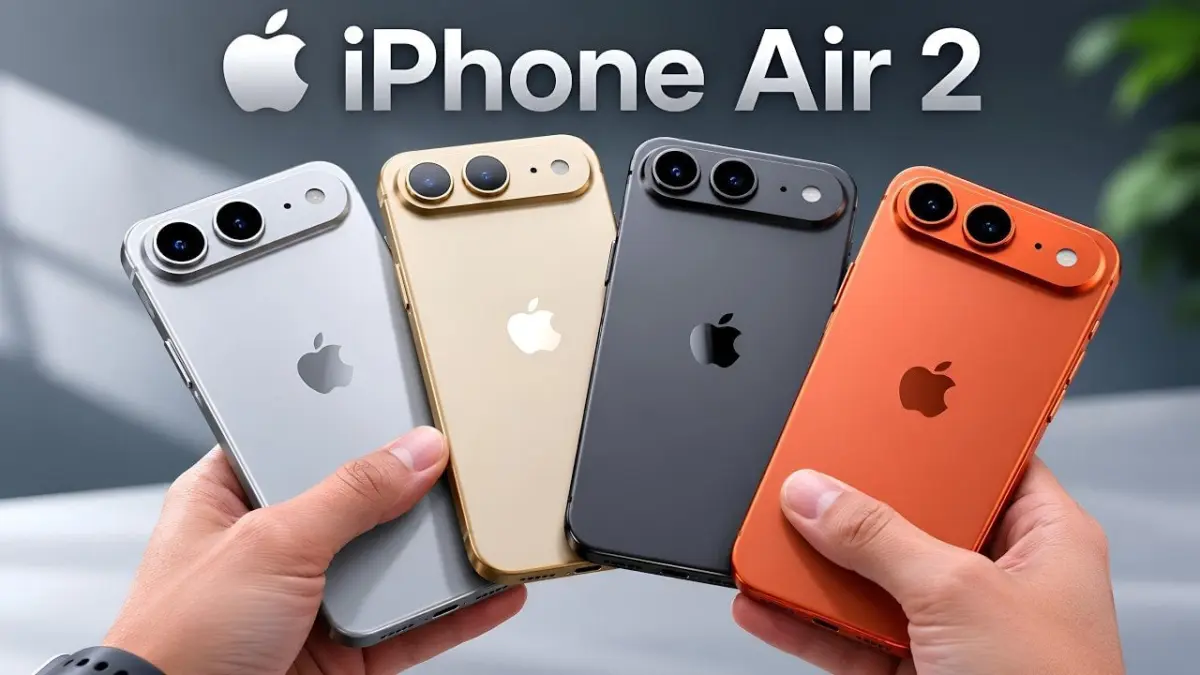
Now, supply chain whispers and industry insider leaks suggest that Apple is preparing to course-correct with the upcoming iPhone Air 2. Poised to debut as a critical evolutionary step for the company’s slim form-factor strategy, the new device aims to directly address the shortcomings of its predecessor. The headline upgrades rumored for the iPhone Air 2 include the integration of a second rear camera and a significantly larger battery.
Yet, these enhancements are far from simple plug-and-play additions. Incorporating a dual-lens photography system and enhanced power cells into an aggressively slender chassis introduces profound engineering hurdles. Rumors of an unconventional camera layout—such as dual lenses flanking a centrally positioned flash module—highlight the spatial desperation engineers face when working within millimeter-thin tolerances. This comprehensive investigative report explores the technical complexities, design philosophies, potential market ramifications, and broader industry trajectory surrounding the highly anticipated iPhone Air 2.
Detailed Chronology: The Evolution of Apple’s Ultra-Thin Strategy
To understand the strategic significance of the iPhone Air 2, one must first trace the evolutionary timeline of Apple’s pursuit of thinness and how consumer expectations have forced the tech giant to adapt its product roadmap.
The Genesis of the "Air" Moniker in Mobile Devices
Apple’s obsession with reducing physical heft is not new. The nomenclature was famously popularized by the MacBook Air, a device that stunned the computing world when Steve Jobs pulled it from a manila envelope. Years later, the company successfully applied this philosophy to its tablet lineup with the iPad Air, proving that consumers valued portability over maximum processing headroom or desktop-class thermal architectures.
However, translating this design language to the iPhone proved exponentially more difficult. A smartphone requires an intricate arrangement of antennas, sensors, processing silicon, battery chemistry, and optical modules—all packed into a footprint small enough to comfortably fit inside a pocket.
The First-Generation Compromise
When the initial iPhone Air hit the market, it achieved its striking visual profile by making calculated sacrifices. To shave fractions of a millimeter off the casing depth, engineers had to:
- Omit secondary and tertiary camera lenses, leaving users with a solitary wide-angle shooter.
- Reduce the physical volume of the lithium-ion battery cell, directly impacting screen-on time.
- Employ advanced, high-cost structural materials to prevent chassis bending under normal pocket-load conditions.
While these design choices created a gorgeous conversation piece, they ultimately alienated a segment of the market. Buyers accustomed to the multi-lens versatility of flagship Pro models felt restricted, while power users balked at the battery longevity. Sales figures reflected this friction, illustrating a lukewarm market response that signaled a clear mandate for change.
The Pivot to the iPhone Air 2
Recognizing that absolute thinness at the expense of core functionality was a commercial dead-end, Apple’s internal hardware teams reportedly went back to the drawing board. The iPhone Air 2 represents the maturation of this ultra-thin philosophy. Rather than abandoning the slim form factor entirely, Apple has chosen to solve the engineering puzzles that plagued the first generation, setting the stage for a device that attempts to harmonize form and function.
Supporting Context & Metrics: Engineering the Impossible
Designing a modern smartphone requires navigating strict physical boundaries. To appreciate the magnitude of what Apple is attempting with the iPhone Air 2, it is helpful to examine the quantifiable engineering constraints involved in reducing a device’s z-axis (thickness) while expanding its internal capabilities.
The Spatial Mathematics of a Dual-Camera System
In a standard smartphone, a camera module is one of the thickest components inside the housing. This is due to the physical depth required for optical image stabilization (OIS), voice coil motors for autofocus, and multi-element lens stacks that bend light onto the digital image sensor.
- Single vs. Dual-Lens Footprint: Transitioning from a single camera to a dual-lens array doubles the required surface area on the logic board or rear shell.
- Z-Height Conflicts: In an ultra-thin chassis, placing two standard camera housings side-by-side often creates an unmanageable camera bump or forces the entire thickness of the phone to increase.
- The Unconventional Layout Solution: Recent industry murmurs indicate that Apple may bypass traditional vertical or diagonal dual-lens configurations. Instead, engineering drafts point toward a unique layout where the two camera lenses are positioned on opposite sides of the horizontal camera module, with the TrueTone flash centered precisely between them. This balanced symmetry not only distributes internal component stress more evenly but also creates a distinct visual identity for the Air series.
Battery Chemistry and Energy Density Advances
Battery life remains the single most scrutinized metric for any mobile device. In ultra-thin smartphones, physical volume dictates capacity. Because lithium-ion batteries cannot be compressed beyond certain safety and performance thresholds without risking degradation or swelling, Apple has had to look toward next-generation energy storage solutions.
[Traditional Battery Cell]  --> Limited capacity, thick profile
[Stacked Silicon-Carbon]    --> Higher energy density, same physical volume
[iPhone Air 2 Target]       --> Extended runtime within a minimalist chassis
To fit a larger battery into the iPhone Air 2 without increasing its thickness, industry analysts speculate that Apple may leverage emerging battery technologies, such as silicon-anode or stacked cell architectures. These advancements offer higher energy density by volume, allowing the device to maintain its paper-thin profile while delivering the endurance desperately needed by modern consumers.
Official Statements & Industry Perspectives
While Apple remains notoriously tight-lipped regarding unannounced hardware, statements from supply chain analysts, industrial design experts, and component manufacturers provide a clear picture of the industry sentiment surrounding the iPhone Air 2.
The Supply Chain Perspective
Key figures within Apple’s Asian manufacturing partners have hinted at a rigorous R&D phase centered around structural rigidity. Speaking anonymously due to non-disclosure agreements, a supply chain source noted:
"The challenge with the Air lineup is not just making things smaller; it is ensuring that shrinking the components does not introduce structural weaknesses. With the second camera module, our primary hurdle has been recalibrating internal shielding to prevent electromagnetic interference between the lenses and the upgraded wireless charging coils."
Industrial Design Realities
Prominent tech commentators and design analysts have frequently debated whether consumers truly desire a phone that is fractions of a millimeter thinner at the expense of battery life. However, market research suggests a dedicated demographic exists that prioritizes ergonomic comfort and pocketability above all else.
An independent industrial design critique published earlier this year emphasized:
"Apple’s greatest triumph has always been its ability to make complex engineering look effortless. If the iPhone Air 2 successfully integrates a dual-camera system and a high-density battery into a chassis that still feels weightless in the hand, it will silence critics who claimed the form factor was a passing gimmick."
Future Outlook: Market Impact and Consumer Reception
As the launch window for the iPhone Air 2 approaches, the device stands as a litmus test for Apple’s broader hardware strategy. Will consumers embrace a slim phone that bridges the gap between elegance and capability, or will the compromises required to achieve its profile continue to limit its appeal?
Redefining the "Air" Identity
The success of the iPhone Air 2 will likely dictate the future of Apple’s product segmentation. If the dual-camera upgrade and battery enhancements resonate with buyers, the "Air" branding could cement itself as a permanent, viable third pillar alongside the standard and Pro iPhone lineups. It would carve out a definitive space for users who find Pro models too heavy and bulky, yet find standard models insufficiently refined in their physical silhouette.
Aesthetic Consistency vs. Functional Innovation
The rumored symmetrical camera layout—with lenses flanking a central flash—presents an intriguing psychological hurdle for consumers. Apple has long built its brand equity on clean, unified design languages. A radical departure from traditional camera bumps could polarize the user base initially. However, Apple has a history of turning polarizing design choices (such as the original notch or the diagonal camera arrangement) into industry-standard design cues through sheer execution quality.
Conclusion
The iPhone Air 2 is much more than a routine generational spec bump; it is a calculated engineering redemption arc. By directly confronting the battery and camera limitations that hampered its predecessor, Apple is demonstrating a willingness to listen to consumer feedback without abandoning its core design ethos. Whether the company can successfully thread the needle between ultra-slim minimalism and uncompromising modern utility remains the ultimate question—one that will be answered the moment the device lands in the hands of consumers worldwide.








Belum ada komentar. Jadilah yang pertama berkomentar!