

Executive Overview
The landscape of artificial intelligence is undergoing a profound structural shift. For years, the predominant paradigm in generative AI relied on monolithic prompting—asking a single, catch-all model to handle everything from high-level software architecture down to the most granular syntax correction. While this approach has driven unprecedented productivity gains, it suffers from inherent bottlenecks. Single models often struggle to maintain deep contextual awareness across sprawling codebases, and they frequently hit performance ceilings when forced to pivot rapidly between strategic oversight and tactical implementation.
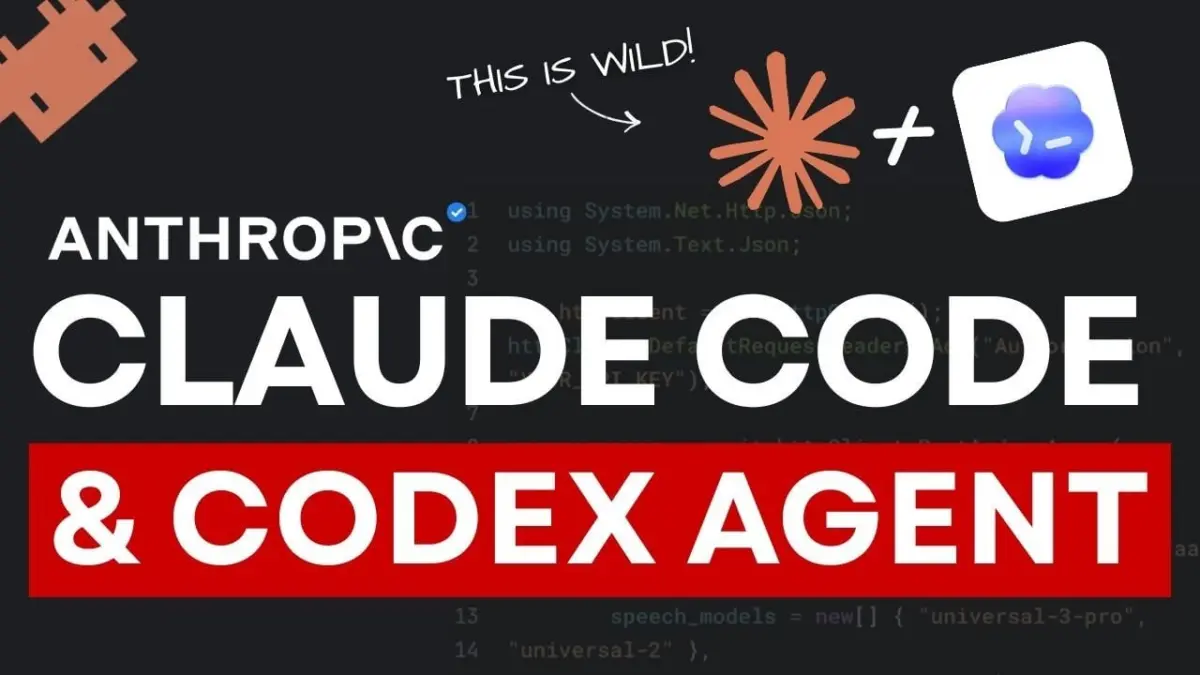
Enter Tracer, a powerful new open-source desktop application that changes how developers and organizations approach artificial intelligence orchestration. Highlighted by Universe of AI, Tracer introduces a collaborative, multi-agent workspace where state-of-the-art foundation models—most notably advanced iterations like Opus 5 and OpenAI’s Codex—operate in concert. Rather than forcing one model to wear every hat, Tracer establishes a disciplined division of labor. Opus 5 steps into the role of the strategic architect, managing high-level planning, conceptual design, and logical flow, while Codex acts as the master craftsman, generating, debugging, and refining production-grade code.
By dismantling the traditional operational silos that isolate individual AI tools, Tracer allows models to share context seamlessly, communicate bidirectionally, and cross-examine one another’s outputs in real-time. This article explores the mechanics of Tracer, examining its role-based task assignment, intelligent token management systems, real-world utility in complex software engineering tasks, and its broader implications for the future of collaborative artificial intelligence.
Detailed Chronology and Architectural Evolution of Multi-Agent Orchestration
To understand the significance of Tracer, it is essential to trace the evolutionary trajectory of how humans interact with LLMs (Large Language Models).
Phase 1: The Monolithic Era
In the early days of widespread generative AI adoption, users interacted with individual chat interfaces. If a developer wanted to build an application, they would paste entire files into a single context window, ask for code, and then manually copy-paste the output back into their local integrated development environment (IDE). This manual workflow introduced severe friction points:
- Context windows filled up rapidly with repetitive preamble.
- Models suffered from "attention degradation" when forced to manage both architecture and fine-grained code debugging simultaneously.
- Human intervention was required at every single step to bridge the gaps between disparate tasks.
Phase 2: The Rise of Specialized Agents
As foundational models matured, developers began noticing stark divergences in their capabilities. Some models excelled at creative writing, nuance, and structural planning, while others were fine-tuned specifically for mathematical reasoning and code generation. However, integrating these disparate models into a unified pipeline remained a custom, script-heavy endeavor requiring complex API plumbing.
Phase 3: The Tracer Framework
Tracer bridges this gap by providing an out-of-the-box, open-source desktop environment designed explicitly for multi-agent orchestration. The architectural workflow within Tracer is structured around distinct, iterative pipelines:
- Initialization and Planning: When a user initiates a project within Tracer, the request is first routed to a strategic planning engine—frequently anchored by advanced reasoning models like Opus 5. This model decomposes the user’s prompt into a granular roadmap, mapping out dependencies, functional requirements, and milestone objectives.
- Task Delegation and Context Sharing: Once the roadmap is established, Tracer distributes sub-tasks to specialized execution models, such as Codex for programming tasks, while retaining a shared context layer accessible to all participating agents.
- Iterative Peer Review: Unlike traditional linear pipelines where a model outputs an answer and stops, Tracer employs autonomous verification cycles. Secondary agents (such as linguistic or logic validators) review the output generated by primary agents, identifying logical flaws, edge-case vulnerabilities, or syntax errors before the code or text ever reaches the user.
- Final Synthesis: The application compiles these verified components into a cohesive, ready-to-deploy deliverable, significantly reducing the cognitive load on the human operator.
Supporting Context, Mechanics, and Technical Metrics
Tracer’s effectiveness relies on sophisticated underlying mechanics designed to address two of the most persistent challenges in modern AI engineering: context fragmentation and token bloat.
Intelligent Token Management
Running multiple high-capacity models concurrently can quickly become economically and computationally prohibitive if left unmanaged. Tracer implements an intelligent token allocation framework that dynamically routes tasks based on computational complexity:
- High-Capacity Operations: Resource-intensive tasks requiring deep reasoning, long-range planning, and complex context synthesis—such as architectural system design or abstract problem-solving—are assigned to high-capacity models like Opus 5.
- Lightweight Execution: Routine, high-frequency, or hyper-specific operational tasks—such as boilerplate code generation, syntax linting, and formatting checks—are offloaded to leaner, more cost-effective execution models.
This dynamic routing minimizes overall resource consumption without sacrificing output quality. By automating the handoffs between agents, Tracer eliminates redundant conversational turns, reducing the token overhead typically wasted on back-and-forth prompt engineering.
Breaking Down the Silos
In a standard multi-model workflow, passing information from one AI to another usually involves exporting data, changing windows, and re-prompting. Tracer unifies this experience within a single desktop workspace. The application maintains a persistent, shared state matrix. If Codex generates a new function, the underlying state updates immediately, allowing other integrated models (such as Claude or specialized verification agents) to inspect the code, suggest optimizations, or write corresponding unit tests without human intervention.
Practical Application: Building a Voxel Garden
To fully appreciate how these theoretical mechanics translate into practical utility, consider a real-world development scenario: building an interactive voxel garden featuring a fully movable player character.
This project requires tackling multiple distinct domains: 3D grid logic, user input handling, rendering mathematics, and state management. Managing this through a single chat window often leads to hallucinated functions, broken dependencies, and lost context.
Inside Tracer, the voxel garden project unfolds through a highly structured, multi-stage pipeline:
[User Request: Create Voxel Garden]
               │
               ▼
   ┌───────────────────────┐
   │ Opus 5 (Architecture) │ ──► Establishes grid logic & movement rules
   └───────────────────────┘
               │
               ▼
   ┌───────────────────────┐
   │ Codex (Implementation)│ ──► Generates core code & rendering loops
   └───────────────────────┘
               │
               ▼
   ┌───────────────────────┐
   │ Validation Agents     │ ──► Iteratively tests for bugs & edge cases
   └───────────────────────┘
               │
               ▼
[Polished Final Output]- Architectural Phase (Opus 5): The user defines the project parameters within Tracer. Opus 5 takes charge of the macro-level design, outlining the coordinate system for the voxel grid, defining the mechanics of player movement, and structuring the modular components of the codebase.
- Implementation Phase (Codex): Armed with the structured architectural blueprint, Codex steps in to write the actual code—generating the rendering loops, handling event listeners for player inputs, and constructing the matrix arrays required to render the garden environment.
- Iterative Refinement and Testing: As Codex produces the code, secondary evaluation agents review the output in real-time. If an edge case is detected—such as a collision-detection bug that allows the player to walk outside the voxel boundaries—the system flags the error autonomously.
- Correction and Polish: Tracer routes the flagged error back through the pipeline, where Codex patches the vulnerability and Opus 5 verifies that the fix aligns with the original architectural intent.
This iterative, self-correcting loop ensures that the final deliverable is clean, functional, and largely free of the logical inconsistencies that plague single-model workflows.
Key Features and Organizational Benefits
For individual developers, small engineering teams, and larger organizations looking to scale their AI capabilities, Tracer offers a compelling suite of built-in features:
- Unified Workspace Interface: A clean, desktop-native UI that brings disparate AI models into a single, cohesive collaborative environment.
- Role-Based Specialization: Out-of-the-box configurations that map specific AI models to the tasks they perform best, eliminating the inefficiency of generalized prompting.
- Automated Task Handoffs: Seamless programmatic transitions between planning agents, coding agents, and verification agents without requiring manual copy-pasting.
- Optimized Resource Consumption: Intelligent token management that balances performance and cost by routing tasks according to model complexity.
- Open-Source Accessibility: Built on transparent, open-source foundations, allowing developers to inspect, modify, and extend the application to fit their unique security and workflow requirements.
Advantages of Multi-Agent Collaboration
- Drastic Error Reduction: Continuous, automated peer review catches bugs and logic gaps early in the development lifecycle.
- Enhanced Productivity: Humans transition away from operational micro-management and manual prompt coordination, focusing instead on high-level strategic decision-making.
- Scalability: Capable of handling complex, multi-step projects that would quickly overwhelm standard single-model chat interfaces.
Future Outlook: The Horizon of AI Orchestration
The release of open-source orchestration tools like Tracer marks a pivotal transition in the generative AI ecosystem. We are moving rapidly past the era of the "all-in-one oracle model" toward an era of specialized, swarm-like collaborative intelligence.
As foundational models continue to evolve—growing more capable, faster, and more specialized—the true competitive advantage will no longer lie solely in possessing the single largest model. Instead, value will concentrate around the orchestration layers: the software architectures that enable diverse models to reason together, critique one another, and execute complex workflows autonomously.
Projects like Tracer demonstrate that the future of software engineering, research, and creative problem-solving is inherently collaborative—not just between humans and machines, but among machines themselves. By providing an open, accessible framework that harnesses the unique strengths of models like Opus 5 and Codex, Tracer points the way toward a more organized, precise, and scalable era of artificial intelligence.








Belum ada komentar. Jadilah yang pertama berkomentar!