

Executive Overview
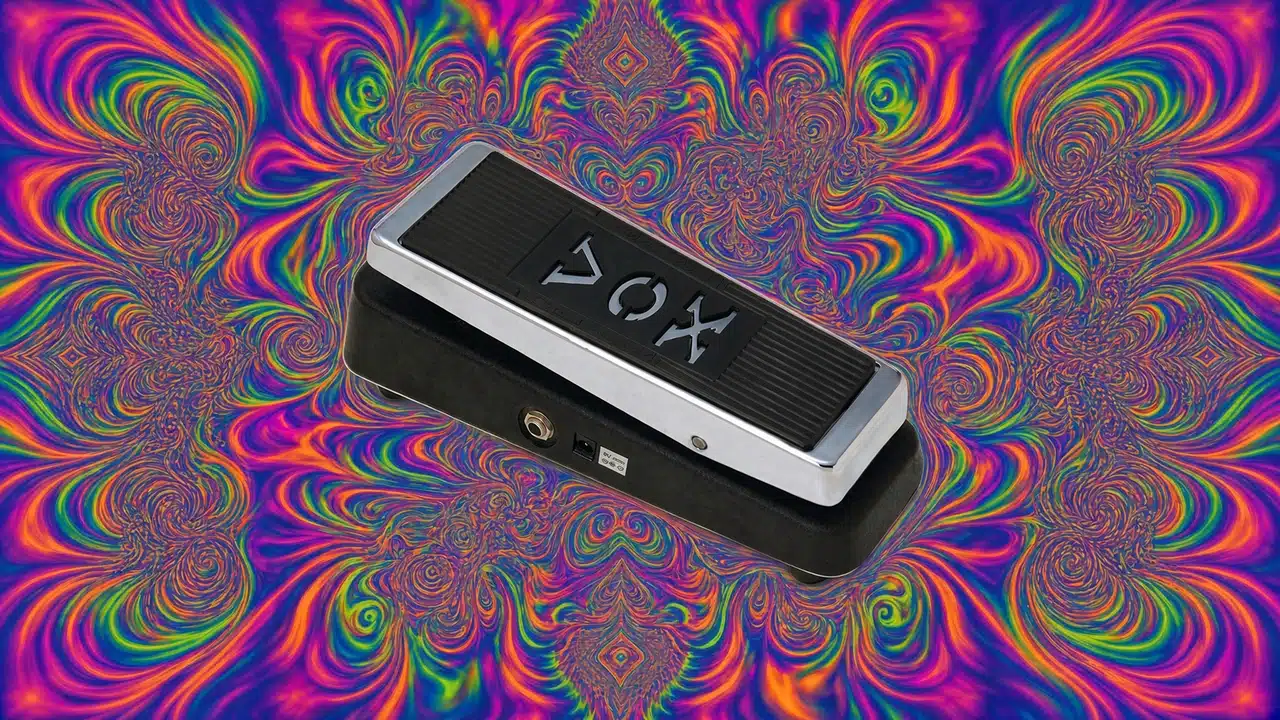
Mention the wah-wah pedal, and the collective imagination of the music world instantly conjures towering walls of 1960s Marshall amplifiers, psychedelic light shows, and the shimmering, liquid-metal guitar solos of Jimi Hendrix. It is the quintessential foot-stomped device that injected a heavy dose of toe-tapping funk and cosmic psychedelia into the popular music lexicon. From the razor-sharp syncopation of Isaac Hayes’s "Shaft" and Funkadelic’s mind-bending "Maggot Brain" to the driving hard-rock pulse of Led Zeppelin-adjacent jams and Rage Against the Machine’s "Bulls on Parade," the wah-wah pedal has spent over half a century acting as a vibrant sonic watermark.
Yet, to limit the narrative of the wah-wah pedal strictly to the electric guitar is to miss half the story. While guitar slingers from Eric Clapton to John Frusciante built their signature styles around its weeping blue notes and rhythmic punch, the device quickly broke out of its six-string enclosure. During the experimental golden era of the late 1960s and early 1970s, jazz-fusion trumpeters, avant-garde saxophonists, and funk royalty eagerly adopted the circuit.
This is the definitive history of how a fortunate laboratory accident in a Los Angeles electronics workshop birthed a pop-culture artifact. It traces the journey of the wah from a rejected studio novelty into an indispensable cornerstone of modern audio production, exploring how trumpet and saxophone pioneers harnessed its expressive, vocal-like capabilities to redefine the boundaries of modern music.
Detailed Chronology: From Lab Bench to Stage
The story of the wah-wah pedal reads like a classic piece of music-industry folklore, involving corporate demonstration artists, curious engineers, and a heavy dose of serendipity. Like many monumental inventions in audio history, multiple individuals staked claims to its creation and commercialization, but the true genesis of the device points squarely back to a Los Angeles session guitarist named Del Casher.
1966: The Accidental Discovery at Vox
In 1966, Del Casher was maintaining a famously hectic schedule. A remarkably versatile musician, Casher held the distinct professional honor of having performed alongside both the easy-listening bandleader Lawrence Welk and avant-garde iconoclast Frank Zappa. In addition to his studio and stage work, Casher served as a demonstration artist for Vox, the powerhouse British company renowned for manufacturing the amplifiers and organs that powered the British Invasion.
While working in the Vox company laboratory one day in 1966, Casher overheard an engineer named Brad Plunkett tinkering with an amplifier’s midrange control knob. As Plunkett rapidly twisted the dial back and forth, the circuit emitted a distinct, vocalized "wah-wah" sweep.
Musicians immediately recognized this acoustic phenomenon. For decades, jazz trumpet players like King Oliver—on seminal recordings like "Dippermouth Blues"—and Duke Ellington—on "East St. Louis Toodle-oo"—had achieved a similar crying, anthropomorphic effect by manually manipulating plunger mutes and derby hats over the bells of their horns.
Sensing a golden opportunity, Casher suggested that Plunkett extract the potentiometer knob from the amplifier circuit and wire it directly into one of the volume pedals Vox routinely manufactured for its electronic organs. This modification allowed a musician to sweep the filter frequency dynamically using their foot while keeping both hands free to play their instrument. With that simple mechanical adaptation, the modern wah-wah pedal was born.
Rapid Prototyping and the Zappa Connection
Casher wasted no time putting the prototype to work, integrating the foot-controlled filter sweep into his daily studio sessions. Before long, word of the device reached his former bandmate, Frank Zappa. Always on the bleeding edge of electronic manipulation, Zappa immediately recognized the expressive potential of the pedal and incorporated it into his evolving soundscapes.
According to music lore, Zappa introduced the device to Jimi Hendrix following a high-energy gig in New York City’s Greenwich Village. Hendrix, a master of textural guitar exploration, took the wah-wah pedal and utterly revolutionized its application. Through Hendrix, Eric Clapton (heard definitively on Cream’s "White Room"), and later generations of rock and funk innovators, the pedal transformed from an obscure studio gimmick into a mandatory tool for any self-respecting guitarist.
1970–1975: The Horn and Fusion Expansion
While guitarists monopolized the commercial market, the early 1970s marked a radical shift as horn players began commandeering the circuit. Jazz luminary Miles Davis utilized the pedal to morph his trumpet tone on heavily criticized yet now-revered fusion masterpieces like Live-Evil, On the Corner, and Agartha. Concurrently, saxophonists like Chris Wood of Traffic and the legendary King Curtis began plugging their reeds into modified effect chains, proving that the vocal qualities of the wah-wah were tailor-made for wind instruments.
Supporting Context & Metrics: The Anatomy of an Effect
To fully understand why the wah-wah pedal became such a cultural juggernaut, one must examine its underlying engineering and its unique psychological impact on the listener.
At its core, a standard wah-wah pedal is a simple band-pass filter. When the player depresses the treadle (the foot pedal), it sweeps a resonant peak across a specific frequency spectrum. Boosting these specific frequencies mimics the formant shifts of the human vocal tract as it transitions from an "ah" sound to an "oo" sound—hence, "wah."
Cultural Impact and Usage Metrics
- Genre Penetration: While birthed in rock and blues, internal industry tracking and cataloging reveal that the wah-wah pedal heavily saturated at least five distinct genres by the mid-1970s: Psychedelic Rock, Funk, Soul, Jazz-Fusion, and Hard Rock.
- The Guitar Monopoly: By the late 20th century, market research within the guitar-effects industry consistently ranked the wah-wah pedal alongside overdrive/distortion and delay as the top three most commonly purchased effect pedals worldwide.
- The Horn Revolution: Though accounting for less than 5% of all wah-wah usage due to the technical difficulties of amplification and feedback suppression, horn-driven wah applications produced some of the most critically acclaimed and harmonically complex performances in jazz-rock history.
| Artist / Ensemble | Track / Album | Instrument Used | Era / Year |
|---|---|---|---|
| Jimi Hendrix | "Voodoo Child (Slight Return)" | Electric Guitar | 1968 |
| Cream | "White Room" | Electric Guitar | 1968 |
| Isaac Hayes | "Shaft" | Electric Guitar (Wah-Wah Rhythm) | 1971 |
| Miles Davis | On the Corner | Trumpet (Modified Tone) | 1972 |
| Traffic | "Glad" (John Barleycorn Must Die) | Saxophone (Chris Wood) | 1970 |
| King Curtis | "I Stand Accused" (Live at the Fillmore West) | Saxophone (King Curtis) | 1971 |
| Rage Against the Machine | "Bulls on Parade" | Electric Guitar (Tom Morello) | 1996 |
Official Statements & Industry Perspectives
The journey of the wah-wah pedal was not without its skeptics. Even as engineers and studio musicians celebrated its arrival, towering figures in the rhythm-and-blues community initially rejected the device as a passing fad.
Del Casher frequently recounted his early encounters trying to pitch the newly minted invention to industry heavyweights. One notable encounter involved the Godfather of Soul himself, James Brown. When Casher demonstrated the foot-controlled filter sweep to Brown shortly after its creation in the mid-1960s, the legendary soul innovator reportedly dismissed the device as "pointless," declaring flatly that it "wouldn’t be cool."
For years, Brown’s rhythm sections relied on razor-sharp, unprocessed guitar syncopation to drive their legendary grooves. However, as the musical landscape shifted toward heavier funk hybrids in the 1970s, the Godfather of Soul softened his stance. By 1974, Brown’s massive hit single "Funky President (People It’s Bad)" featured a prominent, driving wah-wah guitar track running through the mix. Even so, Brown’s utilization of the device remained strictly disciplined, usually reserved for textural punctuation rather than overindulgent experimentation.
Jazz fusion trumpeter Randy Brecker offered a different perspective on the accidental nature of gear adoption. Brecker’s transition into using the pedal occurred entirely by chance:
"When the guitarist in our proto-fusion band Dreams didn’t show up for a rehearsal one day, I decided to copped his device out of frustration and curiosity. Plugging my trumpet into the rig unlocked a completely new vocabulary of phrasing that permanently altered how I approached live soloing."
Similarly, music historians and biographers have continually championed under-recognized wind players like Chris Wood. Dan Ropek, author of the definitive 2015 biography Tragic Magic: The Life of Chris Wood, noted that Wood’s integration of the Varitone system and the wah-wah pedal transformed the saxophone from a traditional acoustic lead instrument into a modern, electric-age voice capable of matching the sonic firepower of contemporary electric guitarists.
Future Outlook: The Endless Sweep of Innovation
As we look toward the future of music production, the wah-wah pedal has successfully transitioned from analog stompboxes to complex digital multi-effects processors, software plugins, and modular synthesizer patches. Yet, the physical act of rocking a treadle back and forth remains an enduringly human gesture in an increasingly digital world.
The Modern Landscape
Today’s pedalboards feature everything from classic optical-sensor wahs and vintage-spec Clyde McCoy replicas to automated envelope filters (auto-wahs) and expression-controlled MIDI filters. Contemporary genres—ranging from modern neo-soul and progressive metal to indie pop and electronic dance music—continue to borrow from the foundational sonic palette laid down by Hendrix, Zappa, and King Curtis.
The Horns Return
Furthermore, a new generation of boundary-pushing jazz and improvisational artists are rediscovering the wind-driven wah-wah techniques pioneered by Chris Wood and Randy Brecker. By running saxophones, trumpets, and even electronic wind instruments (EWDs) through physical pedalboards, modern players are unlocking unprecedented textural depths, proving that the vocal sweep of the wah-wah is a timeless acoustic phenomenon.
Ultimately, the wah-wah pedal stands as a monument to accidental creativity. Born out of a casual workshop experiment in 1966, it transcended its humble electronic origins to become an indispensable extension of the human voice—whether channeled through six strings of steel, the bell of a trumpet, or the wailing reed of a saxophone. As long as musicians seek to make their instruments weep, sing, and talk, the foot-stomping magic of the wah-wah will remain an essential fixture on stages and in studios worldwide.



Belum ada komentar. Jadilah yang pertama berkomentar!