

Executive Overview
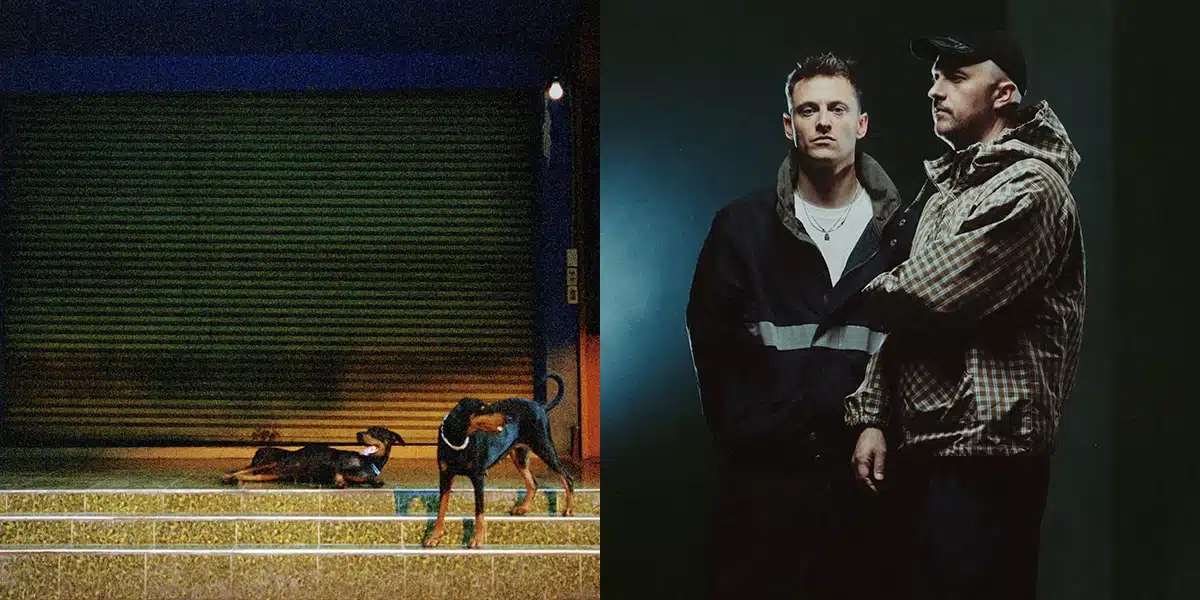
For years, brothers Tom and Ed Russell operated as respected artisans within the shadows of the underground electronic scene. Operating under various monikers and solo projects, they honed a distinct sonic vocabulary that eventually coalesced into Overmono. With the release of their stunning 2023 full-length debut, Good Lies, the duo signaled that a transformative new force had arrived, ready to stake its claim alongside the titans of contemporary British electronic music. Anchored by the title track—widely regarded as one of the defining tunes of the era—Good Lies established a blueprint built on pulsing breakbeats, deep analog synthesizers, and pitch-shifted vocal samples that felt both nostalgic and intensely futuristic.
Following up on a critical and commercial breakthrough of that magnitude is never an easy task. Yet, the Russell brothers have risen to the challenge with Pure Devotion, one of the most anticipated electronic releases of the year. Expanding far beyond the functional parameters of traditional dance music, the album balances club euphoria with striking emotional vulnerability. It captures a duo stepping out of the shadows and pulling their sound in bold new directions, crafting expansive, tactile electronic music that resonates just as deeply in a pair of headphones as it does on a sweat-drenched warehouse floor.
Detailed Chronology: A Track-by-Track Journey Through Pure Devotion
The Opening Salvo and Conceptual Shifts
Pure Devotion wastes no time establishing its grand ambitions. Opener “Lockup” hits with stunning force, utilizing a heavily manipulated vocal sample as the centerpiece for a dizzying hybrid of pounding, club-heavy beats and electrifying synth work. The track packs in more structural ideas and kinetic energy than some artists manage to squeeze into an entire LP; its jaw-dropping scale serves as a clear statement of intent. It is a dancefloor-slaying banger engineered to propel Overmono into the upper echelons of modern electronic stardom.
In stark contrast, “Knight in Shining Prada” steers the album down an unexpected, deeply reflective alleyway. Featuring spoken-word lines from British poet John Joseph Holt, the track pairs urban cadence with wavering, melancholic house beats. While spoken-word poetry over dance tracks risks feeling like a tired trope of modern electronic music, Holt’s contribution quickly transcends cliché. The track serves as a profound meditation on the nature of brotherhood, rendered with staggering emotional weight when contextualized by the fact that Holt lost his own brother to suicide in 2017.
Lines such as:
“Faith keeps me close to you but not close enough / I long for your embrace, but you’re gone when I wake up”
Baca Juga
expose a raw, futile yearning for someone who has passed. Yet, in Overmono’s hands, the composition avoids wallowing in pure grief. As the track builds toward a euphoric, life-affirming payoff, it highlights the immense psychological strength required to endure unimaginable loss:
“I am here / It is me by your side / I am the fight in the dog / I am the luck of the lights.”
It is a remarkably affecting piece of music that proves Overmono are willing to explore the darkest, most profound facets of the human experience.
Balancing the Familiar and the Experimental
Following the emotional gravity of “Knight in Shining Prada,” “Slowmotion” offers a more straightforward yet utterly engaging rhythmic exercise. Shuffling, sub-bass-heavy beats underpin emotive synth chords that are periodically ruptured by yawning, cavernous bursts of electronic noise. As is characteristic of the duo’s best work, stretched vocal samples function as the sonic glue binding the disparate elements together.
It is not until the fourth track, “Even Angels Ghosts,” that listeners encounter the quintessential Overmono sonic signatures that first brought the brothers to prominence. Pitched vocal loops weave a hypnotic spell through gliding synthesizers and bubbling, intricate beats, serving as a welcome, nostalgic reminder of their breakthrough era.
This momentum continues with “Barum,” which frames understated, expertly layered electronics around the soulful, arresting vocals of London singer-songwriter Jaz Karris. It is an intimate, deeply moving composition tracking Karris as she attempts to navigate the hollow pain of a partner’s emotional indifference:
“Even if you don’t love me / Even if you don’t love me no more.”
Just as the emotional temperature threatens to turn inward, “Laxbrook” ramps up the BPM and yanks the listener right back onto the pulsating grid of the dancefloor. Driven by harsher, scruffier electronics and a relentless driving house rhythm, the track features low, fragmented vocals that lend a haunting air, though it is ultimately carried by its undeniable, soulful groove.
Genre-Blending and Mid-Album Interludes
“Gem Lingo” showcases the duo’s knack for seamless pop-electronic crossover, featuring distinctive R&B vocals from London-based artist Ruthven. Lyrically, Ruthven captures the harrowing vulnerability of trying to keep a relationship afloat as a partner grows increasingly distant and emotionally unavailable. Musically, the track reaches for the heavens, anchored by a lattice of ticking percussion and smooth synth washes before abruptly plunging earthward on the back of rapid-fire techno breakbeats.
Serving as an ambient palette cleanser, “Adre” offers a fascinating glimpse into the duo’s softer, more experimental side. Entirely beatless, it acts as a sonic sketch, though purists might debate its necessity regarding the album’s overall momentum and pacing.
Order is swiftly restored, however, with the misleadingly titled “Ballad.” Far from a slow-tempo acoustic number, it is a high-energy, wiry dance track that masterfully fuses elements of UK garage, techno, and deep house. Lyrically, it chronicles a relationship slowly turning to dust, giving way to an almost unbearable atmospheric uncertainty.
The album closes with “After the Rain,” an emotionally resonant companion piece to the record’s earlier explorations of grief and fracture. While tackling similar themes of heartbreak, it strikes an ultimately optimistic chord, suggesting that love—and the capacity to feel it—will eventually prevail. Even as relationships end, the music reassures the listener that there are always second chances for human connection. It is a heartfelt, lingering sign-off on a record that continually reveals new layers upon repeated listens.
Supporting Context & Metrics: The Evolution of Overmono
To fully appreciate the cultural and sonic weight of Pure Devotion, one must examine the trajectory of Tom and Ed Russell within the broader ecosystem of British electronic music.
| Metric / Milestone | Good Lies Era (2023) | Pure Devotion Era (Current) |
|---|---|---|
| Primary Sound Palette | Analog synths, pitch-shifted vocals, UKG breakbeats | Expanded ambient textures, spoken-word, driving house, techno |
| Collaborative Scope | Select vocal samples and underground features | High-profile cross-genre features (Ruthven, Jaz Karris, John Joseph Holt) |
| Critical Standing | Breakthrough acclaim, establishing underground-to-overground crossover | Cementing top-tier status among UK electronic vanguard |
| Live Production Scale | Club sets, mid-tier festival slots | Headlining major international venues, immersive audiovisual staging |
For over a decade, the Russells produced under separate aliases—Tom as Truss and Walsall-born techno producer, and Ed as Tessela, famous for the underground club anthem "Hackney Parrot." When they formally united as Overmono in the mid-2010s, they combined Tom’s mastery of modular hardware with Ed’s intricate rhythmic programming.
The transition from subterranean club weapons to structurally expansive album formats culminated in Good Lies, which cracked UK chart thresholds and earned critical universal praise. Pure Devotion builds directly on these quantitative and qualitative milestones, expanding their audience base while retaining the gritty, tactile sound design that won over their core fan base in London’s toughest basement clubs.
Official Statements & Industry Perspective
In recent interviews surrounding the rollout of Pure Devotion, the Russell brothers have spoken candidly about the intentionality behind their artistic evolution. Moving away from the anonymous, anonymous-adjacent mystique of early techno producers, Overmono has deliberately leaned into human collaboration and emotional transparency.
"We never wanted to make music that just functions as a tool for a DJ set at 4:00 AM," Tom Russell noted in a recent press statement. "Dance music can carry the full weight of human experience—grief, love, confusion, and joy. When you pair a heavy breakbeat with a lyric that actually breaks your heart, something magical happens. That tension is what drives us."
Collaborators have similarly praised the duo’s meticulous production ethics. Speaking on the creation of “Knight in Shining Prada,” poet John Joseph Holt highlighted the empathy embedded in the Russells’ creative process:
"Working with Tom and Ed wasn’t just about putting words to a beat; it was about finding a sonic vessel for an experience that words alone struggle to hold. They understood the emotional geography of what I was trying to convey instantly."
Industry critics have echoed these sentiments, pointing to Pure Devotion as proof that contemporary electronic music is shedding its historical aversion to vulnerability, thanks in large part to acts like Overmono bridging the gap between club culture and singer-songwriter introspection.
Future Outlook: Where Do They Go From Here?
As Pure Devotion establishes itself as a defining release of the contemporary electronic landscape, the horizon looks exceptionally bright for Overmono. The critical and commercial success of this sophomore LP all but guarantees that the duo will graduate to major festival headline slots, positioning them alongside legacy UK heavyweights like The Chemical Brothers, Bicep, and Four Tet.
The challenge moving forward will not be proving their technical proficiency—which is already world-class—but managing the expectations of a rapidly expanding global audience. By refusing to rest on the formulaic laurels of Good Lies, Overmono has proven they are artists interested in long-term sonic evolution rather than fleeting trend-chasing.
If Pure Devotion is any indication, Tom and Ed Russell are only scratching the surface of what emotional, hardware-driven electronic music can achieve. They have successfully negotiated the difficult tightrope walk between the underground and the overground, proving that you can command a massive festival stage while still keeping your heart firmly planted in the machinery of the club.









Belum ada komentar. Jadilah yang pertama berkomentar!