

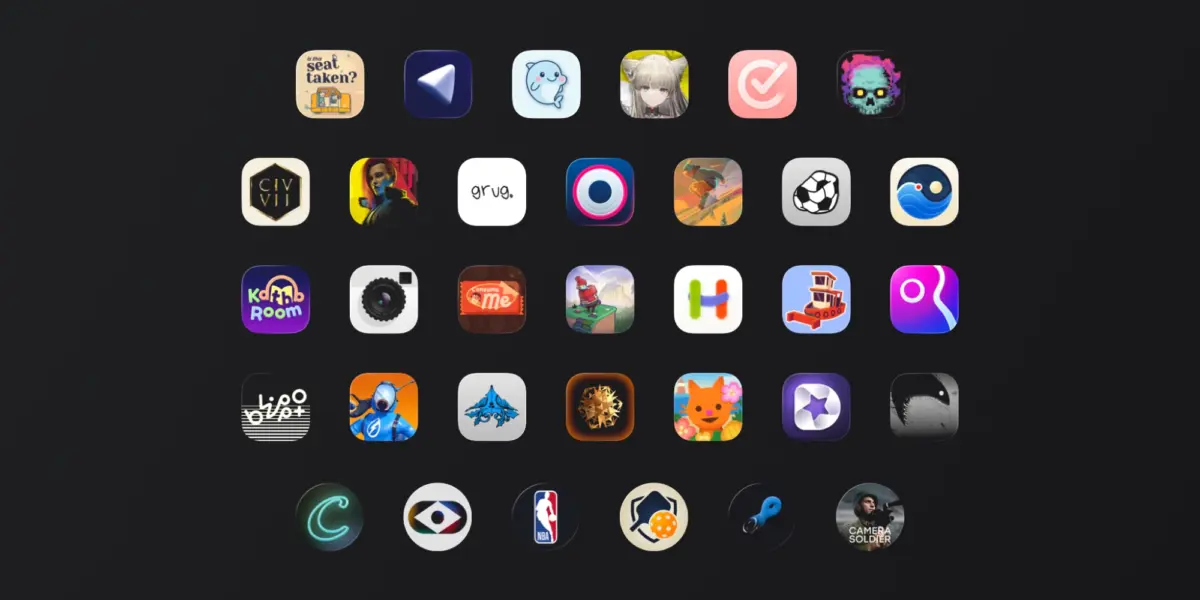
As anticipation reaches a fever pitch across the global developer community following Apple’s official distribution of press invites for the Worldwide Developers Conference (WWDC 2026) keynote, the Cupertino tech giant has pulled back the curtain on another cornerstone tradition of the yearly event. Apple has officially revealed the complete roster of finalists for the 2026 Apple Design Awards (ADAs).
Recognizing the pinnacle of creativity, technical ingenuity, and human-centric design within the App Store ecosystem, this year’s shortlist showcases 36 elite applications and games. Competing across six distinct categories, these nominees represent the absolute best of what is possible when visionary software engineering meets cutting-edge Apple hardware and software architecture.
Executive Overview: The Architecture of App Store Excellence
The Apple Design Awards are much more than a routine seasonal accolade; they serve as a definitive barometer for the software industry at large. Each year, Apple’s design evaluation teams scour the vast expanse of the App Store to identify titles that not only leverage proprietary Apple frameworks—such as Metal, SwiftUI, VisionOS APIs, and CoreML—but also elevate the user experience through sheer empathetic design.
For 2026, the competition is particularly fierce. The nominated titles span a broad spectrum of digital experiences, ranging from immersive spatial computing applications and high-fidelity gaming masterpieces to utilitarian utilities designed to foster accessibility, mental well-being, and social connectivity.
Breakdown of the 2026 ADA Landscape
- Total Finalists: 36 entries (accounting for overlapping nominations).
- Competing Categories: 6 core pillars (Delight and Fun, Inclusivity, Innovation, Interaction, Social Impact, and Visuals and Graphics).
- Format: Three applications and three games per category.
- Winner Announcement: Scheduled to be revealed in the coming weeks leading up to the official commencement of WWDC 2026.
By highlighting these exceptional titles, Apple continues to signal to independent developers and major studios alike what standards are expected of modern applications operating within the Apple ecosystem.
Detailed Chronology: The Path to the 2026 Apple Design Awards
The journey toward the Apple Design Awards is a grueling, year-round evaluation process conducted by Apple’s internal App Store editorial and design evangelism teams. Understanding the roadmap leading up to this moment provides vital context to the magnitude of being named a finalist.

Q3–Q4 2025: The Silent Observation
Long before developers receive any formal notification, Apple’s curators continuously monitor the App Store for breakout hits, technological milestones, and quiet masterpieces. Applications that aggressively adopt new OS capabilities—such as advanced machine learning models running locally on Apple Silicon or novel interface paradigms introduced across iOS, iPadOS, macOS, watchOS, and visionOS—instantly draw attention.
Q1 2026: Internal Deliberations and Testing
As the software development lifecycle for the upcoming generation of operating systems begins to lock in, Apple narrows down hundreds of potential candidates to a carefully vetted short list. Every nominated app undergoes rigorous stress-testing by design specialists. Evaluators examine everything from UI responsiveness and accessibility compliance to the subtlety of micro-animations and spatial audio integration.
Mid-May 2026: The WWDC Invites and Finalist Reveal
The formal announcement arrives in tandem with the distribution of media passes for the WWDC keynote. By publishing the list of finalists ahead of the conference, Apple achieves a dual objective: it builds palpable excitement for the developer community while affording these creators a well-deserved moment in the global spotlight before the ultimate winners are crowned.
Supporting Context & Metrics: What It Takes to Win
To truly comprehend the weight of an Apple Design Award, one must analyze the criteria that separate an ordinary application from an ADA finalist. Apple evaluates entries through a rigorous lens that measures both technical execution and philosophical alignment with the company’s core brand ethos.
The Six Pillars of Evaluation
- Delight and Fun: Finalists in this category are tasked with delivering memorable, deeply engaging, and satisfying experiences. These titles often utilize Apple technologies—such as the Taptic Engine, ProMotion displays, or spatial audio—to make interactions feel organic and joyful.
- Inclusivity: Software must serve everyone, regardless of background, physical ability, or primary language. Finalists here demonstrate exemplary integration of accessibility features like VoiceOver, Switch Control, and dynamic text scaling, ensuring that their experiences are welcoming to all users.
- Innovation: This category honors state-of-the-art experiences that utilize Apple technologies in novel, unprecedented ways. Whether it is pioneering local AI processing or pushing the boundaries of augmented reality via visionOS, these apps redefine their respective genres.
- Interaction: Seamless navigation is the hallmark of great design. Finalists in the Interaction category feature intuitive interfaces and effortless controls that feel entirely native to the platform they reside on, minimizing cognitive load for the user.
- Social Impact: Technology at its best solves real-world problems. Applications in this bracket improve human lives in meaningful ways, addressing crucial social, environmental, or health-related issues with sensitivity and operational rigor.
- Visuals and Graphics: Aesthetics matter profoundly in the Apple ecosystem. Nominees in this category boast stunning imagery, meticulously drawn interfaces, and silky-smooth animations that coalesce under a unified, distinctive artistic theme.
The Developer Economy Impact
Securing an Apple Design Award—or even a finalist position—yields profound commercial and professional dividends for independent studios. Historically, ADA finalists experience a significant surge in organic App Store visibility, user acquisition, and media coverage. For small development teams consisting of just one or two people, this recognition can single-handedly secure the financial runway needed to sustain future software innovations.
Official Perspectives: The Philosophy of Apple Design
While Apple keeps its specific panel deliberations strictly confidential, statements from corporate leadership over successive developer conferences illuminate the overarching philosophy guiding the awards.

Apple’s design ethos has always prioritized human augmentation over mere automation. In previous briefings regarding the design awards, executives have repeatedly emphasized that the most successful applications are those that "disappear" into the background, allowing the user to achieve their goals with maximum efficiency and minimal friction.
Furthermore, the integration of new paradigms—particularly the rapid maturation of spatial computing and on-device generative machine learning—has fundamentally shifted how Apple’s design teams evaluate software. An application that successfully translates traditional two-dimensional workflows into immersive three-dimensional spatial environments without inducing cognitive fatigue or motion discomfort immediately ascends to the front of the pack.
Future Outlook: Looking Beyond WWDC 2026
As the technology sector navigates a transitional era defined by artificial intelligence, ambient computing, and cross-platform continuity, the 2026 Apple Design Award finalists offer a clear glimpse into the future of digital interaction.
The Rise of Spatial and AI-Driven Interfaces
A noticeable trend among this year’s top-tier submissions is the effortless blending of traditional touch interfaces with spatial and ambient computing concepts. Developers are no longer treating visionOS or advanced machine learning frameworks as mere novelty add-ons; instead, these technologies are being woven into the very fabric of application architecture.
As we approach the official announcement of the 2026 ADA winners during WWDC week, the broader software development community will undoubtedly look to these finalists as masterclasses in modern product design. Whether you are an indie developer sketching out your next big project on an iPad or a consumer eager to see what the App Store has to offer next, the 2026 Apple Design Award finalists prove that human creativity remains the ultimate driving force behind technological innovation.









Belum ada komentar. Jadilah yang pertama berkomentar!