

Executive Overview
In the sprawling landscape of popular music culture, few phenomena rival the tenacity of fan-generated urban legends. From the absurdly persistent "Paul Is Dead" conspiracy that shadowed the Beatles to modern digital-age rabbit holes, devoted music listeners have long derived a distinct brand of intellectual pleasure from mapping patterns where none were explicitly designed. Among contemporary alternative acts, few bands have inspired as much cryptographic fervor as the British rock outfit Radiohead. Renowned for their intricate arrangements, dystopian lyrical themes, and deliberate elusiveness, the band’s catalog has become a perpetual playing field for fan speculation, yielding everything from hidden narrative messages in music videos to whole, unreleased shadow albums.
Chief among these hypotheses in recent years is the "Binary Theory," a fan-constructed narrative arguing a calculated, mathematical link between the band’s 1997 landmark masterpiece, OK Computer, and their self-released 2007 album, In Rainbows. Proponents of this theory suggest that these two culturally defining records—released precisely a decade apart—are meant to be interleaved into a single, complementary playlist that unlocks a secret conceptual statement.
This deep-dive investigation tests the structural integrity of the Binary Theory against musicology, timeline realities, and the artists’ own reactions. Ultimately, while the theory collapses under rigorous academic scrutiny—much like the Paul McCartney myth—it serves as a crucial lens through which to examine a broader cultural framework. The Binary Theory is not merely a case of misdirected fan passion; it is a symptom of modern music marketing, cognitive psychology, and the deeply ingrained human impulse to seek order in chaos.
Detailed Chronology: From "Ones and Zeroes" to the "Jigsaw Falling into Place"
To understand the architecture of the Binary Theory, one must retrace its origins to shortly after the autumnal release of In Rainbows in 2007. Originally synthesized and publicized by music journalist Kevin Flick, the hypothesis rests heavily on the symbolic omnipresence of the number ten—and, by extension, the foundational language of digital computing: binary code.
The Numerical Breadcrumbs
Flick and subsequent digital archivists pointed to a series of circumstantial alignments leading up to the release of In Rainbows:
- The Lead-Up: The album’s formal announcement was allegedly preceded by a series of cryptic online dispatches featuring the Roman numeral "X" embedded within modified phrasing.
- The Countdown: On October 1, 2007, the band officially declared that In Rainbows would drop online in precisely ten days (October 10). Rumor dictated that the initial digital distribution was powered by exactly ten servers.
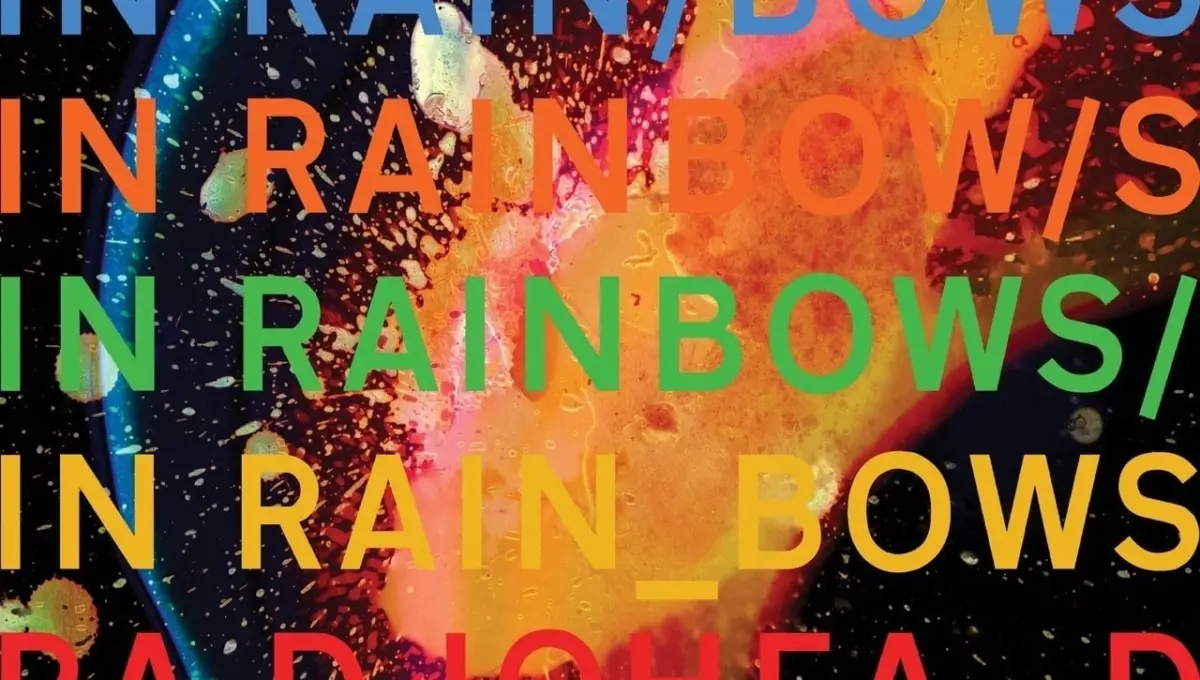
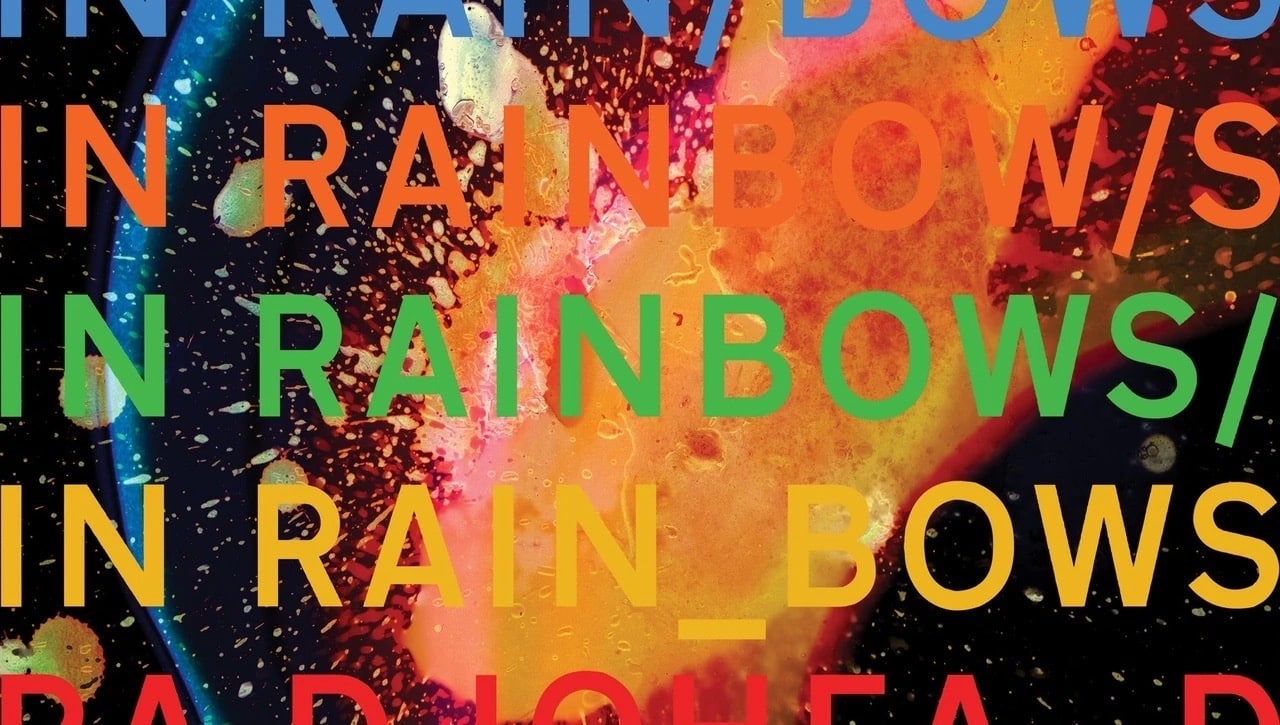
- Linguistic and Visual Motifs: The album title consists of ten letters. The typographic design of the band’s name on the cover art mimics the numeral "X" via the stylized placement of lowercase "i" and "o" characters. Furthermore, the standard tracklist contains precisely ten songs.
By leaning on OK Computer’s reported working title—Ones and Zeroes—Flick posited a grand conceptual design: OK Computer represents "01," while In Rainbows a decade later represents "10." Together, these binary integers create a master code.
The Interleaved Playlist
The heart of the theory proposes a combined, alternating tracklist. Starting with OK Computer’s opening track, "Airbag," and concluding with In Rainbows‘ haunting closer, "Videotape," fans assemble a 21-song chronological mosaic.
A surface-level listen yields moments of uncanny serendipity. Untreated playlists feature curious moments of sonic continuity, such as the metronomic drum beats bridging "Airbag" into In Rainbows‘ opening track, "15 Step," or the reverb-drenched crossfades moving from "Subterranean Homesick Alien" to "Nude."
Yet, closer structural analysis reveals severe fractures in the illusion. An alternating playlist of 10 and 11 tracks mathematically breaks unless one conveniently omits OK Computer’s spoken-word interlude, "Fitter Happier." Moreover, while tracks like "Nude" originated during earlier writing sessions (a common practice for a band that famously incubates songs for decades before official release), In Rainbows bears no explicit musical or lyrical motifs directly referencing OK Computer.
Supporting Context & Metrics: Musicological Riddles and Marketing Psychology
Radiohead’s invitation to numerical and cryptographic speculation is far from accidental; it is baked into the very DNA of their public presentation. The band has a long-standing history of employing rhythmic illusions, backmasking, and metrical ambiguities.
A Legacy of Ambiguity
On "Pyramid Song" from 2001’s Amnesiac, the band famously veiled a 4/4 time signature behind a palindromic 3-3-4-3-3 rhythmic structure that mirrors the geometry of a physical pyramid. Similarly, the track features a transpositional nod to the historical BACH musical cipher. On later works, such as A Moon Shaped Pool’s "Daydreaming," reversed audio snippets (backmasking) reveal whispered lines interpreted as deeply personal reflections on loss.
When listeners are consistently rewarded with genuine cryptographic easter eggs—such as the hidden computer code embedded within the C90 cassette of the OK Computer OKNOTOK 1997 2017 physical box set—it is hardly surprising that they perceive hidden dimensions in subsequent releases.
The Science of Scarcity and Reciprocity
This environment of mystery directly intersects with commercial strategy. As consumer psychology dictates, Radiohead’s historical reluctance to oversaturate the market operates in direct alignment with Robert Cialdini’s "principle of scarcity" (outlined in Influence), wherein human decision-making is heavily motivated by the dread of missing out. By withdrawing from traditional promotional cycles, refusing immediate streaming access to platforms like Spotify for years, and utilizing cryptic dispatches from fictional personas like Chieftain Mews, the band positioned their art as an elusive commodity.
Furthermore, the radical "pay-what-you-want" digital rollout of In Rainbows activated Cialdini’s rule of reciprocation. By offering an entire album under a voluntary pricing model, the band established an implicit social contract. Fans, feeling uniquely trusted and gifted, responded not merely by purchasing physical box sets and concert tickets, but by investing emotional and cognitive labor into decoding the art.
Paradoxically, this behavior also shields listeners from the psychological fatigue of the modern digital landscape. As Barry Schwartz’s "paradox of choice" suggests, an overwhelming abundance of daily media leads directly to consumer paralysis and dissatisfaction. Radiohead’s streamlined, alternative distribution models allow fans to focus intensely on a singular, revered artistic ecosystem.
Official Statements: How the Band Reacts
Inevitably, the architects of these auditory mazes are forced to address the labyrinthine constructs built around their work. Radiohead’s responses to the Binary Theory, and fan theories at large, oscillate gracefully between deadpan humor, gentle validation, and polite bemusement.
When probed about the mathematical intricacies of the Binary and Golden Ratio theories—the latter of which claims the album title "In Rainbows" is whispered in the backing vocals of "Reckoner" at the exact temporal moment corresponding to the mathematical golden ratio—band members have offered telling glimpses behind the curtain.
Drummer Phil Selway responded to inquiries regarding the Binary Theory with characteristic dry wit:
"I’m sure that there must be. No smoke without fire… I feel like the custodian of Radiohead secrets here."
Frontman Thom Yorke has similarly leaned into the comedic absurdity of fan deductions, noting in interviews:
"There’s one about… ‘ten’ comes up a lot… Every time I get asked about it, I say, ‘Oh, yes, absolutely! We thought of all that.’ Yes… [The fans are] usually slightly wrong. I think it’s nice that people are interested enough to come up with all these mad ideas."
Guitarist Ed O’Brien offered a similarly grounded perspective regarding the mathematically precise Golden Ratio theory:
"I love that… [It] says that you get to the heart of the record right in the middle of ‘Reckoner’… Which is true, but… it wasn’t deliberately done like that, obviously."
These admissions confirm what structural analysis implies: the grand mathematical designs are brilliant projections of active fan imaginations rather than pre-meditated blueprints from the studio console.
Future Outlook: The Enduring Allure of the Unknown
As Radiohead moves deeper into their hiatus—with members focusing on side projects like Thom Yorke and Jonny Greenwood’s The Smile, individual film scores, and solo records—the appetite for archival excavation and theoretical debate within the fanbase remains entirely unexhausted.
The persistence of theories like the Binary Theory reveals profound truths about human cognition. Rooted in Henri Tajfel’s social identity theory, modern fandom operates as a vital pillar of personal identity formation. Belonging to a community that decodes complex artistic riddles provides individuals with a validated sense of exclusivity, shared purpose, and continuity of self across decades.
Ultimately, whether OK Computer and In Rainbows were explicitly engineered as a binary palindrome matters very little in the grand scheme of cultural impact. These fan theories function as self-sustaining cultural engines—low-budget, organic marketing tools that enrich the listening experience, forge unshakeable community bonds, and transform passive consumers into active co-creators of musical mythology. As long as artists continue to craft enigmatic worlds, audiences will happily step into the dark, armed only with flashlights, searching for the next jigsaw piece falling into place.







Belum ada komentar. Jadilah yang pertama berkomentar!