

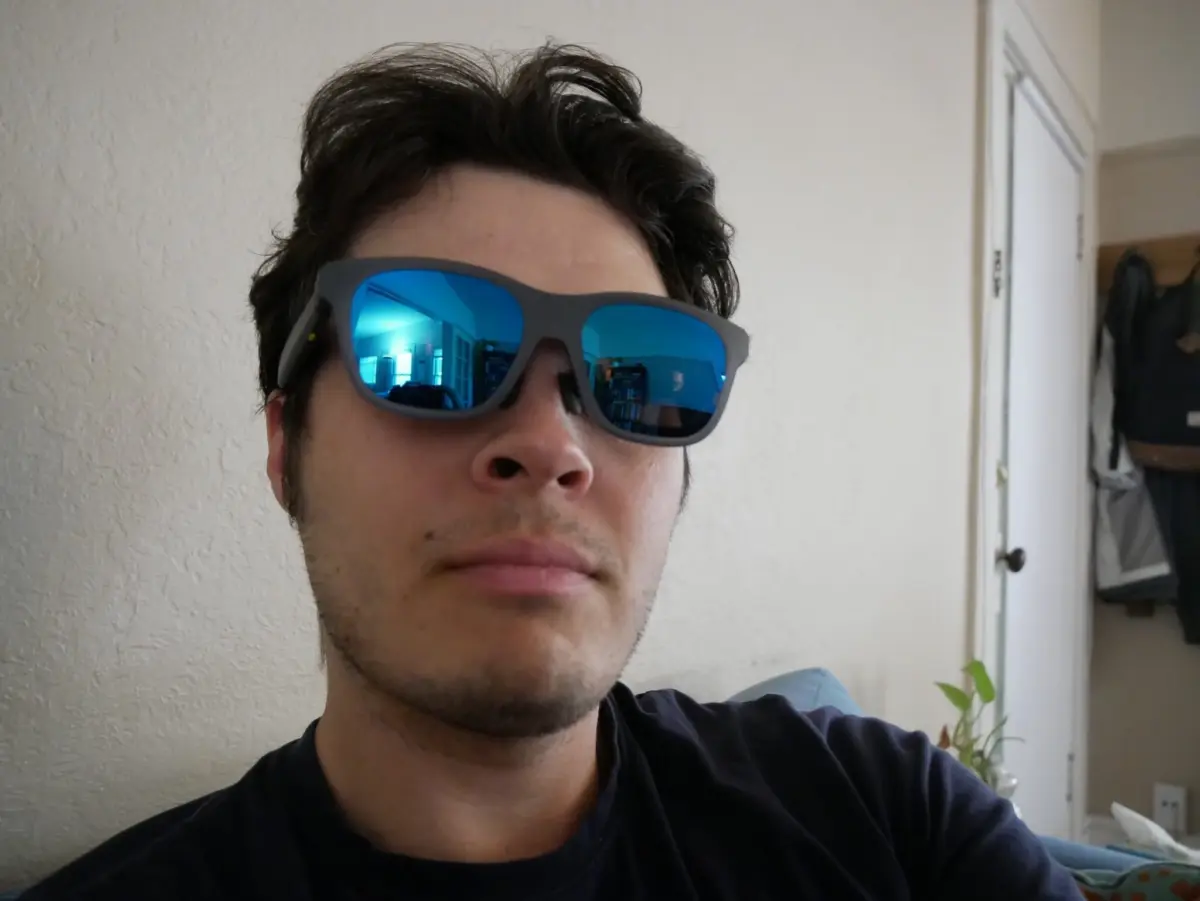
For decades, cinema enthusiasts have chased the holy grail of media consumption: an infinite screen, unconstrained by the physical boundaries of a living room or the logistical nightmare of a commercial movie theater. Enter the world of Extended Reality (XR) hardware, where companies like XREAL promise to shrink massive cinematic displays into lightweight, wearable form factors.
In May, smart glasses manufacturer XREAL introduced the a01, a streamlined, consumer-focused wearable designed to act as an external monitor for handheld gaming devices, laptops, and smartphones. Retailing at a highly accessible $300, the a01 strips away the heavy software suites and complex operating systems found in advanced augmented reality (AR) devices like the Meta Orion or Snap’s Specs. Instead, it offers a straightforward proposition: plug in a USB-C cable, hook it up to your tech ecosystem, and project a virtual 147-inch display directly onto your retinas.
However, a device designed to democratize immersive media raises tough operational and existential questions. Is a wearable external display a genuine paradigm shift in how we consume entertainment, or is it a solution in search of a problem? This deep-dive evaluation explores the real-world utility, engineering hurdles, and ultimate viability of the XREAL a01 through the lens of a dedicated film buff, while also looking forward to the industry’s next evolutionary leaps, such as XREAL’s upcoming "Project Aura."
Detailed Chronology: Putting the XREAL a01 to the Test
To understand what the a01 brings to the table, it helps to walk through the user journey from unboxing to operational fatigue.
The Cinephile’s Setup
As a self-described movie fanatic constantly hunting for novel ways to engage with celluloid and digital media, I eagerly integrated the a01 into my daily routine shortly after receiving a review unit. Eschewing its gaming-centric optimization—which targets handhelds like the Steam Deck—I plugged the glasses directly into my personal laptop, fired up the Criterion Channel, and initiated a screening of David Lynch’s surreal classic, Wild at Heart.
Watching Nicolas Cage navigate a violent bar brawl in a snakeskin jacket before breaking into an Elvis Presley song is an eccentric visual test for any display. Right out of the gate, the a01 delivered impressive visual fidelity. Outfitted with dual mini-OLED panels capable of delivering 1080p resolution and up to 1,600 nits of brightness, the colors were remarkably vibrant and punchy. In a darkened room, aiming the glasses at a blank wall yields an experience remarkably similar to a high-end home projector or an old-school drive-in movie theater.
The Redundancy Paradox
Despite the sharp visual output, an immediate design contradiction emerged. Why sit at a desk with a tethered headset strapped to your face, watching a movie that is simultaneously playing on a laptop screen resting a mere 14 inches away?
XREAL pitches this as a matter of immersion, arguing that the virtual projection replicates the scope of a 147-inch screen. Yet, the physical redundancy forces users to question the primary use case. If deployed as a "second monitor" or wearable display, the glasses suffer from opacity issues. Because it is nearly impossible to see your physical workspace while wearing the active projection, multitasking—such as typing a document while watching reference video—becomes frustratingly difficult.

Mobile Trials and Tribulations
Shifting the test to a mobile environment highlights both the potential and the friction of the hardware. Connecting the a01 to a smartphone theoretically liberates the user from the confines of an indoor workspace, turning planes, trains, and automobiles into private IMAX theaters (though walking down a public street while wearing them is a fast track to stepping into oncoming traffic).
Unfortunately, legacy hardware limitations reared their head: my older iPhone lacked native port compatibility with the a01’s cable, necessitating an additional adapter. Furthermore, because the a01 functions strictly as a screen-mirroring device, the host phone’s display must remain active and awake during playback. This triggers the redundancy problem all over again: you are projecting a video onto your face while the exact same media drains the battery of a phone sitting anxiously in your pocket.
Supporting Context & Metrics: Hardware, Heat, and Ergonomics
To objectively evaluate the a01, one must weigh its physical specifications, financial investment, and thermodynamic performance against contemporary competitors.
| Feature / Metric | XREAL a01 | XREAL Beam Pro (Optional Add-on) | Competitor Class (e.g., Snap Specs) |
|---|---|---|---|
| Price Point | ~$300 | ~$200 | Varies (Typically Higher) |
| Display Technology | Dual Mini-OLED (1080p, 1,600 nits) | N/A (Standalone Hub) | Integrated AR Waveguides |
| Power Source | Tethered USB-C (Host Device) | Internal Battery / Standalone | Internal Battery |
| Processing Power | None (Screen Mirroring) | Integrated Compute Node | Standalone SoC |
| Hand Tracking | Absent | Touch / Remote Interface | Advanced Native Tracking |
The Thermal Threshold
Perhaps the most pressing physical drawback of the a01 is thermal management. It does not take long for the glasses to begin generating heat during operation. Users quickly notice an unusual, warm tingling sensation creeping across the bridge of the nose and framing the eyes.
While this defect is by no means unique to XREAL—it remains an industry-wide challenge for manufacturers attempting to cram dense electrical processing and display drivers into lightweight plastic frames—it remains a jarring user experience. Having a warm, active electronic circuit strapped tightly to your face undercuts the relaxed comfort a consumer expects from media consumption accessories.
Comfort and Weight
On the ergonomic front, however, XREAL deserves credit. The a01 is remarkably lightweight and comfortable. Compared to heavier, more bloated smart glasses systems—such as Snap’s Specs, which prioritize standalone AR utility over casual media consumption—the a01 rests easily on the face without causing immediate neck strain or heavy facial fatigue.
Official Statements and Ecosystem Integration
XREAL has consistently positioned its hardware ecosystem as a bridge between traditional computing and spatial display. By offering modular accessories like the Beam Pro—a $200 mini-tablet designed to act as an isolated streaming hub—the company attempts to solve the tethering and battery-drain issues associated with direct phone-and-laptop mirroring.
Users who invest in the Beam Pro can download movies and shows directly onto the companion device, decoupling the glasses from primary workstations and mobile phones. However, doing so pushes the total financial barrier to entry past the $500 mark, shifting the product out of the "impulse buy" accessory category and into dedicated gadget territory.

Future Outlook: Project Aura and the Horizon of Spatial Computing
The true test of any hardware ecosystem lies in its iterative velocity. The existential design dilemmas plaguing the a01—such as screen mirroring redundancy, lack of standalone processing, and absent hand-tracking controls—appear to have been aggressively targeted in XREAL’s pipeline.
The Promise of Android XR and Project Aura
Previewed at Google I/O earlier this year, XREAL’s upcoming Project Aura represents a dramatic pivot for the company. Powered by Android XR, the joint extended reality operating system developed by Google and Samsung, Project Aura introduces native hand tracking and direct access to the Google Play Store.
Most importantly, Aura departs from the direct-tether design of the a01 by incorporating a pocket-sized puck that serves as both the primary compute node and charging source. This architectural shift promises true mobility: users can store applications locally, navigate menus via intuitive gestures, and shed the awkward dependency on external laptops or wired phones.
The Cinephile Verdict
Despite these exciting advancements on the horizon, the core question remains: Is watching movies on smart glasses actually better than traditional displays?
From the perspective of a dedicated cinephile, the answer is nuanced. Movie fans universally prize screen scale, environmental immersion, and visual fidelity. While a 55-inch consumer TV or a massive home projector screen offers comfortable, shared, and compositionally accurate viewing experiences, smart glasses offer an intensely insular, hyper-bright alternative. They provide a fascinating novelty, but they ultimately struggle to replace the comforting utility of a traditional flat-screen display in a home environment.
The XREAL a01 serves as a compelling, if flawed, time capsule of a hardware industry still finding its footing with mainstream consumers. It proves that the display technology is ready—delivering dazzling 1080p mini-OLED panels at an affordable $300 price point. Yet, until thermal efficiency catches up with ergonomic design and untethered software ecosystems become standard, wearing your movies will likely remain an intriguing niche rather than the definitive cinematic future.
As XREAL prepares to launch Project Aura, the stage is set for a major generational leap. When that hardware finally hits the market, film fanatics and tech enthusiasts alike will happily return to the drawing board to reevaluate what the future of portable cinema truly looks like.
Disclaimer: When you purchase through links in our articles, TechCrunch may earn a small commission. This editorial independence remains strictly uncompromised.







Belum ada komentar. Jadilah yang pertama berkomentar!